
Loading dispatches...
← Return to Newsroomgeneral
Allahabad HC acquits doctor jailed in POCSO case involving daughter
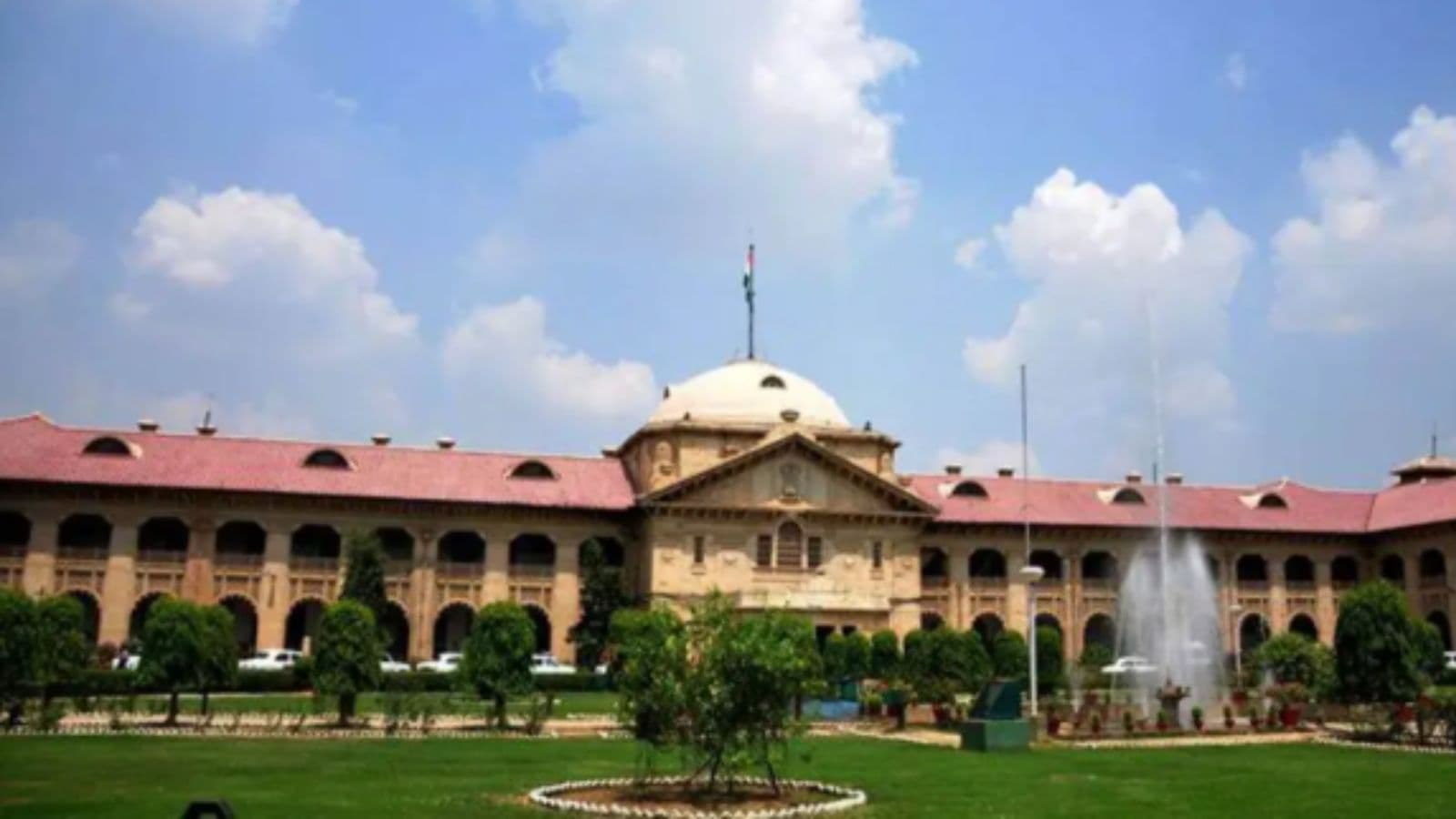
The bench of Justices Varma and Upadhyay ordered that the appellants are acquitted of all the charges levelled against them. Cautioning that evidence of a child witness should be considered with great sagacity in cases in which the Protection of Children from Sexual Offences (POCSO) Act is used as an instrument to accuse either of the parents, the Allahabad High Court Thursday acquitted an Uttarakhand doctor who was facing life imprisonment in a case of sexual assault of his minor daughter. The doctor was in jail for over one-and-a-half years following a 2025 Varanasi court order that convicted him, following a complaint by his wife, also a doctor, in 2018. On an earlier occasion too, he was lodged in jail for over a year after the case was registered.A division bench of Justices Siddhartha Varma and Jai Krishan Upadhyay, in its order, while going through the materials in the case, concluded that the mother was trying to embroil the child in her fight against her husband. The bench observed, “We would like to add that in cases in which the Pocso Act is being used as an instrument to accuse either of the parents, then the evidence of a child witness should be considered with great caution. Undoubtedly, a child is supposed to speak the truth, but when it is portrayed by one parent that the other parent had brought about injustice to him or her and the child begins to sincerely believe that the parent with whom he or she is living has been wronged, then the child begins to testify against the other parent even wrong things, believing that they were true. Therefore, we are of the view that in such cases the evidence brought forth by a child witness should be considered with great sagacity.” According to the First Information Report (FIR) lodged by the wife in June 2018, she was staying with her parents in Varanasi along with her daughter and was working in a hospital at that time. Her husband hails from Uttarakhand and was practising in his hospital there. The FIR stated that her daughter went with her father to Uttarakhand in March 2018 after the child’s school holidays had begun. After a 10-day stay with her father, the child returned to Varanasi. The mother claimed in the FIR that the girl while writing a ‘letter to father’ as part of her homework refused to address her father as ‘dear father’. When the mother questioned, the child allegedly called her father bad and narrated about ‘bad touch’ by him and the ‘sexual assault’ during her stay with him in Uttarakhand, the FIR alleged. Despite having known about the ‘assault’, the mother lodged the case after two months, concerned about her family’s respect and her father’s illness.Story continues below this ad The case, initially, was transferred to the Uttarakhand district on the ground that the sexual assault incident occurred there. The Uttarakhand Police arrested the father, and he remained in jail until he was granted bail after a year in 2019 by the Supreme Court, according to his counsel Rajiv Dwivedi. The case was again transferred to Varanasi, following a Supreme Court order on the victim’s mother’s application. After the trial was completed, a Special Posco Court in Varanasi sentenced the doctor and his brother to life imprisonment on charges of rape, indulging in the act repeatedly, and gangrape in February last year. While his brother got bail, the doctor continued to be in jail. They filed an appeal in the High Court, challenging the Pocso court order.Story continues below this ad The counsel of the appellants said the sexual assault case was the result of a dispute between the doctor couple which began in 2017. While the wife wanted her husband to build a hospital in Varanasi, he started building it in Uttarakhand. The dispute escalated as the wife withdrew a guarantor in the documents of a Rs 3 crore loan for the construction of the hospital. The rape case was lodged during the same period of the discord, added Dwivedi. ‘M
New DelhiAug 11, 2026 06:28 PM IST The Kerala High Court was dealing with a bail plea of a man accused in POCSO case. (AI-generated Image)Holding that the mother cannot legally settle or compromise a case against the father for sexual harassment or sexual assault of their minor daughter, the Kerala High Court has refused bail to a 50-year-old man accused of sexually assaulting his 17-year-old daughter. Dealing with a bail plea of a father in a Protection of Children from Sexual Offences (POCSO) case, Justice Kauser Edappagath noted that the case depicts the tragic plight of a minor girl, aged 17 years, who was repeatedly subjected to sexual exploitation by her own father. The accusation against the applicant is grave, and prima facie discloses a premeditated criminal act.“The mother cannot legally settle or compromise a case against the father for sexual harassment or sexual assault of their minor daughter. Any compromise or out-of-court settlement effected by the parents of a minor victim with the object of stifling criminal prosecution cannot receive the sanction of law, nor can such a settlement override the State’s duty to prosecute offences against children,” the court said on August 3. The court pointed out that it now emerges that the mother of the survivor, who had initially lodged the complaint alleging sexual assault, has chosen to settle the matter in utter disregard of the interest and welfare of her daughter, a situation aptly described as “the fence itself devouring the crop”. “Courts, in the exercise of their parens patriae jurisdiction, bear a bounden duty to safeguard the rights of minor victims of sexual assault, even where parents fail to do so,” the order said. Mother seeks to settle POCSO case The prosecution’s case was that the 50-year-old petitioner, father of the minor girl aged 17 years, had sexually assaulted his daughter on multiple occasions spanning three months. He was booked under multiple Sections of the POCSO Act. Justice Kauser Edappagath said the offences involving sexual assault of a minor are not compoundable.He was then arrested and remanded to judicial custody and remained in custody thereafter. His first bail application was dismissed. He then filed a second regular bail application before the high court. In the second bail plea, the accused claimed that he was innocent and falsely implicated. The survivor’s mother filed an affidavit stating that the matter had been settled and that she did not wish to pursue the case.Story continues below this ad Appearing for the petitioner, advocate Jerry Mathew submitted that the dispute had been settled between him and the survivor’s mother, who had expressed no objection to his release on bail. His counsel argued that there were no materials on record connecting him with the alleged offences and, therefore, he was entitled to bail. The Senior Public Prosecutor opposed the bail plea. The prosecution argued that the alleged incidents were part of the accused’s intentional criminal acts. It contended that, considering the nature and gravity of the allegations, the accused should not be released on bail at that stage. Parents not permitted to compromise minor victim: Order The court noted that the survivor had given a statement describing the alleged sexual assault. It also pointed out that the accused’s first bail application had already been rejected considering the nature and gravity of the offence and the relationship between the accused and the survivor.Story continues below this ad The court expressed concern that the survivor’s mother, who had initially lodged the complaint, later sought to settle the matter and give consent for bail. It said this was done “in utter disregard of the interest and welfare” of the minor daughter. Importantly, the court observed that the mother did not say that the alleged incident had not occurred; her position was only that the matter had subsequently been settled. Holding that the offences involving
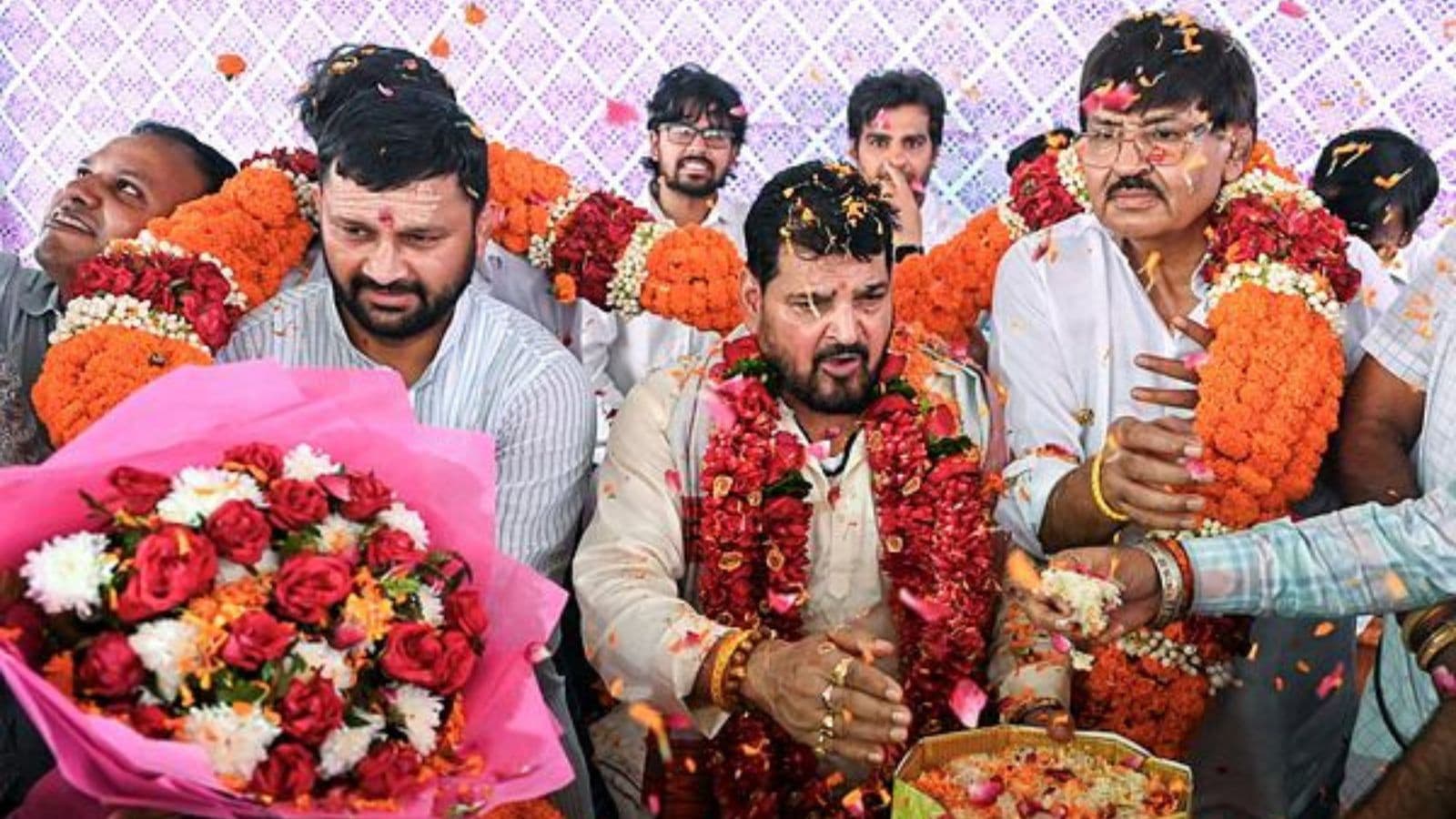
The victims had initially been hesitant to level allegations against the accused, fearing that doing so could jeopardise their careers. When they eventually came forward, they gave “wrong” details about the country and year in which the alleged incident took place.The court described the contradiction as “fatal to the prosecution case”.“All the victims have deposed that they did not make allegations against the accused persons timely as they feared loss of their career… When they took up the courage to do so, they ended up mentioning the wrong country and the wrong year as the alleged place and year of the incident in question… The shift in the first/initial version of the witness with respect to the place/country and the year where the incident allegedly occurred is fatal to the prosecution story,” the court of Additional Chief Judicial Magistrate (ACJM) Ashwani Panwar noted in his August 3 order. The women had levelled the allegations against Singh in 2023, when he was president of the Wrestling Federation of India (WFI) at the time. Vinod Tomar, the then Assistant Secretary of the WFI, was also acquitted in the case. The order was given to the counsel in the case on August 10. In the order, ACJM Panwar also said the allegations are “false and fabricated” and “seem to be motivated politically”,Story continues below this ad “… I have no hitch in saying that the version given by the victims ‘P’ and ‘I P’ discredit the prosecution case completely and also show that the entire allegations are false and fabricated made collectively at the instance of ‘V P’, ‘B P’, and the coaches of Mahadev academy, against the accused persons in deep conspiracy which seems to be motivated politically,” the court said. “Both ‘P’ and ‘I P’ were projected as victims right from the inception, however, they appeared before the court and were eventually counselled. They categorically admitted that no sexual harassment acts were committed against them…,” ACJM Panwar added. The court also noted that some victims continued to maintain “cordial relations” with Singh. “It is also relevant to mention that the victims remained silent for many years after the alleged incidents and besides that, they also kept cordial relations with A1 [Accused 1]. Many photographs on record verify the same. He was invited to family functions and wedding ceremonies by the victims,” the judge said in the order.Story continues below this ad “It is understandable as alleged that A1 being the then WFI President could have spoiled their careers if they had made a complaint against him. However, it is not at all understandable as to why cordial relations were [maintained] with him for years,” he added. “Since nobody made any formal complaint or retaliated to the alleged acts of A1, it is highly improbable that the alleged acts are true. The victims even met the higher authorities but failed to disclose the alleged acts to them,” the judge said. The court also noted various “inconsistencies” and “improvements” in the statements of the complainants. “… Female wrestlers who were selected came forward, and same/similar allegations, [which] were incorporated in the tailor-made formal complaints drafted in fancy manner, with similar excessive decoration… and… were filed on 21.04.2023 before the police,” the court observed.Story continues below this ad Of the six complainants, two later turned hostile. In allegations levelled by a third complainant, charges were not framed. The court noted this in its judgment as well. “To say this, I draw strength from the fact that out of five victims on whose allegations charges were framed against the accused persons, two have not supported the case of the prosecution… they stated that they were forced/pressured to give their statement at the instance of PW 5 and PW 10 [husband of one of the wrestlers],” the court said. In relation to another incident, the court noted that even though it was “stated to have taken place at a public place, in the presen
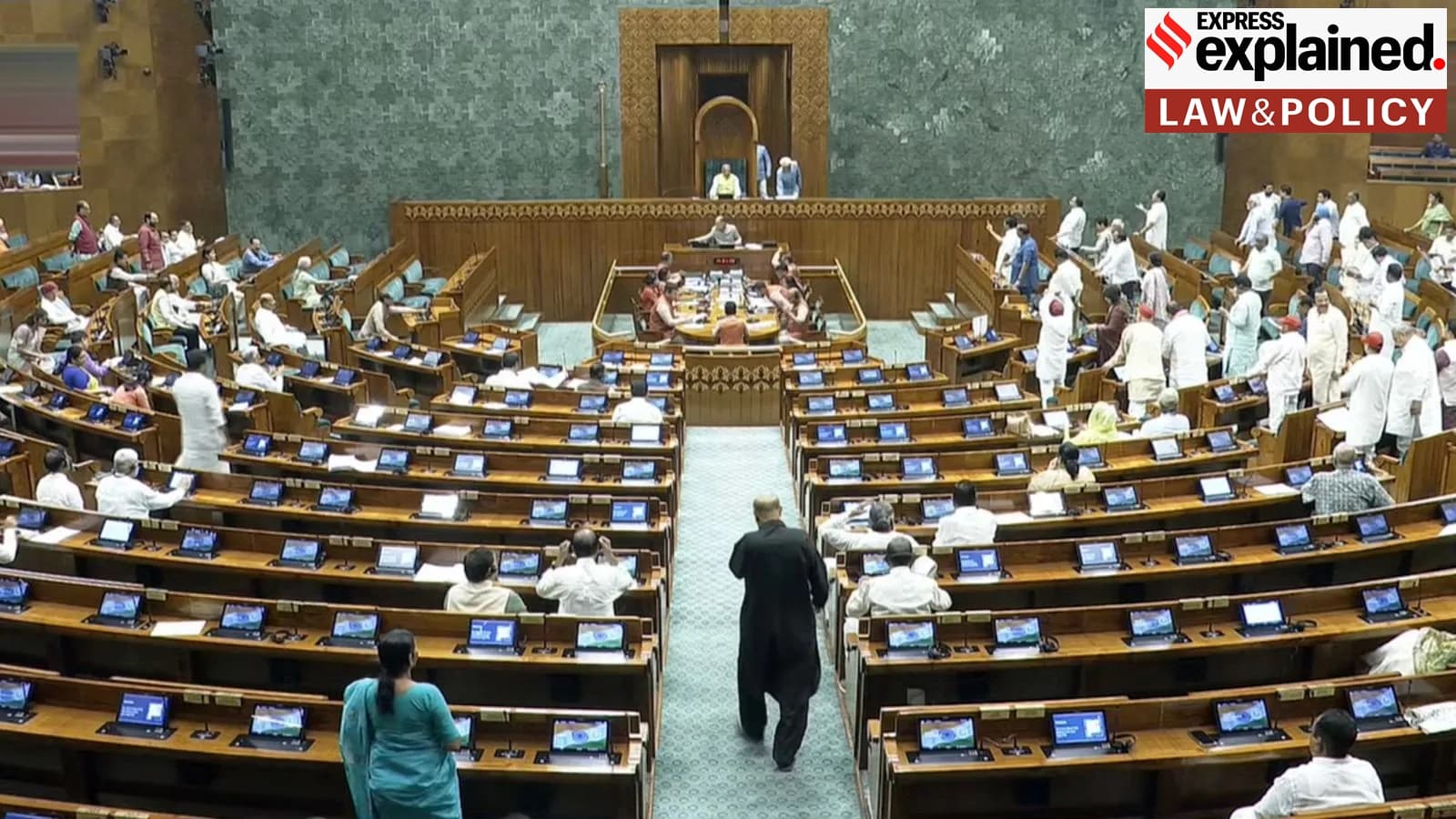
New DelhiAug 6, 2026 07:15 AM IST In 2018, a key dissenting opinion in a Supreme Court ruling had described this route as a “fraud on the Constitution.” (File Photo)The Rajya Sabha Wednesday passed the Supreme Court (Number of Judges) Amendment Bill, 2026, which seeks to increase the sanctioned strength of Supreme Court judges from 34 to 38 including the Chief Justice of India. The Bill, which cleared Lok Sabha Monday, was passed as a money Bill, a route it had also taken in 2019 when the Supreme Court strength was raised to 34. In 2018, a key dissenting opinion in a Supreme Court ruling had described this route as a “fraud on the Constitution.”The Statement of Objects and Reasons of the Bill cites the expenditure involved in creating four additional posts of judges, along with staff, residences and security. “This will increase the expenditure on account of pay and allowances on creation of four additional posts of Judges in the Supreme Court along with required staff. The Judges will also be entitled to the use of a rent-free official residence. Each Judge will have to be provided with personal staff at residence and office. Expenditure would also be incurred in connection with the deployment of security for Judges. The estimated recurring expenditure on salaries of four Judges and their staff, conveyance and other miscellaneous expenses would be rupees 10,56,81,648 per annum and non-recurring expenditure towards car and furnishing of official residence and other miscellaneous expenses will be approximately rupees 3,47,36,000. Thus, the total expenditure on creation of additional four posts of Judges in the Supreme Court of India will be of rupees 14,04,17,648 approximately,” the Bill stated. The issue of whether a Bill can be certified as a money Bill is a key question pending for consideration by a seven-judge Constitution Bench. In 2023, the then Chief Justice of India D Y Chandrachud had said that the case would be listed for hearing soon. However, the issue is yet to be taken up. Article 110 of the Constitution deals with money Bills. A money Bill is a Bill that, in the opinion of the Speaker of the Lok Sabha, deals with taxation, appropriation of public funds – the Consolidated Fund of India or the Contingency Fund of India. A money Bill can only be introduced in the Lok Sabha, and the Speaker categorising a Bill as a “money Bill” means that it need not be passed by the Rajya Sabha. The Union Budget, for example, is a money Bill. Article 110(1) (g) adds that “any matter incidental to any of the matters specified in Articles 110(1)(a)-(f)” can also be a money Bill. This additional clause has been the basis for the Modi government to pass key legislations as money Bills in its previous terms. The Opposition had argued then that this was done only because the government did not have the numbers to get these legislations cleared in the Rajya Sabha.Story continues below this ad The constitutionality of three major laws, including the Prevention of Money Laundering Act, are yet to be examined by the larger bench in the light of whether these laws qualify to be passed as a money Bill. The other two are the Aadhaar Act and the 2017 amendments altering service conditions of Tribunals. While the PMLA and Aadhaar Act were substantially upheld by the Court, the Supreme Court struck down the tribunal amendments as unconstitutional. However, in both rulings the issue of money Bill was left to a larger bench to decide. Justice D Y Chandrachud, the lone dissenter in the Aadhaar ruling of 2018, criticised the government for passing the Aadhaar Act as a money Bill. He had called it a “fraud on the Constitution” and “subterfuge”. The government had argued that since the subsidies distributed through Aadhaar flow from the Consolidated Fund of India, the law is validly categorised as a money Bill. Later, a five-judge bench of the Supreme Court in 2019 struck down the law as unconstitutional for interfering with judicial indepe
Soumya Ranjan Swain was beaten to death after the motorcycle he was riding pillion collided with a scooter in the Balianta area near the state capital. (File photo)The Crime Branch of Odisha Police on Wednesday named 11 people in the preliminary chargesheet in the lynching of a 32-year-old railway police constable on the outskirts of Bhubaneswar on May 7. The 767-page chargesheet was filed before a local court in Bhubaneswar under Sections 103(1) (murder), 191(2), 191(3) (rioting), 189(4), 190 (unlawful assembly), and 127(2) (wrongful confinement) of the Bharatiya Nyaya Sanhita.“It has been based on substantial oral, documentary, scientific, and other corroborative evidence collected during the course of the investigation,” one officer from the Crime Branch said. Twenty people were arrested in the case, with a Crime Branch officer saying there wasn’t sufficient evidence against the remaining nine accused to establish their active participation in the assault. But the Crime Branch said the investigation continued. “Efforts are underway to apprehend the remaining identified persons involved in the incident and collect further evidence,” read an official statement. “Supplementary chargesheets, if warranted by further evidence, will be submitted before the competent court in accordance with law.” The GRP constable — Soumya Ranjan Swain — was beaten to death after the motorcycle he was riding pillion collided with a scooter in the Balianta area near the state capital. The two women riding the scooter accused Swain of trying to sexually assault them, prompting a mob to tie him to a pole and brutally assault him. The constable’s family, however, alleged it was a “pre-planned murder” and demanded an impartial investigation. Family members also allegedly scuffled with the police outside Balianta Police Station. Sujit Bisoyi is a Special Correspondent with the Indian Express and covers Odisha. His interests are in politics, policy and people’s stories. He tweets at @bisoyisujit87 ... Read More Tags: mob lynching Odisha
New DelhiUpdated: Jul 30, 2026 05:11 AM IST People hold placards during a joint protest rally over the NEET paper leak issue, in Kolkata on July 24, 2026. (Photo: PTI/Enhanced using AI) Probing the NEET-UG 2026 paper leak case, the CBI has uncovered two messaging app trails — a Maharashtra-Rajasthan-Haryana route and a Maharashtra-Rajasthan-Kerala pathway — through which the question papers travelled. Investigators are calling it a “countrywide conspiracy” involving subject experts, coaching institute operators and intermediaries, The Indian Express has learnt.In a chargesheet filed Tuesday in a Delhi fast-track court, the CBI has named 13 accused including NTA biology expert Manisha Mandhare, NTA chemistry expert Pralhad Vithalrao Kulkarni, NTA physics expert Manisha Sanjay Havaldar. The others named are Shivraj Raghunath Motegoankar, owner of Renukai Career Centre Coaching Institute in Latur; Tejas Harshadkumar Shah, COO at APMA Coaching Institute in Pune, and eight alleged intermediaries: Manisha Sanjay Waghmare, Dhananjay Nivrutti Lokhande, Shubham Madhukar Khairnar, Yash Yadav, Mangilal Biwal, Vikash Biwal, Dinesh Biwal and Dr Manoj Bhagwanrao Shirure. Investigators have focused on Motegoankar whose coaching institute has branches in Pune, Nashik, Chhatrapati Sambhajinagar, Nanded, Solapur, Kolhapur, Akola and other parts of Maharashtra. “Investigators have alleged that Motegoankar was an active member of the organised network that procured and circulated NEET (UG) 2026 question papers. He allegedly arranged procurement of chemistry questions by paying Rs 5 lakh, routed through co-accused Dr Manoj Bhagwanrao Shirure, reportedly for the benefit of his son and students enrolled at RCC,” sources said. A phone found during a search at Motegoankar’s house allegedly led to recovery of leaked questions, and notes of chemistry questions in his handwriting. “At least 36 images, including five duplicates, containing 132 handwritten chemistry questions were recovered from his mobile phone. The metadata allegedly showed that the images were captured on a Samsung Fold7 on April 23 this year, around 10 days before the examination. Prima facie, investigators found that approximately 111 of these questions matched questions from the NTA master sets for NEET (UG) 2026,” sources said.Story continues below this ad The CBI chargesheet, it is learnt, also details the alleged role of Dr Shirure, a medical practitioner running a private hospital in Latur. Investigators have said Shirure facilitated the procurement and onward dissemination of leaked chemistry questions at the instance of Kulkarni, also an accused. “Shirure’s hospital premises were allegedly used as the venue where Motegoankar’s son accessed the chemistry question paper in the third week of April, before the NEET examination. Shirure also referred two other doctors whose children procured the question paper from Kulkarni, each allegedly paying Rs 3 lakh,” sources said. Kulkarni was said to have also disclosed that he first came in contact with co-accused Dhananjay Lokhande in 2021 and conspired with Manisha Waghmare in procuring and circulating the leaked papers. “The paper reached the beneficiaries through Kulkarni’s network. A payment of Rs 5 lakh made for the leaked paper was traced to Motegoankar’s wife and was allegedly recovered from the residence of a Shirure family member,” sources said.Story continues below this ad The CBI has found that the first formal indication of the alleged NEET paper leak came not from an investigating agency, but from a May 7 email sent by a chemistry teacher, Shashikant Suthar, in Rajasthan’s Sikar, to the NTA, detailing how solved questions were allegedly circulating hours before the examination. Suthar wrote that on the evening of May 3, shortly after the NEET examination ended at 6 pm, his landlord approached him with two PDF files containing question papers and asked him to compare them with the actual NEET paper. Suthar found


Discussion (0)