
Loading dispatches...
← Return to NewsroomPolitics
SC proposes special courts to exclusively hear CBI, NIA cases on Manipur ethnic violence
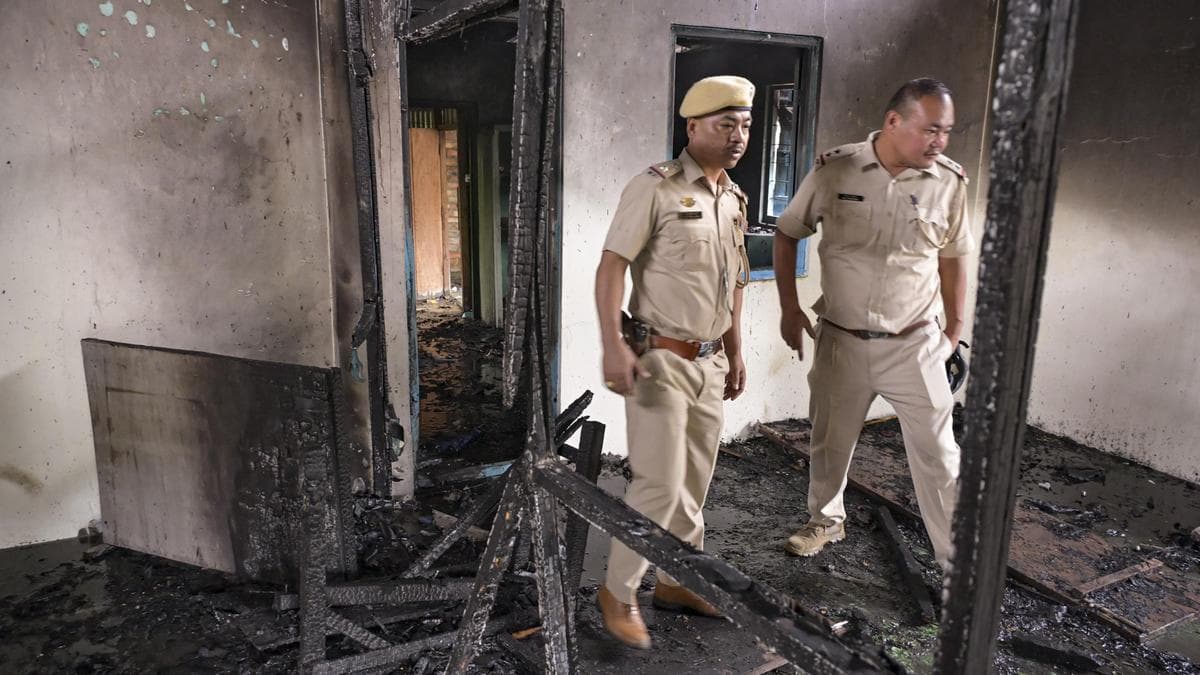
Police personnel take stock of a house, belonging to the Meitei community members, after it was set ablaze by miscreant in Imphal West district, Manipur. Representational file image. | A Bench headed by Chief Justice of India Surya Kant made a request to the Chief Justice of the Gauhati High Court to constitute Special Courts, separately to hear CBI and NIA cases linked to the 2023 Manipur violence on a day-to-day basis.The court sought a status report on this aspect by the next date of hearing.Additional Solicitor General Aishwarya Bhati submitted from the latest status report that out of the 31 cases investigated by the CBI, final reports were filed in 27, including 22 charge sheets and five closure reports. Four cases remain under investigation.Ms. Bhati said cognisance was already taken in 20 of the 22 chargesheeted cases. The law officer said only one of the 22 cases was triable by a Magistrate, while the remaining involved serious offences to be tried by a Sessions court.The Supreme Court had previously transferred the CBI cases from Manipur to Gauhati.The ASG said NIA had investigated a total 30 cases, of which chargesheets were filed in 15 while the remaining 15 were still under investigation.Earlier hearings had seen the apex court insist on status reports on the investigation detailing evidence to “bring home the guilt” of persons accused of various heinous offences, including the sexual assault and gangrape of women during the sectarian violence that rocked the northeastern State.The CBI’s status report had revealed that out of 904 witnesses in the CBI cases, 891 were yet to be examined. The request to have exclusive Special Courts for the Manipur cases was prompted by the sheer number of witnesses waiting to testify.“Having regard to the total number of witnesses proposed to be examined, we request the Chief Justice of the Gauhati High Court to consider the feasibility of allowing the CBI/NIA court to exclusively deal with Manipur-related cases. Other cases be transferred to some other court,” the Court said.Appearing one of the petitioners, senior advocate Colin Gonsalves lamented the lack of progress in the criminal trials despite the fact that heinous crimes were committed on women and ordinary people and caught on camera.Ms. Bhati objected to submissions made by Mr. Gonsalves, saying a mechanism for investigation and trial had already been spelt out by the Supreme Court, which has been hearing the Manipur violence cases since 2023.“To raise these issues again is like going back to the initial days of the writ petition. Legal aid counsel are there. To raise the whole issue again when the Supreme Court has been seized of this matter for the last three years and has passed a series of directions is unnecessary,” Ms. Bhati submitted. Published - August 10, 2026 01:22 pm IST
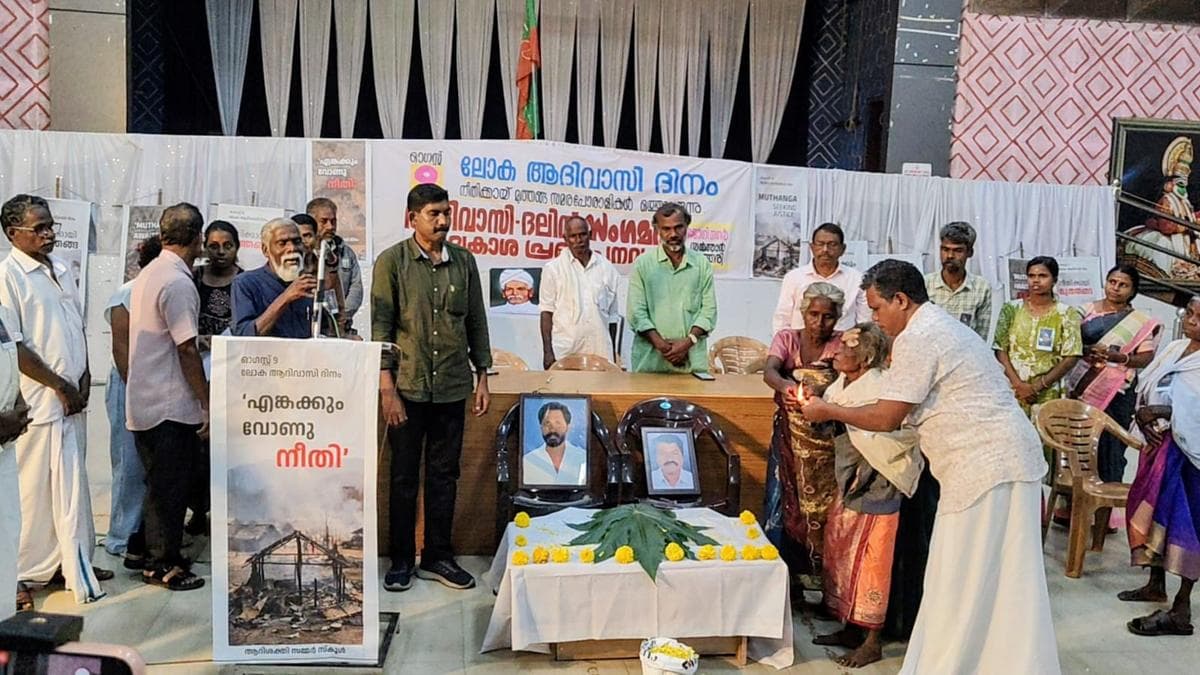
Bommi Amma, the oldest surviving participant in the Muthanga agitation, inaugurating the Adivasi-Dalit gathering at Sulthan Bathery in Wayanad on August 9. | The gathering was inaugurated by Bommi Amma of Cheeral, the oldest surviving participant in the Muthanga struggle.Several people who participated in the land stir shared their experiences at the meeting, organised by the Adivasi Gothra Mahasabha (AGMS) and the Ambedkarite Democratic Front (ADF). In the evening, a cultural procession was taken out through the town under the leadership of the Adi Shakti Summer School, followed by a public meeting at the Municipal Town Hall. It was inaugurated by ADF State working chairperson K. Ambujakshan.AGMS general secretary P.G. Janardhanan made the Declaration of Rights. The resolution demanded a fair investigation into Jogi’s death, implementation of the direction issued by the National Human Rights Commission calling for a comprehensive inquiry into the human rights violations during the Muthanga agitation and adequate compensation for all those affected by the violence.Sivan Yogi, son of Jogi, and others attended.The Muthanga land agitation has returned to the limelight after the Kalpetta Principal Sessions Court, on July 31, acquitted all the accused who stood trial, including social activist M. Geethanandan, in the case relating to the murder of police constable K.V. Vinod. However, the court convicted Geethanandan and three others on other charges related to the case and sentenced each to five years of rigorous imprisonment. Published - August 09, 2026 09:20 pm IST
K.A. Ratheesh is the first accused in the CBI case concerning the alleged misappropriation in the import of raw cashew by the KSCDC between 2006 and 2015. The Kerala High Court has directed the Central Bureau of Investigation (CBI) and the State government to respond to the allegations raised by K.M. Shajahan, former Additional Private Secretary to the late former Chief Minister, V.S. Achuthananthan, against K.A. Ratheesh, former managing director of the Kerala State Cashew Development Corporation and one of the accused in the ₹600-crore cashew import scam.Mr. Shajahan, through a petition, had alleged that appointing a person who was chargesheeted by the CBI, and for whom prosecution sanction was granted in a major corruption case, to key posts in the government violated the established norms of public integrity and transparency.He sought directions to the Vigilance Director and CBI Superintendent to dispose of his representations against the continued occupation of Mr. Ratheesh in key official posts and to direct the State to ensure that he is not appointed in important government posts, considering the ongoing corruption case against him.Posts currently heldJustice A Badharudeen noted that Mr. Ratheesh currently holds the positions of Secretary, Kerala Khadi and Village Industries Board; Managing Director, RUTRONIX (Kerala State Rural Women’s Electronics Industrial Co-operative Federation Ltd); and Chief Executive Officer, Kerala Khadi Workers’ Welfare Fund Board.The petitioner pointed out that Chief Minister V.D. Satheesan is the chairman of the Kerala Khadi and Village Industries Board, and that Mr. Ratheesh reports directly to him.Mr. Shajahan further alleged that if Mr. Ratheesh was allowed to continue in his posts during Onam, the State government would lose another ₹300 crore as the Khadi Board was allegedly purchasing substandard materials from unauthorised traders who were not shortlisted by the Central Khadi Board.Mr. Ratheesh is the first accused in the CBI case concerning the alleged misappropriation in the import of raw cashew by the KSCDC between 2006 and 2015, along with R. Chandrasekharan, the former chairman of the corporation. They are accused of dishonestly awarding tenders to a private supplier to purchase cashews at inflated rates, foregoing store purchase rules. Published - July 30, 2026 10:11 pm IST

The story so far: The Kerala High Court has directed the State government to decide within three months on a demand for paid menstrual leave for women conductors of the Kerala State Road Transport Corporation (KSRTC).The Court said the government may consider introducing an appropriate policy providing menstrual leave to women conductors, subject to suitable safeguards. It observed that a limited provision for menstrual leave could promote employee welfare, reduce presenteeism, improve productivity, and foster a more inclusive workplace.The order came on a writ petition filed by three women conductors and Forum for Justice, an organisation working for the welfare of KSRTC employees, seeking two days of paid menstrual leave every month.Additionally, on Tuesday (July 28, 2026), the Madurai Bench of the Madras High Court directed the Tamil Nadu government to file an interim report on the constitution of a committee and the progress made in framing rules for a comprehensive paid menstrual leave policy for women government employees, along with advisory guidelines for private establishments.Which States in India have menstrual leave policies, and how do these policies differ?Only five States have introduced menstrual leave policies, and these vary in terms of coverage and the number of leave days permitted.Bihar was the first State to introduce menstrual leave, allowing women government employees two days of paid leave every month, amounting to 24 days annually.Odisha provides one day of menstrual leave every month to women government employees up to the age of 55. The leave may be availed of on either the first or second day of the menstrual cycle, amounting to 12 days a year.Karnataka became the latest State to introduce a menstrual leave policy in 2025, extending one day of paid leave every month to employees in both the government and private sectors.Kerala provides up to three days of menstrual leave every month for higher education and university students by reducing the mandatory attendance requirement from 75% to 73%.Sikkim has introduced a menstrual leave policy for employees of the Sikkim High Court, allowing two to three days of leave every month.Is there a national law or policy governing menstrual leave in India?India does not have a central law mandating menstrual leave for women employees or students. Several Private Members' Bills have sought to introduce such a framework, but none has been enacted. In 2017, Arunachal Pradesh MP Ninong Ering introduced the Menstruation Benefits Bill, 2017, proposing paid menstrual leave and workplace facilities for menstruating women. The Bill was reintroduced in 2022 but did not progress. In 2018, Congress MP Shashi Tharoor introduced the Women's Sexual, Reproductive and Menstrual Rights Bill, which sought, among other measures, to ensure free access to sanitary pads at public institutions. More recently, Congress MP Hibi Eden introduced the Right of Women to Menstrual Leave and Free Access to Menstrual Health Products Bill, 2022. The Bill proposes three days of paid menstrual leave every month for women and transwomen, extends similar benefits to female students, and seeks to provide free access to menstrual health products. It cites studies indicating that nearly 40% of girls miss school during menstruation, while around 65% report that their periods affect their participation in classes and examinations because of pain, anxiety, stigma and inadequate facilities.What have courts said about menstrual leave?In Shailendra Mani Tripathi vs Union of India (2023), the Supreme Court declined to direct the Centre to frame a nationwide menstrual leave policy, holding that the issue falls within the domain of public policy. The Court asked the petitioner to approach the Ministry of Women and Child Development instead.The Court also observed that while female labour force participation had increased significantly, many women, particularly those in the informal sector, could not afford t
The Kerala High Court has held that a woman demanding a separate residence away from her husband’s family without sufficient reason, amounted to an act of cruelty.A Division Bench of Justice Satish Ninan and Justice P. Krishna Kumar said this while considering an appeal filed by the husband who challenged a family court order that rejected his petition for divorce. The wife returned to Kerala from Dubai where she stayed with her husband’s family, on her seventh month of pregnancy. She did not return to his house even after the birth of their child, he submitted.She also blocked his calls and that all communications were through her brother. Moreover, she put the condition that they live separately from his parents. The other acts of ‘cruelty’ included conduct of the child’s naming and feeding ceremonies without consulting him.The wife submitted that she had no serious issues with her husband, except for her mother-in-law’s ‘interference’ in their marital relationship.Stating that the husband was entitled to divorce, the court took the view that she was evasive in answering questions, while her husband’s version was more believable. Her demand for separate residence was without any valid reason, the court observed, adding that she deserted her husband without any justifiable cause. Published - August 06, 2026 10:21 pm IST

The Kerala High Court has directed the State and Union governments to file their statements on the delay and pending issues in the establishment and implementation of exclusive courts for the trial of cases registered under the Narcotic Drugs and Psychotropic Substances (NDPS) Act.The court was informed by the District Judiciary that there were a total of 8,422 NDPS cases pending in the State. Ernakulam ranked first with 1,492 cases, followed by Thiruvananthapuram (1,245) and Palakkad (1,055). The Division Bench of Chief Justice Soumen Sen and Justice C. Jayachandran expressed concern over the undue delay by the State in establishing the special courts, despite several directions from January 2026. The court orally questioned the State on why it was seeking additional time, noting that it had already been granted multiple extensions in the matter despite assuring the court that the NDPS courts would be operational by July 30. The court also warned that it would initiate contempt proceedings against the official responsible for delaying the process.The court had earlier directed the State to establish fully equipped NDPS courts in Thiruvananthapuram, Ernakulam, Thrissur, Palakkad and Manjeri by January. Subsequently, the State sanctioned the establishment of these courts. The court later directed the State to consider availing financial assistance under the Scheme for Special Assistance to States for Capital Investment 2025-2026 by appraoching the Department of Expenditure under the Ministry of Finance for funds to set up the Special Courts. Published - August 01, 2026 12:51 am IST
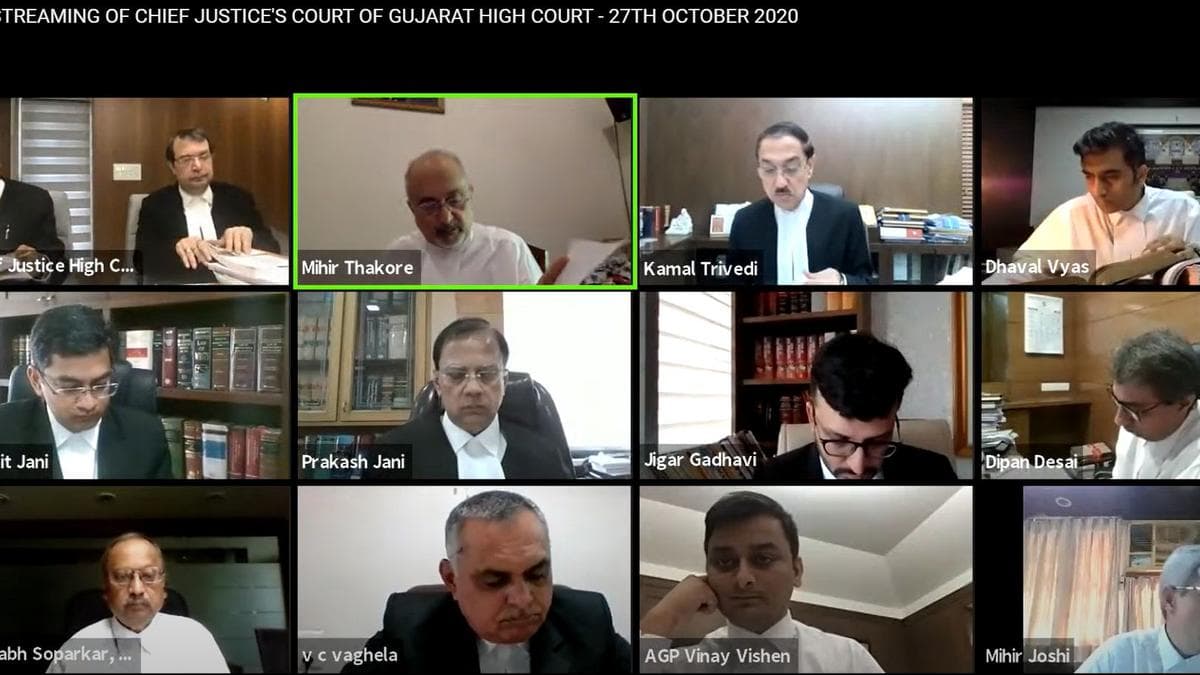
File photo of a live stream on Gujarat High Court proceeding. Two activists have opposed a Supreme Court order barring the circulation of livestreamed proceedings on social media and digital platforms as a reversal of the ‘principle of open justice’ upheld by the apex court itself in a plethora of judgmentsThe application filed by activists Anjali Bhardwaj and Amrita Johri, represented by advocates Prashant Bhushan and Cheryl D’Souza, said the July 24 order veers away from the principle of open courts, which is a constitutional guarantee under Article 21 of fair, just and reasonable procedure.“Open access to justice ensures that the judicial process remains answerable to the public and guards against arbitrariness,” the application argued.The intervening application of the activists would be put forth for consideration on July 31 (Friday) before a Bench headed by Chief Justice of India Surya Kant which had passed the interim order in a petition filed by Harshita Grover. Also Read : Is the Supreme Court closing the gates on judicial transparency?The order had prohibited the extraction, modification, dissemination, posting, reposting, uploading, recording, or monetisation of audio-video recordings of judicial proceedings on any social media or digital platform without prior permission of the Secretary General of the Supreme Court and Registrar General of the State High Courts.The apex court had reasoned that the unregulated circulation of livestreamed court proceedings made judges, advocates, and litigants vulnerable to trolling and reputational harm while eroding public confidence in the judicial system.‘Provide authorised recordings to prevent misuse’The applicant-activists said the concern of intentional misuse/misdepiction sought to be addressed could be more precisely met by providing an authorised live-stream and audio-video recording of court proceedings and by defining the terms and conditions of re-use, sharing and dissemination of the recordings and livestream, rather than restricting these activities based on the nature of the user.“The safeguards should be such that they protect fair and accurate representation, including sharing and dissemination of proceedings that are already open to public view,” the application said.Arguing that the issue warranted wider engagement and inputs from various stakeholders, the application said the July 24 order has placed over-reaching restrictions on the sharing and dissemination of audio-visual recording of court proceedings “without drawing a distinction between fair and accurate representation of the proceedings done in good faith versus malicious and malafide distortion of the audio-visual recordings including through morphed clips, misleading captions, misdepiction”.“By requiring prior permission from the Secretary General or the Registrar General for the extraction, dissemination, even re-posting of such recordings, the order converts a right flowing from the openness of the courtroom into something contingent on administrative discretion,” it said. Published - July 31, 2026 10:27 am IST

Two endangered tribal languages spoken by the Mavila and Malaveduvan communities in north Kerala are being documented in separate dictionaries to preserve their linguistic heritage before they disappear.The dictionaries are being jointly prepared by writer and Sir Syed College faculty member Dr. Mohanan V.T.V. and tribal writer O.K. Prabhakaran Vattamathatta.The project records the vocabulary, oral traditions and cultural identity of communities with a combined population of around 60,000, spread across the Kannur and Kasaragod districts. Dr. Mohanan V.T.V, writer and faculty member of Sir Syed College, and tribal writer O.K. Prabhakaran Vattamthatta | Together, the volumes will document more than 5,000 words collected through extensive fieldwork in tribal settlements.Dr. Mohanan said the initiative was driven entirely by a personal commitment to preserving rapidly disappearing languages.“This is entirely an effort born out of personal interest. We realised these languages are slowly vanishing, and unless they are documented now, future generations may lose them forever,” he said.The project builds on Dr. Mohanan’s earlier Malayala Bhashabheda Nighandu (Malayalam dialect dictionary), published by the Kerala Bhasha Institute, while Mr. Prabhakaran’s research from Iyyama Jovv traces the history of the tribal communities’ struggle for rights.Language lossAccording to Dr. Mohanan, migration, formal education and increasing interaction with mainstream society have accelerated language loss, particularly among Mavila families who migrated from Kasaragod to Kannur. Many have already lost their ability to speak their mother tongue.“During fieldwork, an 84-year-old man residing in Naduvil in Kannur told me that his father knew the language, but he himself could no longer speak it. That shows how rapidly it has disappeared,” he said.The researchers faced significant challenges in documenting the languages because community members were reluctant to trust outsiders. Dr. Mohanan said he initially visited settlements on his own, but his efforts were met with suspicion, despite repeated visits and long stays.“No matter how much effort I put in, they remained hesitant. Eventually, I realised that this approach would not succeed,” he said.Documenting the languageHe later identified a trusted member from within the community to continue the documentation work, which greatly improved acceptance. However, he observed that some members still stayed away from community meetings. He said it took nearly three years to establish an effective process for documenting the language.Dr. Mohanan said language shift begins early, with children adopting Malayalam, Kannada, and other dominant languages after joining schools or moving outside their settlements. Adults working in offices or across the Kerala-Karnataka border also gradually abandon their native language, accelerating its decline.He criticised the institutions created for the welfare of the communities for failing to provide adequate employment opportunities to tribal members.“An institution meant for their development does not even employ people from the community,” he said, describing it as a major setback to language preservation. Fluent speakers are now found mainly in tribal settlements around Neeleswaram and nearby areas of Kasaragod district.Tulu, Kannada and Malayalam influencesThe Mavila language, meaning “the language of those who produce food”, is also known in some places as Markoli Tulu, while the Malaveduvan community speaks the Malaveduvan language. Both languages show strong influences of Tulu and Kannada, with Malayalam words entering later through migration and education.The dictionaries also reveal distinctive linguistic and cultural features. The communities traditionally have no sepa
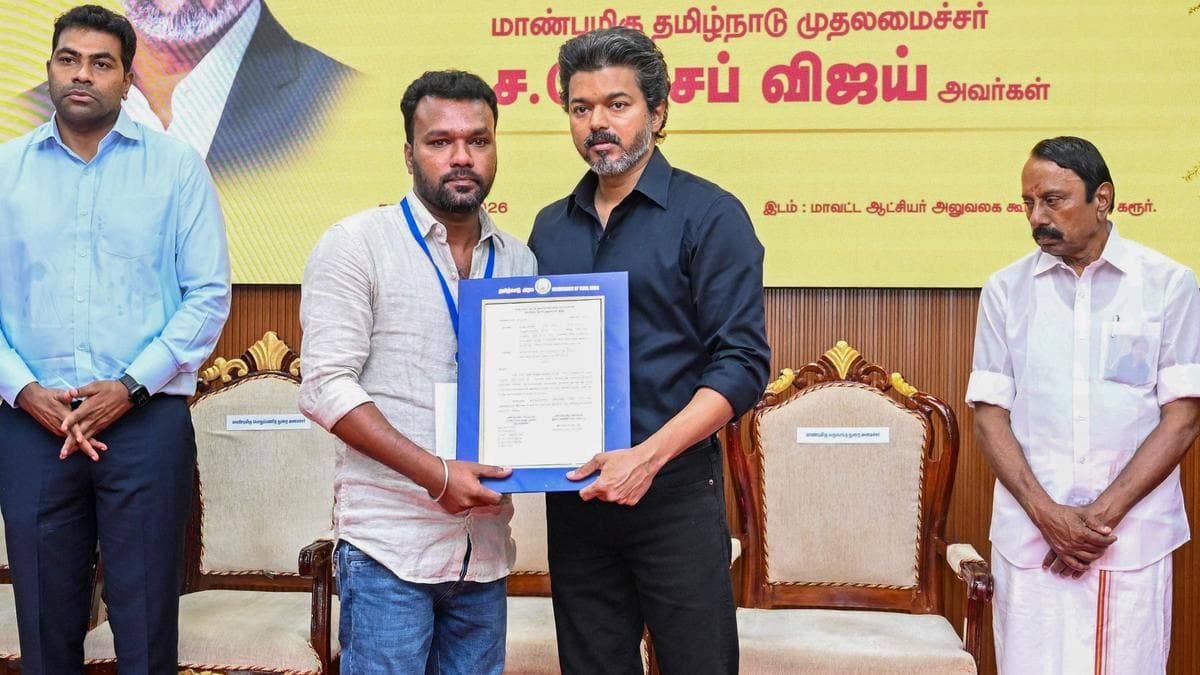
Tamil Nadu Chief Minister C. Joseph Vijay visited Karur earlier this month. | The Madurai Bench of the High Court had quashed the government orders granting jobs to the victims’ family members on compassionate grounds on July 27.The State had argued in the court that the appointments were meant as a humane gesture.But the court concluded that specific guidelines covered the field of compassionate appointments, and they cannot be cast aside by the State government. The High Court had warned that the government’s action, if condoned, may run the risk of opening the floodgates.Waiting list overlookedThe High Court had pointed out that there were wait-lists in every government department for appointments on compassionate grounds.Employment has to be granted only in accordance with seniority and not with reference to the immediate nature of relief to be granted, the Division Bench of the High Court had noted.The High Court had reasoned that it would be in violation of the fundamental rights of equality and due of process of law, enshrined in Article 14 and 21 of the Constitution, respectively, to overlook those in the waiting list in a bid to bring relief to the family members of the Karur stampede victims.The State had contended that these jobs were given in exercise of its executive powers under Article 162 of the Constitution. But the High Court had responded that any exercise of executive authority of power had to be within the confines of the Constitution.The stampede occurred in September last year during a TVK roadshow addressed by now Tamil Nadu Chief Minister Joseph Vijay, who is also the party president. Published - July 31, 2026 07:26 am IST
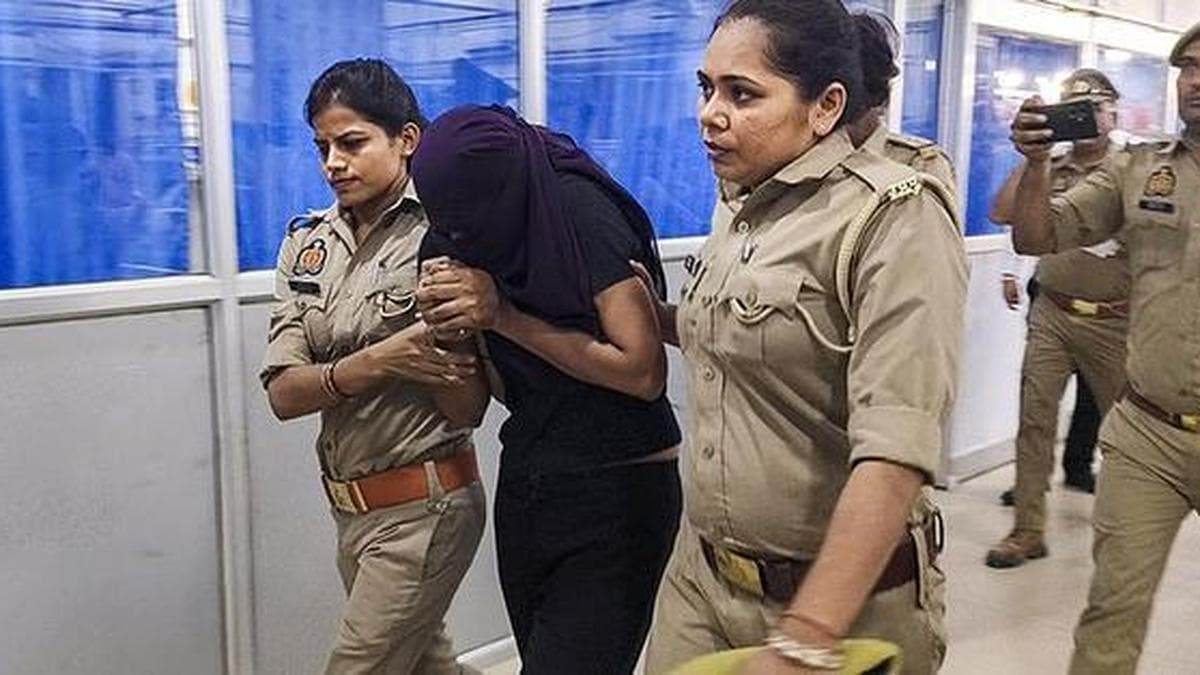
Sonam Raghuvanshi, the Indore woman accused of plotting her husband’s murder, being brought in for medical examination at a hospital, in Ghazipur. File | The accused, a resident of Indore in Madhya Pradesh, was remanded to judicial custody on Tuesday (July 28, 2026), East Khasi Hills district Superintendent of Police Vivek Syiem said.The Supreme Court on July 23 set aside the bail granted to Sonam and directed her to surrender within three weeks. She was arrested in June last year in connection with the killing of her businessman husband Raja Raghuvanshi.The couple had gone missing while vacationing in Meghalaya's Sohra area on May 23 last year. Subsequently, Raja's body was found in a deep gorge on June 2, 2025. Police have alleged that Sonam conspired with her alleged lover, Raj Kushwaha, and hired contract killers to murder Raja during the honeymoon for financial gain.On June 29, the Meghalaya High Court upheld a trial court order granting bail to the accused. The High Court dismissed a petition filed by the State seeking cancellation of the bail granted by the trial court on April 27.While holding that continued enlargement at this stage might hinder the ongoing trial, a Bench of Supreme Court Justices M.M. Sundresh and P.B. Varale allowed the plea filed by the Meghalaya government challenging the bail granted to Sonam. The Supreme Court said that in the event of the trial not proceeding and concluding within six months, Sonam is at liberty to file a fresh bail application. Published - July 30, 2026 03:48 pm IST


Discussion (0)