
Loading dispatches...
← Return to Newsroomgeneral
Supreme Court stay on Balaji arrest puts Vijay’s anti-corruption drive to its first legal test
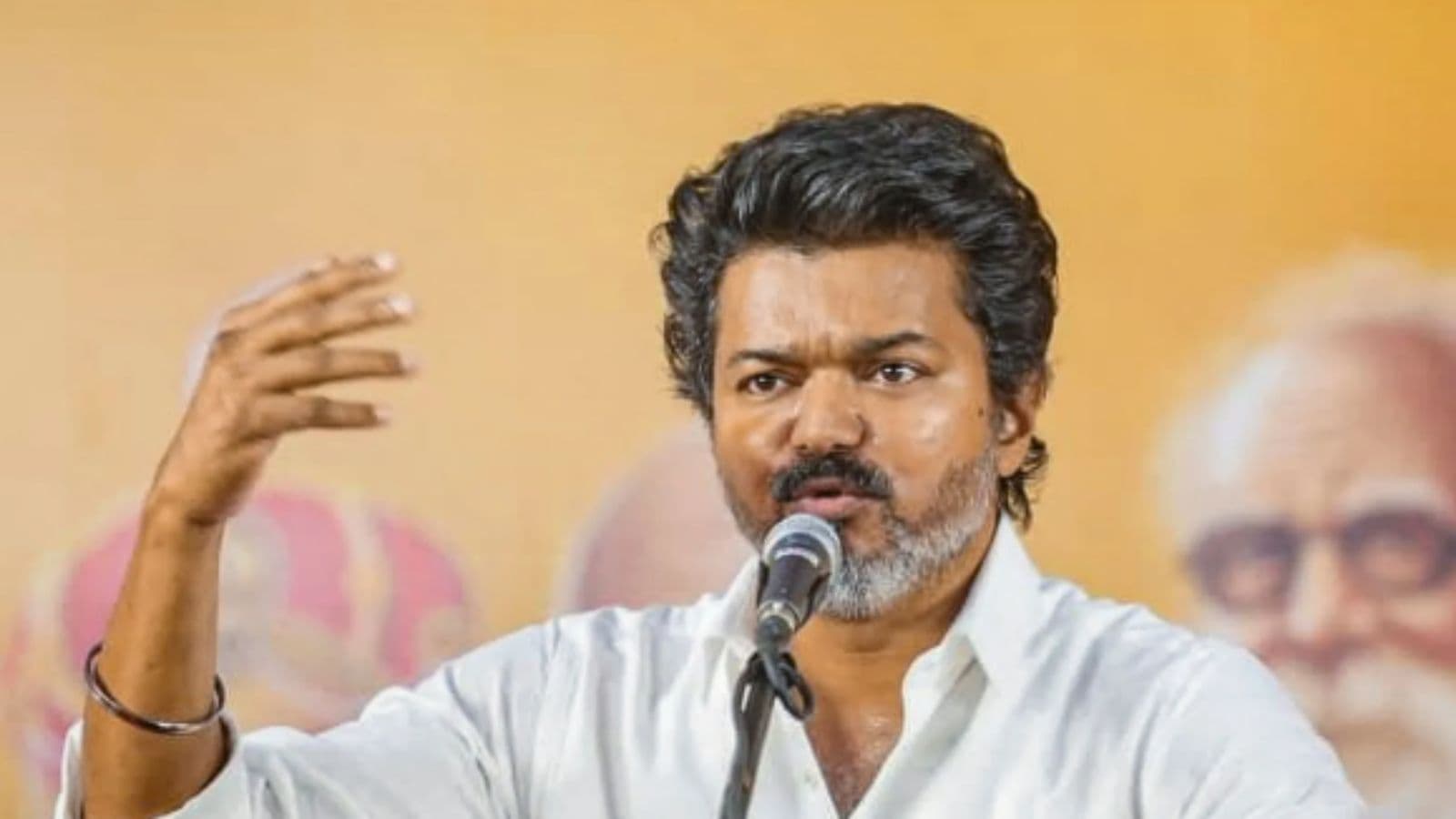
First published on: Aug 1, 2026 at 06:53 AM IST The Supreme Court’s order staying the arrest of former Tamil Nadu minister and DMK leader V Senthil Balaji in the TASMAC corruption case has become more than a legal reprieve for one politician. It marks the first significant judicial checkpoint in what has emerged as a defining political project of Chief Minister C Joseph Vijay’s young administration: convincing Tamil Nadu that the era of political impunity is over. For nearly three months, vigilance investigations have steadily dominated the state’s political conversation. Former DMK ministers E V Velu and Balaji have found themselves at the centre of fresh corruption investigations. An FIR has also been registered against senior DMK leader K N Nehru. DMK MLA Markandeyan remains in jail in another case, while another legislator, Anitha Radhakrishnan, has also faced arrest. Political circles continue to speculate about possible future action against other former ministers, including Sekar Babu and S S Sivasankar, though no formal action has yet materialised.The message has been unmistakable: The new government wants to be seen pursuing corruption allegations that, it argues, accumulated under the previous regime. That political narrative briefly encountered its strongest institutional counterweight on Friday. While the Madras High Court had only a day earlier refused anticipatory bail to Balaji, observing that custodial interrogation appeared necessary given the seriousness of allegations involving losses running into crores of rupees, the Supreme Court took a different interim view. The Bench headed by Chief Justice Surya Kant stayed Balaji’s arrest, directed him to surrender his passport and observed that, following the change in government, there appeared little reason to fear he could influence the investigation. It also recorded assurances from senior counsel appearing for Balaji that he would cooperate fully with investigators. The investigation itself is ongoing. Political observers had, for weeks, speculated that Balaji’s arrest might coincide with Vijay’s emotionally charged visit to Karur, where he met families affected by last year’s stampede. No such arrest came then. Instead, the legal contest shifted quietly into courtrooms before culminating, at least for now, in the Supreme Court’s protection against arrest. If the courts have reminded the government that investigations must satisfy legal standards, politics has presented another question. Even as vigilance agencies investigate former DMK ministers, the ruling TVK has welcomed into its ranks former AIADMK ministers C Vijayabaskar and M R Vijayabhaskar, both of whom are facing corruption allegations and investigations. DMK leaders have repeatedly mocked what they call a “new washing machine”, arguing that corruption appears negotiable once political loyalties change. TVK leaders reject that charge, maintaining that legal proceedings will continue independently regardless of political affiliation. Whether the public accepts that distinction may become increasingly important. Political to judicial test Inside the ruling party, leaders privately acknowledge that the honeymoon period is ending. Around the government’s first 90 days in office, even some senior functionaries concede that the administration will begin facing sharper scrutiny over every decision rather than continuing to benefit from the momentum of electoral victory. Some privately expect parties such as the CPI(M), VCK and IUML to become increasingly vocal critics, while believing the Congress and the Vaiko’s MDMK may remain relatively more sympathetic. That transition – from Opposition movement to governing administration – is where anti-corruption politics often becomes most difficult. Announcing investigations is politically easier than sustaining them – raids generate headlines, arrests generate television debates, and bail orders generate fresh arguments.
The results marked a significant reversal for the BJP, which had secured a majority in the Devgadh Baria Municipality in 2025. (File Photo) After months of courtroom battles, defections, and political infighting, the Bharatiya Janata Party (BJP) suffered a setback in the high-stakes by-election for six vacant seats in the Devgadh Baria Municipality in Gujarat’s Dahod district, with voters delivering a fractured verdict that has reshaped the civic body’s political equations. The bypoll, held on July 28 after the Gujarat High Court cleared the way for polling in all six seats, saw the BJP manage only two seats, while both the Congress and the Aam Aadmi Party (AAP) won two seats each.The results, declared on Thursday evening, marked a significant reversal for the BJP, which had secured a majority in the Devgadh Baria municipality in February 2025 but failed to consolidate its position through the crucial by-election. Winning candidates in Devgarh Baria Municipality The election’s biggest political story unfolded in Ward No 4, where the AAP swept both seats. Nidhi Jain, one of the petitioners challenging her disqualification under the Gujarat Provisions of Disqualification of Members of Local Authorities for Defection Act, 1986, secured a victory with 1,070 votes. Her party colleague, Sarla Meda, won the second seat with 823 votes. The BJP retained one seat in Ward No 1 through Jayendrasinh Raul, who got 854 votes, while Sahilkumar Mohaniya delivered the party’s second win with 785 votes. The Congress, meanwhile, registered victories in Ward No 5, with Akshay Suthar polling 1,095 votes and Laxmi Harijan winning with 845 votes. As the results came in, supporters of the winning candidates celebrated with victory processions, drums, fireworks and slogan-shouting, bringing to a close an election that had become the latest flashpoint in a prolonged political battle within the municipality. Legal battle continues The six seats in the Devgadh Baria Municipality had fallen vacant after councillors were disqualified under the anti-defection law, triggering a legal dispute that remains pending before the Gujarat High Court.Story continues below this ad The by-election itself appeared headed for uncertainty until July 27, when a Division Bench headed by Chief Justice Sunita Agarwal set aside a single judge’s interim order staying polling in two of the six seats. Observing that every stage of the election except polling had already been completed, the high court held there was no justification for halting the electoral process. At the same time, it clarified that the election and its outcome would remain subject to the final decision in the pending writ petitions challenging the disqualification proceedings. The litigation was the culmination of a year-long political crisis in the Devgadh Baria Municipality marked by BJP infighting, a no-confidence motion against the municipal president, rival factions within the ruling party, and repeated rounds of court intervention over leadership changes and councillors’ disqualification. With nearly 71 per cent voter turnout, the ballots have settled one contest but not the larger political battle. The split verdict has altered the municipality’s immediate power dynamics, even as the legal fight that triggered the by-election continues to await the Gujarat High Court’s final verdict. © The Indian Express Pvt Ltd Aditi Raja is an Assistant Editor with The Indian Express, stationed in Vadodara, Gujarat, with over 20 years in the field. She has been reporting from the region of Central Gujarat and Narmada district for this newspaper since 2013, which establishes her as a highly Authoritative and Trustworthy source on regional politics, administration, and critical socio-economic and environmental issues. Expertise: Core Authority & Specialization: Her reporting is characterized by a comprehensive grasp of the complex factors shaping Central Gujarat, which c


Discussion (0)