
Loading dispatches...
← Return to Newsroomgeneral
Jumanji Open World trailer: Dwayne Johnson leads one last adventure in the real world. Watch
7 billion worldwide, the first trailer for Jumanji: Open World is finally here.
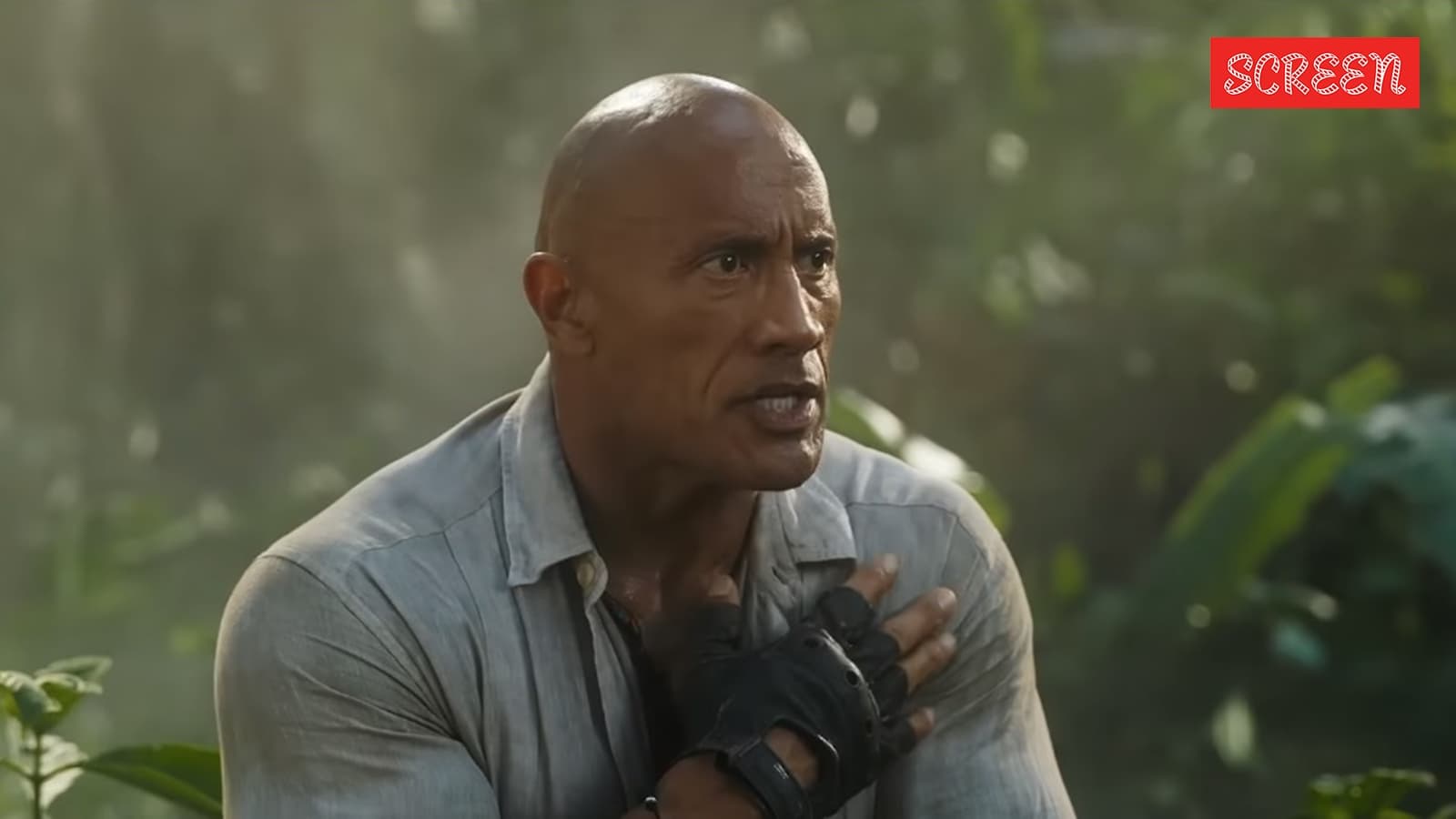
7 billion worldwide, the first trailer for Jumanji: Open World is finally here.
After the global success of Jumanji: Welcome to the Jungle (2017) and Jumanji: The Next Level (2019), which together made more than $1.7 billion worldwide, the first trailer for Jumanji: Open World is finally here. The film marks the third and final instalment in the rebooted Jumanji series, with the core cast, Dwayne Johnson, Jack Black, Kevin Hart and Karen Gillan, returning for yet another adventure. Going by the three-minute trailer, the film promises to retain the franchise’s trademark mix of humour, action and spectacle. This time, however, the game is no longer confined to its console. Instead, the trailer flips the familiar premise on its head as the game’s characters spill into the real world, bringing chaos along with them. Johnson, Black, Hart and Gillan appear as the video game avatars navigating reality for the first time, while Alex Wolff’s character explains the problem: “They’re video game characters, but they’re stuck in demo mode.” WATCH | Jumanji Open World trailer The “demo mode” glitch leads to a series of comic moments, with Johnson’s Dr Smolder Bravestone unexpectedly switching to a Spanish accent and other bizarre malfunctions disrupting the team’s mission. “I’m beginning to suspect that we’re not in Jumanji,” Black’s Professor Shelly Oberon remarks, as the trailer escalates into large-scale action set pieces featuring stampeding ostriches, rhinoceroses and giant lizards loose in the real world. The stakes become clear when Wolff’s character tells the group, “The only way to stop this is to get you guys back into the game.” Directed by Jake Kasdan, Jumanji: Open World also stars Danny DeVito, Lamorne Morris and Nick Jonas. The film continues the modern reinvention of the beloved franchise, which began with the 1995 original starring Robin Williams. Jumanji: Open World is scheduled to release in theatres on December 25, setting up a major holiday box office clash with Dune: Part Three and Avengers: Doomsday.
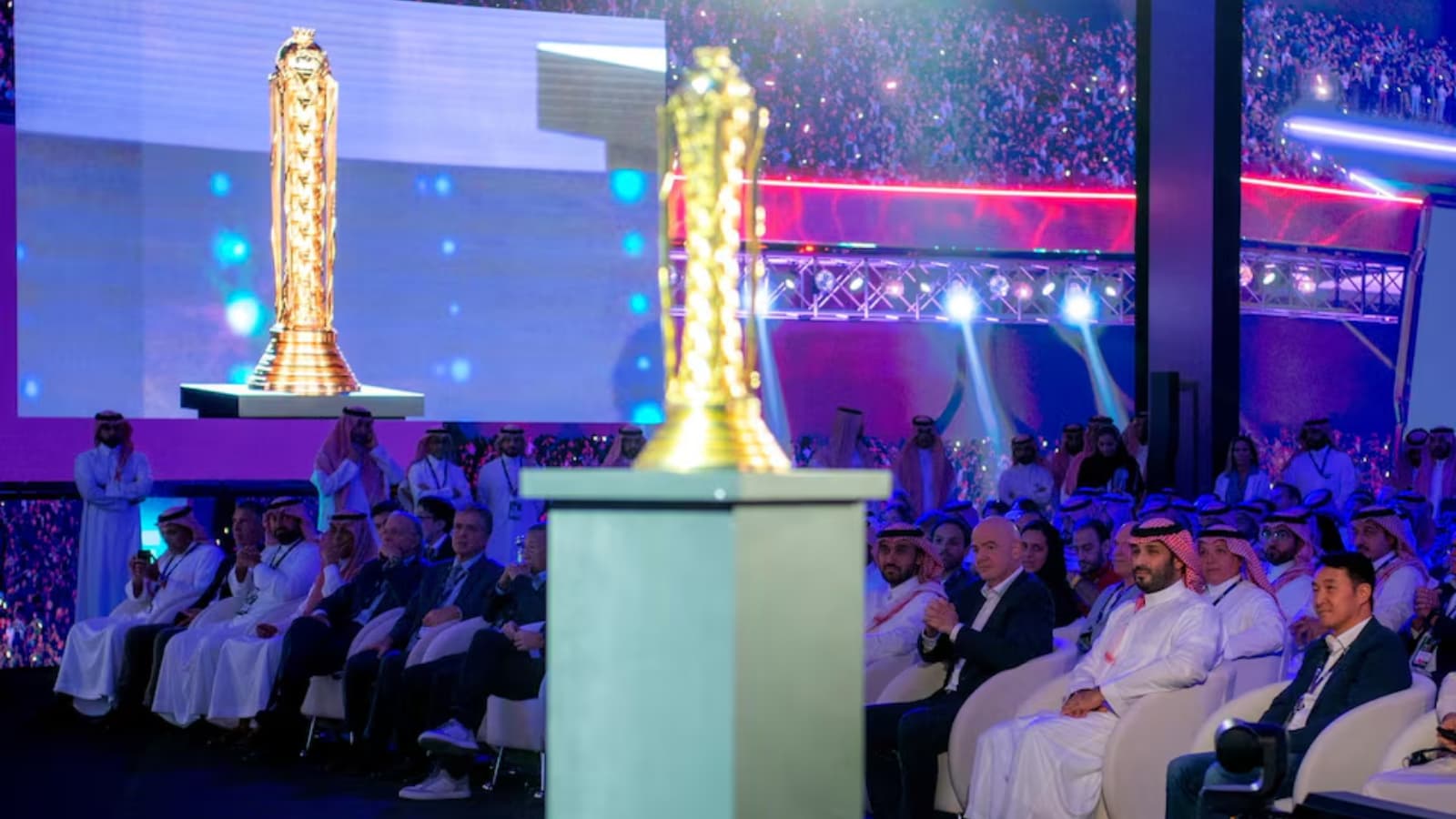
Esports World Cup 2026 was moved to Paris from Riyadh due to rising tensions in Middle East. (Reuters)Indian teams made their biggest-ever appearance at the Esports World Cup 2026 in Paris, with multiple organisations competing across different titles. The Free Fire campaign delivered a historic moment but ended on a disappointing note. Three Indian teams, Team Apex Gaming, S8UL Esports, and Total Gaming Esports, made history by qualifying for the Free Fire World Cup, marking India’s first-ever presence in the event. Team Apex provided the tournament’s brightest moment for India, securing a Booyah in the Survival Stage, the country’s first at a Free Fire World Cup, and finishing second in their group to reach the Grand Finals. The title round, however, proved brutal. Both S8UL and Team Apex finished at the bottom of the 12-team leaderboard, with S8UL in 11th place and Apex in 12th. Total Gaming Esports were eliminated earlier in the Survival Stage despite winning two Booyahs. Mexico’s LYON took the trophy with a record-breaking 33-elimination performance.India’s chess campaign is yet to begin, scheduled for August 11-15. Grandmasters Aravindh Chithambaram, Nihal Sarin, and Arjun Erigaisi are set to represent the country in the $1.5 million tournament after qualifying through the Champions Chess Tour. PUBG Mobile, featuring two Indian teams, is also still to come. The tournament runs from August 6 to 16. GodLike Esports, India’s top seed after winning BMPS 2026, have been placed in the tougher Group B alongside Team Vitality and Wolves Esports, while Orangutan are in Group A with DRX, RRQ, and FURIA. India’s Representation at Esports Nation Cup 2026 The Esports Foundation will host the Esports Nation Cup (ENC) 2026 later this year in November in Riyadh. India’s Charanjot Singh earned a place through the FC Pro World Rankings. The 23-year-old, who has also represented India at the FIFAe Nations Cup and FC Pro World Championship, received a direct invite as the nation’s highest-ranked player in the FC Pro World Rankings. India has now secured representation in seven titles at ENC 2026: Battlegrounds Mobile India (BGMI), Chess, EA Sports FC, Honor of Kings, Rocket League, Trackmania and VALORANT. The nation earned a special invite in BGMI and Honor of Kings. In Chess, Grandmaster Nihal Sarin qualified directly through the official ENC Rankings, while Mitrabha Guha secured his place through the regional qualifiers. India’s Rocket League team, VALORANT team and Trackmania star Kunal Upreti (Spark) also earned their spots at the global event through their respective regional qualifiers. A maximum of two players from each country or territory may qualify for the ENC 2026, including those who have already received direct invitations. With Charanjot already securing one of India’s two available spots, one more Indian player can still qualify through the South Asia regional qualifier, where a total of four players will advance to the ENC 2026 main event.
Nadia Hashimi’s new novel, City of Widows, is a sequel to her debut, The Pearl That Broke Its Shell (2014). Nadia Hashimi’s new novel, City of Widows, opens in the precarious years before the 2021 Taliban takeover, back when Afghan women were still soldiers, journalists, and pursuing an array of professions. Hashimi evokes that bygone world to show us exactly what was lost. The book, a story of resistance, grips you by the cuff from the get-go, plunging the reader into a relentless sequence of unbearably tense moments that never loosen their hold. Its fascinating title comes from a real settlement on a hillside outside Kabul known as Zanabad, which literally translates to ‘city of women’ but is referred to as ‘hill of widows’ in Afghanistan. Hoping to escape the stigma, widows started inhabiting the hills in the 1990s, forming a tightly knit community where they could eke out independence, as per a 2017 AFP report.Hashimi says she would never have thought that she would one day write the sequel to The Pearl That Broke Its Shell (2014), her internationally acclaimed debut, which just goes on to prove ‘never say never’. She was inspired to write this story when she came across an article about Afghan women soldiers, one of whom said, “If I die tonight, I die pretty.” It was that AFP article that planted the seed for Hashimi’s novel. “I don’t actually know how I first came about it, but I did find an article,” she told The Indian Express. “And this is where a lot of my stories come from — these journalistic pieces where there’s either a line in a piece of journalism or an introduction to something. Whenever I find something that surprises me, I feel like that’s where the story is going.” City of Widows follows three women. Marjan, a former soldier in the Afghan army, is on the run with her young daughter Hawa, desperate to escape before the Taliban discovers her past. In her earlier life, she was Rahima, a bacha posh — a girl raised as a boy — forced into an early marriage from which she fled. Soraya, who defiantly wore red lipstick as she led the army’s all-female combat unit, is now a wanted woman whose own brother may not shelter her. Mina, a journalist and broadcaster, is known to everyone in Kabul, including the new regime. Hashimi, a paediatrician-turned-novelist and the daughter of Afghan immigrants, conducted in-depth interviews to flesh out her protagonists. She spoke to a commander of the Female Tactical Platoon, a musician who conducted the Zohra Orchestra, and a woman who runs shelters for the vulnerable. “I always try to be authentic when it comes to these social aspects within the country,” she said. “There are so many misrepresentations and stereotypes that are opposite of what these women are actually experiencing.” The bacha posh tradition, central to Marjan’s backstory, reveals everything about Afghanistan’s relationship with gender. “It reveals the difference in the value placed on a son and a daughter,” Hashimi said. Families engage in the practice either from superstition — believing the next child will be a boy — or “to logistically have a child who can navigate the outside world with a little bit more freedom and maybe with less risk.” She predicted that as women develop economic value, the practice would fade. “But with the Taliban coming back and making life impossible for girls, you can see where it would be really necessary to have a way to skirt around these rules.”Story continues below this ad That sense of a world turning its back animates the novel. “It felt like the world overnight decided they did not want to care about Afghanistan anymore,” Hashimi said. “We had had 20 years of saying we must fight the Taliban in Afghanistan because we must liberate Afghan women. And then, overnight, it was like, ‘Well, actually, we are just kind of tired of doing this and we are going to turn our backs.” What makes City of Widows so powerful is that Hashimi refuses to reduce


Discussion (0)