
Loading dispatches...
← Return to Newsroomgeneral
Avalanches, climate change more: Why Himalayas are getting riskier for climbers
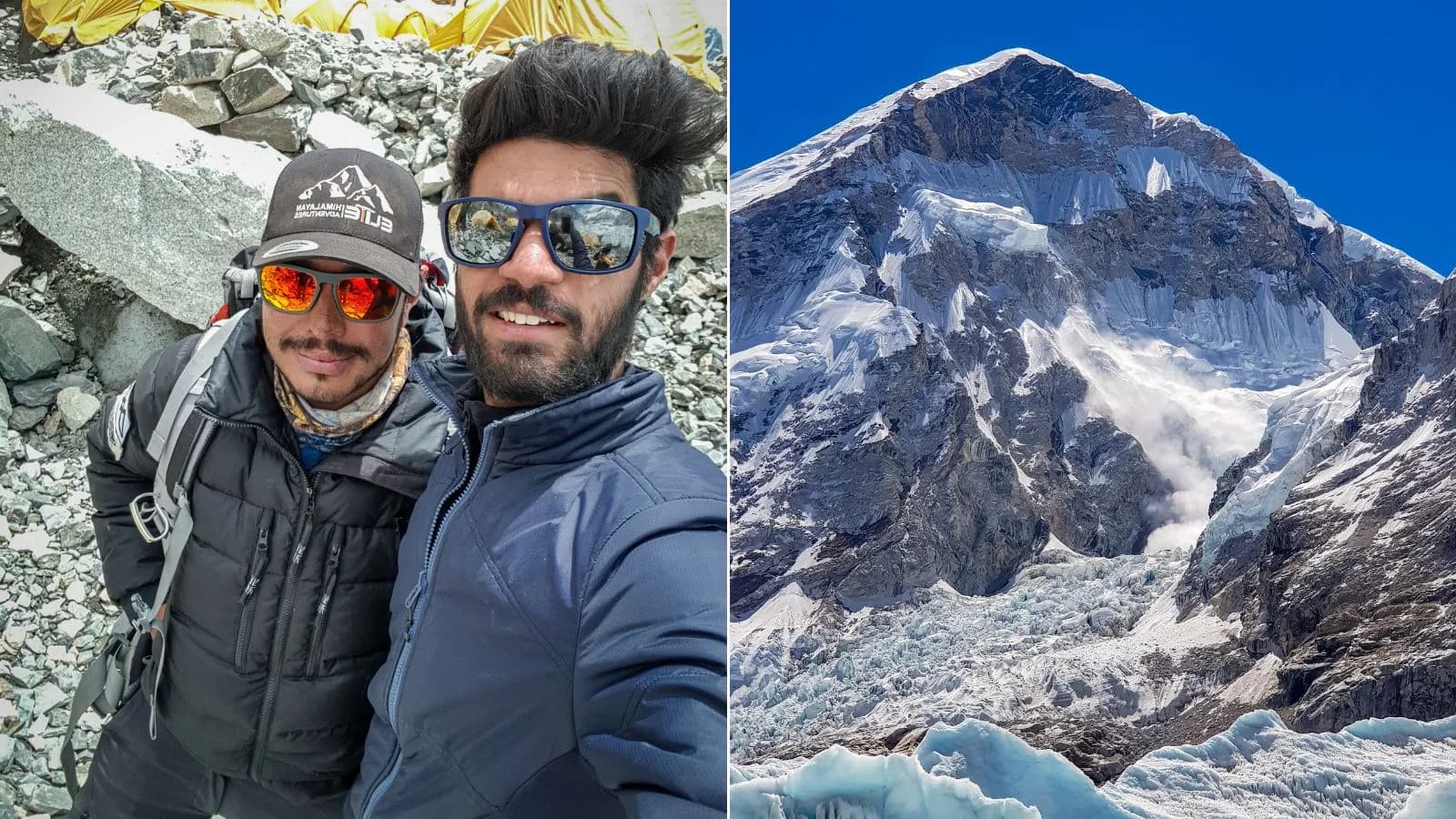
Updated: Aug 3, 2026 07:50 AM IST Mountaineer Rizza Alee with famed Nepalese climber Nirmal Purja at the Everst Base Camp in 2019. ( The climbers had been missing since July 30, when an avalanche struck the expedition at an altitude of 6,600 metres. The incoming wall of snow threw the climbers 1,000 feet down, the GPS tracker attached to their bodies revealed.A rescue operation was launched by local authorities and three bodies were recovered on Friday. The expedition seemed to be a lesser challenge for Purja, who had ascended eighth-thousanders 57 times. Eighth-thousanders refer to the 14 mountains in the Himalayas and the Karakoram range, which exceed 8,000 metre altitude. Broad Peak is the 12th highest at 8,047 metres. Suggesting a departure from expected trends, experts say that avalanches of such nature shouldn’t be occurring in July. “There is a particular period —February to April— which is the highest avalanche risk period because after the high snowfall during the winter months from December to January. According to studies, generally, avalanches take place between February and April,” Dr Hasan Raja Naqvi, an Assistant Professor of geography at New Delhi’s Jamia Millia Islamia told The Indian Express. Naqvi said the impact of climate change is clearly visible in the Western Himalayas, which is bearing the brunt of the changing weather events. According to a report by the scientists at the Institute for Environmental Sciences at the University of Geneva, there has been an increase in avalanche occurrence in recent decades in Western Himalayas.Story continues below this ad Apart from frequent avalanches, weather events like snow blizzards, intense snowfall and extreme precipitation remain challenges at the high altitude. In order to reduce risk, mountaineers often resort to ascending critical patches on high mountains during night hours. Overcrowding at the Himalayas has also posed several challenges for the climbers. “While I was climbing Everest, a lot of people died because of slow-moving climbers. Even if I’m fast, but somebody ahead of me is slow and I am actually dying because of him as my oxygen is running out,” says Rizza Alee, who attempted to climb Mount Everest in 2019, the same year Nirmal Purja was on ‘Project Possible’, where he became the first climber to summit all 14 eight-thousanders in just 6 months and 6 days. “There’s only one rope. You have to be clipped to that rope and can’t overtake. If you try to overtake, you can die if you slip,” he added. Eleven people died in the spring season of Everest that year, he remembers.Story continues below this ad While the footfall on Everest and its neighbouring peaks like Lhotse or Makalu have made them more explored, Karakoram, on the other hand, remains remote. The terrain is difficult and weather is unpredictable. Climbers call 8,000 altitudes the “death Zone”, where the body stops working because of the lack of oxygen. At high altitude, people start experiencing High Altitude Cerebral Edema (HACE), where lack of oxygen results in brain swelling, and High-Altitude Pulmonary Edema (HAPE), where fluid builds up in the lungs. “I had to turn down at 800 meters before the summit as my oxygen regulator broke. I could see the summit, but I turned back,” Alee said. “I could have easily summited Everest, but I would have definitely died on my way back.” Majid Alam is a Senior Copy Editor at Indianexpress.com. With over seven years of experience in journalism, he has worked across leading newsrooms, managing online news desk operations, heading shifts, and handling breaking news in fast-paced environments. While his primary experience has been on the news desk, his interests extend to field reporting and in-depth storytelling. He has reported stories on gov
NewsWorldMountaineer Nirmal Purja dies in Broad Peak avalanche: What he wrote before his last climb Purja's tracking device initially showed movement after Thursday's avalanche, raising hopes he had survived. 4 min readAug 2, 2026 11:49 AM IST First published on: Aug 2, 2026 at 11:49 AM IST mountaineer Nirmal Purja, popularly known as 'Nimsdai', has died after an avalanche hit Broad Peak in Pakistan-occupied Kashmir's Gilgit-Baltistan. (Photo: X/@nimsdai) Mountaineer Nirmal Purja, known as Nimsdai, has died after an avalanche struck Broad Peak in Pakistan-occupied Kashmir’s Gilgit-Baltistan, where he was leading an expedition on Thursday. Elite Exped, the mountaineering company Purja co-founded, confirmed his death in a statement on Saturday, saying other members of the expedition also did not survive. The company named two of his climbing partners, Pur Bahadur Gurung and Nima Sherpa, among those lost, and asked for the families’ privacy to be respected as they grieve.Why was he on Broad Peak? Purja, a British-Nepali climber and holder of several mountaineering records, had not originally planned to climb Broad Peak. In a post on X on 27 July, he explained that his focus had been a separate project called Hattrick, centred on climbing G2. THE MISSION SHIFTS. THE COMPASS HOLDS.This was never the plan. Initially, the plan was to climb just G2. But just before setting off for Pakistan, I ran the numbers on my 8000m summits. That’s when it hit me: if I tick off Broad Peak whilst I’m here , only one remains “Cho… pic.twitter.com/rovJzFcazP— Nirmal Purja MBE (@nimsdai) July 27, 2026 Just before leaving for Pakistan, he worked out that adding Broad Peak to his summit count would leave him needing only one more peak, Cho Oyu, to become the first person to climb all 14 mountains above 8,000 metres twice, without supplemental oxygen. The desire to achieve this feat led him to take on Broad Peak as well. What did he write before setting off? In the same post, Purja wrote on his X account: “Broad Peak, I ask for nothing but safe passage up and back down.” He added that he never took a mountain for granted and treated every step from base camp onward with full seriousness. THE MISSION SHIFTS. THE COMPASS HOLDS.This was never the plan. Initially, the plan was to climb just G2. But just before setting off for Pakistan, I ran the numbers on my 8000m summits. That’s when it hit me: if I tick off Broad Peak whilst I’m here , only one remains “Cho… pic.twitter.com/rovJzFcazP— Nirmal Purja MBE (@nimsdai) July 27, 2026 How did the search unfold? Purja’s tracking device initially showed movement after Thursday’s avalanche, raising hopes he had survived. Rescue teams believed for a time that he was alive and conscious, awaiting rescue. As search efforts continued, it became increasingly unlikely that anyone would be found alive. . World · PoK · Mountaineering Nirmal “Nims” Purja and nine teammates killed in Broad Peak avalanche An avalanche on Broad Peak, in Pakistan-occupied Kashmir (PoK), has killed record-breaking mountaineer Nims Purja and his teammates. His company, Elite Exped, confirmed his death on Saturday; there were no survivors among the 10-member team. .Confirmed by Elite Exped · no survivors Who was Nims Purja Career timeline By the numbers What happened The team Broad Peak A modern climbing legend Nepal-born Nirmal “Nims” Purja was one of the most celebrated high-altitude mountaineers of his generation. He was leading this expedition for his company, Elite Exped, when the avalanche struck. On Saturday, Elite Exped confirmed his death. “Today it is with profound sadness and immense heartbreak that we confirm that Nirmal ‘Nimsdai’ Purja tragically lost his life following the avalanche on Broad Peak.”— Elite Exped, in an Instagram statement ▲Climbed all 14 peaks above 8,000 m in 189 days in 2019 — a world record that stunned the sport. ▲Subject of the Netflix documentary “14 Peaks: Nothing Is Impossible.” ▲



Discussion (0)