
Loading dispatches...
← Return to Newsroomgeneral
Transferred Rs 45,000 to wrong account, bank failed to recover, ordered to pay Rs 65,000

New DelhiAug 13, 2026 07:00 AM IST The commission was dealing with a plea of a man regarding money transfer from his account. (AI-generated Image)The Haridwar District Consumer Commission held a private sector bank deficient in service for failing to recover Rs 45,000 wrongly transferred to another account despite receiving prompt information. It directed the bank to refund Rs 45,000 to the man. A bench of president Gagan Kumar Gupta and members Amresh Rawat and Ranjna Goyal also directed the bank to pay Rs 10,000 for mental agony and Rs 10,000 towards litigation costs.“The complainant immediately informed the opposite bank with sufficient information that the amount in question had been transferred to the account of another person. Upon this, the opposite bank assured the complainant that they would recover the said amount from the account of the said other person after two to four days and inform him. However, the said amount was not recovered, and even after repeatedly contacting the opposite bank, only assurances were given. The said amount was not recovered, which is indicative of deficiency in service on the part of the opposite parties,” the commission said on July 21. The order added that it is also noteworthy in the present case that, despite repeated opportunities being granted to the opposite parties, they did not present their case at any stage, due to which the proceedings of the complaint against the opposite parties were proceeded with ex parte. “In such a situation, the complaint petition, documentary evidence and affidavit of the complainant available on record remain unrebutted, from which it is clearly evident that the non-refund of the amount in question to the complainant’s account by the opposite parties amounts to deficiency in consumer service,” it underscored. Transferred Rs 45,000 to another person’s account The complainant was a customer of the bank’s Civil Lines, Roorkee branch. On January 10, 2019, he attempted to transfer Rs 45,000 through mobile net banking to an acquaintance’s account. Due to an alleged mistake, the money was transferred to another person’s bank account. The complainant claimed that he immediately informed the opposite parties about the erroneous transfer. The opposite parties assured him that the money would be recovered within a few days, but despite repeated assurances, the amount was not returned. He alleged that the opposite party failed to take adequate steps to prevent the recipient from withdrawing the money.Story continues below this ad After the opposite party allegedly failed to resolve the issue, the complainant sent a legal notice on March 19, 2019, and subsequently filed a consumer complaint seeking Rs 45,000, Rs 15,000 towards litigation expenses and other reliefs. The opposite party did not contest the complaint, and the proceedings eventually proceeded ex parte. Amount remained unrecovered despite assurances The commission found that the Rs 45,000 was transferred from the complainant’s account to another person’s account by mistake, and the bank’s own response to the legal notice supported the occurrence of the transfer. It observed that the complainant had immediately informed the opposite party about the erroneous transfer on January 10, 2019. The commission noted that the opposite party failed to produce documentary evidence contradicting this claim. The commission further noted that the bank had assured the complainant that the amount would be recovered from the recipient’s account within a few days. However, the Rs 45,000 was never recovered or credited back, despite repeated contacts by the complainant.Story continues below this ad Takeaway This judgment matters because it reinforces that banks can be held liable for deficiency in service when they fail to act promptly after being informed about an erroneous transfer. It also highlights that repeated assurances without recovering the customer’s money do not absolve the bank of responsibility,
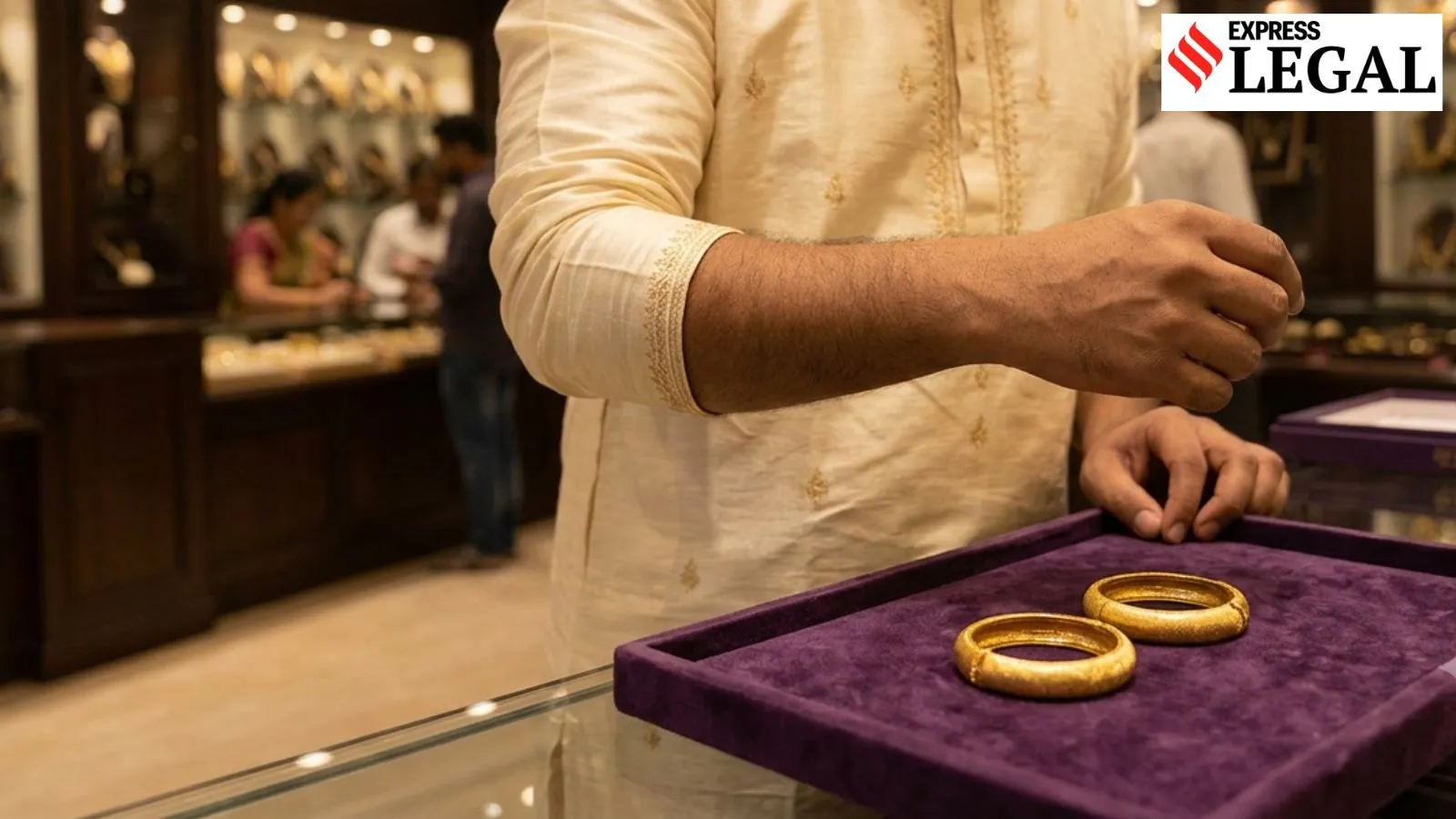
New DelhiAug 8, 2026 03:00 PM IST The commission said the case was not an isolated instance of unfair trade practice by the jeweller and noted that similar complaints were pending against it or had been disposed of. (AI-generated image)A Himachal Pradesh consumer forum has ordered a jeweller to return 32 grams of gold to a man who allegedly waited in vain for over two years to either get back the gold he had given or the promised new’‘kadas’ (bangles). The consumer body also directed the jeweller to pay Rs 25,000 as compensation and Rs 10,000 towards litigation costs. President Hemanshu Mishra and members Arti Sood and Narayan Thakur of the Kangra District Consumer Disputes Redressal Commission were hearing a complaint filed by one Raj Kumar against Mohit Kapoor, Meena Kumari and Om Parkash, associated with Kapoor Jewellers in Paprola, Kangra.“The retention of the complainant’s gold without delivering the promised ornaments or returning the raw material amounts to a gross deficiency in service and unfair trade practice,” the commission held on August 3, directing the opposite parties to return the 32 grams of gold. The dispute dates back to September 1, 2023, when Raj Kumar handed over two old gold kadas weighing 32 grams to the jewellery shop to melt them and make a new pair weighing 40 grams. The order records that the promised delivery was to be made within two months, but the complainant said the matter remained unresolved until September 2025. Old gold, new kadas According to the complaint, Raj Kumar had long-standing family and business relations with the late Sanjay Kapoor, who ran M/s Kapoor Jewellers at Paprola. On September 1, 2023, the complainant handed over two old gold kadas weighing 32 grams to the shop. He wanted the gold melted and used to manufacture a new set of kadas weighing 40 grams with a modern design. The jeweller allegedly promised to deliver the new kadas within two months. However, according to the complainant, repeated visits did not result in delivery, with the work allegedly being delayed on various pretexts. Sanjay died in 2024. The order records that his son Mohit Kapoor and widow Meena Kumari then took over the business, while Sanjay’s brother Om Parkash was also made a party to the complaint.Story continues below this ad The complainant said he subsequently approached the opposite parties seeking either the new ornaments or the return of his original 32 grams of gold. According to his complaint, the matter continued to be delayed and the opposite parties ultimately refused on September 29, 2025, to return the gold or provide the new kadas. Jeweller denies receiving gold Mohit and Meena contested the complaint and denied that any transaction had taken place between them and Raj Kumar. They said they had neither received any gold ornaments from him nor issued an estimate or receipt. They further contended that if any transaction had taken place, it was personal to Om Parkash. Om Parkash also denied involvement with Kapoor Jewellers. He told the Commission that he had been employed with the Himachal Khadi Mandal at Banjar, Kullu, since 1993 and had no connection with his deceased brother’s jewellery business. Parkash alleged that the complainant had concocted a false story to obtain gold and money. Raj Kumar denied the allegations and reiterated his case. Both sides subsequently produced evidence before the commission.Story continues below this ad Customer produces receipt After examining the evidence and hearing the parties, the commission found that Raj Kumar had handed over 32 grams of gold to M/s Kapoor Jewellers on September 1, 2023, for making 40-gram kadas. The commission referred to the receipt produced by the complainant and said that in view of the documentary evidence, the defence of Mohit and Meena “falls flat”. It further held that, as Sanjay’s legal heirs who had taken over the business operations, Mohit and Meena could not escape liability. The commission also rejected
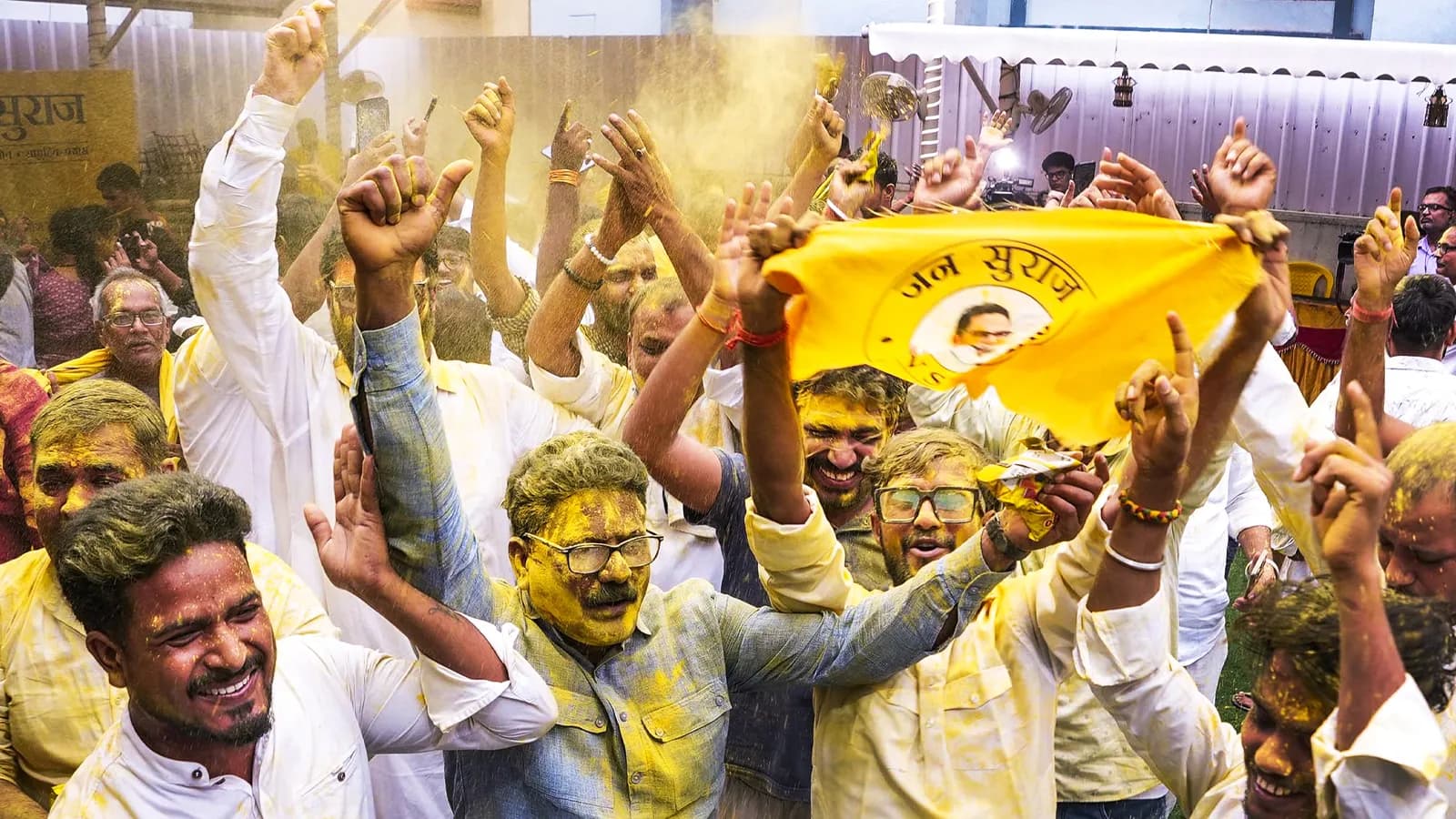
Jan Suraj Party supporters celebrate as party chief Prashant Kishor wins Bankipur Assembly by-election. (PTI) 4 min readPatnaAug 4, 2026 06:17 AM IST First published on: Aug 4, 2026 at 06:16 AM IST At the peak of Nitish Kumar’s powers, the BJP consistently retained and swept all four urban Assembly seats in Patna — Patna Sahib, Bankipur, Kumhrar, and Digha. However, that run came to an end on Monday with the party’s loss to Jan Suraaj Party (JSP) founder Prashant Kishor from Bankipur. Among the many lessons from the loss, the most important of all perhaps is that the party needs to return to the drawing board instead of “relying solely on social engineering”, a senior leader said. In the initial years, the BJP rode to power on the strength of the social coalition of former CM and Janata Dal (United) leader Nitish Kumar. Over the past decade, the BJP worked assiduously to graft non-Yadav OBCs and Extremely Backward Classes (EBCs) onto its traditional upper-caste base through targeted ticket distribution and leadership promotion.At the same time, the party built a formidable organisational network under Union Home Minister Amit Shah, expanding booth-level reach, deploying full-time pracharaks, and running intensive rural campaigns. Given the financial clout that comes with being in power at the Centre, this gave the party an edge in Bihar. In Bankipur, both its social math and organisational networks failed and the primary task will be identifying and fixing what went wrong. Kishor managed to neutralise the traditional divisions of caste and religion with his cross-sectional appeal. This is what caused a fracture in the BJP’s traditional base, with upper castes said to be unhappy for varied reasons. First, the choice of Samrat Choudhary, who is from the OBC Kushwaha community, as CM. While Nitish managed to act as the glue that held together the coalition of OBCs, EBCs, and upper castes, Choudhary has failed to fill the JD(U) leader’s big shoes. The upper castes have also been unhappy over several other reasons, from the now-stayed UGC regulation on caste discrimination on campuses to the exam paper leaks that have affected children from the upper caste and middle classes as much as OBC and Dalit youngsters. This is what brought many of the youth from these sections, seen as the BJP’s support base, out on the streets during the recent protests, spooking the party. Now, the party is likely to try and recalibrate its messaging to this core base and figure out how it can pacify it. The upper castes, who formed a significant chunk of the Bankipur electorate, have signalled they are willing to consider alternative options. For the BJP, that poses a dilemma as fulfilling the demands of the upper castes may rub the OBCs and EBCs the wrong way. Then there is the failure of the BJP’s election management and booth-level organisation that fell apart in front of the Jan Suraaj Party’s strategy of hitting the streets in an attempt at direct outreach to voters where they reside. This allowed Kishor’s party to take its message of change directly to voters while the BJP came across as staid and indifferent — having parachuted in a candidate viewed as an outsider — and with no freshness in its messaging. The party’s insistence on framing the urban constituency as a “durg (fortress)” came across as its arrogance, something Kishor took full advantage of. How the electoral juggernaut that has delivered so many victories over the years is something that the BJP will likely look into closely.
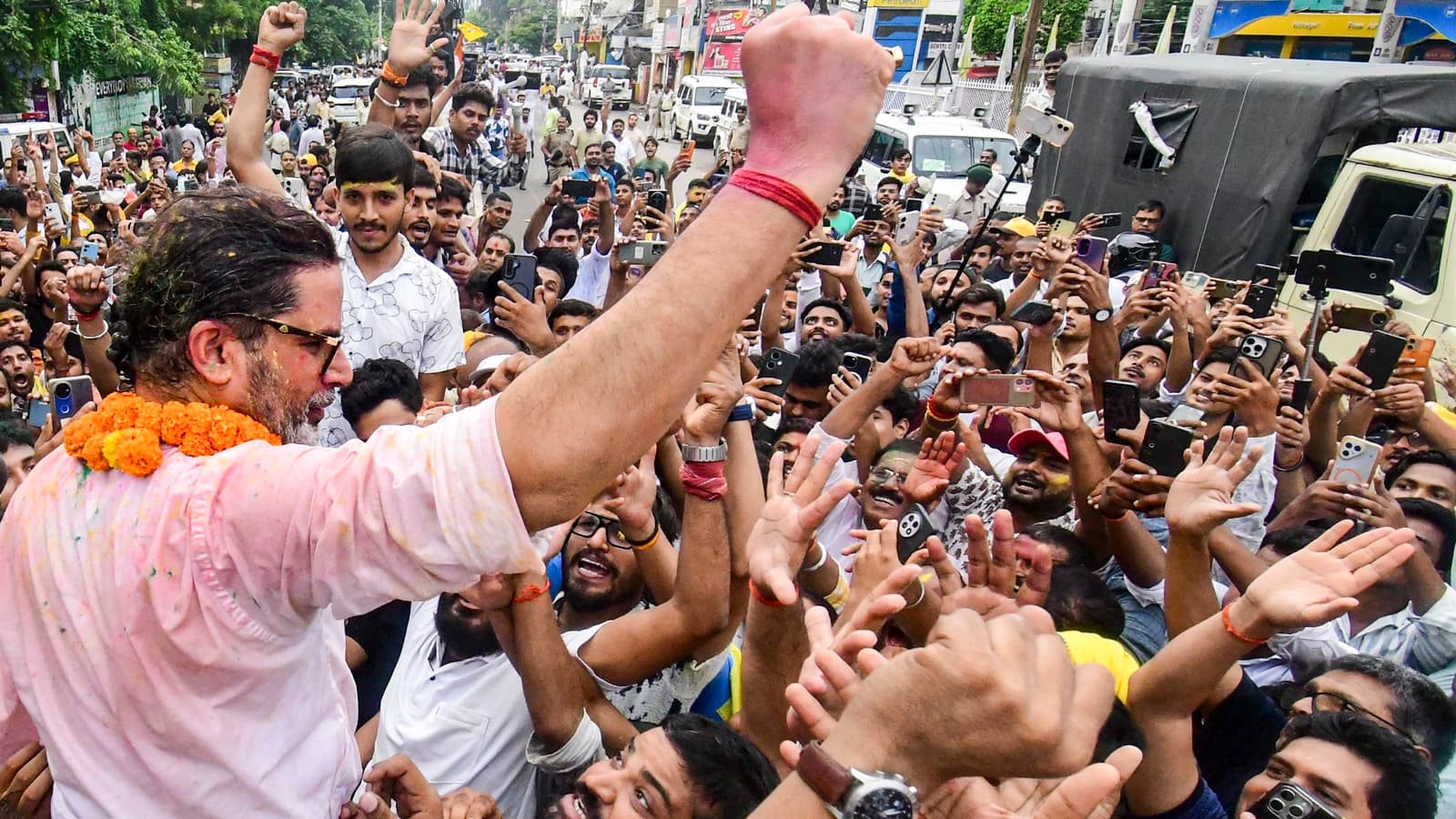
Jan Suraaj Party chief Prashant Kishor celebrates with supporters in Patna, Monday. (PTI)Bringing the BJP’s three-decade-run in Patna’s Bankipur Assembly constituency to an end, Jan Suraaj Party (JSP) founder Prashant Kishor wrested the seat from the ruling party in an Assembly bypoll on Monday. Kishor defeated his nearest rival Neeraj Kumar of the BJP by 19,324 votes. In first comments after the win, Kishor said the BJP’s “30-year fortress has collapsed in just 30 days”. The political strategist-turned-JSP leader had framed this election as a “referendum” on the tenure of Chief Minister Samrat Choudhary, who assumed office in April. Kishor said the BJP-led ruling alliance should have appointed a CM “with an unblemished image”.The loss is a setback for the BJP since its national president Nitin Nabin, and before him his late father Nabin Kishore Prasad Sinha, were the dominant figures in this urban constituency. In 2008, Bankipur was primarily carved out of the Patna West seat that Nabin Kishore Sinha won from 1995 until his death in 2006. Nitin won Patna West in a subsequent bypoll and in 2010 won from the newly created Bankipur seat that he retained till earlier this year, when he moved to the Rajya Sabha after being elected the BJP’s national president. “I thank the people of Bankipur, both those who voted for me and those who did not,” Kishor said as it became all but apparent that he would win. “This election was not merely about electing one MLA; it was about sending a clear message to Prime Minister Narendra Modi and Union Home Minister Amit Shah. When the people of Bihar have entrusted you with a majority of 202 MLAs (now 201), you ought to appoint a Chief Minister with an unblemished image.” Kishor, who is popularly referred to as PK, expressed hope that the BJP’s central leadership would take “concrete steps” for Bihar’s development before the 2029 Lok Sabha elections. “I am confident the BJP’s central leadership will understand the message sent by the people and Modi ji and Amit Shah ji will take concrete steps to improve governance, create jobs, strengthen education and healthcare, attract industries and address migration in Bihar. Governance cannot be limited to distributing five kilograms of free foodgrains.” The BJP’s “30-year fortress” had collapsed in just 30 days because people no longer want votes to be sought solely in the name of caste, religion or free ration, but want to cast them on issues such as education, healthcare, jobs and development, the Jan Suraaj leader said, adding, “If governments fail to address education, employment and migration, they should expect similar electoral verdicts in the future.” Jan Suraj Party supporters celebrate as party chief Prashant Kishor wins Bankipur Assembly by-election. (PTI)Asked about his immediate priorities, Kishor cautioned against unrealistic expectations. “My becoming an MLA will not turn Bankipur into Bengaluru. But people will certainly see improvements in the next two or three months wherever it is possible for us to make a difference,” he said.Story continues below this ad Conceding defeat, the BJP said it would introspect while Choudhary congratulated Kishor on his win. Leader of Opposition Tejashwi Prasad Yadav, whose party RJD finished a distant third, said that “winning and losing are part of democracy”. RJD candidate Rekha Kumari had finished second in the 2025 election. Takeaways from PK’s win First, it revives the political fortunes of the JSP, which had secured just 3.44% of the votes in its debut election in November 2025 despite a high-pitched campaign. Kishor is now set to assume the role of an active Opposition leader in the Assembly. As one voter remarked during the campaign, “Kishor’s presence in the House could be like a camel standing out among 100 elephants (referring to the NDA’s majority).” Second, the outcome shows that traditional divisions of caste and religion disappeared because of Kishor’s broad appeal across demographic groups
Kolkata: Bangladeshi writer and activist Taslima Nasreen, who returned to Kolkata after nearly two decades, has called for the return of former Bangladesh prime minister Sheikh Hasina to her country to lead her party and fight elections.She also called for the removal of the ban on Hasina's party, Bangladesh Awami League, following massive protests in July 2024 that led to her government's collapse and eventual exile."The ouster of Awami League leader Sheikh Hasina in the way it happened was wrong. It was anti-democratic. Banning the party was absolutely undemocratic. They should be allowed to participate in elections. I want Hasina to return to Bangladesh," she told reporters in Kolkata today.She strongly criticised radical Islamists who use madrasas to create chaos."I feel there is no need for any madrasa. It only produces jihadis. All madrasas should be converted into secular schools," she said.She thanked West Bengal Chief Minister Suvendu Adhikari for inviting her back to Kolkata after 19 years."I see nothing political in inviting me to Kolkata after 19 years. The newly elected government has assured security in Bengal during my stay. I would like to thank the chief minister for that," she said.Nasreen said she felt bad when Bengali poet Joy Goswami faced protests from a section of the audience and interrupted her address yesterday. The incident happened at a cultural programme organised to mark her return to the city.The unexpected disruption left Nasreen standing silently at the microphone for a few moments as the auditorium reverberated with slogans and loud voices."I felt bad. It was not an insult just to Joy, be to me too. There might be animosity but everyone has a right to speak. Were there people who didn't want Joy Goswami to speak? I felt bad but I hope it doesn't happen again," she said.On the arrest of former ISKCON leader Chinmoy Krishna Das in Bangladesh, she said he paid the price for helping Hindus who were in trouble. "Many like us are speaking up for Chinmoy. Free thinkers are continuously being targeted. Many of us had no choice but to leave the country."In November 2025, a domestic war crimes court in Bangladesh sentenced Sheikh Hasina and former home minister Asaduzzaman Khan to death on charges of crimes against humanity linked to the protest crackdown in 2024. Hasina's legal team contested those proceedings as politically motivated.


Discussion (0)