
Loading dispatches...
← Return to NewsroomPolitics
Kerala Vigilance arrests Assistant Labour Officer in Kottayam for accepting bribe
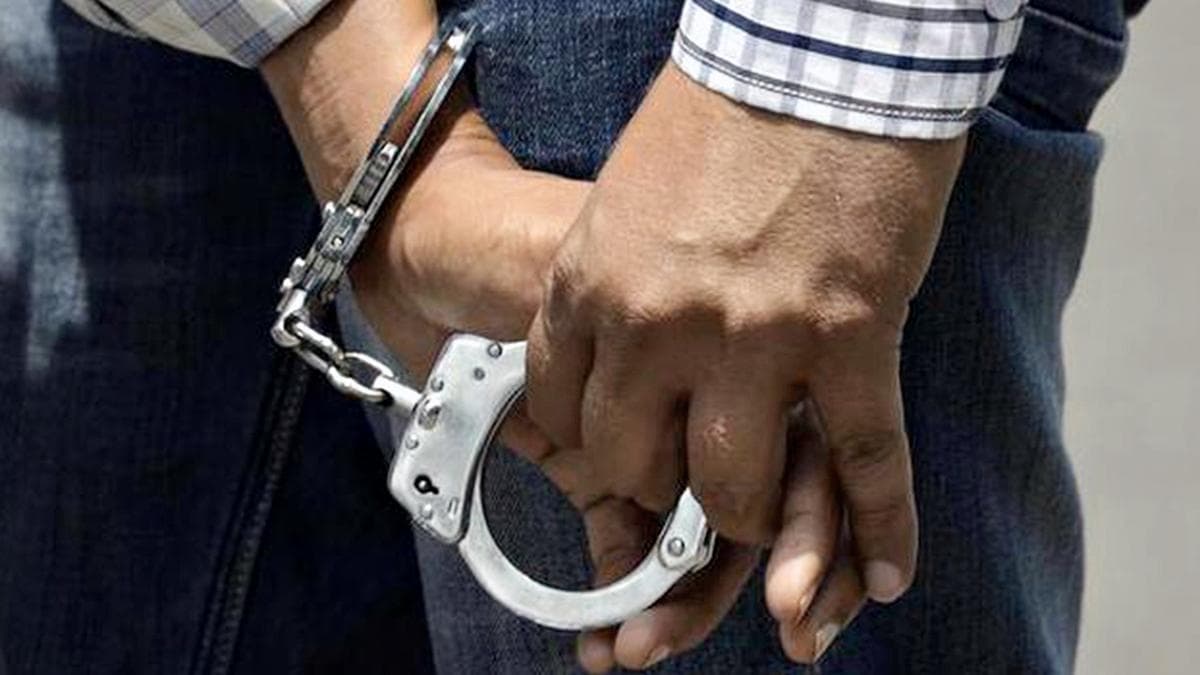
The Vigilance and Anti-Corruption Bureau (VACB) has arrested the Assistant Labour Officer at Vaikom, Kottayam, on charges of accepting a bribe from an IT entrepreneur in Thalayolaparambu.The accused, T.G. Bineesh Kumar, a native of Thodupuzha, was caught red-handed for accepting ₹5,000 from the complainant. The arrest, based on a complaint lodged by the entrepreneur, was part of ‘Project Zero’, a Statewide initiative launched by the Vigilance department to curb corruption in government offices.According to VACB sleuths, Bineesh Kumar had earlier conducted an inspection at the firm run by the complainant and subsequently served a notice citing several lapses. The inspection followed a complaint lodged by three former employees of the firm, alleging that the company had denied them experience certificates.“The accused official used to contact the complainant over the phone and through messaging services and demand money to settle the case. The other day, he contacted the complainant over the phone and asked him to send ₹2,000 through UPI to his wife’s number. After the complainant made the payment and shared a screenshot of the transaction, the accused once again contacted him and demanded another ₹3,000. Following this, the complainant approached the VACB,” an official said.Based on the complaint, the VACB laid a trap and caught Bineesh Kumar immediately after he received the bribe through a UPI payment made to his wife’s phone number.The accused was produced before the Vigilance Court in Kottayam and remanded in judicial custody.According to VACB officials, Bineesh Kumar had accepted bribes through UPI payments on previous occasions too. Further investigation is under way. Published - August 15, 2026 10:21 am IST

Ballari Deputy Commissioner K. Nagendra Prasad speaking at the District Task Force meeting on illegal mining and mineral transportation in Ballari on Friday. | Nagendra Prasad said on Friday.Chairing a meeting of the District Task Force of the District Sand Committee and the District Authority for Licensing and Regulation of Stone Crushing Units at his office in Ballari, he directed officials to strengthen daily monitoring and joint inspections, particularly in Sandur, where a majority of the district’s mining activities are concentrated.“Surveillance should cover not only mining lease areas but also the movement of ore entering and leaving the district. The functioning and accuracy of weighbridges and check-posts should be thoroughly verified to prevent any leakage,” he said.He directed the officials to submit a proposal to establish a camp office of the Department of Mines and Geology at Sandur to facilitate on-the-spot monitoring and reduce the need for officials to travel daily between Ballari and Sandur.According to Deputy Director of Mines and Geology Ram G. Naik, Ballari has been assigned a revenue collection target of ₹6,250 crore for 2026–27 from major minerals, accounting for about 78% of the State’s overall target of ₹8,000 crore. Against a target of ₹5,200 crore in 2025–26, the district had collected ₹4,922 crore, achieving 96% of the target.As of the end of July this year, the district had collected ₹1,345.46 crore against the progressive target of ₹2,250 crore, achieving 59.8%. Revenue collection in July was about ₹28 crore higher than in the previous three months, he said.Mr. Prasad instructed them to expedite the revival of non-operational mining leases and provide the necessary facilities for mining operations while ensuring that mining activities did not adversely affect the environment and biodiversity.“Of the 89 quarry leases for building stone, decorative stone, murram, and sand in the district, 59 are currently operational while 30 are inactive. Officials should inspect quarries that have remained inactive for more than a year and initiate action to cancel their leases as per the rules and bring the land back under government control for re-auction,” he said.He said the nine check-posts in the district would be developed as model inspection stations equipped with CCTV cameras, weighbridge integration, and sample-testing facilities. The movement of vehicles, mineral weight, quality, and transport permits should be monitored through a digital and transparent system, he said.Regarding NMDC’s ore transportation, Mr. Prasad directed the Mines and Geology Department to issue an official notice to the company to augment the capacity of its conveyor-belt infrastructure. He said road transportation of ore should be completely stopped as per the Supreme Court’s directions, and ore should be transported through conveyor belts and railway sidings.“The officials should initiate a survey to identify sand and gravel available in riverbeds, tanks and government land and notify suitable locations for legal extraction. Applications for sand extraction from patta lands should be scrutinised and disposed of expeditiously as per the rules,” Mr. Prasad said.He also directed the formation of joint task forces comprising officials from the Revenue, Police, Forest, and Mines and Geology Departments at the district and taluk levels to conduct surprise raids at least once a week and intensify night patrolling with police assistance to prevent illegal transportation.Superintendent of Police Suman D. Pennekar said a special control room would be established to improve coordination between the district administration and the police. Teams of officials would be linked to the control
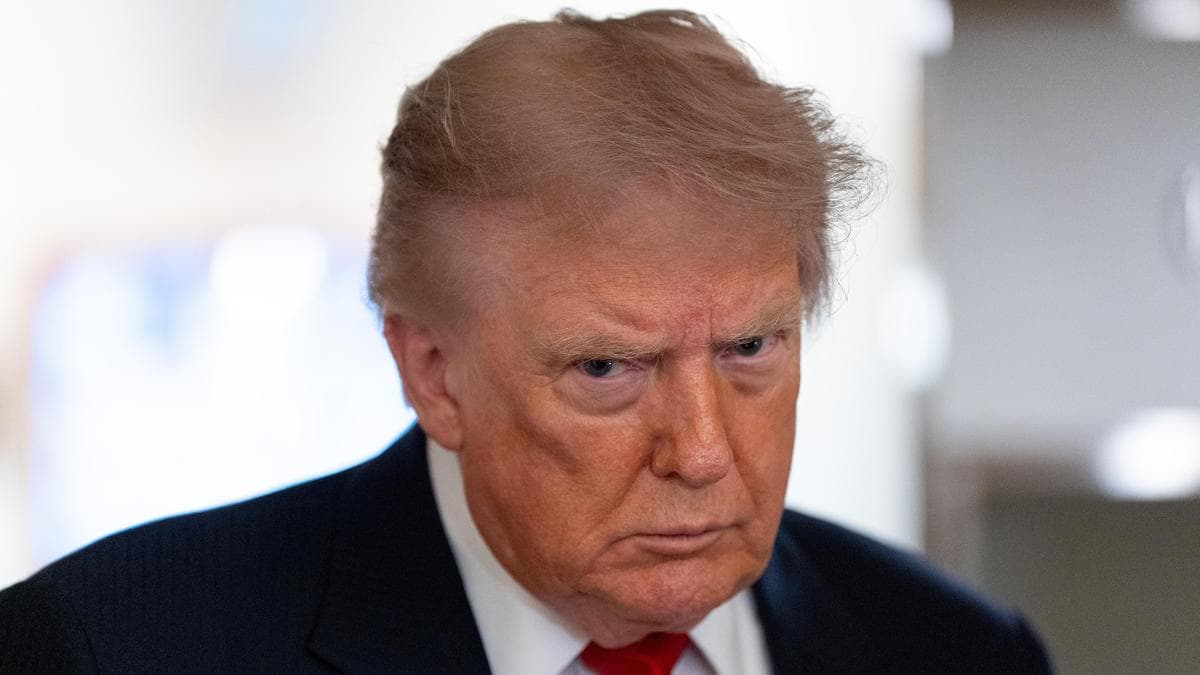
India is once again in the U.S.’ crosshairs, this time for allegedly allowing China to evade U.S. tariffs by routing its exports through the country. The latest allegations are part of a new White House report called ‘The Great Transhipment Scam’.In particular, the U.S. has named the Pune-Gujarat-Chennai belt as one of the areas “enabling” China to evade tariffs to the detriment of supply chains in the U.S. This comes at a time when the U.S. has already imposed a 10% tariff on India for not doing enough to stop the import of goods made using forced labour, and is in the process of enacting legislation that would see tariffs of up to 100% imposed on India for its import of Russian oil. An ongoing investigation by the U.S. Trade Representative (USTR) related to excess capacity could see further tariffs on top of all this. ‘Enabling’ China to evade tariffsThe U.S. had in 2018 levied tariffs ranging from 7.5% to 100% on goods from China under Section 301 of the Trade Act of 1974 for unfair trade and tech practices. On July 24, 2026, it added a further 12.5% tariff for forced-labour compliance gaps. “After their imposition, Chinese exporters increasingly routed goods through third countries,” the White House report noted. “Products that previously moved directly from China to the United States were shipped through jurisdictions where limited assembly, finishing, repackaging, relabeling, or documentation changes could create the appearance of a different national origin.” The report has identified more than 40 countries associated with “elevated illegal transshipment risk”, with India among the top “enablers” of China’s evasion of tariffs. India among top enablers“The countries that comprise China’s Shadow Transshipment Network include many of America’s largest trading partners,” the report said. “China’s biggest enablers range from Mexico and Canada on U.S. land borders to the European Union, India, Japan, and South Korea.”The report classifies the 40-odd countries into three tiers based on how big a transgressor the U.S. feels they are.The top tier comprises “countries and trading blocs that account for large absolute volumes of China-linked goods while maintaining diversified industrial bases and major U.S.-bound export platforms”. The report added that in these economies, illegal transshipment risk is embedded within broad legitimate trade flows. This Tier 1 includes Canada, the European Union, India, Israel, Japan, Mexico, South Korea, and Taiwan.“India’s Pune-Gujarat-Chennai production belt absorbs pumps and compressors… affecting industrial supply chains in Cincinnati, Dayton, and Columbus,” the report added.How the scam supposedly worksThe report goes on to explain that tariff arbitrage lies at the heart of this transshipment arrangement. When a Chinese product that faces a high U.S. tariff is routed through a country with a lower tariff rate, that difference simultaneously becomes a loss of revenue for the U.S. government and a profit for the exporter. “Such tariff arbitrage creates the financial engine behind the Great Transshipment Scam,” the report added. “The savings are more than sufficient to finance the capital equipment, logistics infrastructure, light assembly plants, repackaging operations, and ‘screwdriver factories’ needed to support the scam across Southeast Asia, Mexico, India, and Eastern Europe.” It added that such assembly factories are designed for tariff evasion, and tariff avoidance rather than true manufacturing.“The Office of Trade and Economic Analysis (OTEA) estimates that approximately $67 billion in U.S.-bound goods were transshipped from China through the top hubs — Mexico, India, and Vietnam — in 2025, producing an estimated $28 billion in lost tariff revenue,” the report said.
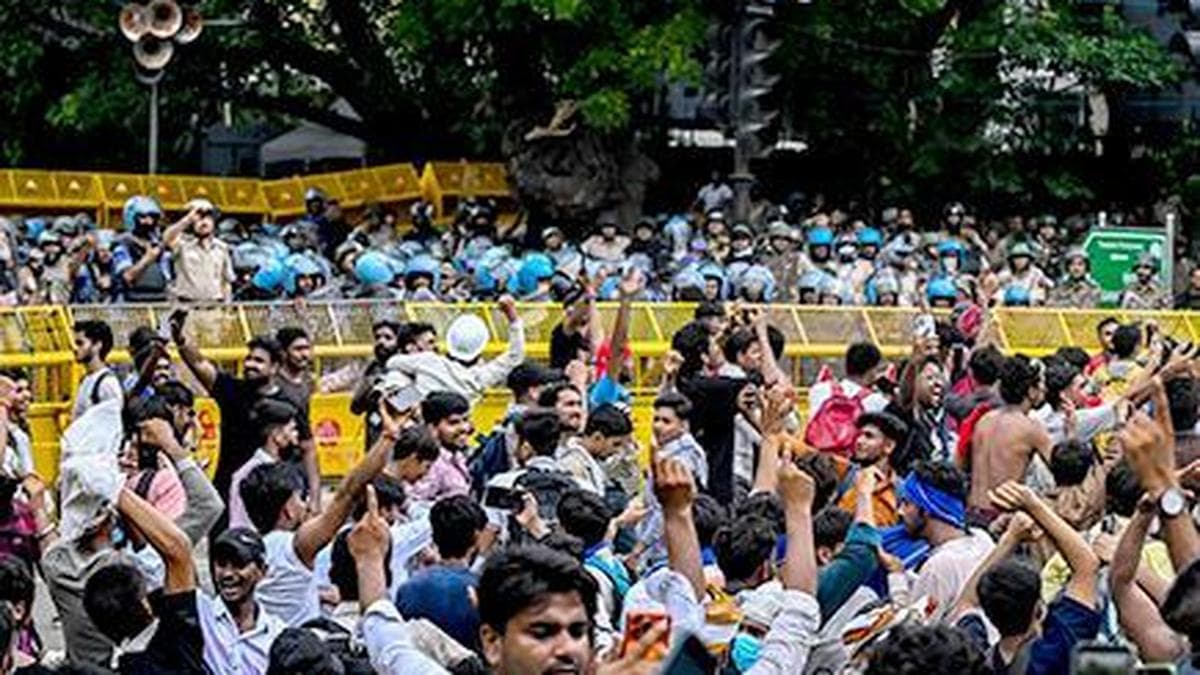
Protesters celebrate the victory after the resignation news of Education Minister Dharmendra Pradhan at Jantar Mantar, in New Delhi. File | A. Rahim who had moved the Supreme Court on the deployment of facial recognition technology and allied mass-surveillance measures against students and persons who participated in the Cockroach Janta Party-linked protests over the NEET-UG exam paper leaks.A three-judge Bench headed by Chief Justice of India Surya Kant addressed senior advocate Menaka Guruswamy and advocate Subhash Chandran that Mr. Rahim’s petition would be tagged with the main NEET-UG protest petitions, which have questioned the police crackdown on students and the use of pellet guns.Ms. Guruswamy submitted that the surveillance was done by the police on the ground and the data was hosted with private agencies.“One maps your face. Spectacles are used and a vehicle is also used. The data is taken without permission. Then private entities host the data in violation of DPDP Rules, CrPC and a variety of things,” Ms. Guruswamy submitted.The MP said that the use of facial recognition technology and covert surveillance on peaceful protesters was unconstitutional.“The gravamen of the challenge is the automated, algorithmic extraction and matching of the biometric identifiers of thousands of peaceful protesters, and the interlinking of such data with permanent national criminal databases. Since the commencement of the sit-in on July 20, the Delhi Police have subjected thousands of protesters, journalists and ordinary citizens to continuous and pervasive biometric surveillance,” the petition said.Editorial | Testing troubles: On the National Testing Agency, NEET-UG 2026The plea said the surveillance was done through the acquisition of videos and photographs through CCTV cameras, drones, a mobile command and control vehicle and hand-held devices.“The real-time processing of such footage through automated facial recognition technology using the ‘Ikshana’ vehicle and ‘AjnaLens’ smart spectacles and the collection and matching of fingerprints through the National Crime Records Bureau’s ‘Abhigyan’ mobile application against the National Automated Fingerprint Identification System. This surveillance was carried out in a complete legal vacuum,” the petition said.The plea said neither the Delhi Police’s own standing orders governing protests nor the Criminal Procedure (Identification) Act, 2022 authorise the biometric surveillance of persons attending a lawful assembly. Published - August 13, 2026 12:57 pm IST

Natarajan Chandrasekaran, the chairman of Tata Sons, who announced his exit from the position at the end of his tenure in February next, will be known for giving new directions to the Tata Group and putting big bets on high technology-oriented businesses after taking over the reins in 2017.The technocrat who helmed Tata Consultancy Services for eight years before getting selected to lead the group under challenging circumstances, steered the conglomerate through unchartered territories making massive investments in semiconductors, electronics manufacturing, consumer Internet platform, mobile technology and battery giga-factories, which are new for the salt-to-software group.It was under him that the Tata group expanded its aviation presence through the acquisition of Air India with a bold attempt to build a global airline out of India. Of course, as the first non-Parsi to lead the Group, he had the complete backing of his mentor former Tata Sons Chairman & Tata Trusts chairman Ratan Tata till the latter’s death in October 2024.After the sudden ouster of former Tata Sons Chairman Cyrus Mistry following a boardroom battle, Mr. Chandrasekaran, joined the board of Tata Sons in October 2016 and appointed chairman in January 2017 after a selection committee ratified his candidature.“At that time, he was the most successful CEO of the Tata Group and was the natural choice,” said a Tata Group veteran who was a part of the selection committee. Long stint with TCSBefore becoming the Chairman of Tata Sons, he was the Chief Executive of TCS, a company where he started as a trainee in 1987 and served for 30 years, including eight years as CEO, until 2017.Under his leadership, TCS became the country’s most valuable company, and he led it’s growth in overseas markets amid adverse conditions. If Mr. Ratan Tata consolidated the Group’s position in key businesses through significant international acquisitions and increased Tata Sons’ holding in Group companies apart from keeping a tight control over the conglomerate, Mr. Chandrasekaran would be known for ensuring synergy, simplicity and scale through his “One Tata” strategy. He was seen driving transformation of the Tata group towards a sustainable future.Considered very close to Mr. Ratan Tata, he is believed to have come in the crossfire from the internal squabble in Tata Trusts that controls 66% of Tata Sons’ holding and takes key decisions on the running of the holding company.Noel takes overNoel Tata, the half-brother of Ratan Tata, became chairman of Tata Trusts in October 2024 soon after his brother’s passing away and since then, the regime change had it’s effects on the affairs at both Tata Trusts and Tata Sons. While many of Mr. Ratan Tata loyalists quit from both Tata Trusts and Tata Sons some more were likely to exit soon, according to Tata Group insiders. The departure of Mr. Chandrasekaran is due to lack of clarity on his extension is part of this. In his statement issued on Wednesday he had stated that though his third five-year term from February 2027 was cleared by Tata Trusts and the nomination & remuneration committee of Tata Sons approved of it, one board member [Noel Tata] did not support it, leading to uncertainties. Mr. Chandrasekaran was reportedly tasked to find a way for not listing Tata Sons as demanded by the Shapoorji Pallonji Group which has about 18% stake in Tata Sons and as per RBI norms.He was also required by the board to reduce the losses at several companies which were bleeding the group, including Air India and Tata Digital. For almost 10 years he piloted the Group amidst several challenges, including the Air India plane crash, cyberattack at JLR and cash burn at Tata Nue to name a few, and had to go leaving an unfinished agenda through he was all set to continue for five more years. By announcing his exit six months ahead of the end of his tenure, he, someone who had worked with the group for nearly 40 years, demonstrated his loyalty to the group which can
Image used for representative purpose only. | The corporation’s Solid Waste Management Department launched the comprehensive campaign to improve visible cleanliness across Mumbai and its suburbs, prevent open dumping and permanently eliminate Garbage Vulnerable Points (GVPs), where garbage is repeatedly dumped.Municipal Commissioner Ashwini Bhide on August 1 directed Assistant Commissioners of all ward offices to conduct regular inspections and ensure high standards of sanitation in their respective jurisdictions.The drive is intended to ensure that all identified GVPs will be monitored through CCTV cameras, and illegal garbage dumping will be penalised. The points have been identified and mapped ward-wise on Google Maps and will be studied for type of garbage and shortcomings in waste management. The civic body also launched a drive to make Mumbai’s footpaths obstruction-free. with Assistant Commissioners instructed to remove encroachments from footpaths along major roads to keep unauthorised hawkers and illegal ramps away. Further, the BMC directed officials to address traffic bottlenecks on major roads and prioritise to pothole complaints received on the Marg App. BMC is also set to take immediate action against unauthorised constructions across Mumbai Published - August 03, 2026 03:17 am IST


Discussion (0)