
Loading dispatches...
← Return to Newsroomgeneral
Ramayana costume designers on backlash: Not about archaeological authenticity
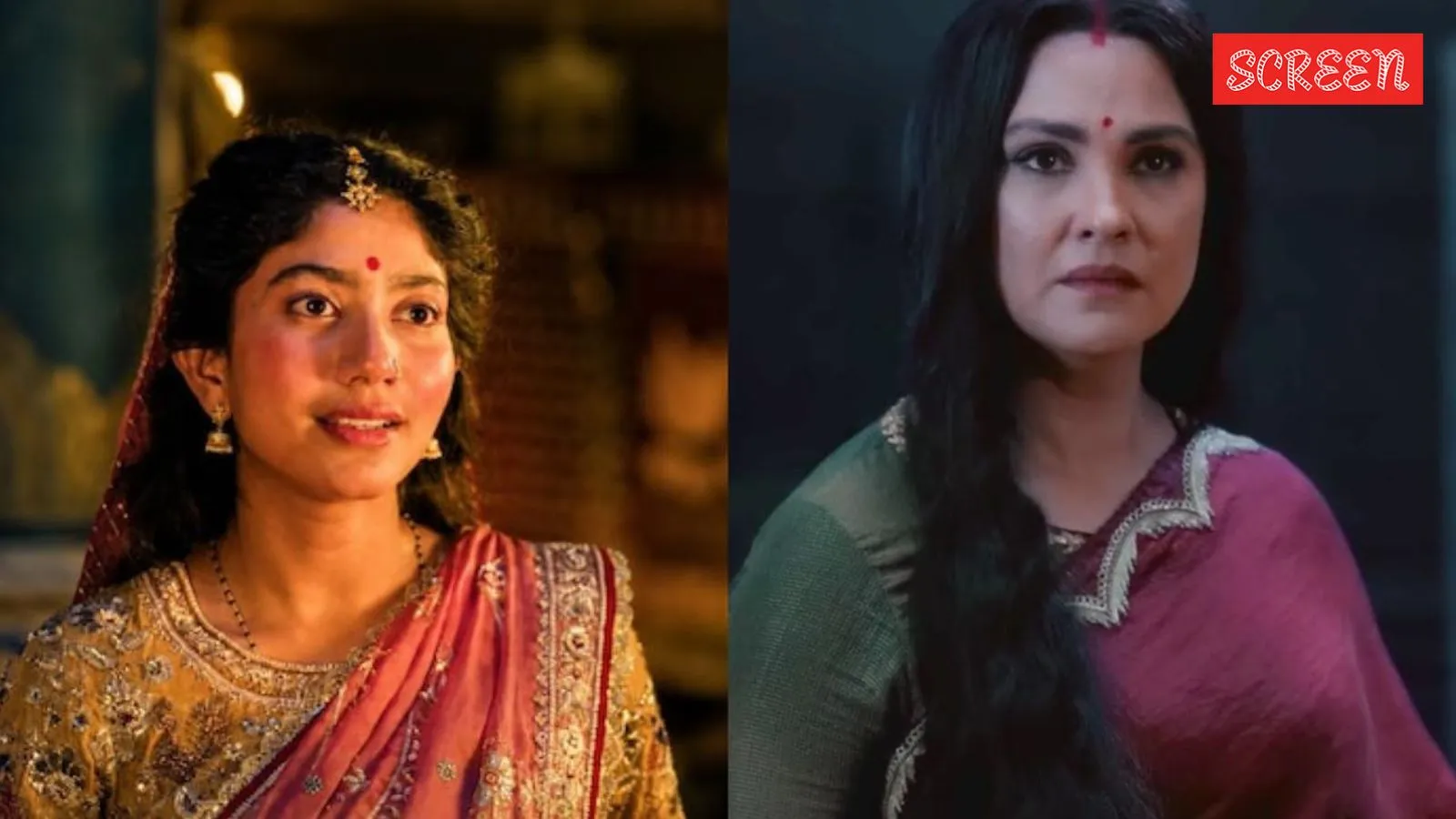
Ramayana will release on Diwali 2026. The trailer of Nitesh Tiwari’s Ramayana, starring Ranbir Kapoor, finally dropped last week, triggering a wave of conversations online. While some praised the scale and ambition of the two-part epic, others questioned several creative choices, including Ranbir’s casting as Lord Rama and the costumes of key characters, particularly Kaikeyi (Lara Dutta) and Sita (Sai Pallavi). Social media has since been flooded with debates over the film’s contemporary visual aesthetic, with many arguing that the styling resembles modern-day television adaptations rather than the mythological world they had imagined. Now, the film’s costume designers, Rimple and Harpreet Narula, who have previously collaborated with Sanjay Leela Bhansali on films such as Padmaavat, have responded to the criticism. Speaking to The Times of India, the duo said they had anticipated differing opinions long before the trailer’s release. “An epic like Ramayana has lived in our collective consciousness for generations. There will always be opinions about the casting, costumes, visual effects and what people believe is right or wrong. We were prepared for that,” they said, adding that the discussions have not shaken their confidence because they remained honest to their creative vision.‘To speak visually to a new generation’ Responding to the criticism surrounding Sai Pallavi’s look as Sita, particularly the blouses worn by the character, Rimple explained that the design was guided by personal faith rather than historical reconstruction. “When I close my eyes and think of Goddess Sita, I don’t think about archaeological authenticity. I wanted my Goddess, the one sitting in my mandir (temple), to look like the image that has lived in my consciousness.” Harpreet also addressed Lara Dutta’s appearance as Kaikeyi, explaining the symbolism behind her costume. “The green in her costume represents motherhood, while the deep maroon reflects the emotional strength and darkness of the decision she has to make. She is torn between her own son and Ram.” He added that every colour in the film was chosen after careful thought, and said audiences are often quick to judge before understanding the creative intent behind such choices. Rimple further pointed out that there are no surviving costume references from the Treta Yuga that can conclusively establish what people wore, making every adaptation an act of interpretation. She noted that the Ramayana itself has been imagined and re imagined differently across cultures and generations. Adding to this, Harpreet said, “This is our attempt to make an ancient epic speak visually to a new generation. There’s thought behind every thread,” urging audiences to watch the film in its entirety before forming an opinion. ‘I don’t know if Ranbir will be accepted as Ram’ Meanwhile, the debate around the film has also drawn reactions from members of the family behind one of India’s most iconic screen adaptations of the epic. Shiv Sagar, grandson of late filmmaker Ramanand Sagar, recently shared his views on the casting in a video posted by The Climax India. While he praised Sai Pallavi and Yash, he admitted he was unsure about Ranbir Kapoor playing Lord Rama. “I did not really care much for some of the other actors. I felt that, typically, what we have done is always cast a fresh face for a character like Ram. Because Ranbir has a lot of baggage with him, especially after Animal, I really don’t know if he will be accepted as Ram.” About Ramayana Directed by Nitesh Tiwari, Ramayana is a two-part epic produced by Namit Malhotra and Yash. The music has been composed by Hans Zimmer and A. R. Rahman. Ramayana: Part One is scheduled to release in theatres during Diwali 2026, while the second installment is slated for a Diwali 2027 release.
Every time I file an important story, I do the same thing. I read it once, then again, then a third time, hunting for the sentence that might be wrong, the question I should have asked but didn’t. This has gone on long enough, and I had a simple explanation for it: fear of failure. Everyone has that, don’t they? But somewhere along the way, I noticed the picture in my head wasn’t of my editor telling me the piece wasn’t good enough. It was the particular expression on the faces of people who believed I could do better. A flicker of disappointment, not anger, which is somehow worse. It made me wonder whether I was really afraid of failing at all, or afraid of what failing might say to the people whose good opinion I’d come to depend on.The more I sat with it, the more I noticed how selective the fear was. I rarely asked myself, “Will this go wrong?” The question that actually formed, uninvited, was, “What if I let everyone down?” When something goes well, I move on within the hour. When I make a mistake, I carry it for days, not because of the mistake itself, but because I’m convinced I’ve chipped away at somebody’s faith in me. Oddly still, praise doesn’t quite land as encouragement. It lands as a debt. The more someone believes in me, the more terrified I become of the day I don’t live up to it. I’ve since learned this isn’t a personality trait, or at least not only that. It has a name, or several overlapping ones, and a shape that psychologists and sociologists recognise instantly once you describe it to them. It isn’t perfectionism, and it isn’t quite imposter syndrome either, though it often travels with both. It is something more specific: anxiety that is anchored not in the task, but in the relationship and in the fear of being the reason someone else’s trust turns out to have been misplaced. The weight of being trusted Rupali Rani, 28, an account manager who has spent years juggling high-priority deliverables, recognised the distinction the moment it was put to her. While handling multiple pressing projects at once, she realised she wasn’t afraid of the work itself. “For me, the fear has never been just about failure; it’s about not living up to the faith someone has placed in me,” she tells indianexpress.com. That fear doesn’t announce itself as pressure every day. She genuinely likes her job, but when the workload builds, she finds herself overpreparing, rereading what she’s already sent, and struggling to properly switch off once the laptop is shut. Recognition, when it comes, complicates things rather than settles them. “Appreciation motivates me, but the ‘high performer’ tag also comes with invisible expectations,” she says.Story continues below this ad Once people begin expecting excellence as a baseline, an average day starts to feel like a small betrayal. For a long time, she estimates, work claimed roughly eighty per cent of her emotional bandwidth against twenty for everything else, a ratio she is now trying, consciously and slowly, to correct. What has stayed with Rani is a line she now repeats to herself: trust, she says, “is built over time; not lost because of one imperfect day.” For S Paul, 25, in her first job after campus placement, the fear arrived dressed as diligence. She was doing well, being praised, and still living with a low hum of dread that something might unravel it all. She began arming herself before she’d even reached her desk, absorbing tips and strategies from people who’d survived long careers, on top of an already demanding job, until the preparation itself became a second job. Paul says she avoided taking leave because she worried it would look like a retreat to her manager, and found herself interrogating her own need for rest before allowing it. Praise, when it arrived, didn’t register as reassurance so much as a puzzle to be solved: after a strong training review, she assumed there had to be an ulterior motive, some reason her mentor was inflating the feedback. “I thanked him a mil


Discussion (0)