
Loading dispatches...
← Return to NewsroomEconomy
US-Iran War Live Updates: Donald Trump’s Hormuz deal would give Iran control of inbound traffic in the Strait
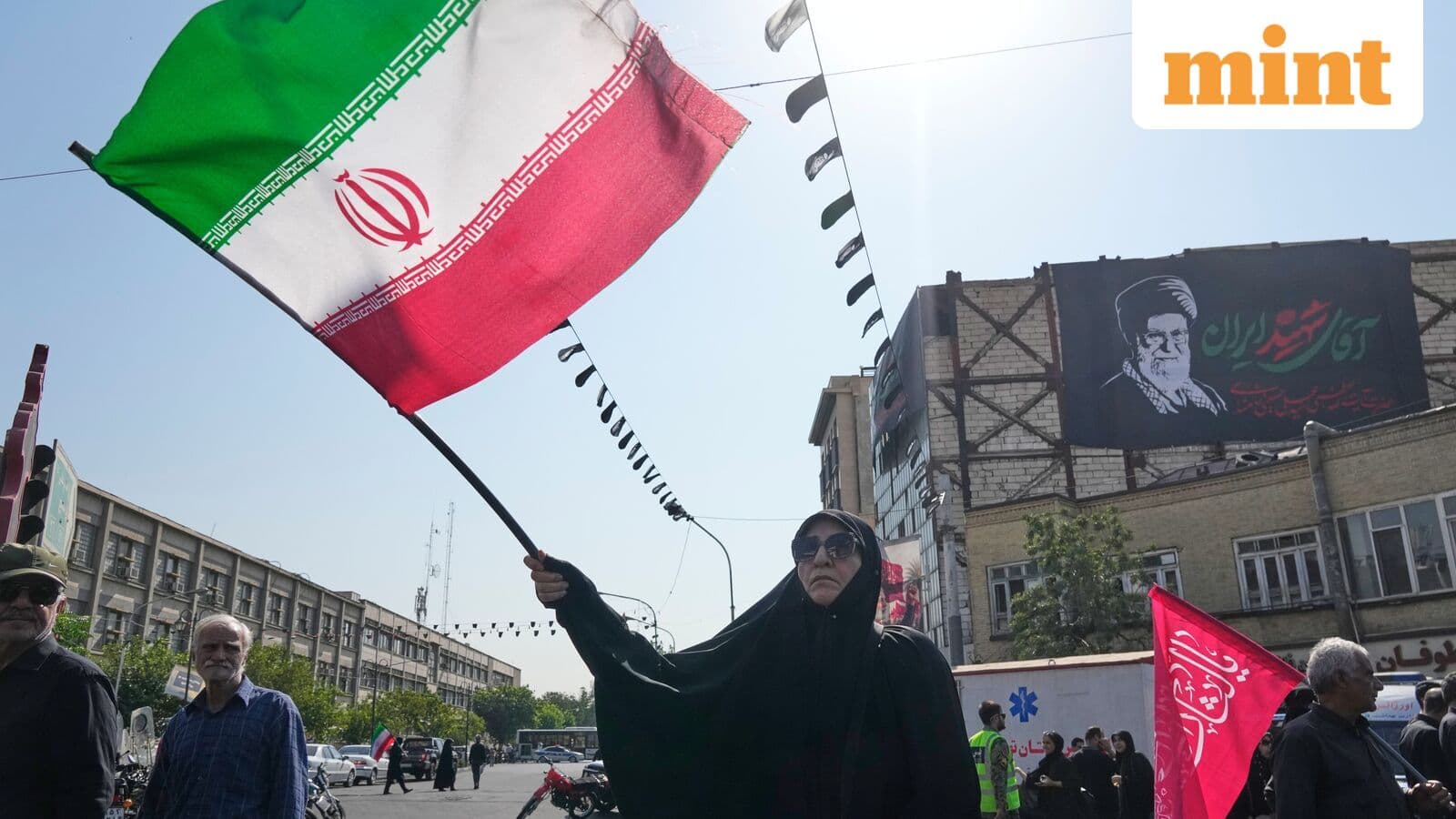
Live UpdatesUS-Iran War Live: US President Donald Trump has said that a deal with Iran to reopen the Strait of Hormuz could be announced in the next few hours. Iran blocked the Strait of Hormuz, through which nearly one-fifth of the world's oil passes through, in response to the US-Israeli war on the country.US-Iran War Live: A woman waves an Iranian flag as a banner showing a portrait of the late Supreme Leader Ayatollah Ali Khamenei is seen at rear during Arbaeen rituals. in Tehran, Iran, (AP Photo)US-Iran War Live: US President Donald Trump has said that a deal with Iran to reopen the Strait of Hormuz could come as early as Wednesday. “It could happen. Trump said. “A lot of progress has been made.”Oil prices eased Wednesday on hopes of a deal that would allow shipping to resume. Brent crude, the international standard, slipped by 1.2% to $78.43 per barrel early Wednesday.The US and Iran reached a deal to open the strait in June, only for attacks to resume. In recent days, Trump has again alternately threatened massive strikes and voiced support for diplomatic efforts.Iran to control Strait of Hormuz?According to Reuters, the proposed deal would give Iran control over ships entering the Gulf through the Strait of Hormuz. If true, this would be one of the biggest concessions the US has offered Iran so far in the more than five months of war.Blocking the Strait of Hormuz through which around 20 per cent of the world’s petroleum and crude oil is transported has been the biggest threat Iran had issued before the US and Israel launched the war on February 28.Following the outbreak of the conflict, Iran made good on its promise and blocked the Strait of Hormuz, a move that economically hit the US allies in the region and threatened the global oil supply. Ever since, Trump has made the unconditional reopening of the Strait of Hormuz a core objective of the war, along with de-nuclearization of Iran.US officials have repeatedly insisted they would never agree to Iran controlling access to the world's most important trade route for energy supplies.An agreement that gives Iran authority over traffic through the strait would mean the war launched by the United States and Israel has resulted in a major shift in the balance of regional power in Tehran's favour. Before the war, the strait was freely open to all ships with no fees.How the previous deal collapsedThe previous MoU between the US and Iran fell apart over how the two sides interpreted Article 5, which concerned the Strait of Hormuz. The MoU stated that Iran would use its best efforts to ensure the safe, free passage of commercial vessels for 60 days. Iran interpreted this language as US recognition of its sole sovereignty to manage and potentially fee ships in the waterway. The US and Gulf allies rejected this, insisting that international law guarantees an open, toll-free strait, which led to the collapse of the MoU and resumption of the hostilities.Follow updates here:6 Aug 2026, 05:49:41 AM ISTUS-Iran War Live: Trump says US would prefer deal but warns Tehran against nuclear ambitionsUS President Donald Trump on Wednesday (local time) said the United States was "doing the same thing" in Iran as it had done in Venezuela, while asserting that Washington would prefer to reach a deal with Tehran but would not allow the country to develop nuclear weapons.Addressing a gathering in Las Vegas, Trump said the US had weakened Iran through recent military action but remained open to negotiations."In Venezuela, it was a 48-minute war, and we paid for the war with what we've taken out...to the victor belongs the spoils, and we are doing the same thing in the lovely Islamic Republic of Iran. We are knocking the hell out of them. I would rather make a deal, because I do not want to kill people," Trump said.The US President claimed that a much larger military operation had been planned but was halted after Iran sought talks."We were set for the biggest attack since World War II, and they cal
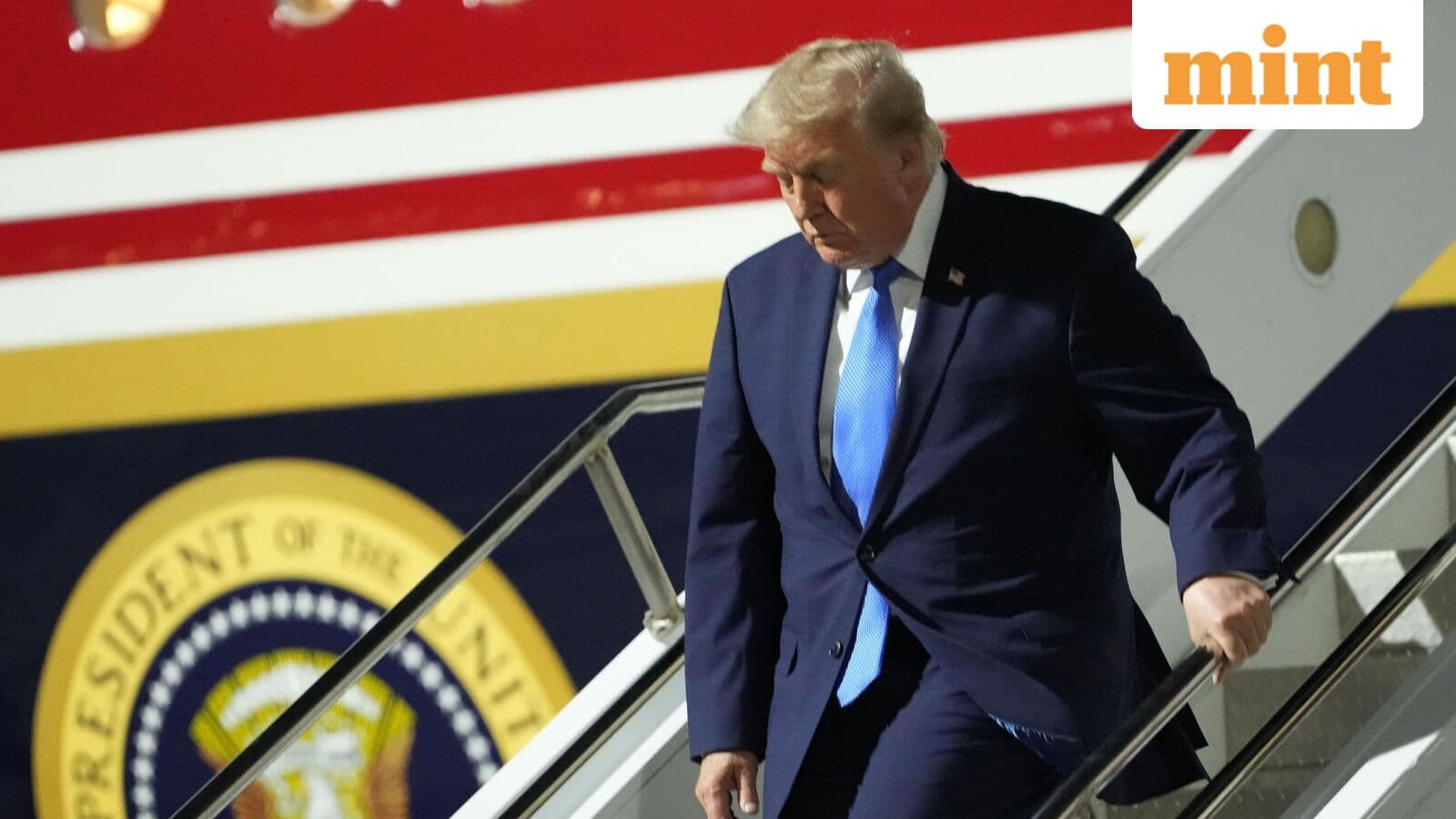
Iranian and Omani negotiators have reportedly completed a draft agreement that is awaiting final approval.President Donald Trump arrives on Air Force One at Harry Reid International Airport in Las Vegas, Tuesday, Aug. 4, 2026. (AP Photo/Mark Schiefelbein)(AP Photo/Mark Schiefelbein)US President Donald Trump said a deal to reopen the Strait of Hormuz could be reached "tomorrow or the next day," expressing optimism that progress in talks between Iran and Oman could help restore shipping through one of the world's most strategically important waterways and ease pressure on the global economy.Speaking to reporters while traveling in California on Tuesday evening, Trump was asked about a report suggesting an announcement on the strait could come on Wednesday."It could happen. Tomorrow or the next day. A lot of progress has been made," Trump said.The remarks come as Iranian and Omani negotiators move closer to finalizing an agreement on managing maritime traffic through the Strait of Hormuz, a critical shipping lane that carried around one-fifth of the world's oil and natural gas exports before the conflict.Iran-Oman draft agreement awaits approvalAccording to regional officials cited by the Associated Press, Iranian and Omani negotiators have completed a draft agreement that is awaiting final approval from Iran's Supreme Leader Ayatollah Mojtaba Khamenei.The proposed arrangement is described as a temporary solution aimed at reopening the strait after months of disruptions following the war launched by the United States and Israel against Iran on February 28. The conflict, initially justified by Washington and Israel as an effort to dismantle Tehran's nuclear program and weaken its government, has increasingly centered on control of the strategic waterway.Officials familiar with the negotiations said the agreement could also pave the way for renewed US-Iran nuclear talks.Earlier reports indicated the proposal would allow ships entering the Persian Gulf to use an Iranian-controlled route while outbound vessels would travel through a route managed by Oman. The arrangement would reportedly include service fees for maritime security and environmental protection, although Washington has repeatedly opposed any deal allowing Iran to levy charges on international shipping.Iranian Foreign Ministry spokesperson Esmail Baghaei confirmed that talks with Oman are in the "final stage" of drafting and said a joint statement could be issued if "certain parties do not obstruct this process," an apparent reference to the United States.Strait closure has disrupted global tradeThe Strait of Hormuz has become the central flashpoint in the conflict after Iranian attacks on commercial shipping sharply reduced maritime traffic.The disruption has driven up global energy prices and increased transportation costs worldwide, placing additional political and economic pressure on the Trump administration ahead of the US midterm elections.Although Brent crude initially fell on optimism surrounding a possible agreement, oil prices later edged higher, trading around $80 per barrel on Wednesday, well below the peaks reached during the height of the conflict.Trump has alternated in recent weeks between threatening major military action against Iran and signaling support for diplomatic efforts to reopen the waterway.Shipping attacks continue despite diplomatic progressEven as negotiations advanced, attacks on vessels in the region continued.Iran-backed Houthi rebels in Yemen claimed on Wednesday that they launched ballistic missile attacks targeting a Saudi oil tanker near the Red Sea port of Yanbu. Houthi military spokesperson Brig. Gen. Yahya Saree announced the attack in a prerecorded statement but provided no evidence. Saudi authorities did not immediately comment.The Houthis have intensified pressure on Saudi-linked shipping after announcing in July that they were closing the Bab el-Mandeb Strait to vessels connected to the kingdom, raising concerns over another
The proposal, now in the final stage of the federal rulemaking process, would require certain employers to pay an additional $4,000 fee for H-1B extensions and $4,500 for L-1 extensions, in addition to the fees already charged for new petitions.If finalized, the rule would mark one of the most significant changes to H-1B filing costs in recent years, affecting technology firms, consulting companies(REUTERS)The administration of US President Donald Trump is preparing to significantly tighten the H-1B visa regime by expanding an existing government fee to cover visa extension petitions, a move that could substantially increase costs for companies employing large numbers of foreign workers.The proposal, now in the final stage of the federal rulemaking process, would require certain employers to pay an additional $4,000 fee for H-1B extensions and $4,500 for L-1 extensions, in addition to the fees already charged for new petitions.If finalized, the rule would mark one of the most significant changes to H-1B filing costs in recent years, affecting technology firms, consulting companies and multinational employers that rely heavily on skilled foreign workers.What is changing?The proposed rule expands the scope of the 9-11 Response and Biometric Entry-Exit Fee, which currently applies only to:-Initial H-1B and L-1 visa petitions.-Change-of-employer petitions.Under the proposal, the same fee would also apply whenever eligible employers file extension-of-stay petitions for existing H-1B or L-1 employees.The Department of Homeland Security (DHS) says the amendment clarifies congressional intent by ensuring the fee applies to all extension requests, regardless of whether the employee changes employers.Which employers will be affected?The additional fee will apply only to companies that:-Employ 50 or more workers in the United States, and-Have more than 50% of their workforce in H-1B or L-1 status.These thresholds remain unchanged under the proposal.Employers outside these criteria would not be subject to the additional biometric fee.How much will companies pay?If the rule takes effect, qualifying employers would pay:$4,000 for every H-1B extension petition.$4,500 for every L-1 extension petition.These charges would be in addition to existing USCIS filing fees and other applicable visa-related costs.The rule would continue to apply to petitions filed through September 30, 2027.Why is DHS making the change?According to DHS, the expanded fee is intended to generate additional funding for the government's biometric entry-exit system.The department argues that revenue from the existing fee is no longer sufficient to maintain and expand biometric screening infrastructure at US borders.The additional collections would help Customs and Border Protection (CBP):-Maintain current biometric entry and exit operations.-Expand biometric systems to additional air, sea and land ports.-Continue deploying a comprehensive biometric exit system mandated by Congress.Rule not yet in effectThe proposal was first published in the Federal Register in June 2024 as a Notice of Proposed Rulemaking.It later appeared in the Trump administration's 2026 Unified Regulatory Agenda as a pending final rule, indicating the administration intends to complete the regulation in the coming weeks.However, the proposal has not yet taken effect. Employers will continue to follow the current fee structure until DHS issues a final rule and specifies its effective date.If finalized, the regulation would require covered employers to pay the additional biometric fee every time they seek to extend an H-1B or L-1 worker's stay in the United States.Stay updated with the latest Trending, India, World and US news. HomeNewsUs NewsH-1B visa extension fees could rise: What employers need to know about Trump Admin's proposalMore



Discussion (0)