
Loading dispatches...
← Return to NewsroomPolitics
Assembly ruckus case: Kerala High Court quashes complaint against former Congress MLA A.T. George

The Kerala High Court has quashed the crime registered against former Congress MLA from Parassala A.T. George, filed by the former Communist Party of India (Marxist) [CPI(M)] MLA from Kuttiyadi K.K. Lathika, alleging that he had hit her during a ruckus in the Assembly in 2015. A Single Bench of Justice C.S. Dias observed that the crime registered in connection with the brawl against former Congress MLAs M.A. Vaheed, Dominic Presentation and K. Sivadasan Nair had been set aside by the court in September 2024.Ms. Lathika had alleged that Mr. Vaheed had restrained her, touched her inappropriately, and attempted to push her to the floor. It was also alleged that the accused had obstructed her movement inside the Assembly Hall and outraged her modesty. The accusations against Mr. Presentation and Mr. Nair had been raised by former Kovalam MLA Jameela Prakasam of the Janata Dal (Secular).The court clarified that there was no evidence to prove the elements required to constitute the offence of obstruction and that the Magistrate had not framed any charge against Mr. George for causing injury to Ms. Lathika.Meanwhile, the court dismissed a plea by some LDF leaders to quash the cases registered against them in connection with the Assembly ruckus.The LDF leaders had sought a joint trial along with the case against A.T. George. However, the court held that since the case against the Congress leader had been dismissed, a joint trial would be irrelevant. LDF leaders Kunjahammed, E.P. Jayarajan, C.K. Sadasivan, and K.T. Jaleel had approached the High Court after the Thiruvananthapuram Chief Judicial Magistrate (CJM) Court rejected their request in this regard.The Assembly ruckus occurred during a protest by LDF MLAs demanding the resignation of the then Finance Minister K.M. Mani and opposing the presentation of the State Budget for 2015-16 by Mani. Published - August 18, 2026 09:54 pm IST
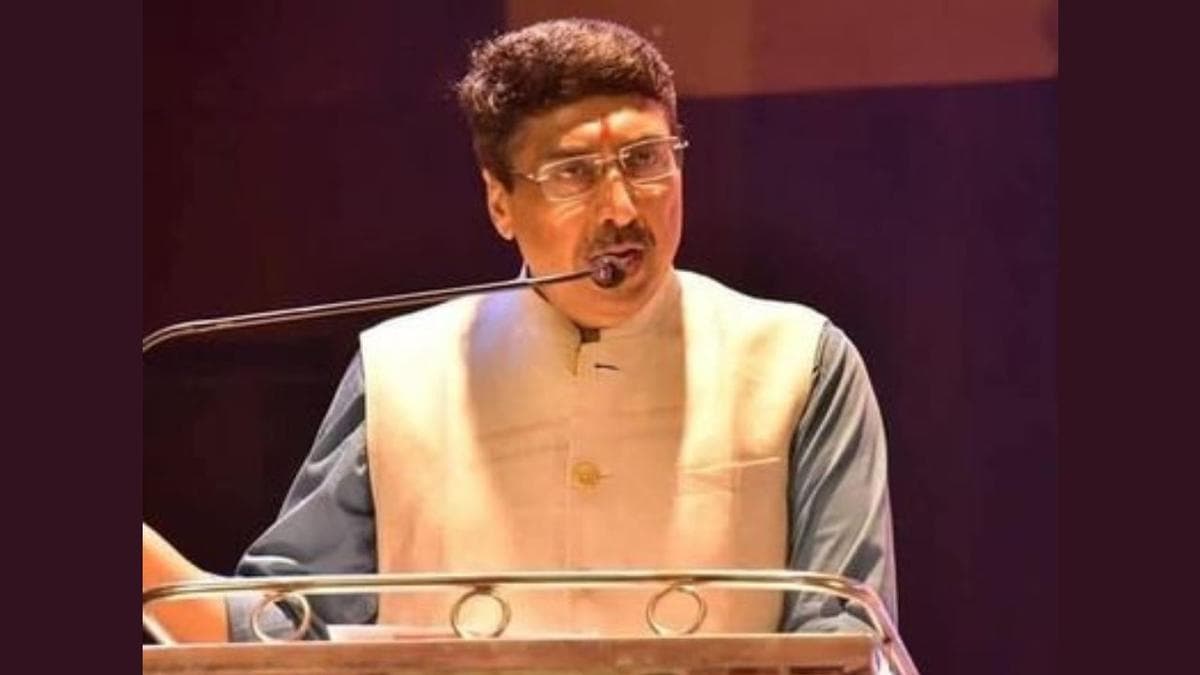
Deepak Mhaskey has served as a State-level spokesperson and had headed the Chhattisgarh social media cell in the past. Photo: X/@deepakmhaskey. Deepak Mhaskey — whose name was announced as the Bharatiya Janata Party’s new national social media convener on Monday (August 17, 2026) — is seen as a strong backroom figure in his home State of Chhattisgarh. However, taking up a bigger role at a time when the party is being forced back to the drawing board to connect with the youth, the spotlight is expected to be firmly on him and his team.Soon after Mr. Mhaskey’s name was announced, the 58-year-old Chemistry professor-turned-politician was asked how he would engage with the youth, to which he replied that it would be through “reels” and that they [the youth] were already on social media and the party would try to reach them through the same.The reply was in his own mild-mannered style, one that has drawn comparisons with his long-serving predecessor Amit Malviya, who was known to be more aggressive. Mr. Mhaskey, who has served as a State-level spokesperson and had headed the State social media cell in the past, was known as someone who was not very regular on TV debates and one who presented the party’s point of view on local media steadily but calmly.Anti-graft campaignThose who have worked with him, however, say that he may come across as unassuming but can shift gears when needed. A case in point, they say, was the party’s constant attack on the Bhupesh Baghel-led Congress government on the issue of corruption in the run-up to the 2023 Assembly polls by bombarding the popular social media networks with relevant posts and pictures. It was also the same period when the party’s current national president, Nitin Nabin, was the BJP in-charge of Chhattisgarh and had the opportunity to see Mr. Mhaskey’s work up close. Later, he also contributed to State election wins in West Bengal and Bihar, putting in use his data analysis skills, said party leaders.Mr. Mhaskey was born into a Maharashtrian Brahmin family which has past connections with the BJP, including the erstwhile Jan Sangh, and the RSS. A profile shared by the party revealed that early in his career, he worked as a college chemistry professor for a few years.“He is an avid agriculturist with over 35 years of experience in agricultural crops and organic farming. He is interested in data collection, analysis, and governance roles,” it added.Mr. Mhaskey will be leading a team which will have Priti Gandhi, Alok Bhatt, Shiwanand Dwivedi and Arun Yadav.While Mr. Mhaskey spoke of busting propaganda after the appointment, the BJP that has been ruling the country for over 12 years is facing questions on governance from a generation that is thinking, acting and connecting differently than the earlier ones. Party colleagues say that of his over three and a half decades, he has been dealing with social media for over 12 years and that makes him suitable for the role. Even Mr. Malviya, when he first took over as the social media chief had lesser experience as a BJP member, they say, even as they underline the need for a more balanced approach in current times.Mr. Mhaskey was congratulated by Chief Minister Vishnu Deo Sai, other Chhattisgarh leaders, and Mr. Malviya. In a long post on X in which he congratulated the new office-bearers whose names were announced in Monday’s organisational reshuffle, Mr. Malviya wrote: “I wish to particularly congratulate Shri Deepak Mhaskey ji, who will be taking over from me as the head of the BJP’s Social Media Department...” making a specific mention of his successor. Published - August 18, 2026 01:57 am IST

Justice Joymalya Bagchi, on the three-judge Bench with Justice V. Mohana, said elephant pathways were not State-specific, and herds travel far by nature. | Periasamy The Supreme Court on Monday (August 17, 2026) directed the Centre to conduct a nationwide survey and take steps to ensure the free passage of wild elephant herds through their ancient corridors across States without human will or habitations blocking or impeding their natural routes.“No State can block their [elephants] paths. Blockading elephant corridors is not the solution to human-animal conflicts. Elephants travel across many States. One State cannot come in their way and block their traditional pathways. The solutions to this (animal-human conflict) are altogether different, and not constructing blockades,” Chief Justice of India Surya Kant said.Justice Joymalya Bagchi, on the three-judge Bench with Justice V. Mohana, said elephant pathways were not State-specific, and herds travel far by nature.“Elephant corridors have been obstructed, impeded, blocked due to some local factors. The Union of India must conduct a fresh survey and file a comprehensive report, which would include the necessary steps which were taken to prevent such obstructions,” Chief Justice Kant ordered.The court directed the government to examine allegations that fireballs, mashaals (fire-torches) and spikes are thrown at wild elephants. In 2018, the apex court had prohibited the use of fireballs, burning rods, and spikes to chase elephants, calling them barbaric and illegal.The court asked the government to ensure the implementation of the ban of such measures by ‘hula’ parties to drive away wild elephants from crops and villages. Elephants are Schedule I animals under the Wildlife (Protection) Act, 1972. They are considered a vulnerable species which receive absolute legal protection.Appearing for the Centre, Additional Solicitor General Aishwarya Bhati agreed to conduct a nationwide survey and submit the status report. Ms. Bhati sought three months, but the court said it would list the case after eight weeks to check on progress.“Construction of any kind of obstacle or creating blockades in elephant corridors is not acceptable. We are very clear that there cannot be obstacles in the way of wildlife. No State can say that just because crops are getting destroyed, they will have to construct obstacles on their path,” the Bench reiterated.Justice Bagchi said the practice of using fireballs and spikes was prevalent in West Bengal where the elephants came from Nepal and went to Jharkhand and other States. Chief Justice Kant said there were elephants in the Yamuna Nagar area of Haryana which travel to Uttarakhand and Himachal Pradesh.The court was hearing a plea by advocate Shibani Ghosh, who submitted that fireballs continue to be thrown at wild elephants in West Bengal to drive them away from human habitation and croplands despite Supreme Court orders in 2018 to desist from the practice. Published - August 17, 2026 05:21 pm IST

The Leader of Opposition Rahul Gandhi said the High court orders had directly affected his civil rights and political reputation. The Supreme Court on Monday (August 17, 2026) ordered an immediate halt on disproportionate assets proceedings initiated by Allahabad High Court against Leader of Opposition Rahul Gandhi while observing that at least courts should follow principles of natural justice. A three-judge Bench headed by Chief Justice of India Surya Kant was reacting to submissions made by senior advocate Kapil Sibal and advocate Prasanna S., appearing for Mr. Gandhi, that High Court proceedings and subsequent directions to the Central Bureau of Investigation (CBI) and Directorate of Enforcement (ED) to inquire into the allegations of disproportionate assets made by the private complainant, S. Vignesh Shishir, against the Congress leader, amounted to a “witch-hunt”.The High Court was scheduled to hear the case on August 20. Mr. Sibal said the High Court proceedings were conducted in-chamber, and not in open court. The records were kept in sealed covers. Mr. Gandhi was not given an opportunity to be heard on the allegations.“According to our understanding of the law, the police or an investigating authority can register a case on a complaint. They do not require permission of the accused to do that. But the courts are different. If the courts want to issue directions [for inquiry/investigation], the courts are expected to fulfill the principles of natural justice,” Chief Justice Kant addressed the CBI counsel, Additional Solicitor General S.V. Raju. Mr. Raju said he was strictly on the law. He said the facts presented in Mr. Shishir’s complaint may be right or wrong. “But if the facts are right, it is a gross case of disproportionate assets,” the law officer, who is also appearing for the ED, submitted. He maintained that the allegations in the complaint were “very serious”, and could not have been dismissed as “frivolous”.“If they [allegations against Mr. Gandhi] were so serious, why did your agency keep quiet all this while? Did you require an impetus from the court? You could have used your own statutory powers to start an inquiry…”, Justice Joymalya Bagchi addressed Mr. Raju. Justice Bagchi said since the CBI had admittedly not taken suo motu cognisance and conducted an inquiry, the apex court was bound to examine the correctness of the High Court order which directed the agencies to start the inquiry.“If someone is approaching the court, and the court compelled you, then we certainly feel this should be looked into… When the court says something, its subjective satisfaction would be recorded. We will look into that,” Chief Justice Kant said. The court further asked Mr. Gandhi’s side to share the case paperbook with Mr. Shishir, who appeared on caveat. Mr. Gandhi had termed the series of directions passed by the Lucknow Bench of the High Court in May and July directing the Central Bureau of Investigation (CBI) and the Directorate of Enforcement (ED) to probe the allegations against him as one of the rarest instances of a Constitutional court acting contrary to several first principles or basic, fundamental legal rules all at once. The Opposition Leader said terming these orders outside the settled rules of law or erroneous would be a gross understatement. Mr. Gandhi submitted that the proceedings were characterised by the unjustified secrecy of in-chamber hearings with documents and pleadings kept under wraps in sealed cover. He had maintained that the High Court did not refer to the foundational material or provide reasons in the orders for directing a “roving inquiry”.Mr. Gandhi challenged the locus standi of Mr. Shishir, saying he was a member of the Rashtriya Swayam Sevak Sangh who had instituted multiple complaints and public interest litigation against him in the past. The Leader of Opposition said the High court orders had directly affected his civil rights and political reputa
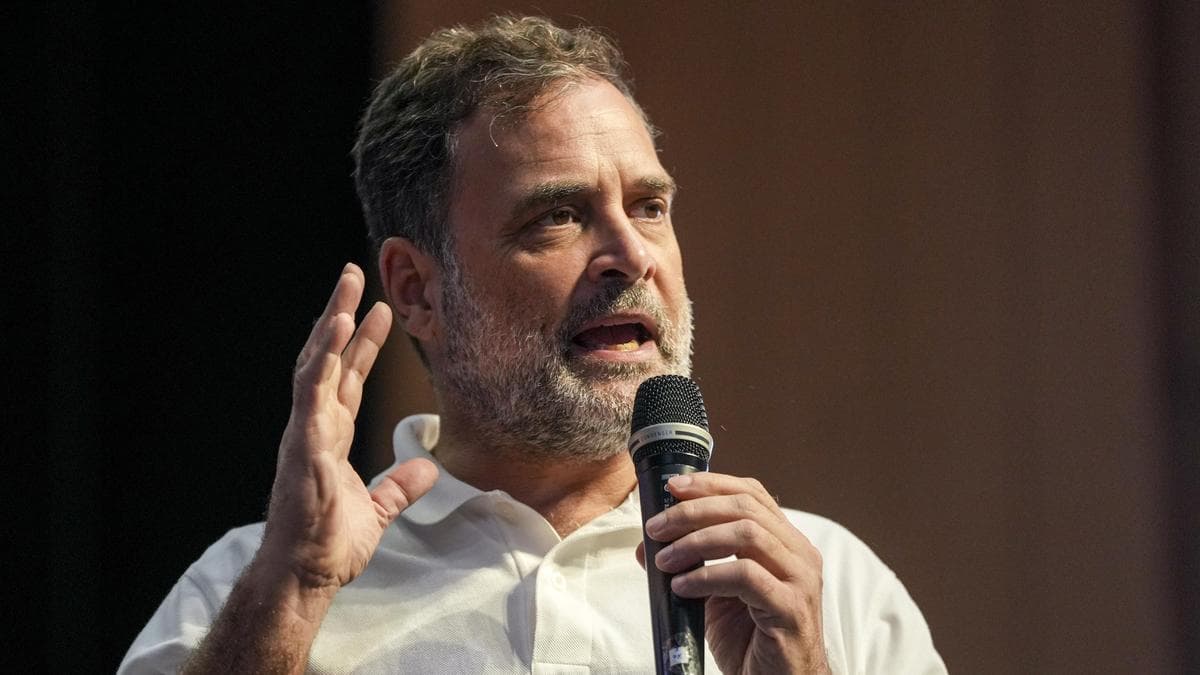
Rahul Gandhi addresses the 'Rachnatmak Congress National Convention', at the Constitution Club, in New Delhi. File | As per the Apex Court's cause list of August 17, a Bench comprising Chief Justice Surya Kant and Justices Joymalya Bagchi and V. Mohana will hear the matter.Expressing dissatisfaction with the CBI's response, the Allahabad High Court's Lucknow Bench on July 20 had directed the agency's senior officer to personally file a fresh affidavit detailing the progress made in the probe into the allegations of disproportionate assets against the Leader of Opposition in the Lok Sabha.The High Court had also observed that if, during the course of its inquiry into the allegations, the Enforcement Directorate (ED) comes across material and documents indicating any illegality, it would be free to proceed further in accordance with law.The High Court was hearing a plea that sought an investigation by the CBI and the ED into allegations of disproportionate assets against the Congress leader.The Order was passed after an in-chamber hearing lasting nearly two hours in the criminal writ petition filed by Karnataka resident S. Vignesh Shishir.Mr. Vignesh, a BJP worker, had earlier filed pleas alleging that the Congress leader holds dual citizenship.The High Court had noted that the affidavit filed by the CBI was not in compliance with its earlier order and did not adequately explain the progress made on the complaint submitted by the petitioner against Mr. Gandhi related to his assets.The Court had directed the joint director or the head of the concerned zone at the CBI's Anti-Corruption headquarters in New Delhi to personally file a fresh affidavit before the next hearing, detailing the progress made in the matter.The bench had treated the matter as part-heard and fixed August 20 as the next date of hearing.The High Court had also granted four weeks' time to the Union Government to file detailed counter affidavits on behalf of the Department of Personnel and Training, the Department of Revenue under the Ministry of Finance, the Ministry of Corporate Affairs, and the Serious Fraud Investigation Office.It had also directed that the entire case record continue to remain in a sealed cover in the safe custody of the senior registrar, in terms of its earlier orders. Published - August 16, 2026 12:58 pm IST
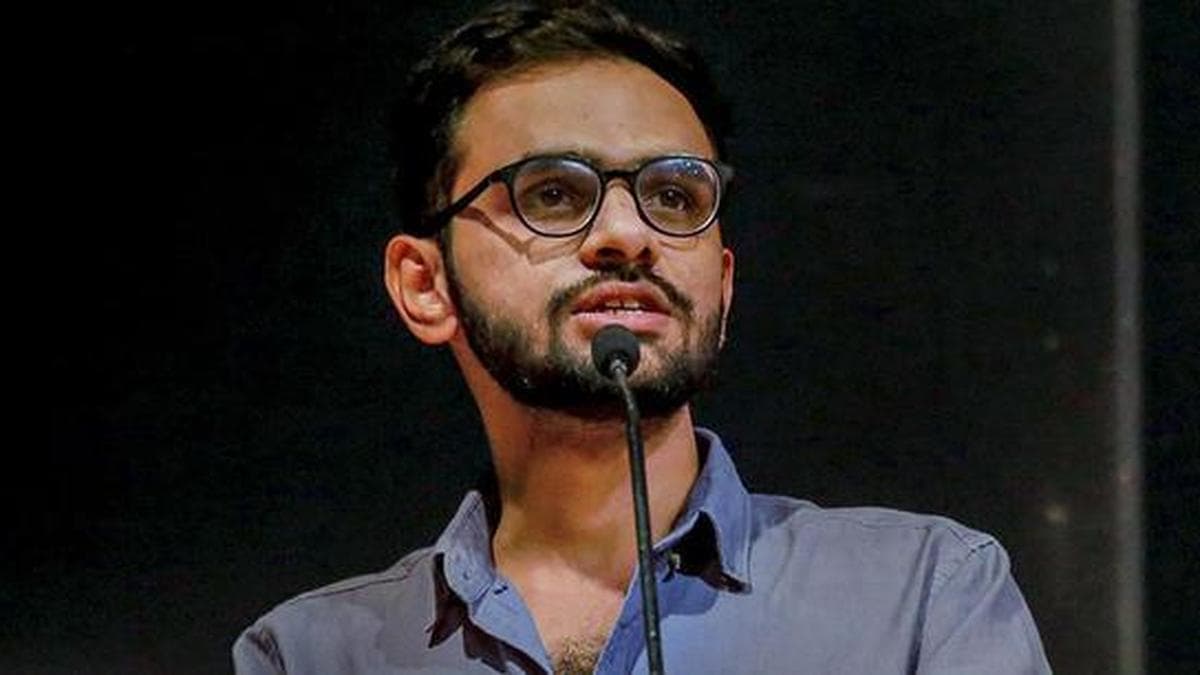
File picture of Umar Khalid. | The two, accused in a larger conspiracy case related to the 2020 North-East Delhi riots, have been in custody for nearly six years.“As Indian citizens, we have been deeply concerned about the life and liberty of those against whom special laws like the Unlawful Activities (Prevention) Act have been unjustly invoked, simply to keep them behind bars for inordinate lengths of time,” the letter, undersigned by more than 100 people, including Arundhati Roy, Amitav Ghosh, Prakash Raj, Ramachandra Guha, Yogendra Yadav, Rana Ayyub, Swara Bhasker and Jayati Ghosh, said.The signatories, who wrote to CJI on the eve of India’s 80th Independence day, invoked the Supreme Court’s 2021 judgment in K.A. Najeeb, which held that prolonged incarceration can violate an accused person’s fundamental right to a speedy trial under Article 21 of the Constitution. The judgment emphasised that stringent bail provisions under the Unlawful Activities (Prevention) Act (UAPA) cannot justify indefinite detention when there is no likelihood of the trial concluding within a reasonable period.The signatories also pointed out to the CJI’s recent lecture in Sweden in which he himself referred to the K.A. Najeeb judgment and highlighted the Supreme Court’s power to grant bail where prolonged incarceration infringes the right to a speedy trial. They also noted that the CJI was also the part of the three-judge bench that delivered the landmark ruling.Drawing comparison between Mr. Khalid and Mr. Imam’s case case and K.A. Najeeb, the signatories said that the prosecution in the Delhi riots larger conspiracy case has arraigned approximately 900 witnesses, compared with 276 prosecution witnesses in K.A. Najeeb. They highlighted that the trial in the present case has not yet begun, despite the two continuing to remain incarcerated as undertrial prisoners.“Their bail applications have been repeatedly rejected by different courts, including by a two-judge Supreme Court bench in January 2026,” the letter read.The signatories also referred to the Supreme Court’s May 18, 2026 judgment in Syed Iftikhar Andrabi v. National Investigation Agency, which, according to the letter, criticised the January ruling in Gulfisha Fatima v. State for denying bail and also preventing another bail application for a year. The judgment emphasised that smaller Benches must follow the law laid down by larger Benches, including the three-judge ruling in K.A. Najeeb.The letter said the matter has since been referred to a larger Bench to consider issues including liberty and national security, while Mr. Khalid and Mr. Imam remain behind bars.“We urge your intervention to reverse this travesty of justice unfolding before our eyes,” the letter said, warning against the use of UAPA to silence critics and dissidents. It urged the CJI to ensure that “bail is the rule, jail an exception” is followed consistently, arguing that after years of incarceration, even a subsequent acquittal cannot restore the lost years of liberty. Published - August 14, 2026 11:53 pm IST
The court was hearing a petition filed by the Kuki Women Organisation for Human Rights seeking the removal of the blockade on National Highway 2 and restoration of supply of essential services to the State. File | Chief Justice of India Surya Kant, heading a three-judge Bench, said highways act as a lifeline for ordinary people.The court was hearing a petition filed by the Kuki Women Organisation for Human Rights seeking the removal of the blockade on National Highway 2 and restoration of supply of essential services to the State.“Why can’t both groups realise something? That blockade of the highway does not serve either group. With the intervention of some agency, why can’t you allow the NH to open,” the CJI asked both groups represented by their respective counsel.Impleading the National Highway Authority of India in the case, the Bench asked the parties to “think of peace now”. It has also sought a clarification from the parties on whether there were any other blocked highways to Manipur.Senior advocate Anand Grover, for the petitioner NGO, said the situation was almost desperate with the lack of essential supplies hitting the lives of the people in Manipur.The court, while agreeing with Mr. Grover about the dire situation, said it did not want to pass any sweeping directions which may unsettle the State again. Published - August 14, 2026 10:47 pm IST
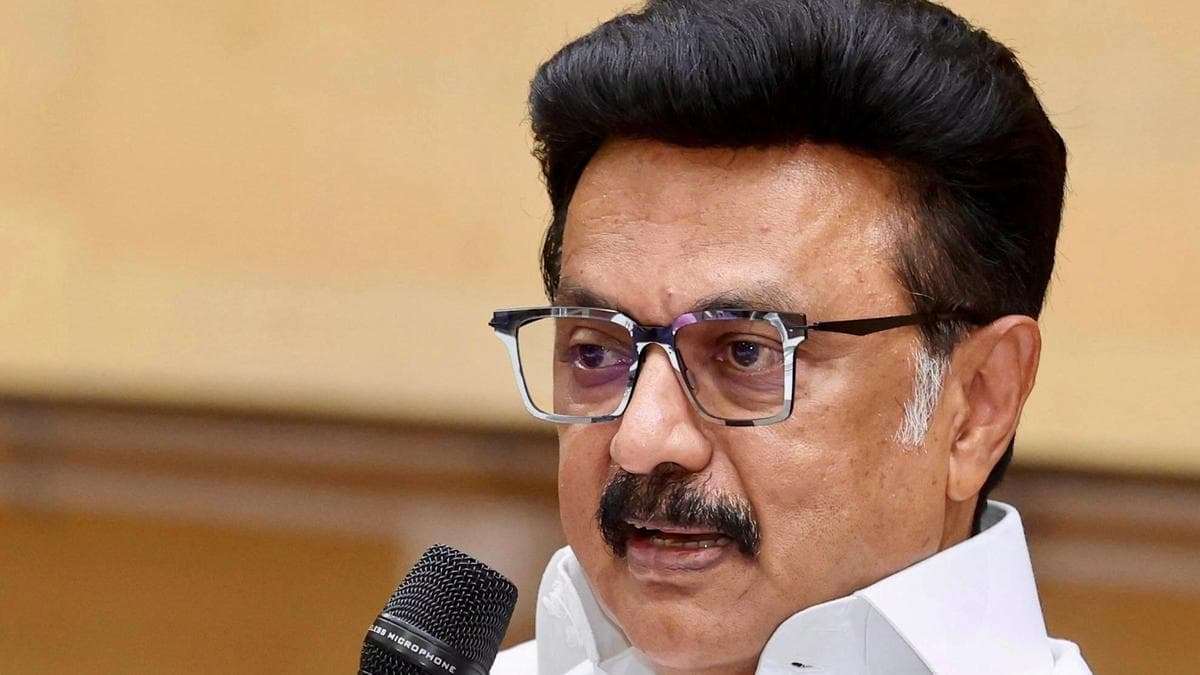
DMK president M.K. Stalin. File | At present, the party is divided into 78 district units.The party leadership is keen on giving a prominent role to younger leaders and is also considering fixing an age limit for district secretaries. It is also likely to prescribe fixed tenures for district secretaries to prevent individuals from exercising permanent control over the party organisation in the districts.Sources said the committee constituted by party president M.K. Stalin to revamp the organisation and infuse fresh energy into its structure had submitted its interim report. The party’s executive committee is scheduled to meet on August 22 to discuss the recommendations.“The recommendations will have to be incorporated into the party constitution to give effect to the proposed changes,” sources said.The committee comprises former Ministers Thangam Thennarasu, Geetha Jeevan, R. Sakkarapani, S.S. Sivasankar, and Tamilarasi Ravikumar; MP Murasoli, former MP M.M. Abdullah; former MLAs I. Paranthaman and Dr. Ezhilan; and party functionary S.K.P. Karuna.“One of the recommendations is to infuse new blood into the organisation by accommodating young faces and women as district secretaries. There should be wider representation to make the organisation more effective,” a source said. Published - August 14, 2026 03:17 pm IST
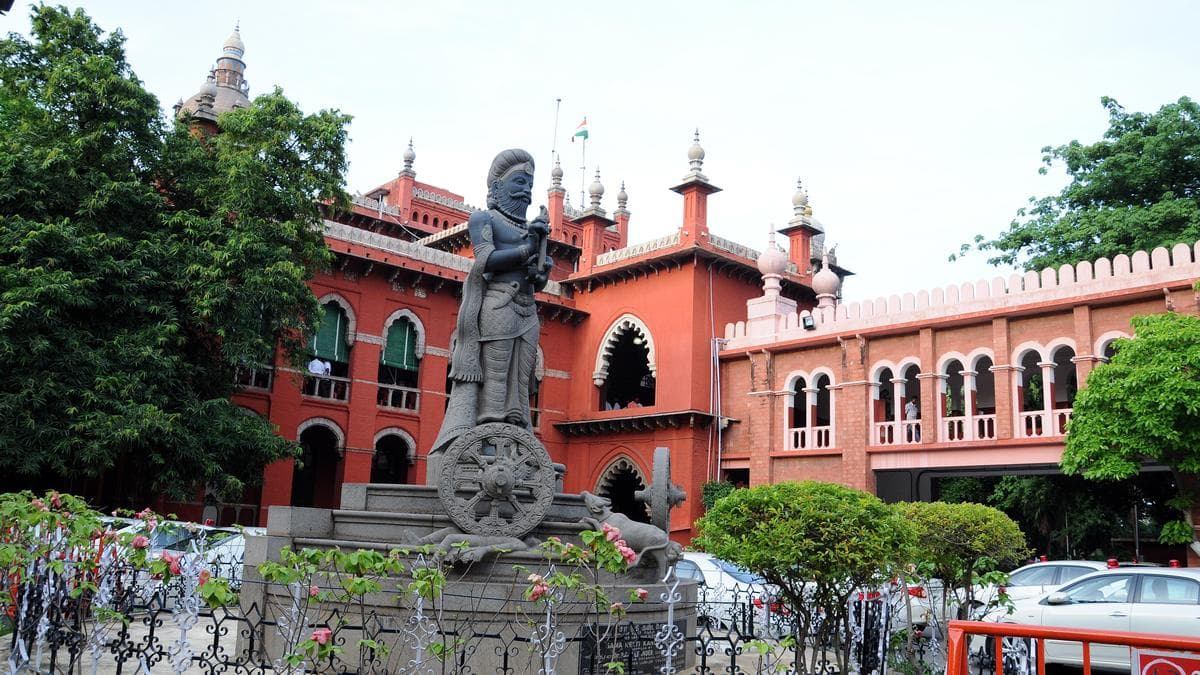
Madras High Court. File | Pichumani The Madras High Court administration has decided to play the national song Vande Mataram before the national anthem during the Independence Day celebrations at its principal seat in Chennai, the Madurai Bench, and all district judicial units, both in Tamil Nadu and Puducherry on Saturday (August 15, 2026).According to a circular issued by the High Court’s Registrar General Deepthi Arivunithi, the decision to include the singing/playing of the national song during the celebrations had been taken in view of the advisory issued by the Centre under the ‘Har Ghar Tiranga Campaign 2026’ to commemorate 150 years of Vande Mataram. A copy of the circular issued by the Madras High Court Registrar General with respect to the playing of the national song Vande Mataram during the Independence Day celebrations | Listing out the sequence, it said, the national song must be played first, followed by the hoisting of the national flag and then the playing/singing of the national anthem.Concern over Tamil Thai VazhthuHowever, the absence of any mention of the playing/singing of the State song Tamil Thai Vazhthu in the circular had become a cause of concern among a section of the legal fraternity. The Madurai Bench of the Madras High Court Bar Association (MMBA) has written to the Registrar General, expressing its concerns.“It is a long-standing convention that in all the programmes conducted by the honourable High Court, the function will start by playing/singing the Tamil Thai Vazhthu,” the association said. It highlighted a Government Order issued on August 12, 2026, making it mandatory to sing/play the State song during specific events.“Tamil Thai Vazhthu is not merely a song but an enduring symbol of Tamil identity, language, culture and heritage of Tamil Nadu. The Madras High Court, being one of the foremost constitutional institutions of Tamil Nadu, has a special responsibility to uphold the dignity of the State, its Constitutional values and its rich linguistic and cultural heritage... Therefore, we request you to include the State song in the events of Independence Day celebrations,” the communication sent by MMBA general secretary P. Jessi Jeeva Priya read. Published - August 14, 2026 02:51 pm IST
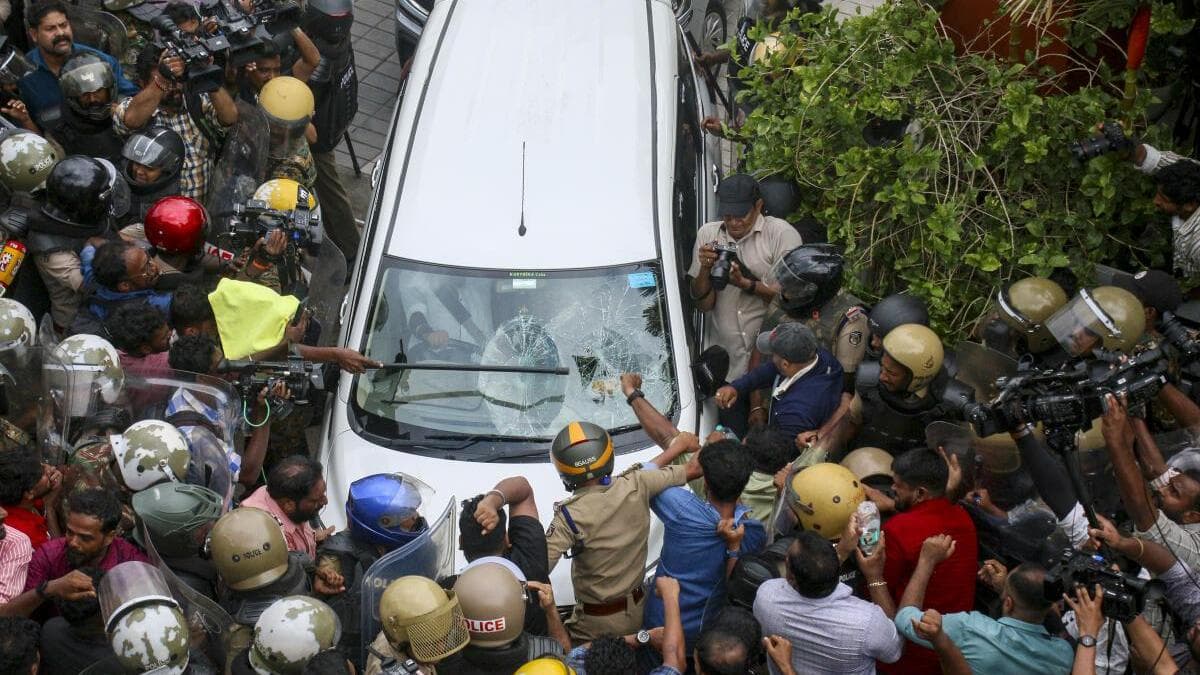
Left Democratic Front activists attack a vehicle carrying Enforcement Directorate (ED) officials outside Leader of the Opposition Pinarayi Vijayan’s residence in Thiruvananthapuram on May 27. The Kerala High Court has refused to interfere with the bail granted to Harish Kumar, one of the accused in the attack on Enforcement Directorate officials during a raid at Leader of the Opposition Pinarayi Vijayan’s house in Thiruvananthapuram.The Sessions Court, Thiruvananthapuram, had granted bail to Mr. Kumar in June. Recently, the court allowed the bail applications of 17 other accused as well, imposing conditions such as execution of a bond of ₹1 Lakh each, with two solvent sureties for an equivalent sum, and depositing ₹10,000 each before the Magistrate Court with jurisdiction.Justice C.S. Dias noted that the condition to deposit ₹10,000 had not been imposed by the Sessions Court in Mr. Kumar’s bail, and modified his bail conditions to include the same.Charges under the Bharatiya Nyaya Sanhita, 2023 and the Prevention of Damage to Public Property Act, 1984 for assault and damage to official vehicles were laid against around 300 individuals in the alleged attack, of which 25 have been apprehended. Published - August 13, 2026 07:53 pm IST
Discussion (0)