
Loading dispatches...
← Return to NewsroomEconomy
FCRA Bill 2026: Ambassador Vinay Kwatra debunks 5 ‘myths’, says asset cessation ‘not new’, doesn't target any religion
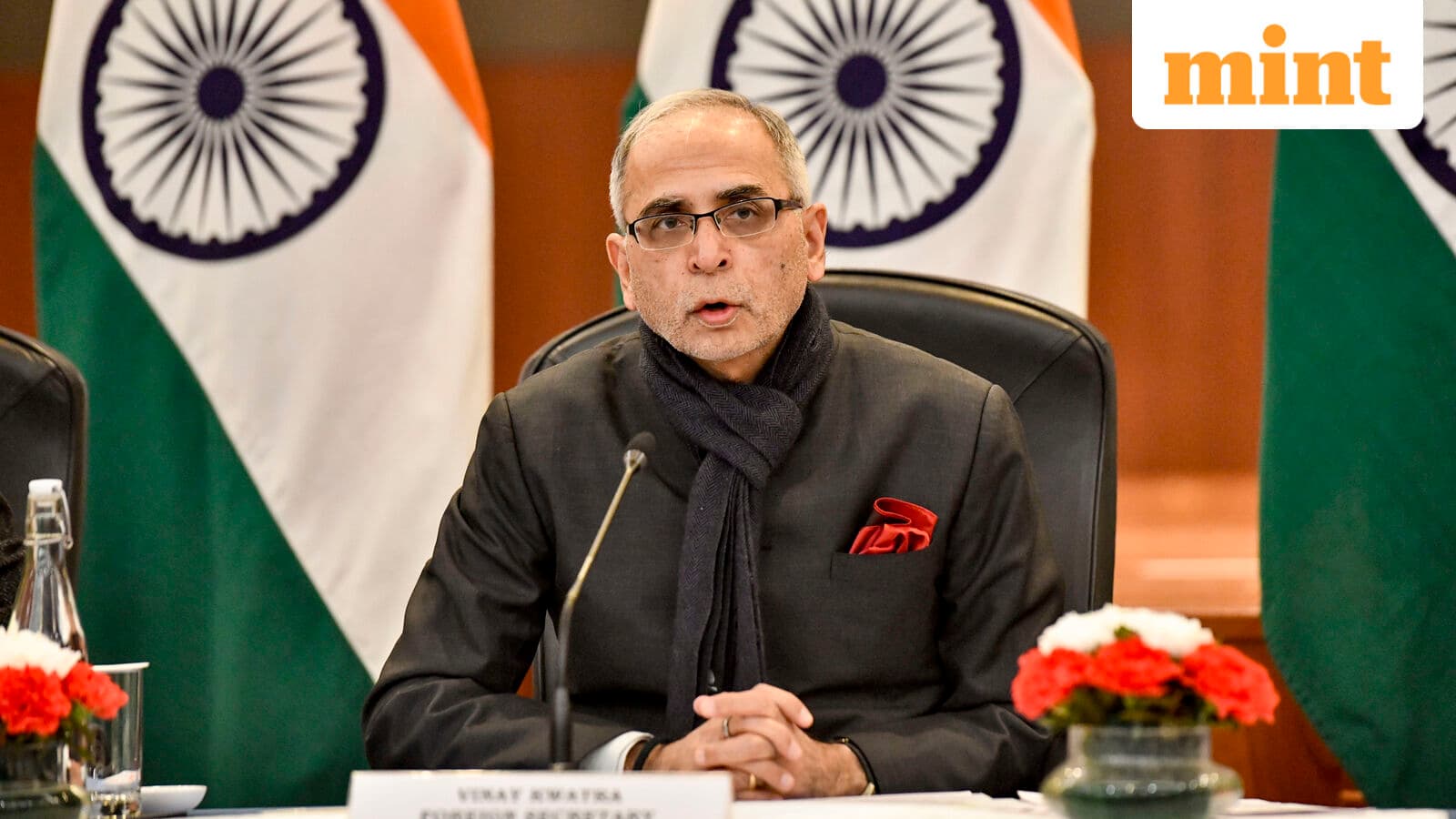
As the Opposition continues to oppose the proposed Foreign Contribution (Regulation) Amendment Bill, 2026, India's Ambassador to the United States Vinay Kwatra offered a "reality check," claiming to dispel five "myths" about the bill.In a series of posts on X, Kwatra said, "There are many misunderstandings in the media and in civil society about the proposed Foreign Contribution (Regulation) Amendment Bill (FCRA), 2026."Here are 5 "myths" that Kwatra claimed to have debunked:1. Myth: India is framing a new law to cut off foreign aid to civil society.Truth: Regulation of foreign financial flows in public and political spaces is a sovereign step driven by national security concerns. It is an accepted feature of modern governance in many democracies around the world.The first FCRA in India came in 1976. It was replaced in 2010 with a more modern framework, and strengthened by amendments in 2016, 2018 and 2020.The 2026 Bill and Rules are the next step in the same direction: more transparency, better governance, clearer rules.The fact is that the law does not forbid Indians from receiving foreign donations or shut down law abiding civil society. Tens of thousands of associations are registered under FCRA and routinely receive foreign funds for health, education, disaster relief, research and humanitarian work.2. Myth: FCRA has adversely impacted the working of NGOs and charitable organisations, and the new amendment would further restrict their ability to operate in India.Truth: In reality, foreign money inflows into India have been rising, not falling. Foreign contributions to registered organisations grew from roughly $1.2 billion in 2010–11 to $2.67 billion in 2024–25.India has over 3 million NGOs. A bare fraction of these, only 14,450, hold FCRA registration. Thus, the overwhelming majority of the civil society organizations are entirely outside the Act.FCRA does not stop anyone from accepting foreign charity, research grants or humanitarian aid. It asks three things — register, receive the money through laid down process, report what you did with it.3. Myth: The law will lead to seizure of assets of NGOs, including religious charities, places of worship, hospitals, schools, and charitable organizations that rely on foreign donations.Truth: India welcomes genuine international partnerships and has always provided a legal framework within which such contributions can be received and utilised.When a registration is cancelled or surrendered, foreign contributions and the assets created from them already vest in a State Government authority. This has been in force since 2010. It is not new.What the 2026 Bill adds is a designated authority to safeguard those assets — and a way back. If the organisation restores its registration, all assets and unused funds are returned in full.Places of worship carry their own protection. Where a cancelled association has created property connected to a place of worship, that property goes to another FCRA-registered association of the same faith to ensure continuity of worship.4. Myth: FCRA specifically targets a particular religion or communityTruth: Nothing could be farther from it. The Act applies uniformly to all organisations regardless of religion, community or ideology. Faith-based welfare activities, including religious education, maintenance of places of worship, and charitable work by organisations of every faith, continue to be eligible for foreign funding.5. Myth: India is an outlier in doing this.Truth: The US has had FARA since 1938 and FATCA since 2010. Australia legislated in 2018, Canada in 2024. The UK's scheme came into force in July 2025. The EU is legislating now.What is FCRA Act?The Foreign Contribution (Regulation) Act (FCRA) is the law that governs how Indian individuals, associations, NGOs, trusts and companies may receive and use money, securities or articles sent to them from a source outside India. It is administered by the Ministry of Home Affairs (MHA).India enacted the

US Senator Eric Schmitt (R-MO) has called for tighter oversight of H-1B hiring practices, raising concerns that companies could be using the visa programme and the broader PERM labour certification process to favour foreign workers over qualified Americans. In a letter to Acting US Labor Secretary Keith Sonderling, Schmitt urged the Department of Labor to modernise recruitment rules, strengthen fraud checks and ensure American workers get a genuine opportunity to compete for jobs before employers seek permanent certification for foreign employees.Schmitt has urged the Department of Labor (DOL) to overhaul the rules governing the employment-based immigration process, arguing that outdated recruitment requirements could allow companies to favour foreign workers over qualified Americans.What is PERM programme?PERM is the DOL process employers generally use to obtain labour certification for certain foreign workers seeking permanent employment in the US.The purpose of the process is to ensure that hiring a foreign worker does not displace qualified American workers or negatively affect the wages and working conditions of similarly employed US workers.Before approving a labour certification, the DOL must determine that there are not enough US workers who are “able, willing, qualified, and available” for the job in the relevant area.Schmitt argues that the system's recruitment rules have not kept pace with the modern job market.Why does Schmitt want PERM rules changed?According to Schmitt, the DOL's PERM regulations have not been substantially updated in more than 20 years.He specifically criticised requirements that rely partly on newspaper advertising to demonstrate that employers attempted to recruit US workers.With job searches and applications now overwhelmingly taking place online, Schmitt said such requirements could make it easier for employers to technically comply with recruitment rules while failing to reach a large pool of American workers.“Given dramatically reduced newspaper circulation and the prevalence of online job applications, these outdated rules let employers conceal jobs from American workers while claiming they tried to recruit domestically,” Schmitt wrote.What changes is Schmitt proposing?Schmitt wants employers seeking PERM certification to face tougher and more transparent recruitment requirements.His proposals include:Mandatory online advertising: Employers would have to post PERM positions on their normal careers pages and at least one widely used online job platform.Same application process: Companies would have to use the same application process for PERM jobs as they use for comparable positions that do not involve foreign-worker certification.Record every US applicant: Employers would have to document each American who applies and explain why an applicant was rejected.Certification against job reservation: Employers would have to certify that a position was not formally or informally reserved for a foreign worker.Electronic applications: Employers would have to accept applications electronically or through the same channels used for comparable jobs.Notice to recently laid-off workers: Companies would have to notify recently displaced American workers who may be qualified for the position.Interviews and written explanations: Qualified laid-off workers would have to be interviewed, with employers providing written reasons for rejection.Schmitt said the changes would replace what he described as “cursory, pro forma consideration” of American applicants with a process that gives them a genuine opportunity to compete.What are H-1B and OPT, and why are they mentioned?Schmitt's letter also focuses on two other immigration pathways: H-1B visas and Optional Practical Training (OPT).The H-1B programme allows US employers to employ foreign workers in certain specialised occupations. OPT, meanwhile, allows eligible international students to gain temporary work experience related to their studies.Schmitt is askin
Union Parliamentary Affairs Minister Kiren Rijiju on Wednesday reached out to Leader of Opposition in the Lok Sabha Rahul Gandhi seeking his cooperation for smooth proceedings during the remaining period of the Monsoon Session.The two leaders spoke about the pending legislative agenda, including the proposed amendment to the FCRA and the possible re-introduction of a constitutional amendment Bill linked to the Delimitation Bill.While there is no clarity yet on whether the Delimitation Bill will be brought in this session itself before it concludes on August 13, sources said Shah will speak in Parliament when the Foreign Contribution (Regulation) Amendment Bill, 2026 is introduced in the House for discussion and passage.Since the Monsoon session began on July 20, the Lok Sabha has not been able to complete its Question Hour. Five bills have been passed without discussion amid din.Why is the FCRA Amendment Bill controversial?The Foreign Contribution (Regulation) Amendment Bill, 2026 seeks to amend the Foreign Contribution (Regulation) Act, 2010, which governs how individuals, associations and organisations receive and use foreign donations.Through the Foreign Contribution (Regulation) Amendment Bill, 2026, the government seeks a greater control over foreign-funded assets if organisations that receive funds from overseas sources lose their registration, according to an earlier report in Mint.The proposed amendment bill proposes the creation of a “designated authority” that will take charge of foreign contributions and assets created out of such funds in cases where an organisation’s registration is cancelled, surrendered, not renewed, or the entity ceases to exist.The assets will be initially placed under the authority’s control and may be permanently transferred if the organisation fails to regain registration within a specified period, it noted.'Operational, legal gaps in the existing law'The authority will also have the power to manage these assets and, if required, oversee the activities of such entities in the public interest. It will be responsible for safeguarding and maintaining assets created out of foreign contributions.As many as 16,000 associations are registered under the Foreign Contribution (Regulation) Act (FCRA) framework, receiving nearly ₹22,000 crore in foreign contributions annually.The new amendments aim to address operational and legal gaps in the existing law, particularly in the management of foreign contributions and assets, noting that the absence of a comprehensive framework has led to administrative uncertainty and scope for misuse.‘Would harm NGOs and community organisations’Describing the proposed law as ‘completely unconstitutional,’ AICC General Secretary K C Venugopal claimed that the Foreign Contribution Regulation Amendment (FCRA) Bill would harm NGOs and community organisations, particularly those run by minority communities.He said Congress will not allow the bill to be passed under any circumstances. He said the bill is the latest example of such efforts.Venugopal also described the bill as a "threat" hanging over minority communities, saying it is a deliberate attempt to intimidate and control organisations, including Christian institutions in Kerala. He also said the bill contains provisions that would tighten control over voluntary organisations and institutions engaged in social services.‘Draconian’ law, says Derek O'BrienTrinamool Congress MP Derek O'Brien has called the Bill ‘draconian’ and sought an All-Party Meeting to discuss it.In a letter to Prime Minister Narendra Modi, O'Brien said the proposed legislation could result in "excessive executive control" over NGOs and other organisations working in areas such as education and healthcare."The FCRA Bill risks weakening and destroying institutions that have served India's poorest and marginalised communities for decades in the education and health sector," he wrote.The Mizoram Pradesh Congress Committee held a protest in Aizawl on Ju


Discussion (0)