
Loading dispatches...
← Return to NewsroomEconomy
India counters China over Arunachal claims: Home ministry identifies 27 locations on Survey of India map — full list
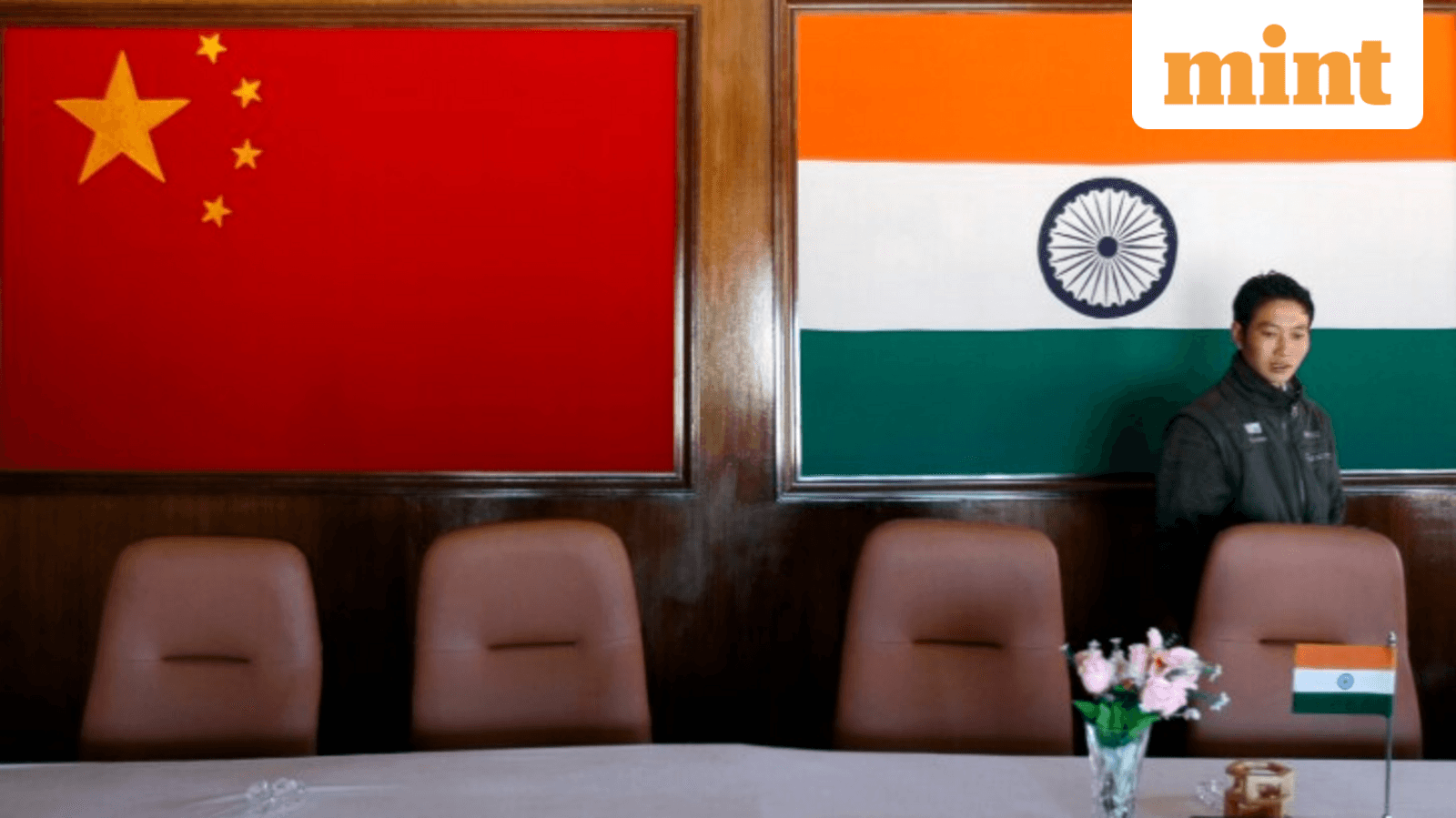
India formally identified 27 places and features in Arunachal Pradesh by their standard names on the official Indian map on Friday, in a move to counter China's attempt to repeatedly rename some places in the state."The Government of India, in consultation with State Government of Arunachal Pradesh, has identified a total of twenty-seven (27) places/features located in Arunachal Pradesh, by standard place and feature names on the official maps of Survey of India (SoI)," the Ministry of Home Affairs said in a press statement on Friday.Together, 27 places and features on official Survey of India maps were updated to improve public awareness and recognition, the release stated.The home ministry said, "Identifying them formally on the Survey of India map of Arunachal Pradesh is aimed at facilitating their accurate recognition and better awareness among the public at large."The statement does not explicitly mention China or its claims over Arunachal Pradesh.These 27 places/features identified on the Survey of India map of Arunachal Pradesh are as under:The 27 locations formally marked on the official map of India include Long Ju located along the Line of Actual Control, which was one of the earliest flashpoints between India and China in 1959 when Chinese forces entered the area.Maja, a village near Long Ju in Upper Subansiri district, has also been marked on the map, the statement said.The list also includes Bisa village, a strategically important high altitude mountain passes in the region Dzo La, Riza La, Pukur La.One of the most strategically important high altitude passes Thag La, where one of the opening battles between Indian and Chinese forces took place in 1962, has also been formally identified on the official map.So is Jairampur, an important logistics hub in Changlang district which is known as the gateway to the eastern border region supporting movements of security forces towards eastern Arunachal and the Myanmar frontier.The list also includes Sambho Sarovar (a high-altitude lake), Bara Kundun and Chhota Kundun on Eastern Arunachal Pradesh, Dhan Bari, Pritnagar, Teritnagar, Ramnagar Jaswant Garh that houses memorial of Indian martyr Jaswant Singh Rawat on Tawang Road, villages of Sagar, Padma, Jyotinagar and Baisakhi.Sher-e-Thapa Memorial commemorating Trilok Singh Thapa, 1962 war hero, Chhota Ropuk and Bara Ropuk, Shivaji Nagar, Sunpura, Kamlang Nagar located near the Kamlang sanctuary and Buddhamandir are also there.S.No.Name of PlaceFeature Type1LongjuLand area,2MajaLand area,3BisaLand area,4Dzo LaPass,5Riza LaPass,6Pukur LaPass,7Thag LaPass,8Sambho SarovarLake,9Bara KundunLand area,10Chhota KundunLand area,11Dhan BariLand area,12PritnagarLand area,13BuddhamandirLand area,14JairampurLand area,15TeritnagarLand area,16RamnagarLand area,17Jaswant GarhLand area,18SagarLand area,19PadmaLand area,20JyotinagarLand area,21BaisakhiLand area,22Sher-e-Thapa MemorialMonument,23Chhota RopukLand area,24Bara RopukLand area,25Shivaji NagarLand area,26SunpuraLand area,27Kamlang NagarLand areaChinese incursion in Arunachal Pradesh?These cartographic updates coincide with recent remarks addressing regional security amid social media reports of an incursion in Arunachal Pradesh along the LAC.On Friday, Arunachal Pradesh Chief Minister Pema Khandu denied the reports of a Chinese incursion in the state.CM Pema Khandu told reporters that he would speak to the locals and the Indian Army on the allegations of an incursion by China's People's Liberation Army (PLA)."We don't think there was an incursion as the Indian Army personnel are deployed and maintaining the territory. I have also urged the local tribes; I will hear them and also talk to the army," he said.In June, the Indian Army also rebutted reports in a section of the media alleging encroachment by the Chinese PLA and setting up camps in Arunachal Pradesh and termed them "incorrect and without basis"."We have seen some media reports alleging recent encroachment by Chinese PLA and
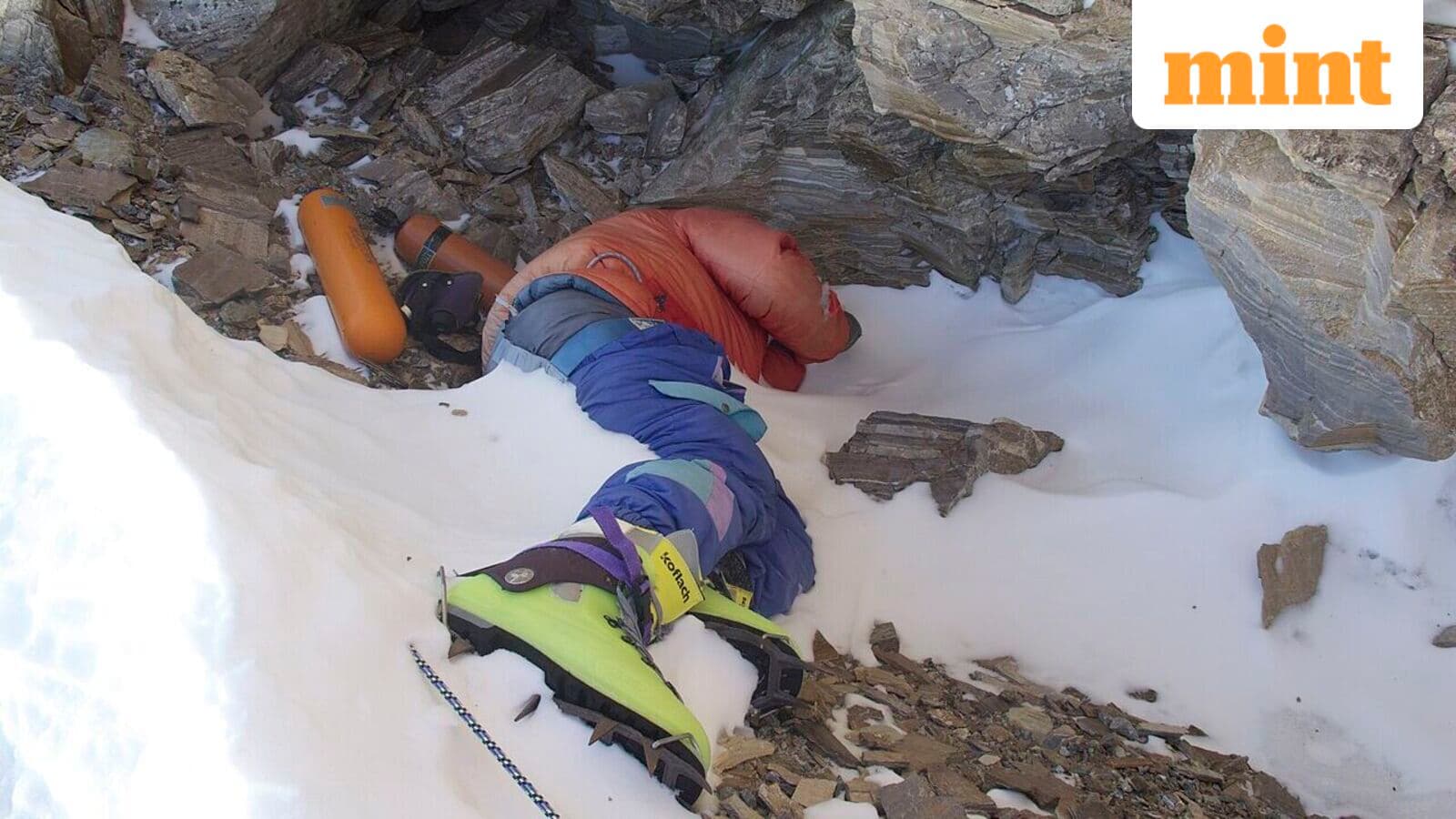
For thirty years, a lifeless figure clad in bright lime-coloured boots has lain undisturbed beneath a rocky overhang near the summit of the world's tallest mountain. Climbers making their final push to the top of Everest have long passed this eerie waypoint, known simply as "Green Boots" — a grim but unavoidable marker on the route.Indian authorities now believe they know exactly whose body it is, and they are moving to bring him home, BBC reported.A Mission Three Decades In The MakingIndia is reportedly scouting for an elite high-altitude recovery team willing to take on one of mountaineering's most hazardous assignments: retrieving the remains believed to belong to Dorje Morup, an Indian climber who perished during a 1996 expedition. His case is considered among the most well-known of the several hundred bodies still stranded on Everest's slopes.For his family, the mission represents a long-delayed chance at closure. Morup's wife has described nights spent half-expecting a knock at the door, imagining her husband finally returning after all these years.A Promise Made Before DepartureThe evening before he set off, Morup — then 48 and serving as a lance naik with the Indo-Tibetan Border Police, the force responsible for guarding much of India's frontier with China — sat with his wife at their home in Ladakh. He vowed he would return victorious and asked her to look after their children until he came back.Morup was part of a six-member ITBP team attempting an ambitious feat: becoming the first Indian expedition to summit Everest via its more punishing Chinese, or northern, route, rather than the more commonly used Nepalese side.Midway through the climb, a snowstorm forced three of the six team members to turn back. Morup pressed on with two teammates, Tsewang Smanla and Tsewang Paljor, and the trio eventually reached the 8,849-metre summit. Tragedy struck during their descent, when a blizzard overtook all three climbers.Two of the bodies have never been located. The third — identified for years by his distinctive lime-coloured footwear — has remained at roughly 8,500 metres ever since.Correcting A Case Of Mistaken IdentityFor a long time, "Green Boots" was widely believed to be teammate Tsewang Paljor rather than Morup. However, accounts from surviving expedition members, combined with the location of the climbers' final radio transmission, have since pointed authorities toward a different conclusion.An unnamed ITBP official told BBC News Hindi that clothing and climbing equipment recovered in recent years helped confirm the body's likely identity as Morup, adding that the force had never given up on bringing him home.Why Recovery Is So Extraordinarily DangerousRetrieving bodies from Everest's so-called "death zone" — where temperatures can drop to -40°C and oxygen is roughly a third of sea-level levels — remains exceptionally rare and dangerous, something that has only been attempted more frequently in the last decade.Nepalese mountaineer Tshiring Jangbu Sherpa, who has taken part in similar missions, told BBC Hindi that weather and snow conditions would be decisive, and warned that the northern route lacks the rapid helicopter evacuation options available on the Nepalese side.Mountaineering guide Pemba Ongchu Sherpa noted that such an operation could require as many as ten to twelve summit-capable climbers just to fix support ropes to the site, while Indian climber Kuntal Joisher told BBC Nepali that the initial descent — roughly the first 1,000 metres over steep, rocky terrain — would be the most perilous stretch.Bodies frozen into contorted positions inside heavy climbing gear can weigh several times a living person's weight, further complicating any descent, and remains risk decomposing once lowered to warmer altitudes. Industry experts estimate even routine recovery missions cost between $40,000 and $80,000 — well beyond what most families could afford on their own.The ITBP, which is funding the operation, is aiming to br
Bhawana Kanth was among the first three women to be commissioned as fighter pilots in the IAF in 2016.Squadron Leader Bhawana Kanth (X)Squadron Leader Bhawana Kanth achieved yet another historic milestone — she is the first woman to graduate from the Indian Air Force's (IAF) elite Fighter Combat Leader course.Completing 20 weeks of gruelling advanced combat flying training, Bhawana is now one of the exceptionally rare breed of officers to qualify from India's equivalent of the prestigious "Top Gun" school, which prepares them for complex combat operations.Who is Bhawana Kanth?Born and raised in Darbhanga, Bihar, Bhawana Kanth harboured a lifelong ambition to fly. That childhood dream materialised into national history in 2016 when the Centre decided to open the fighter cockpit to women on an experimental basis.Bhawana was among the first three women—alongside Avani Chaturvedi and Mohana Singh—to be commissioned as fighter pilots in the IAF.Reflecting on this monumental shift in India's aviation history, Bhawana noted that women were always ready for the skies. “For me, it was a childhood dream. Once I got the opportunity, I didn't take a second to grab it,” she said in an early interview, asserting that the timing was simply a delayed realisation of what was always inevitable.Mastering the MiG-21 and Sukhoi-30MKIBhawana Kanth entered the fighter squadron in November 2017. By March 2018, she executed her first solo flight on the MiG-21 Bison, a notoriously demanding interceptor aircraft.Proving her mettle, she subsequently transitioned to the Sukhoi Su-30MKI, a twinjet multirole air-superiority fighter that serves as the heavy-hitting backbone of the IAF's modern fleet.In 2021, she added another feather to her hat, becoming the first woman fighter pilot to participate in the Republic Day parade and flypast, showcasing India's aerial might to the world.Elite "Top Gun" MilestoneBhawana Kanth's recent graduation from the Tactics and Air Combat Development Establishment (TACDE) in Gwalior marks the apex of her career thus far. TACDE is the IAF's most demanding training establishment. The highly selective five-month programme accepts only about one in 100 IAF pilots.The gruelling course rigorously trains officers in advanced combat tactics, complex weapons handling, and high-G aerial manoeuvres required for frontline operations.Graduating as a Fighter Combat Leader cements her status as a master tactician capable of orchestrating and leading complex combat missions.Life beyond the cockpitIn 2020, Bhawana Kanth was conferred the Nari Shakti Puraskar, India's highest civilian honour for women, by the President of India.Internationally, Bhawana has emerged as a powerful voice for gender parity in defence. During the 2024 World Defence Show in Riyadh, Saudi Arabia, she represented India as part of a tri-service delegation of women officers. Taking the stage as a guest speaker, she strongly advocated for expanding leadership and command roles for women across global armed forces.Despite her soaring public profile and trail of "firsts," Bhawana maintains a grounded persona off the tarmac. On social media, she keeps a relatively low profile with a private Instagram account with 11,000 followers.Her bio hints at a well-rounded life beyond the G-suits and jet engines, listing simple passions: food, fitness, and fun.Get Latest real-time updatesStay updated with the latest Trending, India, World and US news. HomeNewsIndiaWho is Bhawana Kanth? Meet the Indian Air Force's first woman ‘Top Gun’ pilotMore


Discussion (0)