
Loading dispatches...
← Return to Newsroomgeneral
Day after talks with Tarique Rahman, Dinesh Trivedi meets PM Narendra Modi
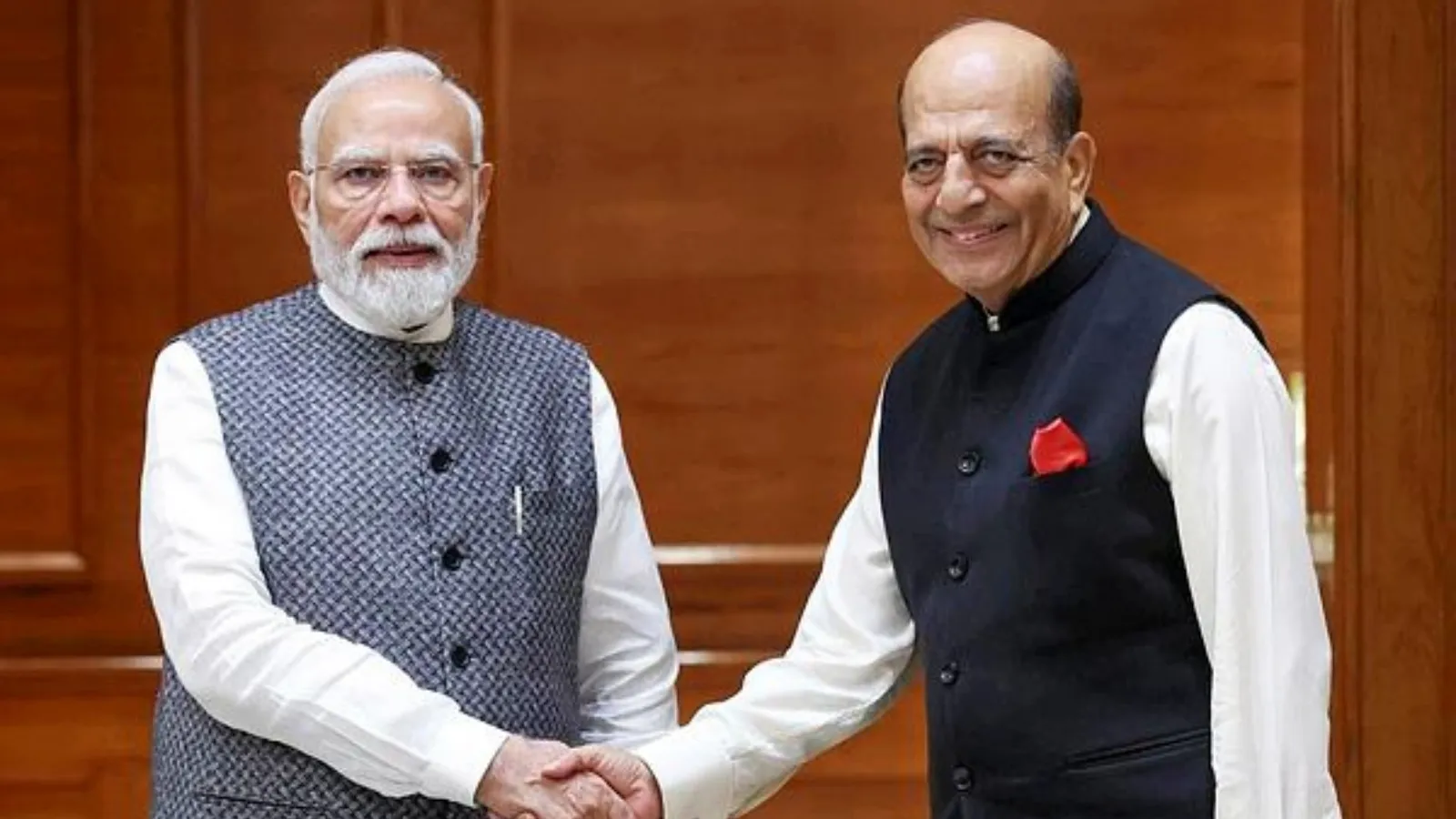
New DelhiUpdated: Aug 12, 2026 04:28 AM IST High Commissioner of India to Bangladesh Dinesh Trivedi calls on Prime Minister Narendra Modi in New Delhi on Tuesday. ANIA DAY after meeting Bangladesh Prime Minister Tarique Rahman, India’s High Commissioner to Bangladesh Dinesh Trivedi met Prime Minister Narendra Modi in New Delhi and sought his “guidance” for an “enduring” bilateral ties between Delhi and Dhaka. “High Commissioner Dinesh Trivedi called on Hon’ble Prime Minister Shri Narendra Modi today and sought his guidance on further strengthening the multifaceted and enduring bilateral relationship between India and Bangladesh in a constructive manner with a people-centric approach,” the Indian High Commission in Bangladesh posted on X.Five days after ousted Bangladesh Prime Minister Sheikh Hasina’s remarks in India angered Dhaka, Bangladesh PM Rahman had raised the issue of her extradition with Trivedi on Monday and had underlined the need to “create a conducive environment to further advance the bilateral relations between the two countries”. On Sunday, Trivedi had described Rahman and Modi as people’s persons and expressed optimism that solutions to issues between the two countries could be found if the two leaders meet. “We all respect him (Rahman) a lot. He speaks from his heart. I listened to his speeches many times…. He is a people’s person, our Prime Minister (Modi) too. I think when two leaders meet, a lot of problems are sorted out. I have full confidence,” he had told reporters. This invoking the persona of the two leaders is key, since Rahman is yet to visit India. He has already visited China and met Chinese President Xi Jinping. After meeting Rahman, Trivedi had described the meeting as “fruitful”, and that Bangladesh and India not only share a border but also share dreams. “We are looking forward. Our invitation is there in place. We are positive that if the two leaders meet together, there will be discussion. There will be issues in democracies. It’s not democracy if there is no issue. But there is only one people’s issue, which is good relations. It’s a win-win situation if there is a good relationship,” he said, referring to India’s invitation to Rahman to attend the BRICS leaders’ outreach summit in September.Story continues below this ad On the meeting dynamics, Trivedi said, “I am not a diplomat. It’s like people’s representative-to-people’s representative. I am very delighted that we have met. I didn’t feel that I met him for the first time. Very good, very humble, on the ground, what will be the discussion – people-to-people relations.” He said there is no issue that cannot be solved. “I can tell you this confidently.” Shubhajit Roy, Diplomatic Editor at The Indian Express, has been a journalist for more than 27 years now. Roy joined The Indian Express in October 2003 and has been reporting and writing explainers and analysis on foreign affairs for about 19 years now. Based in Delhi, he has also led the National government and political bureau at The Indian Express in Delhi — a team of reporters who cover the national government and politics for the newspaper. He has got the Ramnath Goenka Journalism award for Excellence in Journalism ‘2016. He got this award for his coverage of the Holey Bakery attack in Dhaka and its aftermath. He won the Ramnath Goenka Journalism award, 2023, for the second time for his reporting of the Oct 7 attacks on Israel and the war in Gaza. He also got the IIMCAA Award for the Journalist of the Year, 2022, (Jury’s special mention) for his coverage of the fall of Kabul in August 2021 — he was one of the few Indian journalists in Kabul and the only mainstream newspaper to have covered the Taliban’s capture of power in mid-August, 2021. ... Read More Tags: Narendra Modi
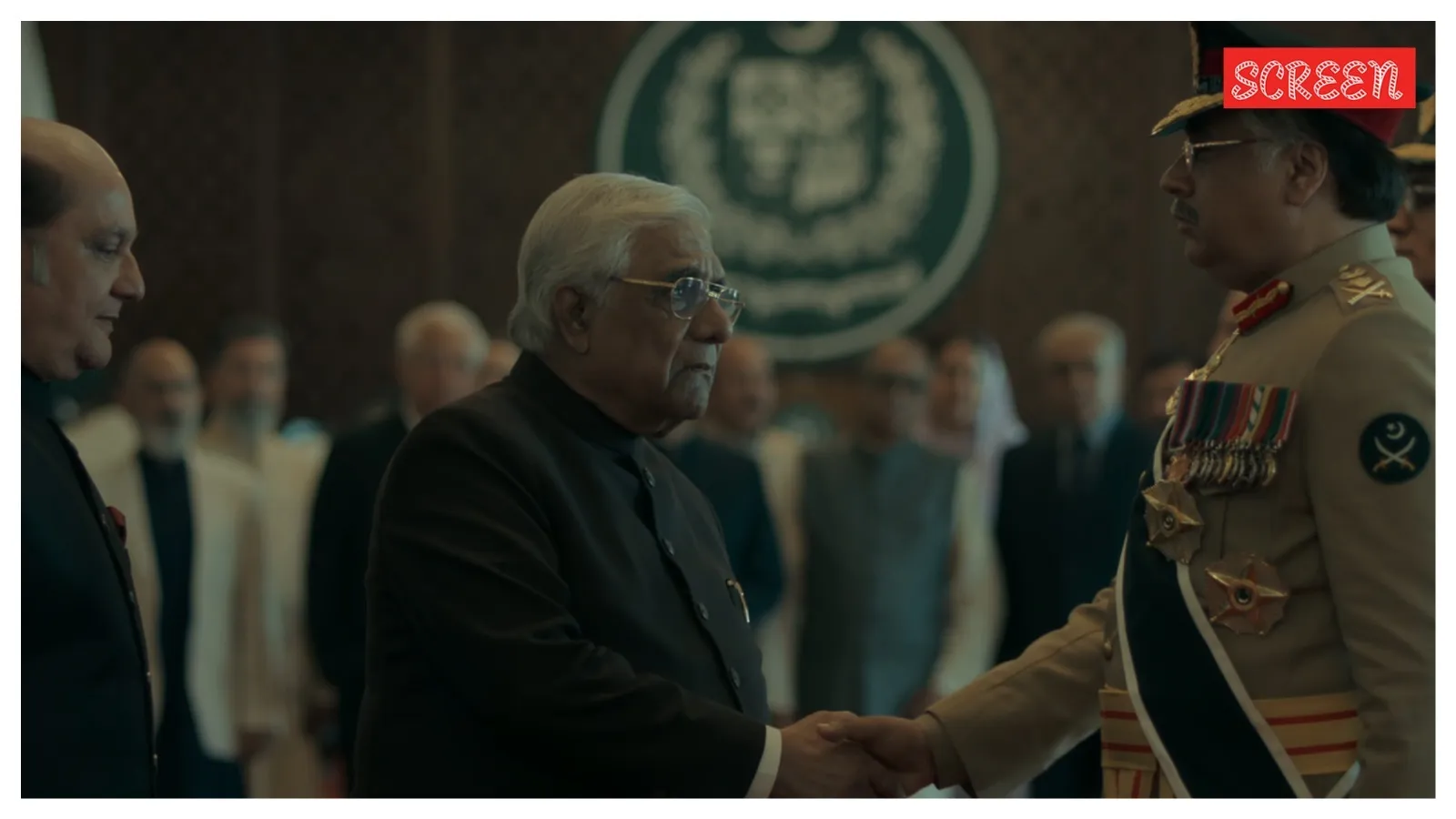
Operation Safed Sagar: Did Pervez Musharraf actually not salute Atal Bihari Vajpayee?Onir Sen’s period war drama Operation Safed Sagar has been trending on the #1 spot on Netflix India’s Top 10 after getting rave reviews upon its release this past Friday on August 7. Made in close collaboration with the Indian Air Force, the six-episode series documents the events of the 1999 Kargil War between India and Pakistan, in which the former emerged victorious. There are certain rather dramatic moments in the narrative that have left the audience wondering whether that’s exactly what transpired in real life. SCREEN digs up news archives to verify five such key moments from the show. When Musharraf refused to salute Vajpayee Operation Safed Sagar shows how Pakistan’s then-Joint Chief of Staffs Musharraf, Pervez Musharraf (Manu Rishi Chaddha), was forced by then-Prime Minister Nawaz Sharif (Vinay Pathak) to salute then-India Prime Minister Atal Bihari Vajpayee (Anjjan Srivastav) upon his historic visit to Lahore in February 1999. However, Musharraf took his sweet time, and instead of saluting the Indian leader, offered a handshake instead, much to his dismay.Historic records show that the moment indeed happened. Firstly, Pakistan’s military service chiefs chose to boycott the welcome reception held for Vajpayee at the Attari-Wagah border. The reason is said to be the fact that they had already initiated military action in India’s side of Kashmir, though they officially maintained that the men, dressed in civilian attire, were part of the separatist group, the Indian Mujahideen. However, when Sharif forced Musharraf to attend a ceremonial event and salute the Indian leader, Musharraf did so reluctantly. He infamously shook hands with Vajpayee, instead of deliberately not giving him a formal military salute, thus breaching the military and diplomatic protocol. This was just a precursor to the major breach he’d go on to execute, by ordering the Pakistani Army to cross the Line of Control, thus kicking off the Kargil War. Little did he know that Musharraf would get a taste of his own medicine just a couple of years later. After India won the Kargil War and Musharraf overthrew the Nawaz Sharif government after imposing Martial Law, and taking over as Pakistan President, he was invited by Vajpayee to India for the Agra summit in 2001. At the ceremonial reception at Rashtrapati Bhavan in New Delhi, Air Chief Marshal AY Tipnis was present on behalf of India’s defence forces. However, he returned Musharraf’s favour by not saluting him, only offering a handshake instead. “Musharraf has lied, I think not only to India, he has lied to his own government, lied to his own army, he has lied to his people,” Tipnis told The America Times in 2013. “Just a few years ago when the Kargil incursion took place, they denied in totality, going so far as not to even claim the dead bodies of their soldiers killed in action. This is the worst thing that any soldier can do and this is what the army chief did to his soldier. I believe that he can tell any lie,” he added.Story continues below this ad Did Musharraf actually fool Sharif? Operation Safed Sagar also shows that Musharraf misled Sharif into believing the scope of the Kargil War. He fed into the Pakistan PM’s political ambition and made him approve the go-ahead on Pakistani soldiers’ incursions into India. It’s only much later when Sharif learned Musharraf’s true actions and intentions that he began to work towards a ceasefire with the intervention of the US. Nasim Zehra’s 2018 book From Kargil to the Coup: Events that Shook Pakistan confirms that Mushrraf indeed kept Sharif in the dark during the excessive Kargil War operations, painting it as an upgrade on the Indian Mujahideen action instead of admitting to a direct military incursion. By the time Sharif realized the same, it was too late as India refused to believe the narrative set by Pakistan. However, a 2021 article by The Indian Express offers anoth
New DelhiAug 9, 2026 11:00 AM IST Mira Kapoor on Korean Glass Skin in India. (Source: Instagram/@mira.kapoor)Mira Kapoor, founder of beauty and skincare brand Akind Beauty, recently raised a pertinent question that would stop most skincare enthusiasts in their tracks. “Is it just me, or is the Korean glass skin trend very unrealistic?” she asks in her latest Instagram video, referring to the dewy, poreless complexion Koreans are famous for. “Don’t get me wrong, it looks beautiful. Super clear, poreless, reflective finish, but can it really be a beauty goal in our weather?” she further adds. While people keep piling on layers of products on their skin, Kapoor wonders whether there is a limit to its absorption. She writes in the caption of her post that trends might fade, but healthy skin is always in.DISCLAIMER: This article is based on information from the public domain and/or the experts we spoke to. The entrepreneur believes skincare isn’t a race to perfection. “Build the basics, stay consistent, and let healthy skin do the talking,” she shares in her latest Instagram post. The dangers of glass skin Dr Satish Bhatia, board-certified dermatologist in Mumbai, says every few weeks a new “glass skin” recipe makes the rounds, but “you should not blindly copy every step a celebrity follows, as such skin ideals are often unattainable due to differing skin type and tone, and can lead to body dissatisfaction.” Like Mira Kapoor also said, he believes the real goal is to understand what actually keeps skin healthy. “What looks good under makeup, filters, studio lighting, and professional treatments may not always suit everyday skin,” he tells indianexpress.com. According to him, one good thing about her skincare routine is the “focus on hydration and protecting the skin barrier”. Honestly, that is where most good skincare begins. So, what goes into healthy skin? “Healthy glowing skin usually does not come from expensive products alone. It comes from doing the basics consistently — using a gentle face wash, applying moisturiser regularly, sleeping well, drinking enough water, using sunscreen daily, and getting professional treatments only when needed,” Dr Bhatia shares, adding that only after the skin barrier becomes stable should you add treatments for pigmentation, acne, pores, or ageing.Story continues below this ad A few things first. Dr Bhatia suggests doing a patch test on your inner arm, especially if your skin runs sensitive. “Don’t leave it on past fifteen minutes. And because acids makes skin more sun-reactive, sunscreen the next morning isn’t optional,” he warns, adding that you should skip add-ins like raw lemon as they sting and push up sensitivity. While the odd face mask can offer certain benefits for healthy skin, particularly hydration, exfoliation and oil control, he reiterates that it is not a substitute for professional dermatological treatments, a consistent skincare routine and proper nutrition. In conclusion, Dr Bhatia says that glass skin look comes from a settled routine and holistic approach, not a single sitting. “If breakouts or pigmentation keep returning, see an aesthetic expert before piling on more home remedies,” he concludes. DISCLAIMER: This article is based on information from the public domain and/or the experts we spoke to.

Discussion (0)