
Loading dispatches...
← Return to Newsroomgeneral
India vs Wales Live Score, FIH Men’s Hockey World Cup 2026: IND look for bright start
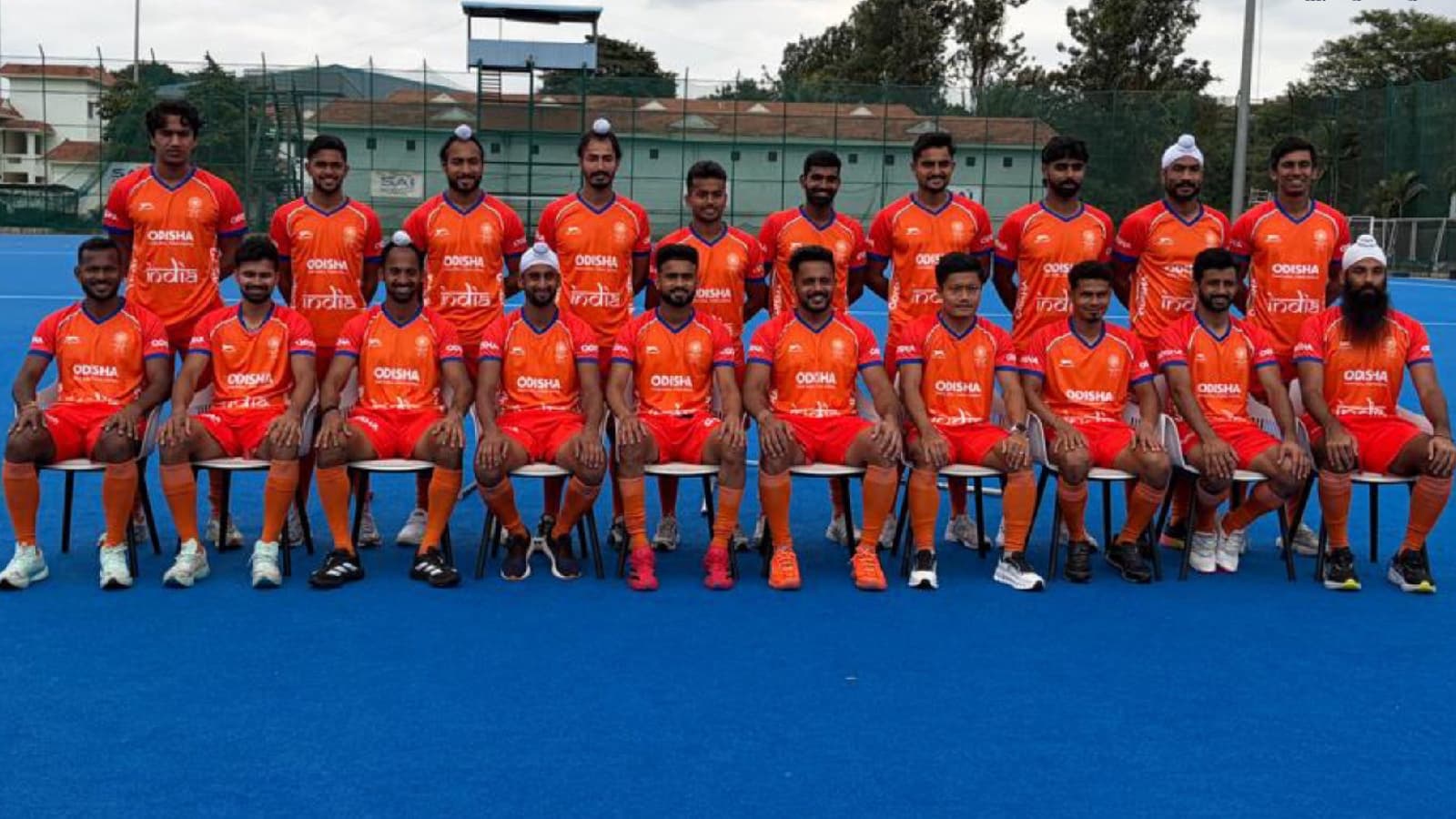
Hockey World Cup live updates, India vs Wales: (Hockey India Photo)On the day that India celebrates its 80th Independence Day, the country’s hockey team start a fresh campaign in the men’s hockey World Cup, a tournament that they have rarely tasted success in despite their illustrious history in the sport. India have won the World Cup just once – in 1975, and that was also the only time that they reached the final. Overall, India have reached the final four just three times, the last of which was in 1975. However, they will first have to keep out of their minds the distraction that came with their controversial desicision to change their jersey colours from the iconic blue, in which they won medals at the last two Olympics, to saffron.Story continues below this ad Their hopes will rest on captain Harmanpreet Singh. At the start of 2026, he told The Indian Express that he was working on different drag-flick variations, which he would ‘reveal at the right time’. He was also focusing on short sprints to improve mobility and strengthening his lower back, shoulders and arms — key areas for generating power in his flick. SCROLL DOWN FOR LIVE UPDATES OF INDIA VS WALES, HOCKEY WORLD CUP: Live Updates The Harmanpreet factor: Why India need their captain firing at the World Cup Harmanpreet was the player of the tournament at the 2024 Asian Champions Trophy, scoring nearly one-third of India’s goals in the triumphant campaign. ( Manpreet Singh crouches to receive the injection from vice-captain Hardik Singh. Rajinder Singh readies himself to flick, while Yashdeep Siwach, Abhishek Nain and Shilanand Lakra take up positions around the circle. Everyone is present for India’s penalty-corner drills. Almost. Well, almost. India’s captain, and the team’s great big-match weapon, Harmanpreet Singh is instead stretched out on the physio’s table in the dug-out. READ MORE. © IE Online Media Services Pvt Ltd Tags: Hockey World Cup
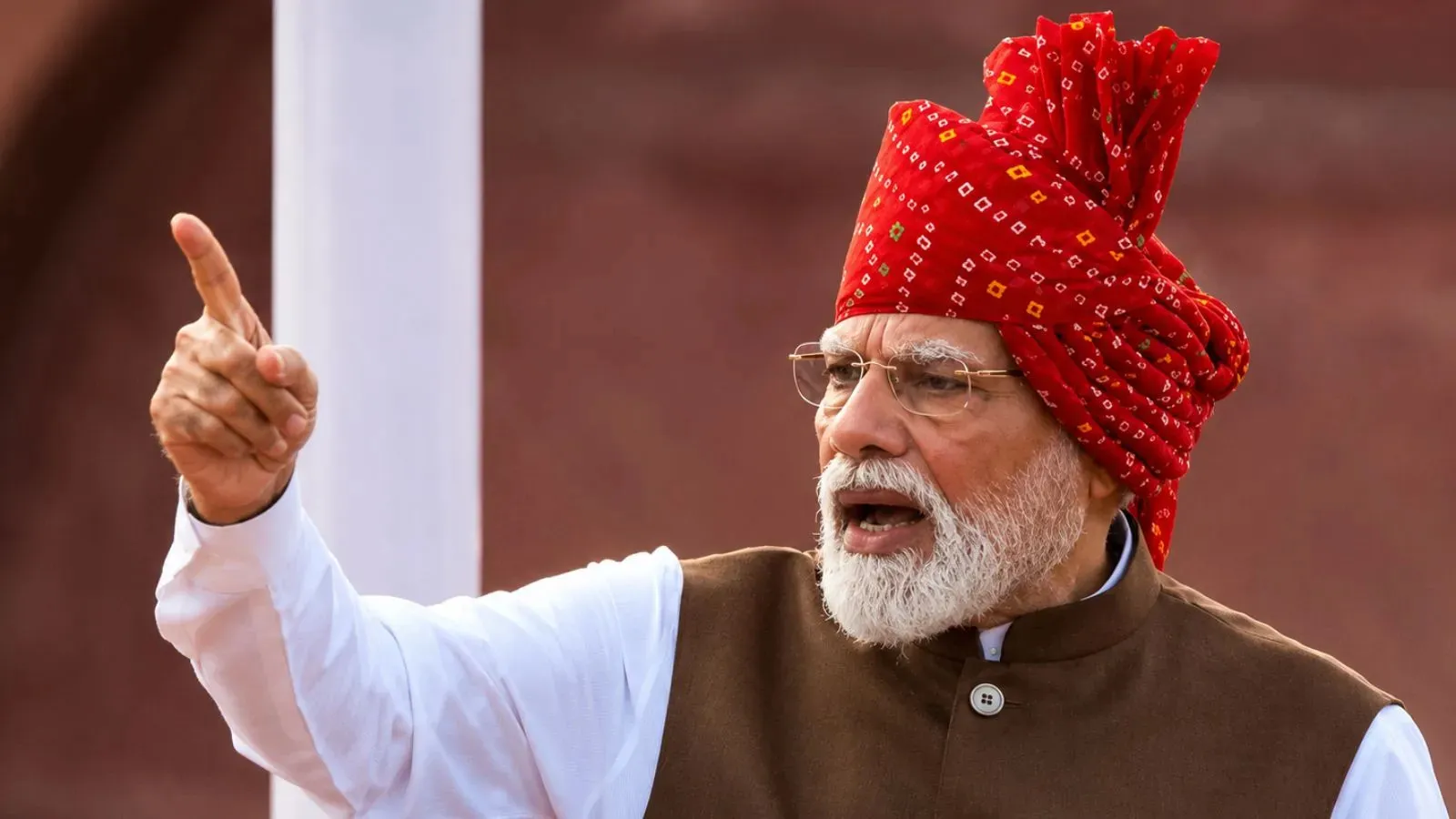
Prime Minister Narendra Modi on Saturday underscored the need for self-reliance, particularly in sectors like energy, semiconductors, and critical minerals, to avoid being vulnerable to the “weaponisation” of resources and even territory being done by some other countries. Modi also called for accelerating the pace of reforms to make India a developed country by 2047. The roadmap Modi laid out from the ramparts of the Red Fort on India’s 80th Independence Day centred around energy security, advanced technology, semiconductors, manufacturing, and exports.The Prime Minister identified energy security as a critical need of the hour, emphasising that a world powered by chips, artificial intelligence (AI), and data centres requires massive and reliable energy supply. He also asked Indian companies to aspire to be counted among the largest in the world, and micro, medium, and small enterprises (MSMEs) to make greater use of the market access provided by India’s free-trade agreements (FTAs) with other countries to reach global markets.Modi also outlined a seven-point growth framework ‘Sapt Dhara’ for the next five-seven years, with focus on manufacturing, agriculture and food production, technology and innovation, infrastructure and connectivity, defence, green and blue economy, and India’s soft power. Self-reliance, with a focus on domestic manufacturing and production to cut import-dependence in key areas of the economy, has been an enduring theme for the Modi government over the past few years as the world went through multiple crises — like the Covid pandemic, Russia-Ukraine war, global trade tensions, and the conflict in West Asia — that adversely impacted global trade and supply chains. Modi said that while there may be many things available in the world that are cheaper and can be obtained faster, relying on imports doesn’t build India’s capabilities, and therefore, the country must strengthen its own capacities and protect its interests. He also said that over the last decade, it seems as if the world has stopped talking about globalisation altogether. “There was a time when I was talking about self-reliance, some people sitting in air-conditioned chambers and thinking were telling us what will happen to globalisation…The voices of globalisation that used to come from have stopped, they cannot be heard. Every nation has turned its focus to addressing its own specific challenges; however, regrettably, during this period of crisis, some have engaged in the game of weaponising resources to assert their dominance. The world is currently intent on weaponising whatever assets it possesses. Resources such as petrol, diesel, fertilisers, medicines, and technology chips are being weaponised; indeed, even territory itself is being weaponised,” the Prime Minister said. Although Modi didn’t name any country, the mention of petrol, diesel, fertilisers, and territory is being seen as indicative of the effective closure of the maritime chokepoint of the Strait of Hormuz due to the US-Israel conflict with Tehran. The trade artery is important for India, as about 40% of the country’s oil imports, over 50% of its natural gas imports, and 90% of its liquefied petroleum gas (LPG) imports came through the Strait of Hormuz before the war began.Story continues below this ad “It is now difficult to run the new world without energy, and therefore, whether it is chips, AI or data centres, we will need electricity in very large quantities. Energy security is the need of the hour, and therefore, we have already taken a series of strong steps in this direction. One major means of ensuring energy security is nuclear energy. By passing the SHANTI Act in Parliament, we have paved the way towards a new goal. By 2047, we are working towards a target of 100 gigawatts of nuclear power. Within this very decade, we have set a target of starting five new nuclear reactors,” Modi said, adding that India has crossed an important milestone by mastering the fast breede
Discussion (0)