
Loading dispatches...
← Return to NewsroomEconomy
India’s UNSC permanent seat push is a top priority, Government tells Lok Sabha
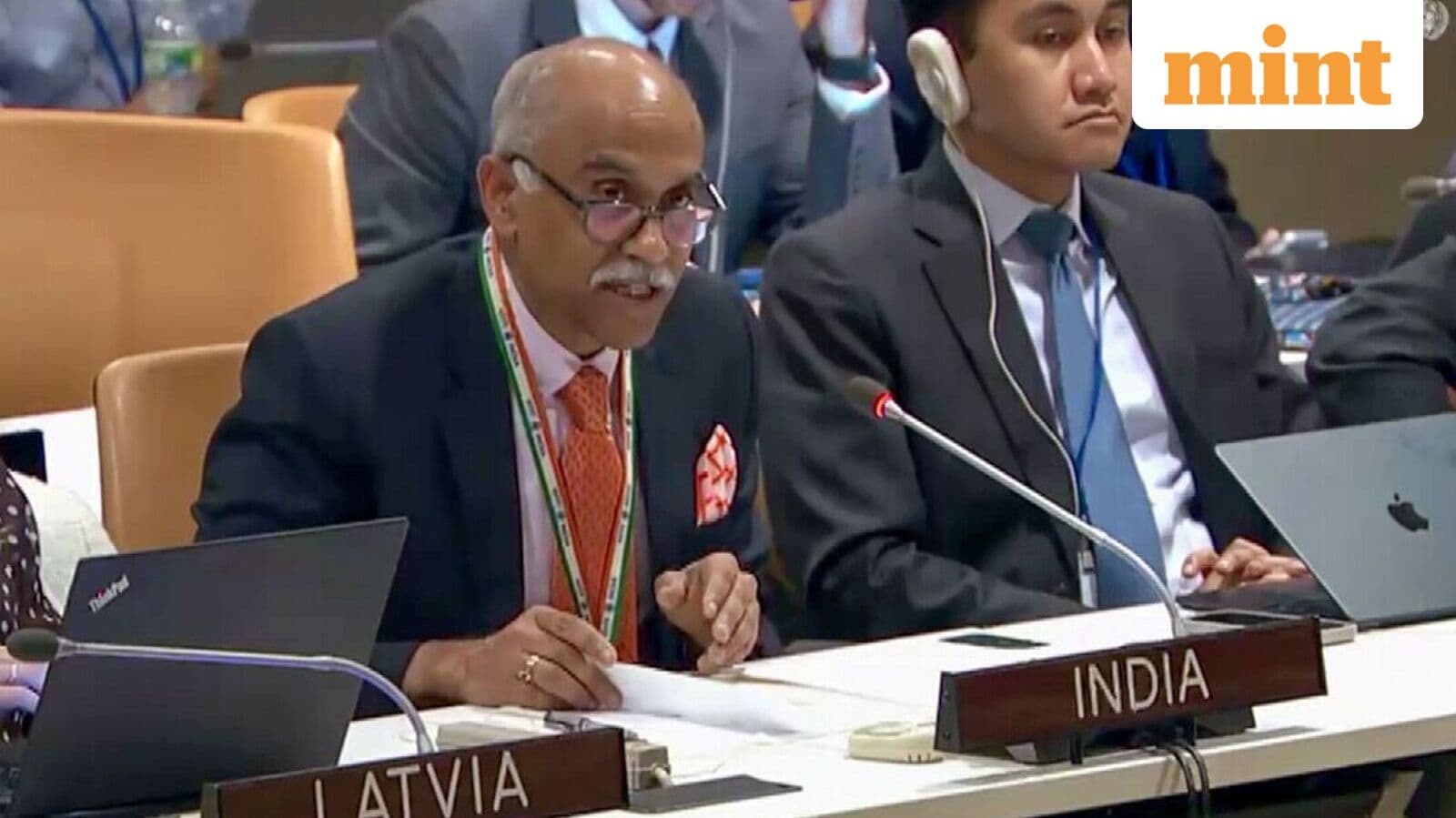
India says securing a permanent seat on an expanded UN Security Council remains a top priority, with New Delhi engaging all five permanent members.The Indian government has said securing a permanent seat for the country on an expanded United Nations Security Council (UNSC) remains a top priority(ANI Video Grab)The Indian government has said securing a permanent seat for the country on an expanded United Nations Security Council (UNSC) remains a top priority, with New Delhi continuing to engage with all five permanent members of the council.Responding to a question in the Lok Sabha, Minister of State for External Affairs Kirti Vardhan Singh said India was pursuing the issue through both bilateral and multilateral channels, including at the highest levels.India engages all five permanent UNSC membersThe government said India’s diplomatic efforts include engagements with all five permanent members of the UNSC, namely the US, Russia, China, the UK and France.The response came after Lok Sabha member Ramprit Mandal asked about the initiatives being undertaken to secure permanent membership for India and whether China was unlikely to support New Delhi’s bid.The government did not directly address the question of whether China would support India’s permanent membership.Instead, it reiterated that India was consistently pursuing its case with countries across bilateral and multilateral forums.India calls for expanded UNSCThe government said India believes it has "all the credentials" to become a permanent member of a reformed and expanded UNSC that reflects present-day global realities.New Delhi has also been calling for an expansion of both the permanent and non-permanent categories of membership, with greater representation for developing countries and the Global South.India has advocated for the early start of text-based negotiations on UNSC reform, along with clearly defined timelines and milestones.UNSC expansion requires UN Charter amendmentThe government said expanding the Security Council would require an amendment to the United Nations Charter.India has maintained that reform of the council is necessary to make it more representative of the current international order.Sweden backs India's permanent UNSC seatSweden’s outgoing Ambassador to India, Jan Thesleff, has expressed support for New Delhi’s push for a permanent seat on a reformed United Nations Security Council (UNSC), saying India deserves a greater role in global decision-making.Speaking to ANI ahead of the end of his tenure in New Delhi, Thesleff also highlighted defence manufacturing, innovation and strategic cooperation as important areas shaping the India-Sweden relationship.He said Sweden expects defence ties with India to deepen further, particularly as Swedish companies expand their manufacturing presence in the country under the ‘Make in India’ initiative.Get Latest real-time updatesStay updated with the latest Trending, India, World and US news. HomeNewsIndiaIndia’s UNSC permanent seat push is a top priority, Government tells Lok SabhaMore
The Delhi High Court on Tuesday called for sanity in the growing wave of personality-rights cases, questioning how far celebrities can go in seeking removal of content about them and raising concerns over the impact of broad takedown demands on free speech.“Assist me in bringing some sanity to this concept of personality. It is growing out of hand. Started small with good intentions, now we are sitting at 6,884 URLs. It can't be like that,” the court said, adding the solution could hit “at the very root of free speech.”A bench of Justice Anup Jairam Bhambhani was hearing actor Janhvi Kapoor’s plea seeking the removal of more than 6,000 URLs that she alleged violated her personality rights. The court questioned the broad approach being taken in such cases and how far a celebrity’s rights can extend over content posted online. The defendants in the case include Meta and Telegram, as well as operators of allegedly infringing fan pages.The court said it would not pass a blanket order covering all material placed before it, limiting relief to content that is clearly obscene or involves commercial exploitation. It also asked Kapoor’s lawyers to narrow their plea and categorise the URLs, rather than seeking an order covering thousands of links. “I am not inclined to grant any blanket orders in the name of personality rights,” the judge said. The matter will be heard next on 17 August.These judicial remarks come as personality-rights suits by actors, politicians, content creators, and corporate leaders multiply rapidly. However, the court’s stance in Janhvi Kapoor’s case marks a notable shift from previous personality-rights suits. In past cases involving figures such as Amitabh Bachchan, Anil Kapoor, Aishwarya Rai Bachchan, Allu Arjun, and Shashi Tharoor, courts routinely granted dynamic injunctions to block new or mirror URLs. What sets Kapoor’s plea apart, and triggered the judicial pushback, is its sheer scale. Targeting over 6,000 URLs, it represents one of the largest takedown requests in a personality-rights case to date.Fan clubs in the spotlightDuring Tuesday's hearing, Kapoor’s lawyers argued several accounts were impersonating her and offering paid promotions, asserting fan pages shouldn't make money from a celebrity's persona. The court questioned whether that approach could end up covering ordinary fan activity, saying, “Fan club, you want me to stop all your fan clubs?”The judge also questioned whether personality rights could be used to stop uncomfortable or critical material from being published. “We see we've had cases where celebrities are trying to hide wrongdoing by saying personality rights, publicity rights, celebrity rights. How can a court allow that?”Nonetheless, the court said it would protect celebrities against clearly objectionable material and direct commercial exploitation. “What is inappropriate, what is lascivious, what is obscene etc., I will protect you, no question.”Discussing posts about relationships, the bench questioned whether such material could simply be labelled misleading or unauthorised. “People are discussing your relationship, they are discussing whether it is true, false, who will know? Why? How can I just block this?” The judge also described the term “misleading digital content” as a subjective phrase, questioning whether it could by itself justify an injunction.Addressing arguments that unconsented photos infringe rights, the court remarked, “Whose eyes are dirty? There are people whose eyes are dirty. What can one do? We are not the conscience keepers of the nation.”Mint’s queries emailed to IndiaLaw LLP, which represents Janhvi Kapoor, as well as Meta, Google, X and Telegram were yet to elicit a response at the time of publishing.Practical problemsMeanwhile, the sheer volume of flagged URLs presented a practical hurdle for social media platforms, with Meta’s legal counsel telling the court that manually reviewing thousands of links one by one was simply unfeasible. “Four thousand,


Discussion (0)