
Loading dispatches...
← Return to Newsroomgeneral
In Independence Day speech, Shivakumar formalises Bengaluru police split
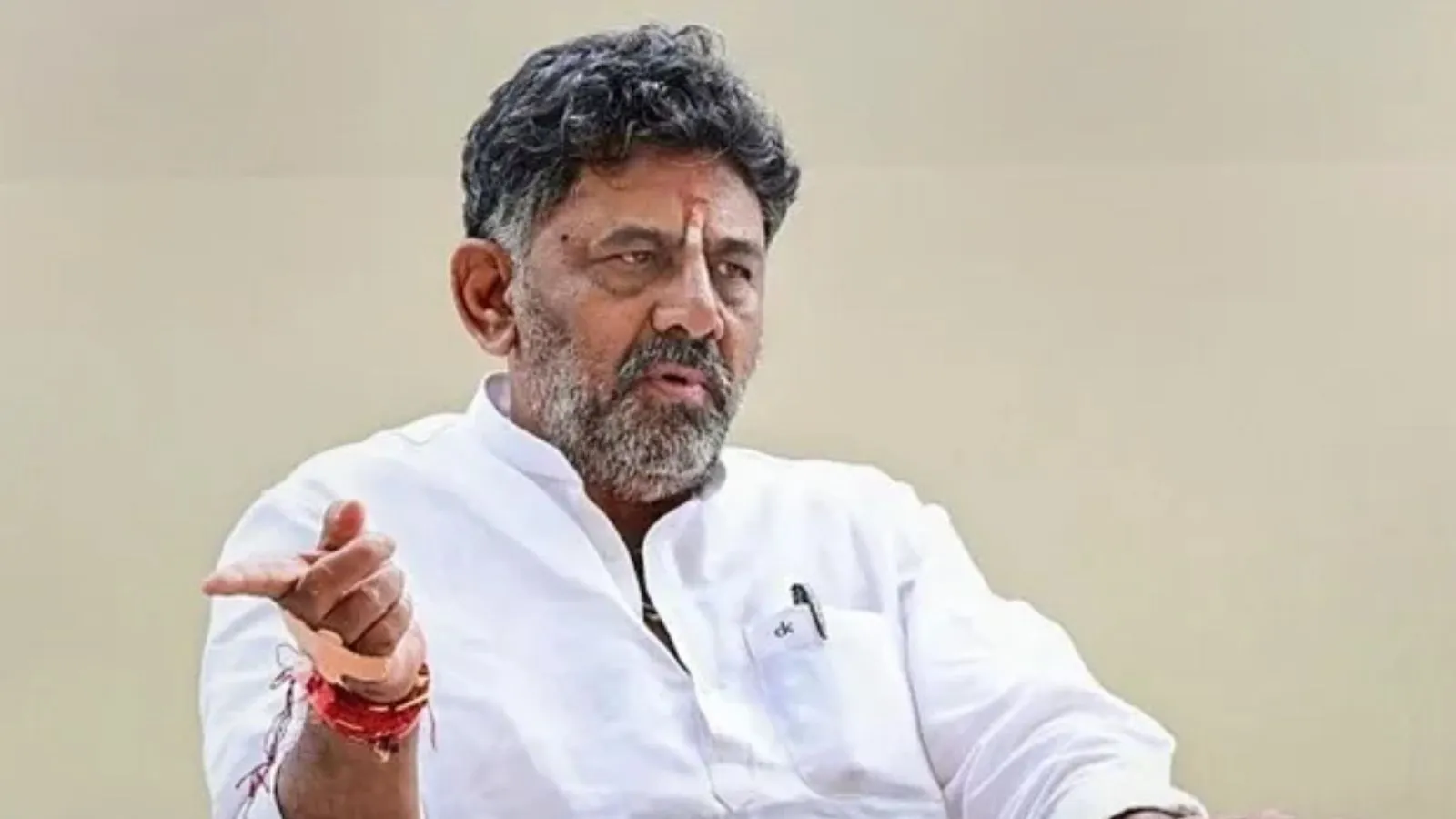
The plan to split the 63-year-old Bengaluru police commissionerate is seen as a key project of the Congress government under Shivakumar. (File Photo).In his first Independence Day speech as the Karnataka Chief Minister, D K Shivakumar Saturday laid out what he described as a roadmap for Bengaluru’s next phase of development, including a formal announcement of the plan to reorganise the city’s police administration. The announcement is part of a broader effort by Shivakumar to reshape Bengaluru’s governance architecture, with plans ranging from restructuring the police commissionerate to rejuvenating lakes and creating tree parks.“The Greater Bangalore Authority and five municipal corporations have been formed for better governance and safety. Steps are being taken to divide the Bangalore police commissionerate into five commissionerates,” Shivakumar said in his speech. Shivakumar also announced measures on AI education, rural employment, professional-course reservations, and agricultural machinery subsidies. Overhauling Bengaluru police commissionerate The plan to split the 63-year-old Bengaluru police commissionerate is seen as a key project of the Congress government under Shivakumar. The Indian Express reported the proposal to split Bengaluru’s police commissionerate into five units earlier this month. The plan, which received in-principle approval from Shivakumar on August 5, envisages five commissionerates — north, south, east, west and central — under a chief police commissioner, along with 6,633 additional posts at an estimated cost of about Rs 765 crore. Under the proposal, five city police commissioners, ranked inspector general of police or deputy inspector general, will report to the DGP-rank chief commissioner. The city will have 28 DCPs working under five commissioners instead of the current 18 DCPs under one commissioner and two additional/joint commissioners.Story continues below this ad According to the police commissioner’s proposal, which emerged in the public domain with an August 1 signature, since the “Bruhat Bengaluru Mahanagara Palike has been divided into five municipalities and the Greater Bangalore Authority has been established, there is a lack of coordination in the duties of the corporation and the police due to the division of jurisdiction”. “Also, at present the police commissionerate unit is functioning under the jurisdiction of the Gram Panchayat and Town Panchayat, not under the jurisdiction of the Greater Bangalore Authority,” it added. ‘Young Karnataka-New India’ The Karnataka chief minister also announced AI Akshara Abhiyaan and a Coding Gurukul to facilitate skill development among children and youth. “Young Karnataka-New India is our motto. More funds are being provided to shape the future of the youth. AI is being introduced in the state’s schools from Class 6 onwards, along with the AI Akshara Abhiyan and Coding Gurukul. The country’s first government-owned AI University will be established in Bengaluru and AI hubs will be built,” Shivakumar said.Story continues below this ad To help rural students compete on par with urban students in gaining access to professional courses in the state, Shivakumar said a Sahaya Hastha scheme will be started to give 7.5 per cent reservation for students who study in rural government schools, within the existing 15 per cent reservation for those who study from classes 1 to 10 in rural schools. “This will further expand opportunities for quality professional higher education, including medicine and engineering,” he said. For the rural sector, Shivakumar said a “50 per cent subsidy would be provided on rental charges of agricultural machinery for farmers with land holding of three acres or less.” Shivakumar also said an employment fund scheme would be implemented “to encourage entrepreneurs who create jobs in ten backward districts by providing an incentive of Rs 2,500 per month for each
The CAG report, tabled in Parliament, covers the Bangalore Metro Rail Corporation Limited (BMRCL) from its inception through March 2021, with financial figures updated to March 2023. (File Photo) Bengaluru’s Namma Metro suffered from poor planning, lower-than-expected passenger numbers, and rising costs, with a performance audit by the Comptroller and Auditor General (CAG) of India finding that weak land assessment and delays pushed up expenses by over Rs 6,600 crore across Phases 1 and 2. The CAG report, tabled in Parliament, covers the Bangalore Metro Rail Corporation Limited (BMRCL) from its inception through March 2021, with financial figures updated to March 2023. CAG reviewed the 117 project contracts worth Rs 27,472.85 crore — 89 per cent of the contract value — along with 75 operation and maintenance contracts worth Rs 348.12 crore.In its report, CAG highlighted that metro ridership fell well short of projections. Actual peak-hour ridership on Phase 1 in 2021 ranged between 6,429 and 8,852 — far below the 15,000 threshold that justified opting for a “Heavy Metro” system over a cheaper Bus Rapid Transit alternative, with no study conducted on how to improve ridership. Between 2016-17 and 2022-23, actual fare revenue stood at Rs 1,758.13 crore against a projected Rs 7,736.70 crore — just 22.72 per cent of the target. The CAG audit also found that the detailed plans for Phase 2 were prepared before the state had an approved plan for how Namma Metro, buses, and other forms of transport would work together. Land issues, cash losses The report highlighted that the poor assessment of land requirements and acquisition delays inflated costs by Rs 6,603.39 crore across both phases. Separately, BMRCL’s incorrect classification of land status led to excess compensation payments of Rs 294.72 crore, while delayed notifications triggered a further Rs 186.86 crore in interest payouts, and improperly applied valuation guidelines cost another Rs 31.35 crore. BMRCL has been posting continuous cash losses since 2013-14 and depends on the Karnataka Government to repay its debt. The 50:50 joint venture between the Centre and the Karnataka Government also significantly missed non-fare revenue and property development targets, with over 2.2 lakh square feet of commercial space in stations lying vacant for years, resulting in an estimated loss of Rs 38.53 crore in rent.Story continues below this ad Meanwhile, BMRCL said Tuesday it recorded 11.19 lakh passengers on August 10, the highest daily ridership recorded this month. According to BMRCL, 4.66 lakh ridership was recorded on the Purple Line, 2.85 lakh on the Green Line, 92,838 on the Yellow Line and 2.75 lakh interchange passengers. © The Indian Express Pvt Ltd

Discussion (0)