
Loading dispatches...
← Return to NewsroomEconomy
US Elections Tuesday: Florida, Alaska, Wyoming Primaries, California Special Election — Key contests to watch
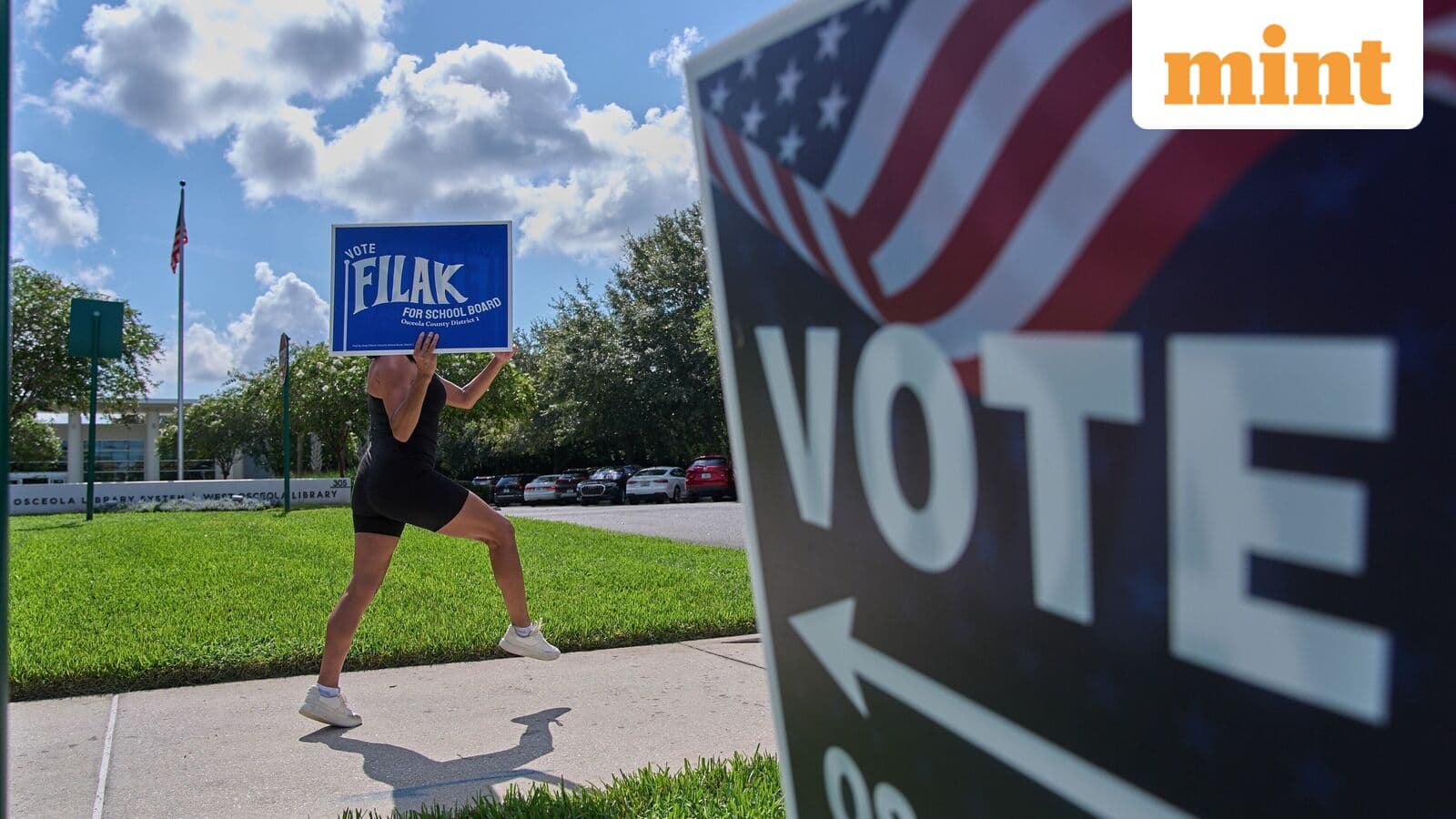
Voters in Florida, Alaska and Wyoming will head to the polls Tuesday for key state primaries, while California voters will decide a special congressional election. The contests will determine party nominees for several high-profile races and could offer an early indication of the political landscape ahead of the November midterm elections.With 77 days remaining until the general election, several races stand out because of their competitive fields, open seats, redistricting battles and potential implications for the balance of power in Washington.Here is a look at what elections are being held Tuesday, the key contests and the candidates involved.Florida elections: Governor, Senate and House primariesFlorida's primary elections are among the most closely watched contests on Tuesday. Voters will choose nominees for governor, the US Senate and several congressional seats.Florida governor Republican primaryEleven Republicans are competing to replace term-limited Gov. Ron DeSantis. The leading candidates include:Byron Donalds, US representative and the Trump-endorsed candidateJay Collins, Florida lieutenant governor and a close DeSantis allyJames Fishback, former investment firm CEOPaul Renner, former Florida House speakerDonalds has a significant financial advantage and the backing of President Donald Trump. Collins has positioned himself as the candidate who would continue the DeSantis political legacy.Florida governor Democratic primarySix Democrats are competing for the nomination. Key candidates include:David Jolly, former Republican US representative who joined the Democratic Party in 2025Dotie Joseph, Florida state representativeDayna Marie Foster, a former high school math teacher backed by the state's Democratic Progressive CaucusJolly has a major fundraising advantage and is running with former Democratic Rep. Gwen Graham as his running mate.The winner will face the Republican nominee in November. Florida Democrats are seeking to end a more than three-decade drought in gubernatorial victories.Florida Senate primaryRepublican Sen. Ashley Moody faces little opposition for the GOP nomination. Moody was appointed in 2025 to fill the Senate seat vacated by Marco Rubio after he became secretary of state.The Democratic nomination will be decided between:Angie Nixon, a Florida state representativeAlex Vindman, a retired Army lieutenant colonel and former National Security Council staff member who became nationally known during Trump's first impeachmentThe winner will challenge Moody in November.Florida House racesThe state's congressional primaries are particularly important because Republicans recently adopted a new congressional map designed to strengthen their position in the November election.Democratic Reps. Kathy Castor and Darren Soto are seeking reelection in newly redrawn, more Republican-friendly districts.In South Florida, Democratic Rep. Jared Moskowitz faces a primary challenge from Oliver Larkin, a union organizer and democratic socialist.Another closely watched Democratic primary pits former Rep. Sheila Cherfilus-McCormick against Rep. Debbie Wasserman Schultz in the newly configured 20th District.On the Republican side, Reps. Randy Fine and Cory Mills face primary challenges.The race to replace Donalds in Florida's 19th District has also attracted national attention. Candidates include former North Carolina Rep. Madison Cawthorn, former New York Rep. Chris Collins and a former Illinois state senator.Alaska elections: Senate, House and governorAlaska's primary could have major implications for control of the US Senate.Alaska Senate primaryRepublican Sen. Dan Sullivan is seeking a third term and faces a strong challenge from former Democratic Rep. Mary Peltola.They are among 16 candidates competing in Alaska's unusual all-party, top-four primary. The four candidates receiving the most votes will advance to the November election regardless of party affiliation.The November winner will be decided using ranked-choice

US President Donald Trump on Saturday once again renewed his call for the Senate to act quickly to make daylight saving time permanent, saying that changing the clocks twice a year causes unnecessary disruption. His remarks came after the House of Representatives cleared the bill last month.File image of US President Donald Trump(AP Photo/Mark Schiefelbein)US President Donald Trump on Saturday (local time) called on the US Senate to vote on the “NO MORE CHANGING THE CLOCKS ACT,” arguing that keeping more daylight in the evening is beneficial and that changing clocks twice a year causes unnecessary disruption and chaos.In a Truth Social post, he wrote, "The Senate must vote on the NO MORE CHANGING THE CLOCKS ACT as soon as possible. More sun later in the day is better (including for fighting crime!), but, even more importantly, NO MORE RIDICULOUSLY CHANGING CLOCKS AND WATCHES TWICE YEARLY, with all of the disruption and chaos it causes. FINALLY, GET IT DONE!!!"Trump's remarks came days after he made a similar appeal to the Senate, saying the House of Representatives had already cleared the bill and urging Republican senators to move quickly on what he called an issue capable of attracting bipartisan support.Earlier in July, Trump made a similar call after the House of Representatives passed the bill to make daylight saving time permanent. He said, "For many years, the vast Majority of Americans have asked to make Daylight Saving Time permanent, but no Administration has been able to get it properly done until now. I am proud to announce that the House of Representatives has passed the Bill, and it has now gone to the Senate for final approval." He added, "People are sick and tired of having to change their clocks twice a year. It is foolish, inconvenient, and, in some cases, very costly. For Cities and States with Watchtowers, and hard-to-reach places, it costs Millions of dollars."US House clears bill to make daylight saving permanentIn July, the House of Representatives approved the bill to make daylight saving time permanent, moving the legislation closer to ending the twice-yearly clock changes.The daylight saving legislation, called the Sunshine Protection Act, cleared the House with a 308-117 vote. Daylight saving time is observed from spring to fall, when clocks in most parts of the US are moved one hour ahead of standard time. Under the proposed law, states that already have exemptions would be allowed to continue observing standard time.While it has been a month since the legislation was cleared in the House, it remains unclear whether the Senate will approve it. According to a Reuters report, Republican Senator John Kennedy said Trump called him recently to ask him to support the bill to end the twice-yearly practice of changing clocks that has been observed across most of the United States since the 1960s.He reportedly informed the US President that while he agrees to support the bill, there is significant opposition in the Senate. He said, "It's going to be a dogfight."Debate over permanent daylight saving growsSupporters argue that changing clocks twice a year can disrupt sleep, raise the risk of workplace injuries and contribute to road accidents. They say keeping clocks an hour ahead throughout the year would extend evening daylight and potentially support economic activity during winter.Opponents, however, point out that permanent daylight saving time would make winter mornings darker, forcing children travelling to school, commuters, construction workers, farmers and others to begin their day before sunrise. In some areas, the sun could rise as late as 9 a.m. or even later during the peak of winter.The US previously observed daylight saving time year-round during World War II and introduced the practice again in 1974 in an effort to conserve energy.About the AuthorSwati GandhiSwati Gandhi is a digital journalist with over four years of experience, specialising in international and geopolitical issues. Her work

The Democratic National Committee officially selected South Carolina as the first state to vote in the party's 2028 primaries, Reuters reported on Saturday.The Democratic National Committee passed the party’s 2028 primary calendar on Saturday.After discussions on Saturday in Texas, the Committee formally anointed South Carolina, with its large African American primary electorate, as the first-in-the-nation state.Following South Carolina will be Nevada, New Hampshire, New Mexico, Michigan and Virginia, the DNC said in a news release.As per the report, the first state to vote in a presidential nominating contest often helps to shape the field of candidates, drawing campaign spending and media attention.Democrats' calendarThe new calendar would launch the early series of contests in six states from late January through the end of February, after which other states could hold their primaries, too.South Carolina’s primary is to be held on January 22, 2028, Nevada’s on February 1, New Hampshire’s on February 8, New Mexico’s on February 15, Michigan’s on February 22 and Virginia’s on February 29, NBC News reported.The calendar adopted on Saturday will allow Democrats "to battle-test candidates while maintaining an open, affordable field," the committee said."The DNC has delivered a 2028 nominating calendar that truly represents our party and our values, and will help us retake the White House in 2028," DNC Chair Ken Martin said in a statement.Some Democrats often mentioned as potential presidential contenders have visited South Carolina over the past several months, including Kentucky Governor Andy Beshear, US Senator Mark Kelly of Arizona, and California Governor Gavin Newsom.“Our 2028 nominee, whoever they are, will have to earn the support across the full breadth of America. Every region, every demographic, every generation,” Democratic National Committee Chair Ken Martin was quoted by NBC as saying in his opening remarks to committee members on Saturday. “No shortcuts. No coronation. You want to lead this party? Go earn it. Go and earn it.”South Carolina and Nevada had tussled in July over which state should claim the top spot in a competition that became a proxy battle between the party's Black and Latino bases.In 2022, former President Joe Biden persuaded Democrats to overhaul their 2024 nominating calendar to put South Carolina first.New Hampshire, which traditionally had been the first state to vote in the primaries, defied the national party that year and stuck to its usual January spot on the calendar, although the DNC did not seat any of the New Hampshire delegates elected in that gathering.Iowa Democratic Party Chair opposes calendarAccording to reports, Iowa Democratic Party Chair Rita Hart on Saturday opposed the new 2028 calendar, saying that Iowa losing its historic status means no Midwestern state will go in the first four states.Hart said Republicans will launch their presidential primaries in Iowa in 2028 regardless of what Democrats do and will have a leg up getting ready for general elections, with national implications for the balance of Congress, including three congressional seats and the chance to flip Sen. Chuck Grassley’s Senate seat in 2028.“They will spend hundreds of millions of dollars to promote their candidates, and they will bring tons of national media attention,” Hart said.Longtime New Hampshire Democratic Party Chair Ray Buckley also issued a statement just after the verification of the new calendar, calling it “disappointing.”New Hampshire has long had a state law on the books dictating that it must hold its presidential primary before other states. The DNC has said it is not bound by an individual state’s law.“Time and again, New Hampshire has proven we are uniquely suited to battle-test candidates. Our small, purple state gives candidates a level playing field with the opportunity to meet voters face-to-face, answer tough questions, and earn support one conversation at a time,” Buckley said.
In the upper chamber, Sens. Bill Cassidy (R-La.) and John Cornyn (R-Texas) lost their primaries earlier this year. In the House, 10 incumbents lost their primaries, with three Republicans going down and seven Democrats losing — in part due to challenges from the party’s left flank.Sen. Bill Cassidy (R-La.); Rep. Thomas Massie (R-Ky.), Rep. Dan Crenshaw (R-Texas)A dozen congressional incumbents lost their primaries in this election cycle, with multiple contests still to come over the next month. In the upper chamber, Sens. Bill Cassidy (R-La.) and John Cornyn (R-Texas) lost their primaries earlier this year to challengers backed by President Donald Trump.In the House, 10 incumbents lost their primaries, with three Republicans going down and seven Democrats losing — in part due to challenges from the party’s left flank, the Hill reported.The three Republican incumbents who fell short include Dan Crenshaw of Texas, Thomas Massie of Kentucky, and Andy Ogles of Tennessee.Here are the congressional incumbents who have lost their primaries, so far.1. Sen. Bill Cassidy (R-La.)Sen. Bill Cassidy of Louisiana, one of the seven Republican senators who voted to remove President Trump from office after the January 6th insurrection at the US Capitol, lost his bid for reelection in May 2026. Cassidy finished third in a three-way race, according to the Associated Press.2. Sen. John Cornyn (R-Texas)Cornyn (Republican Party) ran for re-election to the US Senate to represent Texas. He lost in the Republican primary runoff on May 26, 2026. He assumed office on December 2, 2002. His current term ends on January 3, 2027.According to Politico, the senator was a towering figure in both national and Texas politics, known for his sober temperament, ability to cut deals and role in shaping the Senate GOP conference during the last four presidencies.Then, just about an hour after polls closed, Cornyn lost his primary to Ken Paxton, a scandal-plagued MAGA darling who was boosted by President Donald Trump’s last-minute endorsement.3. Rep. Thomas Massie (R-Ky.)Kentucky US Rep. Thomas Massie lost his Republican House primary Tuesday, becoming the latest Republican lawmaker to anger President Donald Trump and then fall to a primary challenger backed by the president.Massie, who has served in Congress since 2012, was one of the most outspoken holdouts. He pushed for the release of the Jeffrey Epstein files, criticised the war in Iran and voted against the president’s signature tax legislation last year. Still, he tried to convince voters that they could be for both him and Trump.The race was the most expensive US House primary in history, according to the Associated Press.4. Rep. Dan Crenshaw (R-Texas)Rep. Dan Crenshaw (R-Texas) was ousted by a primary challenger who successfully cast the four-term incumbent as anti-Trump and capitalised on a redrawn district. State Rep. Steve Toth — who had the backing of Sen. Ted Cruz (R-Texas) — beat Crenshaw, all but assuring his seat in Congress given the district’s safe-red bend.5. Rep. Al Green (D-Texas)Christian Menefee, a freshman Democratic US representative, beat veteran congressman, Al Green, in a fierce runoff that was the product of Republican gerrymandering. Menefee was sworn into the seat in January, after winning a special election to replace Sylvester Turner, the late US representative.6. Rep. Julie Johnson (D-Texas)Former Rep. Colin Allred has unseated Rep. Julie Johnson in a Democratic primary runoff, NBC News projected, after he dropped out of the Senate race last year and made a run for a House seat reshaped by redistricting.Allred finished well ahead of Johnson, 44%-33%, in the first-round primary on March 3, with the race going to a runoff because no one got majority support, the report added.7. Rep. Adriano Espaillat (D-N.Y.)In June, Rep. Adriano Espaillat, D-N.Y., lost his primary to a challenger backed by New York Mayor Zohran Mamdani, NBC News projected, in a major victory for the progressive wing of



Discussion (0)