
Loading dispatches...
← Return to NewsroomEconomy
Independence Day 2026 LIVE Updates: PM Modi to lead celebrations at Red Fort; rain likely in Delhi today
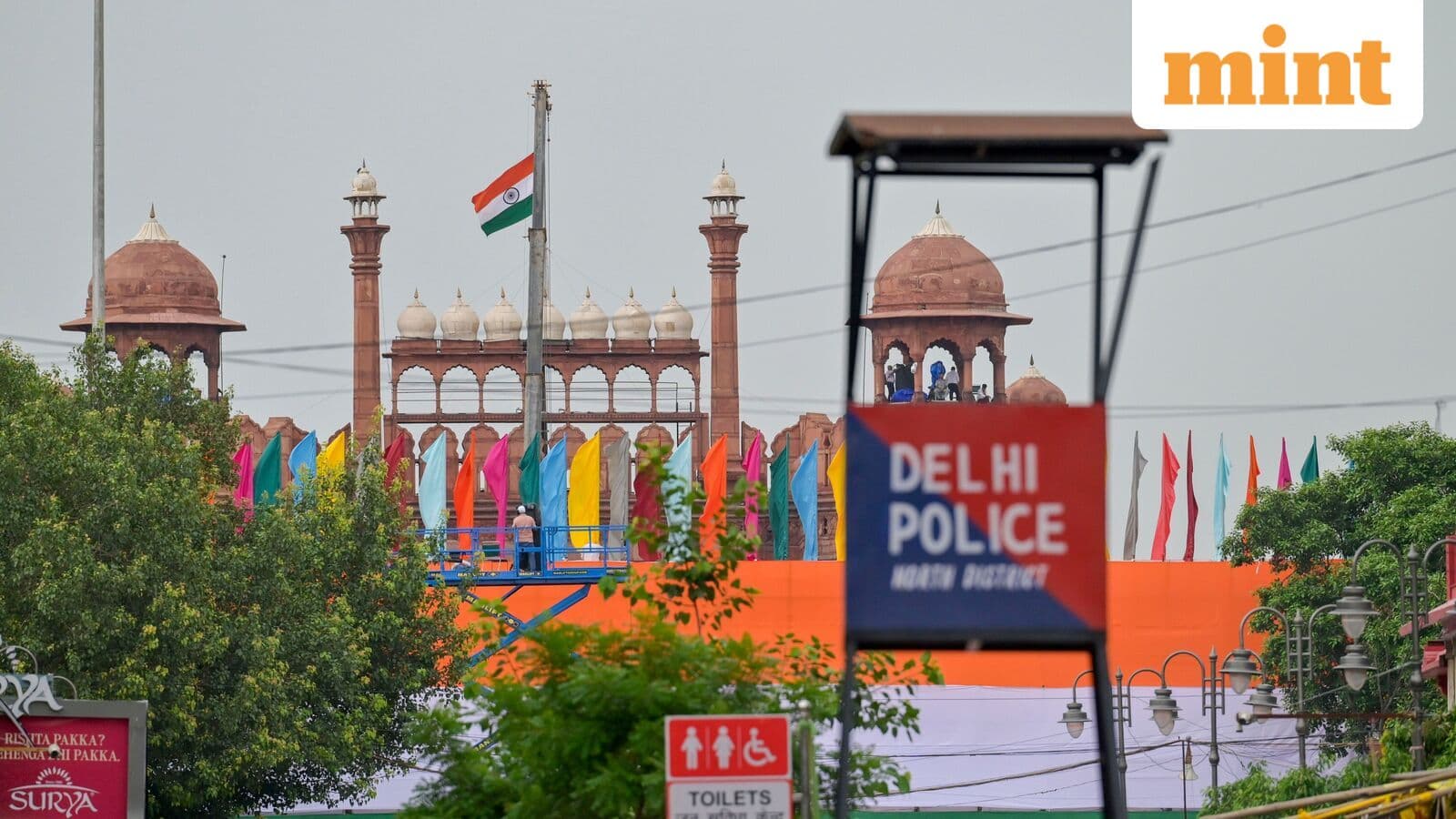
Independence Day 2026 LIVE Updates: India marks its 80th Independence Day today on August 15, with Prime Minister Narendra Modi scheduled to preside over the main celebrations at the Red Fort in Delhi amid patriotic programmes and heightened security arrangements.For the first time, the National Song Vande Mataram will be performed as part of the Independence Day ceremony at the Red Fort.Similar celebrations will take place across the country, with state capitals as well as cities and towns hosting ceremonial flag-hoisting programmes followed by cultural events.The central Independence Day ceremony will be held at the Red Fort complex, where PM Modi will lead the national celebrations.The Defence Ministry said on Thursday that the grand Independence Day ceremony will mark 150 years of the enduring legacy of the National Song, 'Vande Mataram', and “celebrate the energy, aspirations and pivotal contribution of 'Yuva Shakti' in driving India's journey towards Viksit Bharat by 2047”.Independence day celebrations at Red FortWhen PM Modi reaches the Red Fort, he will be welcomed by Defence Minister Rajnath Singh, Minister of State for Defence Sanjay Seth and Defence Secretary Rajesh Kumar Singh.The Defence Secretary will then introduce Lt Gen Rajesh Sethi, General Officer Commanding (GOC), Delhi Area, to the Prime Minister. Lt Gen Sethi will escort Modi to the saluting base, where a combined Guard comprising personnel from the three armed forces and Delhi Police will give him a general salute.PM Modi will subsequently inspect the Guard of Honour, according to the Defence Ministry’s earlier statement.The Guard of Honour will comprise one officer and 24 personnel each from the Army, Navy, Air Force and Delhi Police.5,000 special guests, 1,500-plus traditional-attire invitees to attend Red Fort ceremonyAround 5,000 special guests from diverse backgrounds have been invited to attend this year’s Independence Day celebrations at the Red Fort. The invitees include International Yoga Day volunteers, women entrepreneurs supported under the PM Mudra Yojana, high-performing MY Bharat volunteers, top-performing PMAY (U) beneficiaries and street vendors covered under PM SVANidhi, among others.Another 1,500-plus people from different states and Union Territories, dressed in traditional Indian attire, will also be present at the main ceremony, the ministry said.To encourage a sense of patriotism among the public, band performances are also being organised at 343 prominent locations across the country, according to the Defence Ministry.
The draft Master Plan of Delhi (MPD) proposes a three-pronged strategy, including a greater push for affordable housing developed in small formats while estimating a requirement of around 40 lakh additional houses by 2047, news agency PTI said.The proposed housing strategy seeks to increase housing supply by promoting small-format homes, affordable rental housing and development in land pooling and Transit-Oriented Development (TOD) areas.The national capital’s population will be about 32 million by 2047 and thus would require nearly four million additional houses which would mean three-times the current power generation capacity and two-times the current solid waste management capability, the MPD projects.The 32 million projection for 2047 means that Delhi's population will grow 10 million from what it is estimated to be right now.40 lakh new housesThe plan estimates the housing demand for the period 2011-47 at nearly 40 lakh dwelling units, based on an average household size of 4.5 persons. In 2011 – the last year when the census was conducted – Delhi had 3.11 million houses.Approved by the Delhi Development Authority (DDA), the draft plan is likely to be approved by the Centre within a week, PTI said quoting sources.The MPD also proposes in-situ rehabilitation of slums and JJ clusters, and improvement and regularisation of unauthorised colonies. "In unplanned areas, the housing strategy shall prioritize inclusive development approaches that minimize displacement while improving housing conditions and access to basic services," the plan states.Land Pooling AreasThe supply of new housing shall be facilitated through planned development in Land Pooling Areas, Transit-Oriented Development (TOD) Zones, High Density Corridors and Low Density Areas (LDA), with participation from the private sector and other implementation mechanisms."At the same time, existing housing areas shall be regenerated and upgraded to improve the quality of the built environment, infrastructure and public amenities. This shall include employer housing, resettlement colonies, cooperative group housing societies and housing developed by the DDA," the plan says.To curb the growth of unauthorised colonies in future, the MPD suggests "disincentives" such as levying prohibitive property tax, higher electricity charges, higher water charges by the local bodies to curb unauthorised construction.In the housing plan, regularised Unauthorised Colonies (UC) will also be permitted to undertake regeneration schemes as per relevant provisions."Resettlement colonies, which face issues of accessibility, lack of adequate services and poor quality of construction," the plan states, may also be taken up for regeneration.For unauthorised colonies, the policy says regeneration will facilitate proper road network, open spaces, facilities and accessibility to emergency vehicles, fire tenders, etc."A large number of residents in these colonies live in rental accommodation and that regeneration would facilitate the availability of rental housing," the draft plan states.Small format housing unitsKeeping in mind the limited land availability, the MPD plans "development of small format housing with dwelling unit (DU) size of 25-60 sqm carpet area", which would help maximise housing supply development.It also proposes incentives for the private sector to provide affordable rental housing. Different types of housing, such as hostels and dormitories, are proposed to improve housing access for students, labour and working men and women.The draft MPD further states that Affordable Rental Housing Complexes (ARHCs) shall be permitted separately or as part of new projects in the city.Land Pooling Areas and TOD zones have been identified as key areas for new housing. The policy states that their development provides opportunities for creating multiple housings having a potential to provide approximately 30 lakh dwelling units.The MPD has separately identified 'Low-Density Areas', including ar



Discussion (0)