
Loading dispatches...
← Return to Newsroomgeneral
Hinduism scholar Wendy Doniger on lessons from Mahabharata, her new memoir
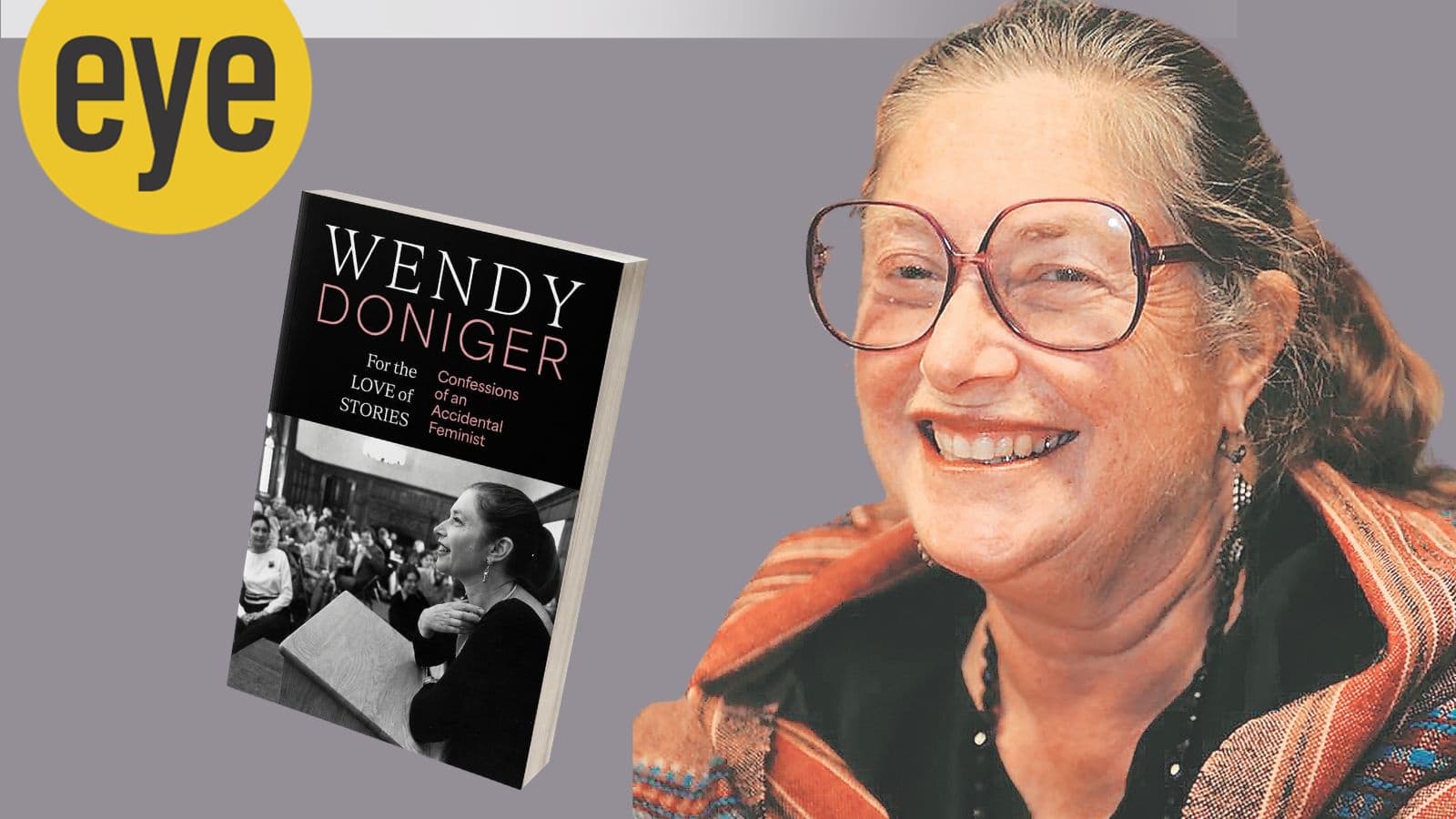
NewsBooks and LiteratureHinduism scholar Wendy Doniger on lessons from Mahabharata, her new memoir Premium American Indologist Wendy Doniger, whose memoir ‘For the Love of Stories: Confessions of An Accidental Feminist’ is now out, speaks about the dangers of provocation in academia and why she would not advise students to follow in her footsteps today In For the Love of Stories: Confessions of An Accidental Feminist, Doniger talks about living life on her terms. (Created using Canava) 7 min readAug 16, 2026 09:20 AM IST First published on: Aug 16, 2026 at 09:19 AM IST At 85, Wendy Doniger has the enviable air of someone who has lived several lives — and remembers all the best stories. One of the foremost scholars of Hinduism, whose The Hindus: An Alternative History provoked both admiration and fury, now turns the scholar’s gaze upon herself. In her memoir For the Love of Stories: Confessions of An Accidental Feminist, Doniger talks about a life lived on her own terms — her many romances (the man she did not marry, however, turned out to be Francis Ford Coppola), forging unlikely friendships in a chauvinistic academic world, learning to hold her own amid a bruising battle with Dinanath Batra, and a lifetime spent between Sanskrit texts and Hindu mythology. In this interview, she speaks of a vanishing academic world, and looking back in longing and gratitude. Edited excerpts: Has writing this memoir changed the way you understand your story? Yes, certainly. I began to write it at a moment when I was beginning to feel very strongly the loss of so many parts of my life as I aged — the loss of friends, of my own physical and mental powers, of important aspects of the worlds that I had loved and now had changed so violently — my own country, India, and academia. It was a time of considerable sadness. But as I wrote, I kept recalling all the wonderful people I had known and the great adventures I had had, and I stopped mourning the present and the future as I became more and more grateful for the past that had given me so much joy.The controversy surrounding The Hindus brought questions of faith, free speech and scholarship into focus. Did that experience change the way you think about the limits — and responsibilities — of a scholar writing about another culture? The controversy made me realise, as I had not realised before, that, as a scholar living outside India, I had the chance, indeed the duty, to write things that would have landed an Indian author in jail or worse. Of course, the view from outside can never capture the intimacy of reports by writers who lived there and experienced the oppression first-hand. But at the same time, an author who lived outside of India (and was willing to give up the great pleasure of ever visiting India again) had a kind of special privilege, that could be regarded as a duty, to speak out. In hindsight, would you have done anything differently with that book? I would not change what I wrote about Hinduism, which was based on texts I knew well and was, I still feel, highly relevant to our understanding of what happened in India since about 1,500 BCE, when our first records appear, and also since 1947. But I wish I had called on my colleagues in the study of India during the period of the Mughals and the British Raj for more help in writing those chapters. I am not familiar with the primary sources for these times, and those chapters are rather weak. If a student came to you today wanting to study mythology the way you did — combining rigorous philology with a willingness to provoke — what would you tell her? I would love to have such a student! I would, of course, still insist on the philology — history is in the texts, as well as the archeological record, and it is such a pleasure to get to know the texts, and everything else follows from that. But the ‘willingness to provoke’ has become so much more dangerous, in both India and the United States, since I published The Hindus that I coul



Discussion (0)