
Loading dispatches...
← Return to NewsroomEconomy
'Mileage depends on more than fuel': Govt allays E20 concerns; cites 'driving habits', 'AC usage' amid intense debate
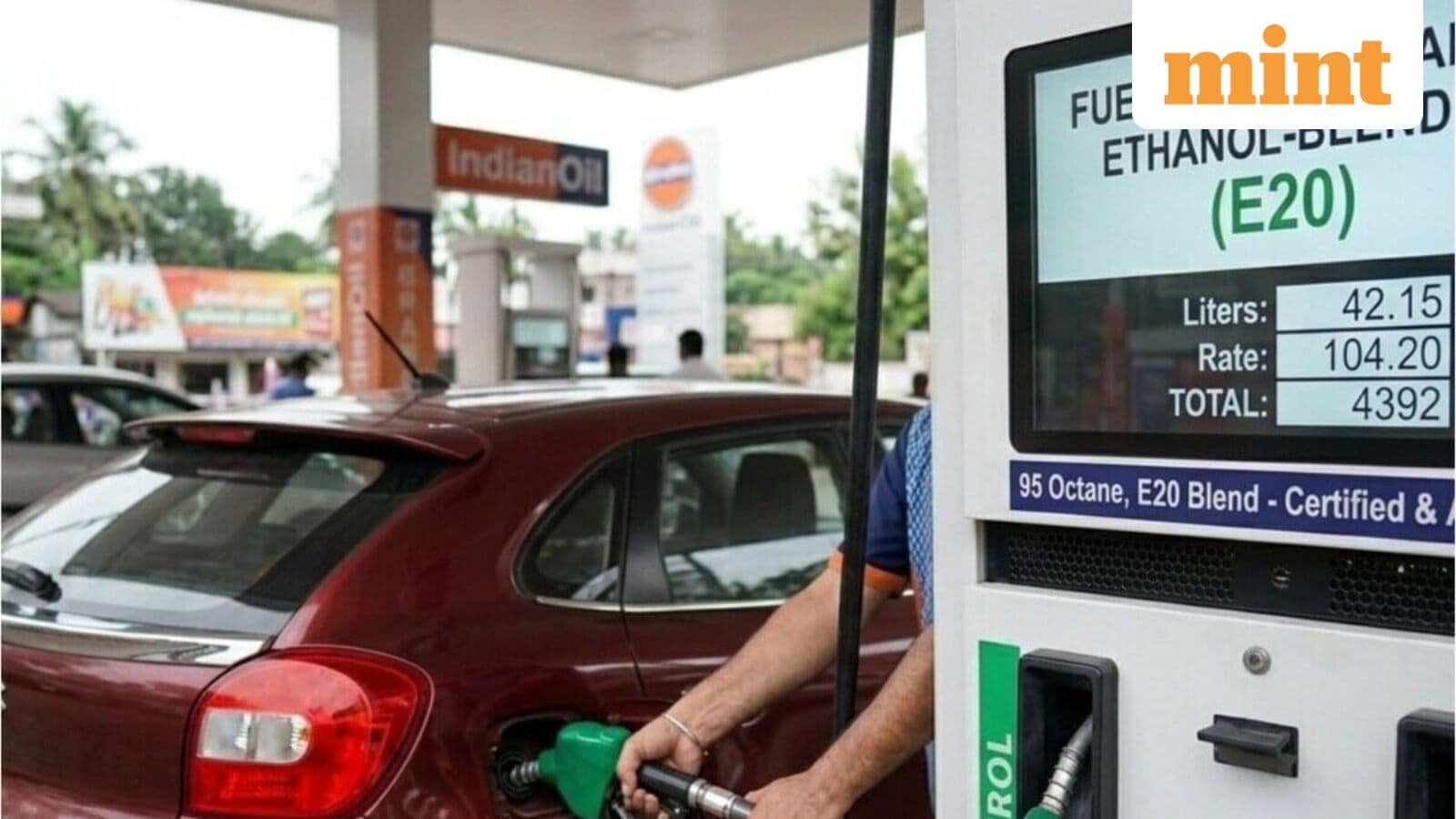
The Ministry of Petroleum and Natural Gas has sought to allay concerns over ethanol-blended petrol, saying vehicle mileage depends on several factors and cannot be attributed to fuel alone."Mileage depends on more than fuel alone. Driving habits, traffic, vehicle maintenance, tyre pressure and AC usage all play a role," the ministry said in a post on X on August 15.The ministry also said E20 petrol, which contains 20% ethanol blended with petrol, has undergone extensive testing and validation. "E20 has undergone extensive testing and validation, while real-world mileage depends on the overall driving and vehicle conditions," it said.In a separate post, the ministry said E20 had been tested across key vehicle parameters, including engine durability, drivability, startability, material compatibility and corrosion resistance."These evaluations support confidence in E20 compatibility and vehicle performance, helping consumers make informed choices as India moves towards cleaner mobility," it said, describing E20 as "Tested. Validated. E20 Ready".Government says E20 testing covers vehicle performanceThe government's latest clarification comes amid concerns raised by vehicle owners over whether higher ethanol blending is affecting mileage and vehicle performance. Social media posts and videos have also claimed that E20 fuel has resulted in lower mileage.The government has maintained that E20 has been subjected to laboratory studies and field trials involving the Automotive Research Association of India (ARAI), Society of Indian Automobile Manufacturers (SIAM), Indian Oil Corporation Ltd (IOCL), Indian Institute of Petroleum (IIP), automobile manufacturers and other stakeholders, according to multiple reports.The studies covered parameters including engine durability, drivability, startability, corrosion resistance, material compatibility, emissions and fuel efficiency. According to the government, these evaluations have not established any widespread adverse impact on vehicle performance or abnormal wear and tear due to E20 under prescribed standards.The government has also said it has not received widespread or substantiated complaints from vehicle manufacturers, automobile associations or consumer organisations regarding E20's impact on fuel efficiency, engine performance, maintenance costs or the overall driving experience.Government had acknowledged 3-5% mileage reductionThe government had, however, previously acknowledged that some vehicles designed to run on E10 could experience a marginal reduction in fuel economy after using E20.Minister of State for Petroleum and Natural Gas Suresh Gopi told the Rajya Sabha last month that any reduction in fuel economy in certain E10-designed vehicles was "generally marginal (around 3–5%)".He also said fuel efficiency depends on factors including driving habits, vehicle maintenance, tyre pressure, wheel alignment and air-conditioning load.Govt highlights E20's higher octane rating"Ethanol contributes to a higher octane rating, helping resist engine knocking and supporting effective engine performance," it said on X.The ministry said E20 was part of India's transition towards cleaner mobility and reiterated that the fuel had undergone testing and validation.The Ethanol Blended Petrol programme began with a pilot in 2001, followed by the introduction of E5 in 2006. Ethanol blending has subsequently increased progressively after the development of production capacity, infrastructure and the regulatory framework.The government has maintained that the rollout of higher ethanol blends was undertaken after consultations with automobile manufacturers, SIAM, ARAI, component manufacturers, testing agencies and oil marketing companies.About the AuthorPrabhakar JhaPrabhakar Jha is a journalist and digital news editor with nearly a decade of experience in online media, specialising in breaking news, politics, national affairs. Having built his career across fast-paced digital newsrooms, he has developed


Discussion (0)