
Loading dispatches...
← Return to NewsroomWorld
'Ghana was the crime scene' - the country leading the demand for slavery reparations
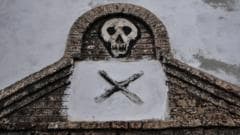
It was Ghana that tabled the UN resolution, and in June, a summit on reparations was held in its capital, Accra, with delegates from around 80 countries, who concluded that recompense was long overdue."Ghana has always been a pan-African leader. We're the first country to attain independence in sub-Saharan Africa and to prove that it is possible to fight imperial might, and win," Foreign Minister Samuel Okuzeto Ablakwa tells me.Ghana has been given special responsibility by the African Union to be "champion for reparatory justice" and it is clearly a role the country's political leadership is taking seriously.In part that is because about 10-15% of the estimated 12 million Africans who were forcibly removed from their homes, torn from their villages, and dehumanised on a scale never before seen, were from what is now Ghana. Even more were shipped from its shores."Ghana was the crime scene where these atrocities took place, so Ghana cannot afford to be silent on ensuring that we hold perpetrators accountable," Ablakwa says.The minister has called for a system of reparatory justice that funds educational grants, venture capital for young African entrepreneurs and research into enduring health issues that some argue may trace their roots back to the severe malnutrition and inhumane conditions of enslavement.And though he insists that this is not about direct financial gain for African leaders, one of the demands laid out at the recent summit on reparations clearly talked of debt relief and debt cancellation.He also wants individual institutions that benefited from the slave trade to be held accountable and pay compensation. Among these is the Church of England.In the 18th Century, the Church's missionary wing ran plantations and owned hundreds of slaves, which helped fund its work across the Americas and beyond.Many Church of England clergy independently owned slaves, and a recent report by the Church's endowment fund reported the institution made large investments in the slave trade from which it made huge sums of money.In July, the leader of the Church, the Archbishop of Canterbury Dame Sarah Mullally, visited Ghana in one of her first international visits in the role.She travelled to Cape Coast Castle, one of the many coastal fortresses that had been run by the British, and where enslaved people were held before enduring the brutal "Middle Passage" to the Americas.As she toured the dungeons where slaves were held and walked through "the door of no return" through which they were forced before being loaded on to ships, Dame Sarah looked emotional and stopped to pray."I felt the weight of the depth of evil that the transatlantic slave trade was. You can't help but be deeply moved by the horrific conditions that people were kept in," the Archbishop said.She also prayed in a 17th Century chapel that was positioned directly above the dungeons."For me that is such a stark illustration of the way the Church was involved in the slave trade," she says. "How can the church have sat above the horrors that were going on below?"."The Church of England has apologised for the part that we played in the transatlantic slave trade but we've also said there needs to be action that relates to that," Archbishop Sarah said.The Church has set up a £100m ($135m) social impact fund designed to benefit communities thought to continue to feel the enduring legacy of the slave trade today.But within the Church, the establishment of the fund has encountered resistance, just as the global push for nations to pay reparations has done.One of the key counter-arguments centres on the fact that some Africans were themselves complicit in the capture and sale of their fellow people.But Foreign Minister Ablakwa emphatically rejects this narrative. "I think that there's a strategy to divide and conquer and to create a very contrived confusion," he argues.He stresses that the entire architecture of chattel enslavement was curated by Western slave-owning powers, who s



Discussion (0)