
Loading dispatches...
← Return to Newsroomgeneral
From my house helps experience, a question: How much discrimination remains in India today?
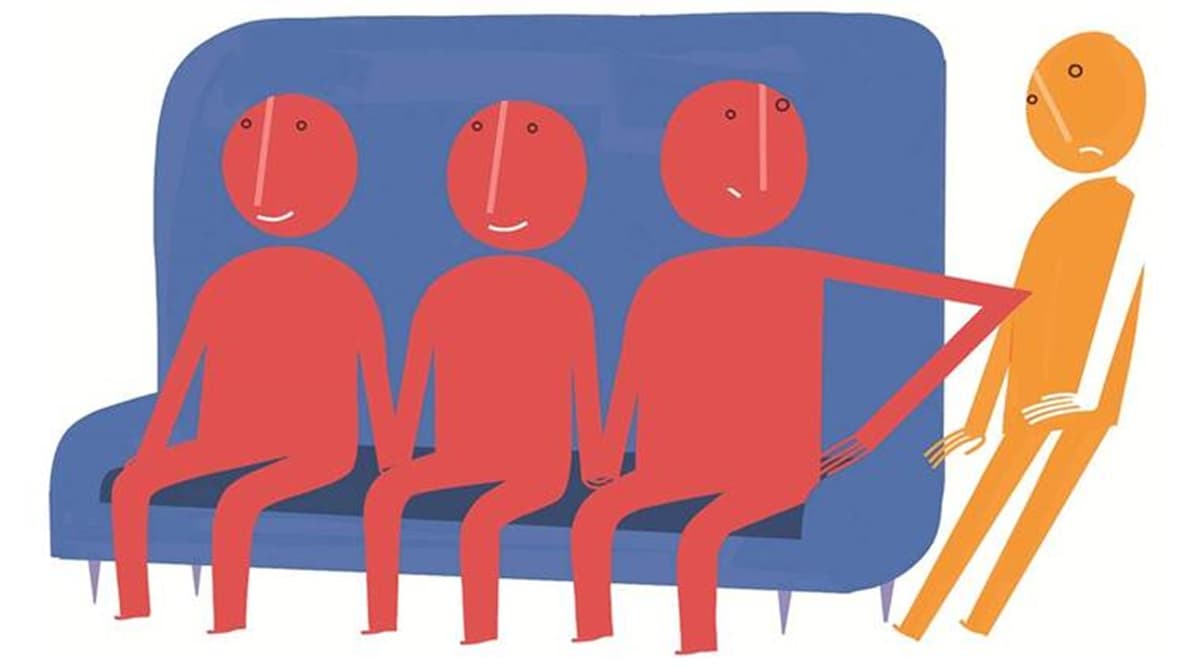
The Constitution contains many provisions to safeguard the interests of underprivileged communities. These are sometimes described in public debate as exceptions to the constitutional promise of equality. That understanding is increasingly difficult to sustain. Written by: Kumar Kartikeya 7 min readAug 19, 2026 12:25 PM IST First published on: Aug 19, 2026 at 12:21 PM IST A few days ago, my mother was talking to our new house help. It was an ordinary conversation of the kind that takes place every day in Indian homes. They spoke about her family, her work and the difficulties she had faced in finding employment. At some point, she said something that stayed with us — that she had regularly been denied work because she was dark-skinned. In some of the more affluent parts of Gurugram, she said, she had found it particularly difficult to get domestic work. Many of the refusals, according to her, had little to do with her ability to work and everything to do with how she looked. There was something unsettling about hearing this in Gurugram, a city that likes to think of itself as modern, prosperous and cosmopolitan. The people making such decisions are not necessarily uneducated or living in some remote corner of the country. They are people living in apartments, working in corporations, sending their children to expensive schools and speaking comfortably about equality and merit. My house help’s experience, by itself, cannot establish a case of discrimination. But her story raises a larger question that our public often avoids: How much has the social hierarchy that the Constitution sought to dismantle actually disappeared from our everyday lives? We have become accustomed to thinking of discrimination in its most visible forms. Untouchability, segregated settlements and denial of access to public spaces are rightly remembered as some of the ugliest manifestations of discrimination. The Constitution contains many provisions to safeguard the interests of underprivileged communities. These are sometimes described in public debate as exceptions to the constitutional promise of equality. That understanding is increasingly difficult to sustain. The Supreme Court has expressly recognised that affirmative action is connected to substantive equality. In its reservation jurisprudence, the Court has observed that Articles 15(4) and 15(5) are not exceptions to equality but particular expressions of it. The Constitution does not assume that treating unequals as equals will necessarily produce equality. This is the constitutional idea of affirmative action, and it is worth remembering because our public debate about reservation has reduced it to a much narrower question of who gets a seat or a job. Affirmative action is not charity. It is not a reward for being born into a particular community. Nor is it an admission that members of reserved communities are inherently less capable. Its underlying premise is that a society which has systematically denied opportunity cannot correct that history merely by announcing that the competition is now open to everyone. If a person has been excluded from education, property, employment and social institutions for generations, the formal removal of the barrier does not automatically place that person at the same starting point as someone who inherited access to those institutions. Much of the argument against reservation begins with a proposition that sounds compelling: Why should a person today receive a benefit because of something that happened generations ago? If a person from a Scheduled Caste family is educated, financially secure and living in a city, why should caste continue to matter? The difficulty with that argument is that it assumes caste is merely an economic disadvantage inherited from the past. It is not. Caste has historically been a system of social ordering, occupation, status and exclusion. Its consequences were not limited to who had money and who did not. It was about who could
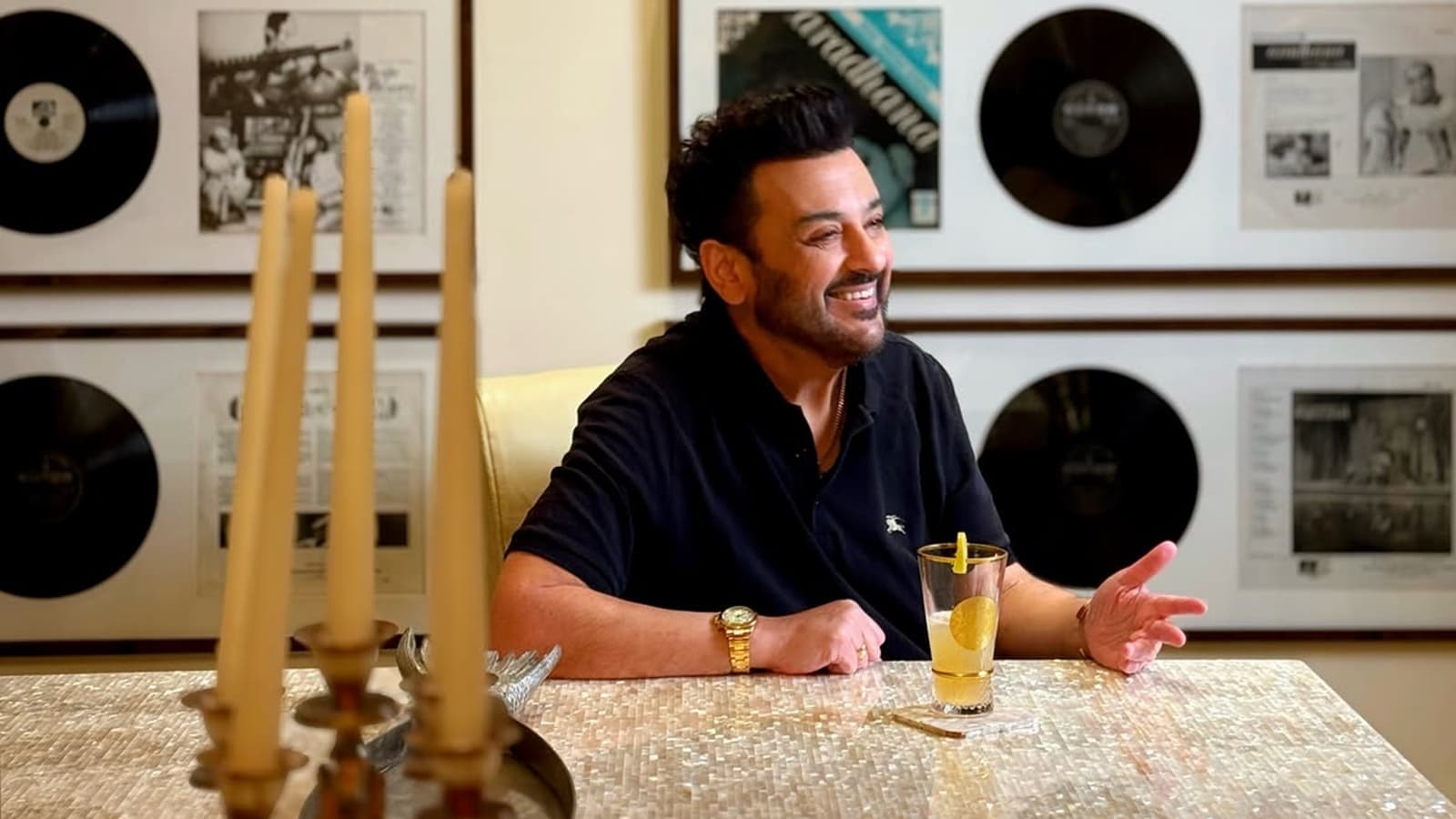
New DelhiAug 17, 2026 05:57 PM IST Adnan Sami on dealing with fatphobia. (Source: Instagram/@adnansamiworld) In an exclusive Zoom Spotlight Session, Adnan Sami spoke candidly about dealing with “fat” jokes, body image and the rumours surrounding his dramatic weight loss. The singer shared how he chose to own his struggles rather than make excuses, while also challenging society’s obsession with appearances and the idea that romance is defined by physical looks. “If I was fat or obese, I played it on the front foot. I said, ‘Yeah, okay, I’m fat. So? Does a fat person not have the right to love someone?'” he shared during the interview, which warranted a particularly interesting conversation where Kruti Shah, Psychologist at Mpower, Aditya Birla Education Trust, weighed in. Body image involves more than one’s weight “We have all seen the dramatic transformation, but what often gets missed is what happens psychologically when a person spends years being conscious of their body, being commented on, compared, judged, and eventually starts looking at themselves through the same critical lens,” she starts off. As a psychologist, Shah often sees that body image concerns are rarely only about appearance. “A client may come into therapy saying, ‘I don’t like my body,’ but when we explore it further, there is often a much deeper belief underneath it ‘People won’t accept me’, ‘I won’t be attractive’, ‘Nobody will choose me,’ or ‘I will feel confident only after I lose weight’. And that is where Adnan Sami’s story becomes relevant. “His weight loss has been spoken about in the context of his health, and there is absolutely nothing wrong with wanting to make changes to your body for health reasons. But psychologically, there is an important distinction between wanting to take care of your health and believing that you need to change your appearance in order to become worthy,” explains Shah. How does such criticism impact mental health? She says that in therapy, a lot of the work around body image is actually about identifying the story a person has created around their body. “We start questioning thoughts such as, ‘I am fat, therefore I am unattractive,’ or ‘If I lose weight, my life will automatically become better’,” she says. But the real question Shah asks is: ‘Where did we learn that?” “Often, these aren’t beliefs we consciously chose. They come from childhood comments, family conversations, teasing at school, social media, relationships and the constant messaging around what an ‘ideal’ body is supposed to look like. After hearing these messages repeatedly, they can become our own internal voice, which can be extremely harsh,” she further elaborates.Story continues below this ad She also believes Adnan Sami’s transformation also raises an important question about how society responds differently to people based on their appearance. “The same person can suddenly be described as “disciplined,” “successful,” “attractive,” or “inspiring” once their body becomes smaller, which can unintentionally reinforce the idea that thinness equals worth,” she points out. “Here we can take therapy into consideration, and start somewhere more realistic with acceptance and neutrality. And while that shift may sound small, it changes the conversation a person is having with themselves,” says Shah. Adnan Sami has been trending on Google for the past 24 hours. DISCLAIMER: This article is based on information from the public domain and/or the experts we spoke to.
New DelhiAug 17, 2026 04:56 PM IST Blocking someone on social media can feel like a definitive move, particularly when it happens without any explanation. While blocking can sometimes be necessary to protect personal boundaries, some people are now choosing a less direct approach when they want distance from someone without completely cutting off digital access. Known as ‘soft blocking’, the practice involves creating distance online without using the formal block function. It can include muting someone’s stories, preventing them from seeing your posts, unfollowing or removing them as a follower, or gradually reducing online communication. Although it may appear less confrontational than blocking, the emotional impact on the person on the receiving end may not always be as gentle.DISCLAIMER: This article is based on information from the public domain and/or the experts we spoke to. The reasons behind soft blocking can vary. Someone may want greater privacy, need space after a breakup or friendship conflict, or be trying to establish a boundary without making an abrupt decision. It can also be used with less healthy intentions, such as to avoid a difficult conversation or to deliberately provoke a reaction. An expert helps unpack where healthy digital boundaries end, and avoidance, stonewalling or passive-aggressive behaviour begins, and how people can create distance without unnecessarily leaving someone confused or emotionally distressed. Why can soft blocking feel more painful than outright blocking? Dr Sakshi Mandhyan, psychologist and founder of Mandhyan Care, tells indianexpress.com, “A clear rejection hurts in a very different way from being left to figure things out yourself. With soft blocking, there may be no argument or final conversation. You simply notice that something has shifted online and hence, the mind is left filling in the missing pieces. Was something I said taken badly? Did they want distance? Are they expecting me to reach out?” She adds that the uncertainty can keep the mind stuck on the situation. We start replaying conversations and attaching meaning to small online changes. There is no clear answer to bring the thinking to an end. Research on social media relationships also shows how much people value knowing where a connection stands. “I would say the emotional difficulty is not necessarily the act itself. It is the ambiguity around it. A clear boundary can hurt. But at least the person knows where they stand. With soft blocking, there can be a lingering sense that something has happened without knowing exactly what it means,” says Dr Mandhyan.Story continues below this ad How can you tell if soft blocking is a healthy boundary? Soft blocking can be a perfectly reasonable way of creating distance. The important question is what the person is trying to achieve through it. If someone does not want an ex appearing in their feed or watching their everyday life, simply removing that connection can be a legitimate boundary. Dr Mandhyan mentions, “The situation changes when the action is meant to be noticed. If someone removes you, hoping you will chase them, feel guilty or ask what happened, there is certainly a different dynamic at play. The same applies when someone uses a soft block to avoid telling the other person directly that they want to end the relationship or create distance. I would ask myself one simple question: Am I creating distance because I need it, or because I want the other person to react to it? This distinction is quite revealing. The intention matters here. If you need distance, take it. You do not need to use that distance to send a message or test how much the other person cares.” When should you communicate before creating digital distance? Quick Quiz See if you can answer this: When is it generally better to communicate before creating digital distance from someone? A. Whenever you unfollow anyone, regardless of the relationship.Story continues below this ad B. When



Discussion (0)