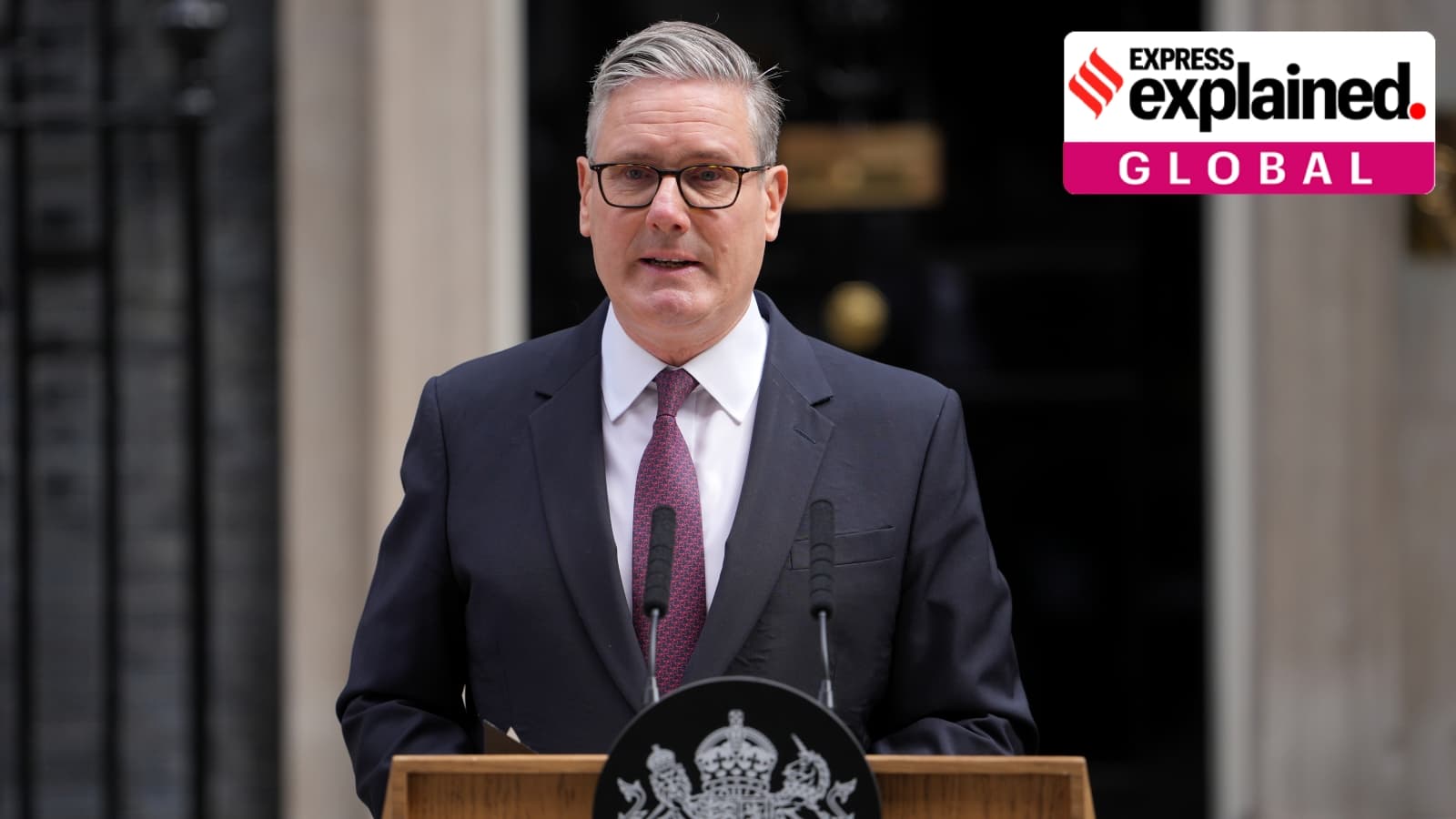
UK PM Keir Starmer announces resignation following by-election setback
Two years after routing the Conservatives, in an election that saw Labour win 412 seats, British Prime Minister Keir Starmer has resigned both as PM and leader of the Labour Party.His election in 2024 had brought Labour back to power after 14 years. This kind of resounding electoral majority was last seen in 1997 when Labour had defeated John Major, the Conservative Prime Minister since 1990, by winning 328 seats under the leadership of Tony Blair. Although Starmer campaigned on the promise of “Change” to create a “fairer, healthier, and a more secure Britain”, he struggled to deliver on his electoral promises and fell to the same post-Brexit malady that has troubled British politics and economy for a decade now. A rocky start: The first 100 days Trouble began to brew in the very first 100 days, often considered the honeymoon period for new leaders, of his government when he and his other Cabinet Ministers were accused of accepting gifts and free tickets for football and concerts worth thousands of pounds. Dubbed as the “freebies gate”, Starmer had to face huge public backlash for his accepting of gifts resulting in his dwindling approval rating. Although he reimbursed the costs for the gifts and tickets and put in place strict donation rules, the damage was already done. Within two months of taking office, 43% of the electorate had started seeing him a bad PM. By June 15, 2026, that number had gone up to 73%. His attempts to strengthen the National Health Service at the cost of cutting subsidies for winter fuel to roughly 10 million pensioners, his decision to release 1,700 prisoners before the completion of their sentence, the controversy surrounding extravagant payments to Sue Gray for her service as the Chief of Staff, and promised spending cuts to the tune of approximately $8 billion for the next financial year were not received well among the public as well as party members. Another issue that brought him into conflict with his own party MPs was his decision to continue with the “two-child benefit cap”, a policy introduced by the Conservatives in 2017 and fiercely opposed by the Labour Party since then. The controversial policy, meant to limit child support for parents in the form of Universal Credit or Child Tax Credit only for the first two children, was hugely unpopular in Britain and was abolished by Starmer only in April this year. The Brexit conundrumStory continues below this ad Starmer’s resignation has come a day earlier when Britain will be observing ten years of its decision to exit the European Union (EU). A decade later, the mood in Britain about Brexit has significantly changed. Brexit supporters had mainly voted to exit the EU on issues of sovereignty, immigration and economic prosperity. Ten years down the line, Britain is still struggling. An estimated range from 2 to 8% contraction in the British gross domestic product, decreased revenue, high borrowing and tax hikes, a spectacular failure on non-EU immigration, struggling businesses, customs complications, and rampant inflation has made at least 57 % of Britons think that the UK was wrong to leave the EU. Although Labour opposed the Brexit referendum and supported the UK’s membership of the EU, Starmer’s position has been a UK-EU Reset without joining the bloc and thus, there was not much political space to manoeuvre especially at a time when the COVID-19 pandemic and the wars in Ukraine and Iran further impacted the already struggling British economy. A decade after Brexit, complex questions including trade, agriculture exports, youth mobility, border control, non-tariff barriers on British goods entering the EU, energy and other issues have continued to complicate the EU-UK Reset. Story continues below this ad Although the date for the 2nd EU-UK Summit has been announced, it would be interesting to see how the EU negotiates with an outgoing PM. Any major concessions on the British side, besides an expected one billion pounds per year payment to