
Loading dispatches...
← Return to Newsroomgeneral
Poll verdicts frame people’s push for change – BJP seized that impulse, rivals paid for their standstill

The BJP's energetic rise is also directly the cause of the Opposition's waning, but that may not tell the full story. THE results of the Assembly elections in West Bengal and Tamil Nadu, Assam and Kerala, were undoubtedly shaped by factors that were state-specific. But if there is a binding theme, it is this: The BJP’s growth and spread beyond its traditional bastions into new arenas and areas coincides with the declining fortunes of its political opponents. The BJP’s energetic rise is also directly the cause of the Opposition’s waning, but that may not tell the full story. Be it the rout of Mamata Banerjee in West Bengal and MK Stalin in Tamil Nadu now, or Nitish Kumar bowing out with Lalu Prasad’s RJD failing to hold up its end in Bihar, or the eclipse of Naveen Patnaik in Odisha, or BJP’s longtime ally-turned-rival Uddhav Thackeray presiding over the Sena’s splintering in Maharashtra, or the signs of implosion in Arvind Kejriwal’s AAP, or be it Congress’s seemingly unchecked slide despite its Kerala victory — the downward trajectory of the party on the other side of the BJP is not just because of the BJP, its undimmed aggression and its vast resources. It is also due to the inertia and do-nothingness of the Opposition party, its sameness and staleness in a time when a young and aspirational electorate is on the move, both literally and as part of shifting imagined communities. Quite simply, the BJP’s success lies, fundamentally, in constantly finding new ways of speaking to this people, by adding to its layered appeal. And the Opposition’s failure comes from its increasing political solipsism, its turning away from the challenges of change, its glib recourse to apocalypse-mongering.Essentially, the verdicts in West Bengal and Tamil Nadu and Kerala frame the people’s push for change. The BJP seized the impulse and built on it in West Bengal, while a new player came in to reap the disillusion with the five-decade-old alternation of parties in Tamil Nadu. Congress benefited from the desire for change in Kerala, while in Assam, the only exception to this story, it failed to even become a receptacle for it. THE outcome in West Bengal, which has been, by far, the most dramatic in this round of elections, with Tamil Nadu coming in second, was made possible, above all, because Mamata Banerjee ignored the warnings. Her party, the TMC, which she led into power by uprooting a 34-year-old Left regime, did not heed the sound of the BJP’s footfall, first with only three seats in 2016, which later shot up to 77 in the 2021 assembly. It refused to brace for the competition by reflecting on its own shortcomings — be it the failure of its government to pull Bengal out of its economic slump, or its inability to check the corruption and unaccountability growing within the party. Inheriting the “party-society” model from Left rule, the TMC nurtured a network of political entrepreneurs that smudged the lines between party, institution and government like the Left’s Syndicate, but unlike it, without any constraints of ideology. The TMC’s standstill laid the ground for the BJP, whose unrelenting determination to capture the state of Syama Prasad Mookerjee, to stitch the east to its conquests in the country’s north and west, has finally met with success. It rides on a Hindu consolidation around the spectre of the “ghuspaithiya”, projection of Banerjee’s politics as “minority appeasement”, and a combination of its criticism of Banerjee’s governance with an identity politics that was subterranean during Left rule and had risen to the surface under the rule of Didi, who had opened the floodgates. How the SIR, which in West Bengal, more than in any other state, became an exclusionary exercise, contributed to the outcome, will be known in days to come. The 27 lakh excluded in the controversial second round of deletions, whose appeals are still pending (less than 2000 were reinstated by the tribunals), are a challenge for the new government to address u
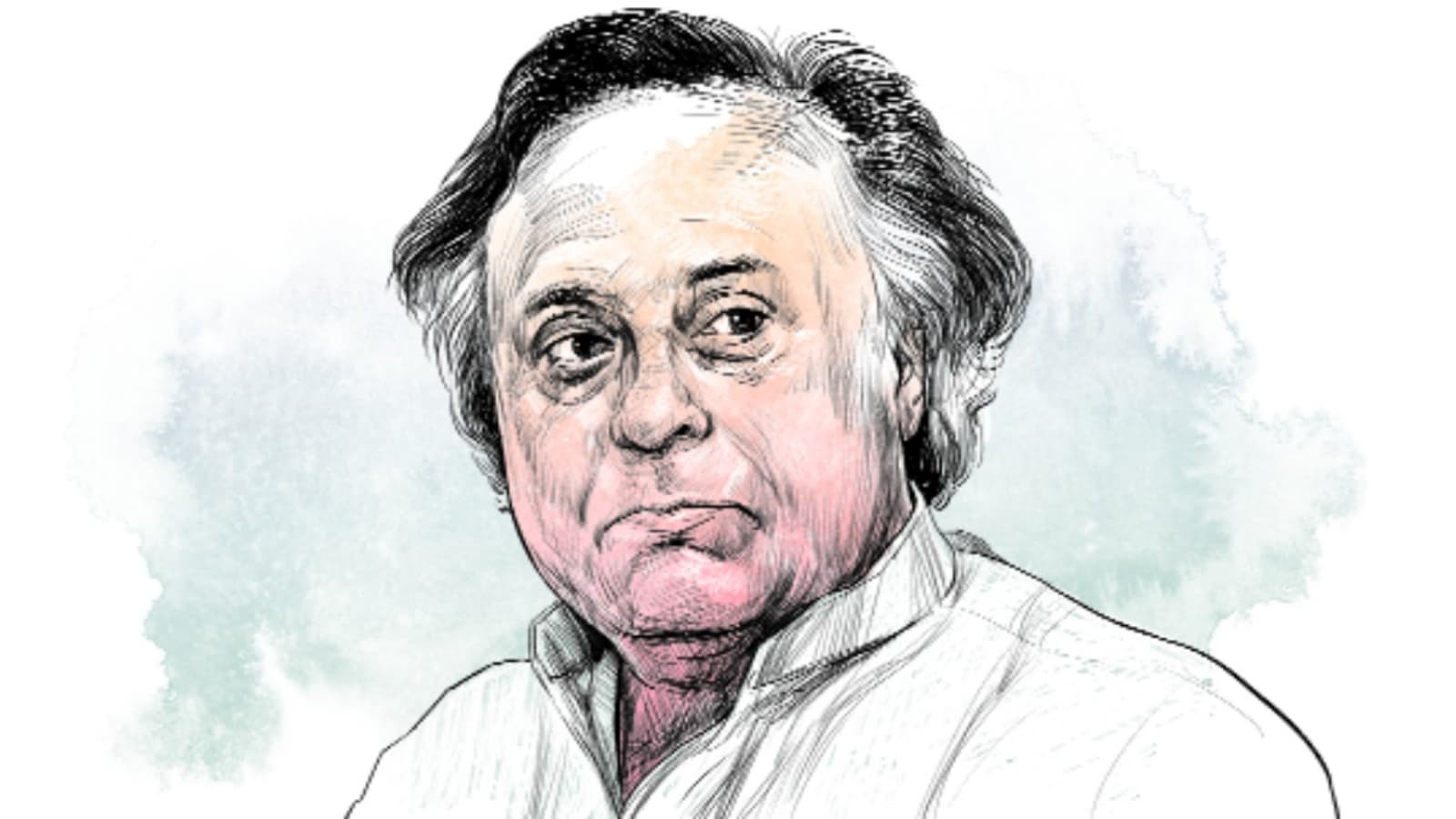
Congress’s communication department head Jairam Ramesh.AS THE early trends indicated the Congress-led UDF would emerge victorious in the Kerala Assembly polls, the party announced a press conference at its Akbar Road office at 5 pm, to be addressed by Congress’s communication department head Jairam Ramesh. But as poll results of other states started coming in, Ramesh and other senior Congress leaders were summoned by party chief Mallikarjun Kharge at his residence to discuss the next steps to be taken in Kerala and Tamil Nadu, where the party is mulling lending support to Vijay-led TVK. With Ramesh attending Kharge’s meet, the press conference had to be cancelled. Jhalmuri Treat To celebrate its thumping victory in West Bengal, the BJP has invited party supporters to its Delhi headquarters for a ‘jhalmuri’ treat. Those in Bengal have been asked to join a ‘maach-bhaat’ feast at the party office. The celebratory mood was also reflected from Prime Minister Narendra Modi’s traditional Bengali attire — beige dhoti and white kurta — which he wore to the BJP office in the Capital. BJP’s Chandni Chowk MP Praveen Khandelwal has invited mediapersons to a ‘jhalmuri programme’ at his residence in the Capital on Tuesday.
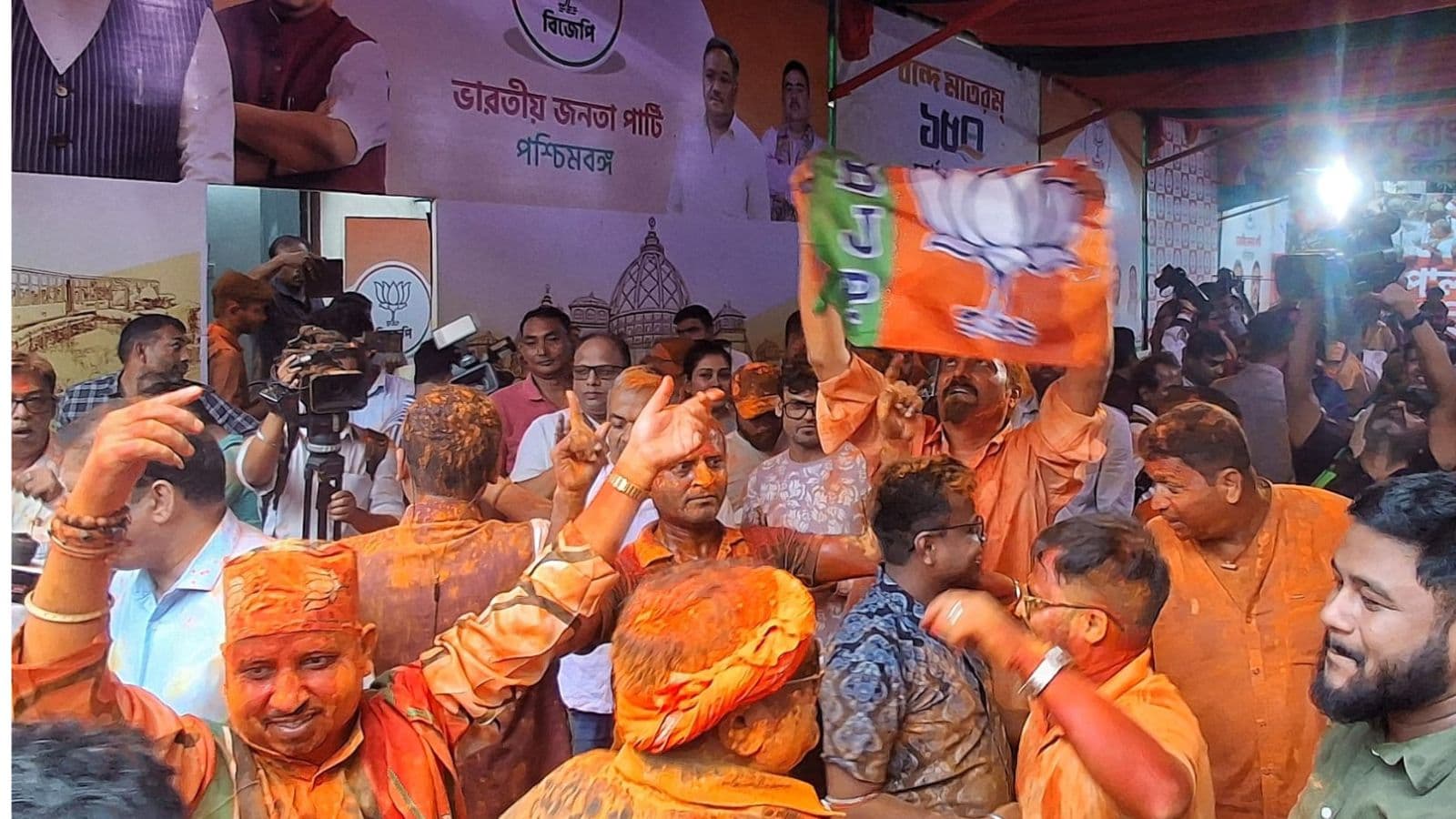
The BJP looks set to form its first-ever government in West Bengal. 2 min readNew DelhiMay 4, 2026 06:28 PM IST First published on: May 4, 2026 at 06:28 PM IST When the BJP emerged as the principal Opposition in West Bengal after the 2021 Assembly elections, it marked a turning point for the party in the state. Now, the BJP is set to come to power in Bengal for the first time, ending the 15-year rule under the Trinamool Congress (TMC). Going by the results of the 2024 Lok Sabha polls, the BJP is now in a position that had not been anticipated two years ago, when the party slid backwards in the Parliamentary elections compared to 2019.Until 2021, the BJP’s best electoral performance in Bengal had come in the 2019 Lok Sabha polls, when it won 18 Parliamentary seats – four short of the TMC at 22 – among the state’s 48 total seats. In 2014, it won just 2 seats, compared to the TMC’s 34. Across every Lok Sabha election before 2014, the BJP had only won a combined 4 seats. A comparison of parties leading Assembly segments in the 2024 Lok Sabha polls and the 2026 Assembly elections.In the 2021 Assembly polls, the BJP won 77 seats and a 38% vote share, a significant improvement from its 2016 showing of 3 seats and 10.2% vote share. This year, the BJP is on the precipice of winning 200 seats with a 45% vote share, well clear of the TMC at 87 and 41%. But the 2024 Lok Sabha elections had marked a reversal for the BJP. It fell to 12 seats, with the TMC climbing back to 29. The BJP’s vote share, though, remained roughly unchanged from the 2021 Assembly polls at 38.7% in 2024, while the TMC went from 48.02% in 2021 to 45.8% in 2024. However, at the Assembly segment level in the 2024 Lok Sabha polls, the TMC had maintained a formidable lead over the BJP. In 2024, the TMC had led in 192 Assembly segments across Bengal (each Lok Sabha seat comprises a handful of Assembly seats). The BJP had led in 90 Assembly segments, the Congress in 11 and the CPI(M) in 1. But the BJP has managed to flip Bengal in its favour this time, despite trailing the TMC by 92 Assembly segments in 2024. The BJP is now set to cross the 200-seat mark, reducing the TMC to below 90 seats and nearing the TMC’s 2021 tally of 215 seats.
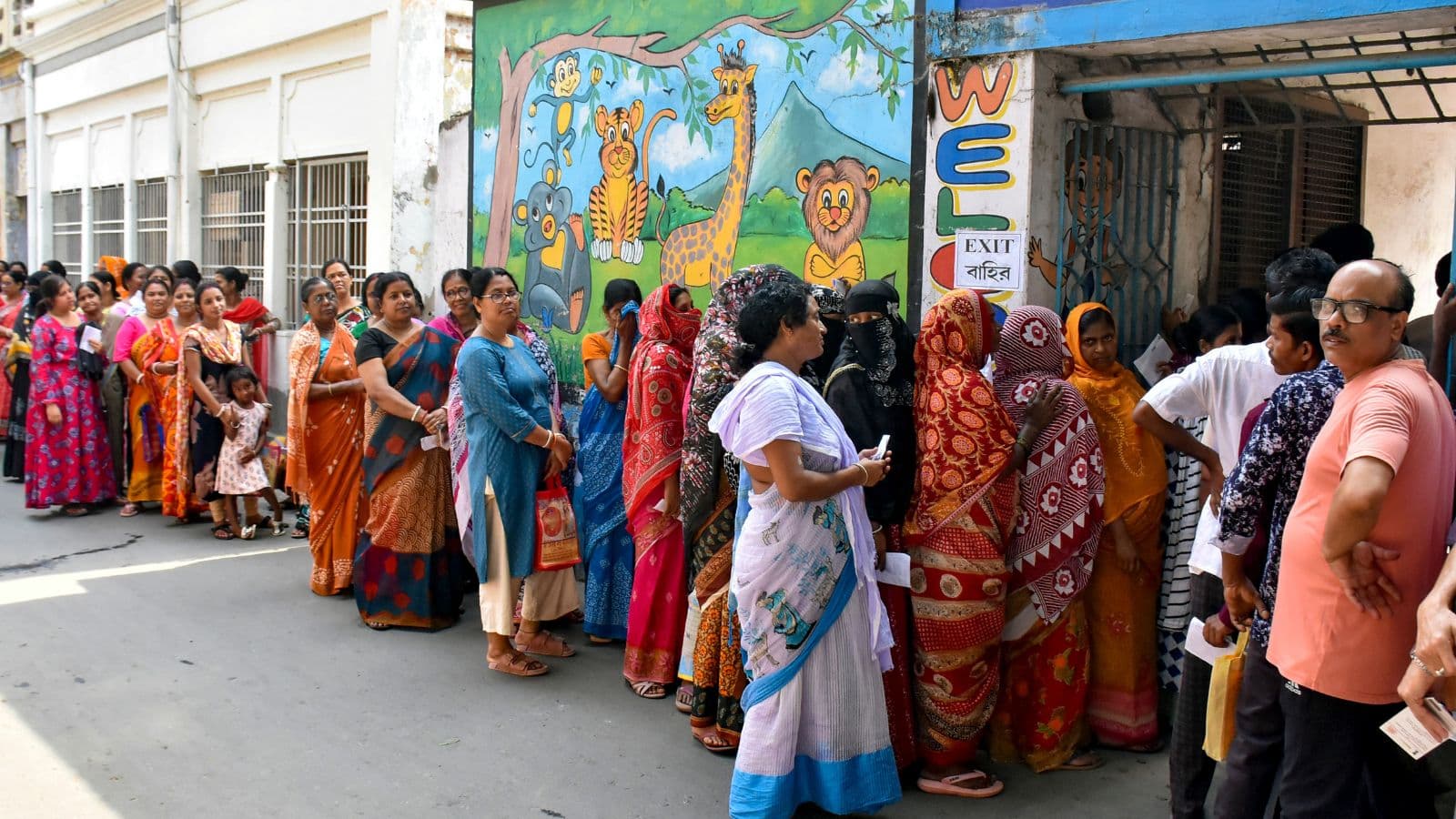
Chief Election Commissioner Gyanesh Kumar said West Bengal had recorded the highest ever polling percentage in both phases since Independence. The election results will be announced, along with those for polls in Assam, Tamil Nadu, Kerala and Puducherry, on May 4.“Highest ever percentage of polling in West Bengal in both Phase I and II since Independence. Chunav ka Parv, Paschim Bengal ka Garv,” CEC Kumar said. Click here for West Bengal exit poll results Charges flew thick and fast from the time the booths opened in the morning with the TMC and BJP, the two main players in the fray, accusing each other of resorting to means to intimidate and influence voters. Chief Minister Mamata Banerjee, the TMC candidate from Bhabanipur, made rounds of the constituency since morning, levelling allegations against the Central forces and accusing Election Commission observers of working at the behest of the BJP. Suvendu Adhikari, Banerjee’s rival in Bhabanipur, also did the rounds and accused the CM and her party of mobilising “outsiders” for voting. As the polling progressed during the day, TMC leaders and workers levelled allegations very similar to those made by Banerjee.Story continues below this ad There were long queues of voters everywhere and polling was brisk. Until 5 pm, the turnout in Nadia was 90.22%, North 24 Parganas 89.74%, South 24 Parganas 89.57%, Kolkata South 86.11%, Kolkata North 87.77%, Howrah 89.44%, Hooghly 90.34% and Purba Bardhaman 92.46%. Like the first phase polling on April 23, no major incident of violence was reported in the second phase. There were a few sporadic incidents such as tape being put on the EVM button against the name of a BJP candidate, and polling agents being beaten up. In the Falta constituency, the BJP accused the TMC of taping the EVM button against the name of the BJP candidate.Story continues below this ad Chief Electoral Officer Manoj Agarwal told the media: “Wherever there are complaints, including that of pasting tapes, black tapes or white tapes on EVMs, we will evaluate the reports sent by the observer and others. And if it is found true, re-polling will take place in those booths. If there are many such incidents reported in any constituency, we may consider repolling in the whole constituency.” In ward number 6 of North Dumdum, the BJP alleged that its worker Arpan Pal has been attacked by TMC workers with a blade. In Khanakul, the ISF said that their polling agent was not being allowed to sit in booths. The ISF also alleged that their party supporters were attacked by TMC workers. Ratna Debnath, the BJP candidate from Panihati, said her car was attacked by the TMC workers who also raised slogans asking her to leave the area. “We have complained to ECI. We know this is the TMC threat culture,” she told mediapersons. In Ketugram of East Burdwan district, crude bombs were spotted some 200 metres from a polling booth. Alerted by residents, police cordoned off the area and a bomb squad was called.Story continues below this ad In Bhangar, Central forces and police had to lathicharge a crowd trying to chase away ISF candidate Naushad Siddiqui from a booth. In Chinsurah of Hooghly district, TMC candidate Debangshu Bhattacharya said the party camp office was ransacked. The Forward Bloc and BJP also said their booth camps had been ransacked and voter lists were torn.
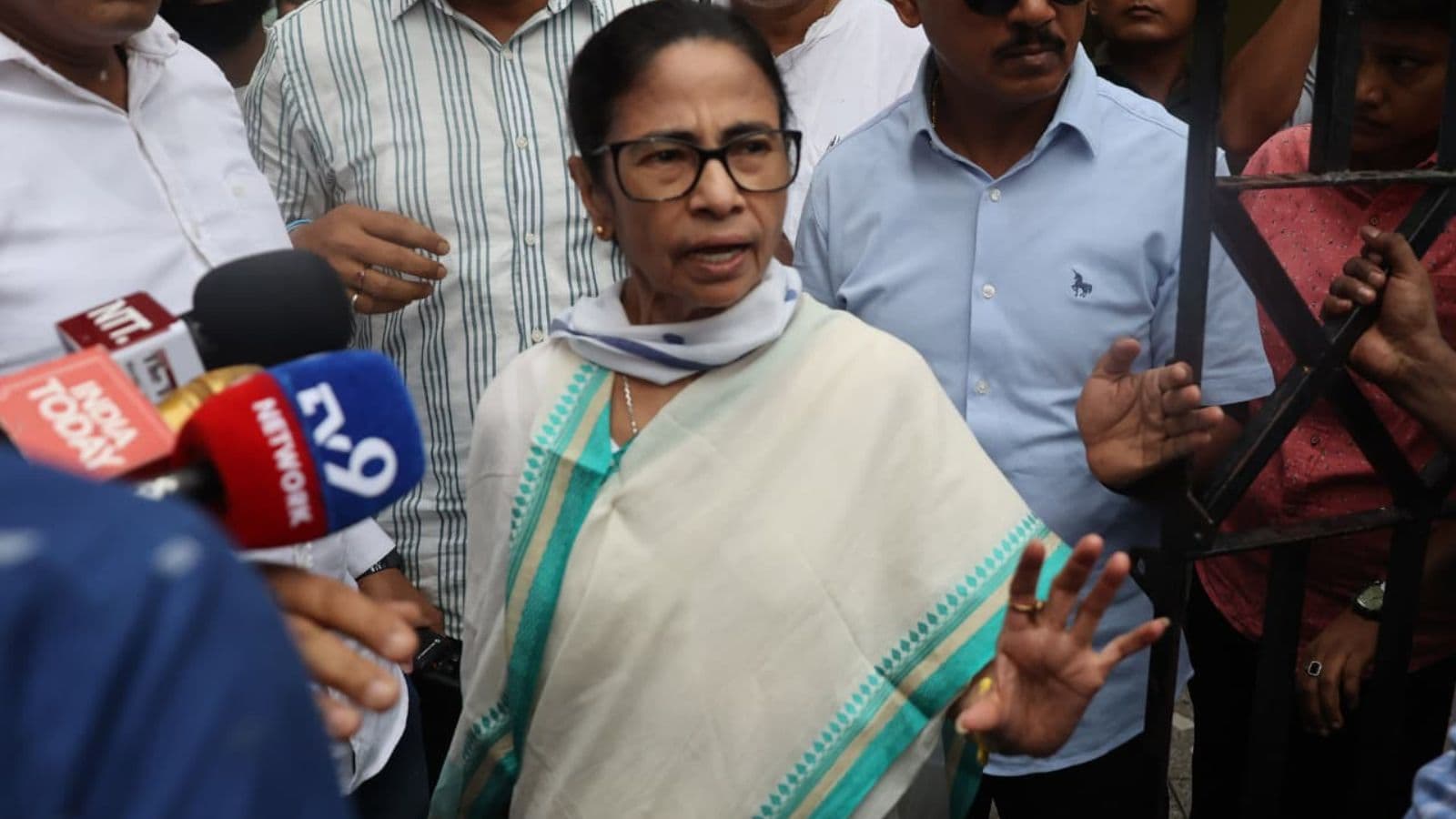
The second and final phase of the West Bengal Assembly Elections was set to conclude Wednesday with a massive voter turnout, even as Chief Minister Mamata Banerjee and the Trinamool Congress (TMC) levelled allegations of bias against the Election Commission of India (ECI) and central security forces.By 5 pm, the state recorded 89.99 per cent polling across 142 constituencies. Purba Bardhaman led the districts with 92.46 per cent turnout, followed by Hooghly (90.34 per cent) and Nadia (90.22 per cent), North 24 Parganas (89.74 per cent), South 24 parganas (89.57 per cent), Howrah (89.44 per cent), Kolkata North 87.77 per cent, and Kolkata South (86.11 per cent), Despite the tense atmosphere, no major casualties or large-scale violence were reported, marking a relatively peaceful end to the polling process.In the first phase held on April 23, polling was conducted across 152 constituencies, primarily covering North Bengal and parts of Central Bengal, recording a historic turnout of 93.19 per cent. The second and final phase on Wednesday saw voting in the remaining 142 seats across eight districts in South Bengal. The day began with CM Banerjee visiting booths in her home turf of Bhabanipur. She launched a scathing attack on the Election Commission of India (ECI), accusing outside observers of “dancing to the tunes of the BJP”. Speaking to the media, Banerjee said, “People are supposed to cast their votes. Can voting take place like this? It is not the police and the security forces, but the people who will cast their vote,” said Banerjee. “The ECI is openly harassing and tormenting us. We have sent a contempt of court notice, yet countless outside observers have been brought in here,” she said. “I could not sleep last night. Midnight raids are being conducted without warrants, and our workers are being detained on fabricated grounds just to stop them from performing their polling duties,” alleged Banerjee.Story continues below this ad She further claimed that election observers were ignoring local concerns and working at the behest of the BJP. Adhikari claims peaceful voting Meanwhile, BJP leader Suvendu Adhikari visited several booths in Bhabanipur and Chakraberia, describing the atmosphere as peaceful. He noted a significant surge in voter participation in Kolkata. “Generally, Kolkata sees 50-55 per cent polling, but this time it crossed 60 per cent by 1 pm. People are coming out to vote,” Adhikari said. However, he alleged that TMC had attempted to use “outsiders” as proxies in some booths, claiming he personally ensured they were removed. Tensions flared briefly when TMC supporters chanted “Joy Bangla” slogans as Adhikari passed, prompting a confrontation in which central forces had to intervene with a baton charge.Story continues below this ad Sporadic incidents In Falta, the BJP alleged that TMC workers placed adhesive tape over the names of Opposition candidates on EVM machines. Chief Electoral Officer Manoj Agarwal stated, “We will evaluate reports of tapes on EVMs. If found true, we will order re-polls in those booths.” Ratna Debnath, the mother of the R G Kar victim and the BJP candidate from Panihati, alleged her car was attacked by TMC supporters. Similarly, BJP candidate Bikash Sarkar alleged stone-pelting on his vehicle in Basanti. In Ketugram in East Burdwan, the police recovered crude bombs near a pond just 200 meters from a polling booth. A bomb squad was deployed to neutralise the area. Central forces resorted to a lathi charge in Bhangar after ISF candidate Naushad Siddiqui was mobbed by TMC workers chanting slogans. In North Dumdum, the BJP alleged their worker, Arpan Pal, was attacked with a blade, while in Khanakul, the ISF claimed its supporters were beaten with bamboo sticks.Story continues below this ad In Chinsurah in the Hooghly district, TMC candidate Debangshu Bhattacharya alleged that his campaign office was ransacked. Similarly, both the Forward Bloc and the BJP claimed that their booth camps were


Discussion (0)