
general
Buzz of early poll in Punjab, parties start preparations
Buzz of early poll in Punjab, parties start preparations The Times of India
9 stories
Buzz of early poll in Punjab, parties start preparations The Times of India

Trump administration drops $1.8bn 'anti-weaponisation' fund13 minutes agoNardine SaadReutersThe Trump administration has abandoned plans to create a $1.8bn (£1.3bn) fund to compensate individuals who claim they were unfairly targeted or investigated by the government, Acting Attorney General Todd Blanche said."We're not moving forward with the fund, period," Blanche told lawmakers on Tuesday.The proposed "anti-weaponisation" fund was announced to settle a lawsuit by President Donald Trump against the Internal Revenue Service over the leak of his tax returns.The plan drew strong criticism from Democrats and some Republicans, who argued it could result in payment to people prosecuted over the US Capitol riot on 6 January 2021, including those convicted of assaulting police officers.Brinkema barred the Department of Justice (DOJ) department from taking any steps to stand up or operate the fund - including processing or dispersing claims - until a preliminary hearing on 12 June.Blanche's comments in a tense congressional hearing comes a day after the Justice Department said it "disagrees strongly" with the judge's order but it would abide by the ruling.While Blanche gave the assurance to abandon the fund in oral testimony, he suggested the justice department may not release a formal statement."I'm not committing to putting anything in writing," Blanche said after Congresswoman Grace Meng, a Democrat, suggested that such a statement would help instill trust in the plan. "I don't know what the purpose is of putting something in writing. I'm telling you what we are doing."The DOJ defended the fund's establishment on Monday, saying in a statement on X that it was created "to make up for the tremendous abuse, harm, and hate unfairly shown to so many people".The fund was "open to anybody who was so weaponized, targeted, or persecuted, whether they were Democrat, Republican, Conservative, Independent, or otherwise", the DOJ said.The White House directed comments about the decision to the justice department. The fund had been set aside for "victims of lawfare" to seek compensation, and eligibility for it appeared broad. Responding to the judge's two-page order last week, a DOJ spokesperson said they were "extremely confident" in the legality of the scheme.The order came down after two men who alleged the fund was discriminatory filed a lawsuit in Virginia. The plaintiffs said they had been targeted for political retribution by the Trump administration but believed they would not be allowed to file claims for compensation.Several Republican lawmakers, as well as Democrats, have voiced opposition to the fund since it was announced last month by Blanche - Trump's former personal lawyer who stepped in as the country's top prosecutor after the ouster of Pam Bondi from that role in April.Senate Majority leader John Thune, the top Republican in the US Senate, has come out forcefully against the fund.He reiterated his stance on Capitol Hill on Monday by saying that he preferred that the White House shut down the proposed fund if Congress was to pass a $72bn (53.5bn) budget reconciliation package to fund immigration agencies."I made my views very clear on the issue," Thune said, adding that "the best way to handle it is if the administration decides to shut it down themselves".Earlier on Monday, Senate Democratic Leader Chuck Schumer, the top Democrat in the Senate, signalled that his party would push to eliminate the fund."Senate Democrats will push legislation to ban Trump's corrupt MAGA slush fund and ensure that no president can ever do this again, " Schumer added on X. "We will make sure that it's dead and can't be revived—just like we did with Trump's ballroom."Over the weekend, former US Vice-President Mike Pence, who served as second in command during Trump's first term, sharply criticised the fund, saying it was a "bad idea from the start" and should be dropped.

A few memes that has been shared across social media on the ongoing tussle among three Congress Chief Minister aspirants. | Photo Credit: Special Arrangement The ongoing tussle among three Congress Chief Minister aspirants after the United Democratic Front’s (UDF) historic Assembly mandate has unleashed a tsunami of trolls and memes across social media.From rib-tickling to downright biting, the menu of satire catered to every palate. “For the UDF government, the CM’s chair is no longer a chair but a bench,” read one meme, complete with a bench photo, mocking the multiple contenders.Another showed V.D. Satheesan, K.C. Venugopal and Ramesh Chennithala decked as royalty with the caption: “War paused for the third day since the sun has set,” a cheeky nod to the Kurukshetra war breaks in Hindu epic MahabharataActor Bijukuttan starred in a troll as a worried Pinarayi Vijayan, fretting whether he’d be caretaker CM for five years. A film clip of Ganesh Kumar counting cash cast him as a flex-printing owner. This was an obvious hint at the windfall from the “flex war” among rival camps of Congress across the State.One meme simply crowned “K.C. Satheesh Chennithala” as Kerala’s new CM — an imaginative and outright hilarious mash-up of all three names. Another had Jagathy Sreekumar and the late Mamukkoya as voters from Kerala and Tamil Nadu, chatting over electoral outcome. “Here seats are ready, fight is on for CM,” says Jagathy to which Mamukkoya retorts, “Here, we have CM ready, but seats are short.”The more creative came up with Artificial Intelligence generated videos as well. A viral video reimagined the Harikrishnans song sequence, swapping Mohanlal and Mammootty with Satheesan and Chennithala, before Venugopal crash-lands crooning a Bollywood melody.The Left Democratic Front, which was voted out, wasn’t spared either. A clip from the popular movie Thalavattam cast Jagathy as a CPI(M) supporter pleading with Mohanlal, showed as a UDF supporter, to spare at least the seats as predicted by exit-polls. Another meme recast the heroes from the blockbuster movie In Harihar Nagar as LDF loyalists dissecting defeat, with Jagadeesh’s hilarious character Appukuttan coming up with a conclusion that, maybe Bevco outlets remaining closed on polling day did the front in. Published - May 09, 2026 11:44 am IST
Poll Promises vs Public Finance Trends On West Bengal And Tamil Nadu NDTV
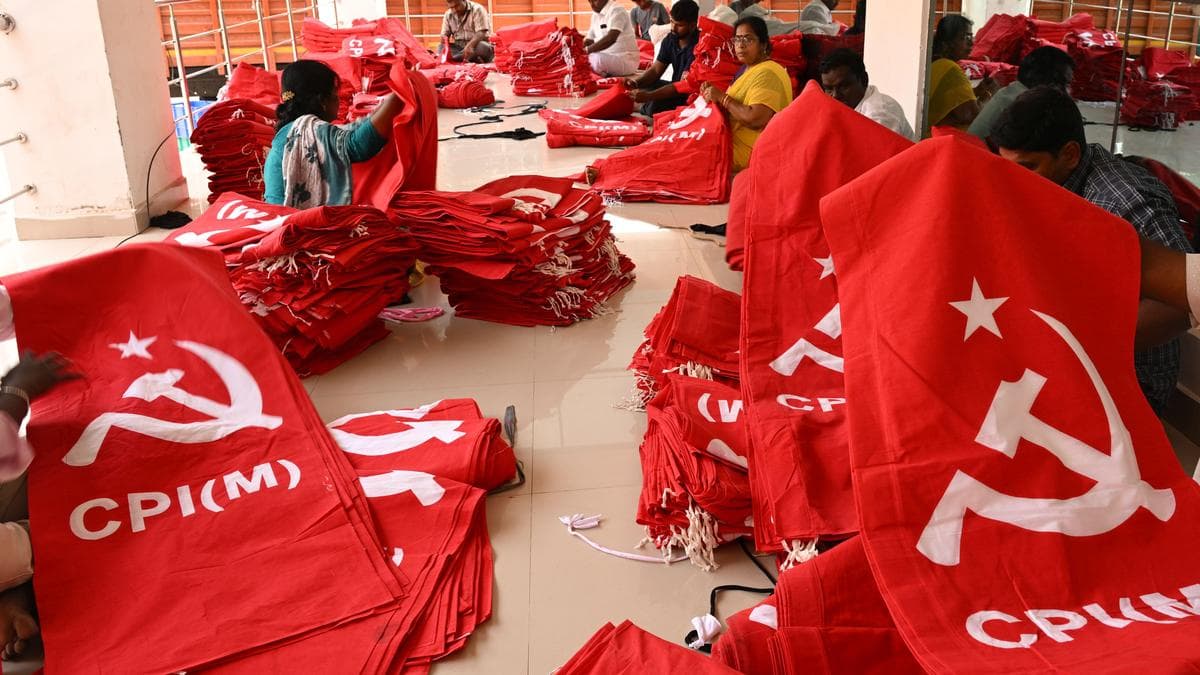
The Communist Party of India (Marxist) [CPI(M)] has reportedly commenced an intra-party exercise to examine, reportedly with a fine-tooth comb, the granular-level reasons for the Left Democratic Front (LDF) political bloodbath in the 2026 Assembly elections, as realisation seemed to dawn on the leadership that there is no magic bullet for resolving the issues that led to the historic defeat.The debilitating rout, especially in the party’s strongholds in Thiruvananthapuram, Kannur, Kasaragod, and Alappuzha, among other districts, has thrown up some big questions regarding the CPI(M)’s campaign strategy, organisational cohesiveness, candidate finalisation, and efficacy of its political operations, including whether “misplaced confidence” of an “inevitable” third consecutive term in power had imbued the party’s electioneering with complacency from the booth level and upwards. Published - May 05, 2026 09:19 pm IST

The BJP's energetic rise is also directly the cause of the Opposition's waning, but that may not tell the full story. THE results of the Assembly elections in West Bengal and Tamil Nadu, Assam and Kerala, were undoubtedly shaped by factors that were state-specific. But if there is a binding theme, it is this: The BJP’s growth and spread beyond its traditional bastions into new arenas and areas coincides with the declining fortunes of its political opponents. The BJP’s energetic rise is also directly the cause of the Opposition’s waning, but that may not tell the full story. Be it the rout of Mamata Banerjee in West Bengal and MK Stalin in Tamil Nadu now, or Nitish Kumar bowing out with Lalu Prasad’s RJD failing to hold up its end in Bihar, or the eclipse of Naveen Patnaik in Odisha, or BJP’s longtime ally-turned-rival Uddhav Thackeray presiding over the Sena’s splintering in Maharashtra, or the signs of implosion in Arvind Kejriwal’s AAP, or be it Congress’s seemingly unchecked slide despite its Kerala victory — the downward trajectory of the party on the other side of the BJP is not just because of the BJP, its undimmed aggression and its vast resources. It is also due to the inertia and do-nothingness of the Opposition party, its sameness and staleness in a time when a young and aspirational electorate is on the move, both literally and as part of shifting imagined communities. Quite simply, the BJP’s success lies, fundamentally, in constantly finding new ways of speaking to this people, by adding to its layered appeal. And the Opposition’s failure comes from its increasing political solipsism, its turning away from the challenges of change, its glib recourse to apocalypse-mongering.Essentially, the verdicts in West Bengal and Tamil Nadu and Kerala frame the people’s push for change. The BJP seized the impulse and built on it in West Bengal, while a new player came in to reap the disillusion with the five-decade-old alternation of parties in Tamil Nadu. Congress benefited from the desire for change in Kerala, while in Assam, the only exception to this story, it failed to even become a receptacle for it. THE outcome in West Bengal, which has been, by far, the most dramatic in this round of elections, with Tamil Nadu coming in second, was made possible, above all, because Mamata Banerjee ignored the warnings. Her party, the TMC, which she led into power by uprooting a 34-year-old Left regime, did not heed the sound of the BJP’s footfall, first with only three seats in 2016, which later shot up to 77 in the 2021 assembly. It refused to brace for the competition by reflecting on its own shortcomings — be it the failure of its government to pull Bengal out of its economic slump, or its inability to check the corruption and unaccountability growing within the party. Inheriting the “party-society” model from Left rule, the TMC nurtured a network of political entrepreneurs that smudged the lines between party, institution and government like the Left’s Syndicate, but unlike it, without any constraints of ideology. The TMC’s standstill laid the ground for the BJP, whose unrelenting determination to capture the state of Syama Prasad Mookerjee, to stitch the east to its conquests in the country’s north and west, has finally met with success. It rides on a Hindu consolidation around the spectre of the “ghuspaithiya”, projection of Banerjee’s politics as “minority appeasement”, and a combination of its criticism of Banerjee’s governance with an identity politics that was subterranean during Left rule and had risen to the surface under the rule of Didi, who had opened the floodgates. How the SIR, which in West Bengal, more than in any other state, became an exclusionary exercise, contributed to the outcome, will be known in days to come. The 27 lakh excluded in the controversial second round of deletions, whose appeals are still pending (less than 2000 were reinstated by the tribunals), are a challenge for the new government to address u

LDF workers celebrate by lifting K. Rajan, the Revenue Minister, after his re-election from Ollur constituency | Photo Credit: NAJEEB KK Ollur’s reputation as a bellwether of the State’s political mood no longer holds. Since 1982, the constituency had consistently elected candidates from the front that went on to form the government in the State.Although Revenue Minister K. Rajan of the Communist Party of India (CPI) won from Ollur, the Left Democratic Front (LDF) has failed to come to power. Published - May 04, 2026 07:58 pm IST
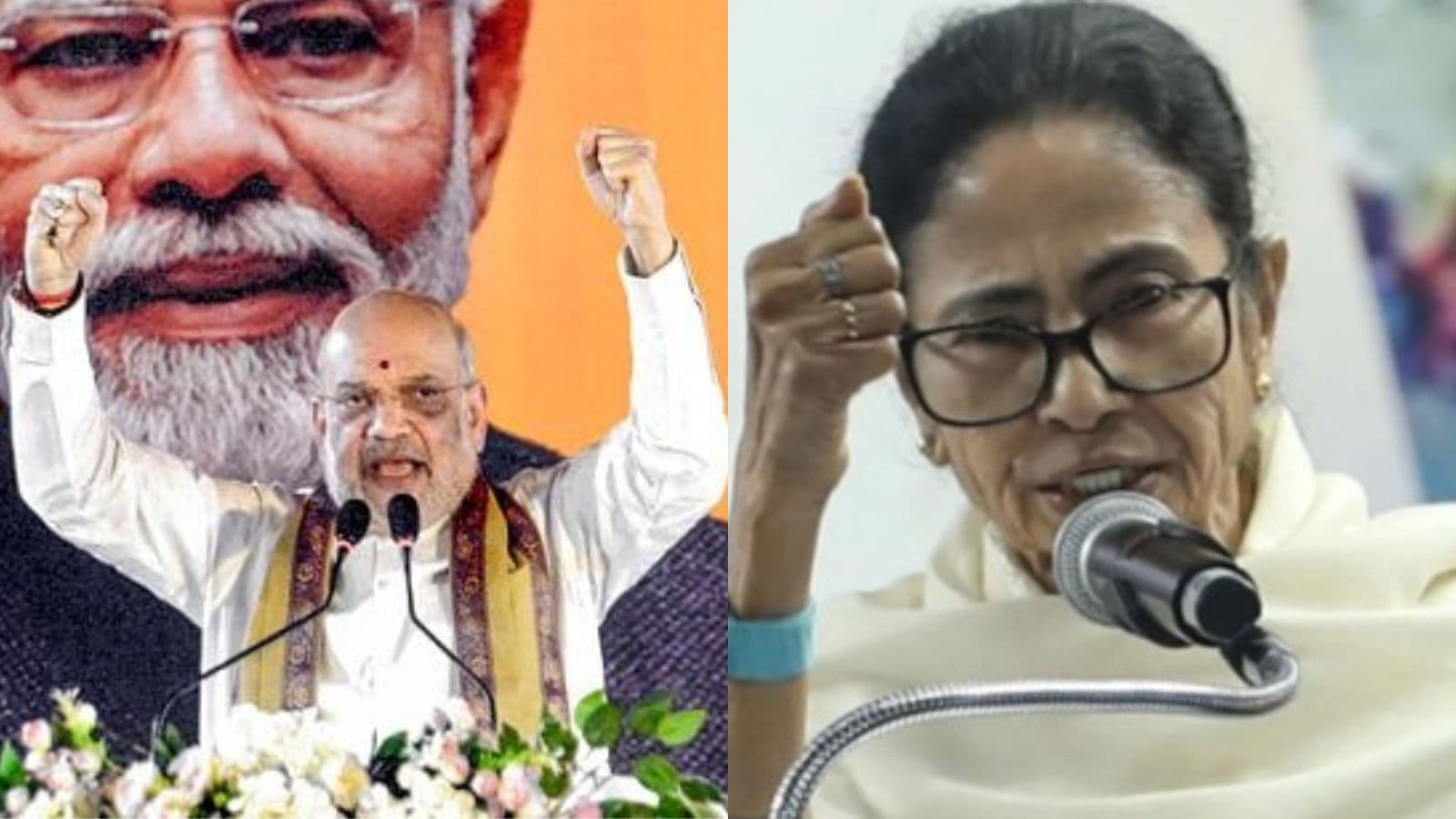
The Narendra Modi-Amit Shah BJP’s victory in West Bengal — this is the first time since 1972 that a “national” party that rules in Delhi will have won an election in the state — is unprecedented. The Congress governments in Kolkata for the first 30 years after Independence had a first-mover advantage, when power was a corollary of the single-party dominant system in a nascent democracy. The BJP in 2026 faced a formidable political force in Mamata Banerjee and the TMC: A leader with a history of slaying behemoths, not least the CPI(M), and a party system — a “syndicate” — that is enmeshed in almost every aspect of social, political, and economic life in the state.With victory in Bengal, and the return of Himanta Biswa Sarma in Assam, the NDA is now in power across east, west, and much of north India. There will, understandably, be pageantry and celebrations by the ruling party and its leaders over the next few days. Beyond the usual and beyond the electoral politics of the moment, the 2026 West Bengal election also marks a deeper inflection point for the ruling party and the Opposition. A ‘Bengali’ BJP? For the BJP, ruling Bengal will be a challenge of the kind it hasn’t faced across at least two registers. In large part, its phenomenal success across the country since 2014 has been based on tailoring its campaigns to the regional and cultural specificities of very diverse polities — from a base in Gujarat to the Hindi belt, to the Northeast, it has found a vocabulary and less recognised historical-cultural figures. A cynical extension of this has been its open-door policy for high-profile defectors, from Suvendu Adhikari to Sarma. This malleability, though, does not mean that the BJP is an “umbrella party”. Ideologically, it has been a flattening force in national politics. In Bengal, as in so many other states, its politics has relied on creating and consolidating the so-called “Hindu” vote, while demonising Muslims — whether as “Bangladeshi infiltrators” or through “love jihad”. West Bengal was the home of the militant stream of the freedom struggle, of Subhas Chandra Bose and his opposition to Gandhi and Nehru in the Congress. Since the early 20th century, it has been both part of the political mainstream and an outlier. Banerjee’s attempt at pitting Bengali identity against the BJP’s religious nationalism failed against anti-incumbency this election. Does that mean the sense of grievance and being left behind over the last half-century — and the wounded pride of once being the country’s intellectual, cultural and political centre — has evaporated? Likely not. The most urgent and difficult task for the BJP, then, is two-fold. First, to rewrite the story of a state that has long been in economic decline. Government largesse in terms of cash transfers and other welfare schemes alone cannot do this. Industrialisation, services and education — the state was once, long ago, a leader in all three. It needs to become that again. To make that happen in a sustainable and meaningful manner is the BJP’s second task. It must not simply take over the political structures of the party society left behind by the TMC. It must build state capacity outside of a cadre-government nexus. The fears that remain Over 90 lakh erstwhile voters were excluded in Bengal. Of these, the exclusion of 27 lakh in the second round – less than 2,000 had their franchise restored by the appellate tribunal — were particularly controversial. Several others went through an arduous process to ensure that their names are on the rolls. The Election Commission and the Supreme Court did not, by all accounts, do enough to make the process either transparent or foolproof, and the questions about their conduct will linger on. The scale of the BJP’s victory indicates that the deletion was not a decisive factor, though it could have helped shore up the final numbers. But beyond the legal and institutional dimensions lie deeper fears. First, the deletions raised the fear th
West Bengal Exit Poll Results LIVE: People's Pulse predicts TMC sweep; Matrize suggests BJP win | India News Hindustan Times
You’ve read everything. Check back for new stories.