
Loading dispatches...
← Return to NewsroomWorld
What next for Mali's military leaders after shock of rebel offensive?
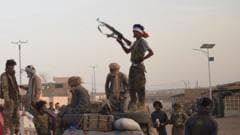
Just nowMakuochi Okafor,BBC AfricaandMohamed Ibrahim,BBC ArabicAFP via Getty ImagesTuareg separatist fighters have taken over the city of Kidal after Russian and Malian troops withdrewIt is hard to overstate the sense of shock reverberating across West Africa after attackers, in co-ordinated assaults, managed to enter Mali's capital, Bamako, assassinate the defence minister and seize control of northern areas.Residents in different cities across the country woke to gunfire and explosions on Saturday - attacks which an alliance of two groups - the separatist Azawad Liberation Front (FLA) and the al-Qaeda-linked JNIM group - said they were behind.It has taken Goïta several days to make an appearance since the offensive, prompting questions about the junta's future, as well as the role of Russian forces deployed in Mali and neighbouring countries to tackle the security threat.So what will happen next?Scenario 1: Junta stays in power and fights backMany analysts believe this remains the most likely short-term outcome, as the military still controls most major cities and towns as well as state institutions.But they say the coming days could be critical as the army launches a counter-offensive against JNIM and the FLA.Its success or otherwise will "determine the longevity of the junta", according to Beverly Ochieng, a senior analyst at global consultancy firm Control Risks.Three days after the offensive, Col Goïta made a televised address to the nation, saying the situation was under control and vowing to "neutralise" those responsible for the attacks.Earlier, the presidency's social media accounts posted photos of Col Goïta meeting Russia's ambassador to Mali, Igor Gromyko, a sign of the importance the junta still puts on that alliance.It also had photos of the coup leader visiting a hospital where those wounded in the attack are being treated.Camara's death may also hamper the relationship with Russia, according to Ulf Laessing, head of the Sahel programme at the Konrad Adenauer Foundation, a centre-right German think-tank.Camara was one of the most powerful figures in the ruling structure and "the main interlocutor for Moscow and the brain behind the deployment of Russian mercenaries in the Sahel", he added.@PresidenceMaliMali's presidency released this photo of a meeting between Col Goïta and the Russian ambassadorWhile Malian forces say they are fighting to secure key parts of the country, it will have a struggle on its hands as the FLA has signalled its ambitions to move south from Kidal."We want to take control of Gao city. All of Gao's gates have fallen, but the camps of the army have not," said spokesman Mohamed Elmaouloud Ramadane.He told the BBC the historic city of Timbuktu was also in their sights: "It will be easy to take over once we fully control Gao and Kidal."The junta had popular support when it seized power nearly six years ago, promising to deal with Mali's long-running security crisis. But it has already been forced into a defensive position over the last year by JNIM's fuel blockade on the capital, as militants broadened their insurgency to include economic warfare.If armed groups do manage to sustain an advance, Mali could face a prolonged conflict, affecting the future of the junta.Scenario 2: Junta stays in power with Russian support but seeks new partnersLast weekend's attacks also damaged Russia's image as a reliable security partner in Mali, Ochieng says.Following the military takeover at the beginning of the decade, French forces, which had been supporting the army, were told to leave and Russian fighters came in their place to help curb the insurgency.The Russians' reputation "has taken a huge blow" after the failure of its Africa Corps to defend major cities and the fall of Kidal, Laessing adds.ReutersMalian newspapers have been carrying stories about the killed defence ministerWhile sticking with Russian support, Mali could be pushe



Discussion (0)