
Loading dispatches...
← Return to NewsroomScience
Touchdown! Private Chinese rocket aces landing on 2nd-ever flight
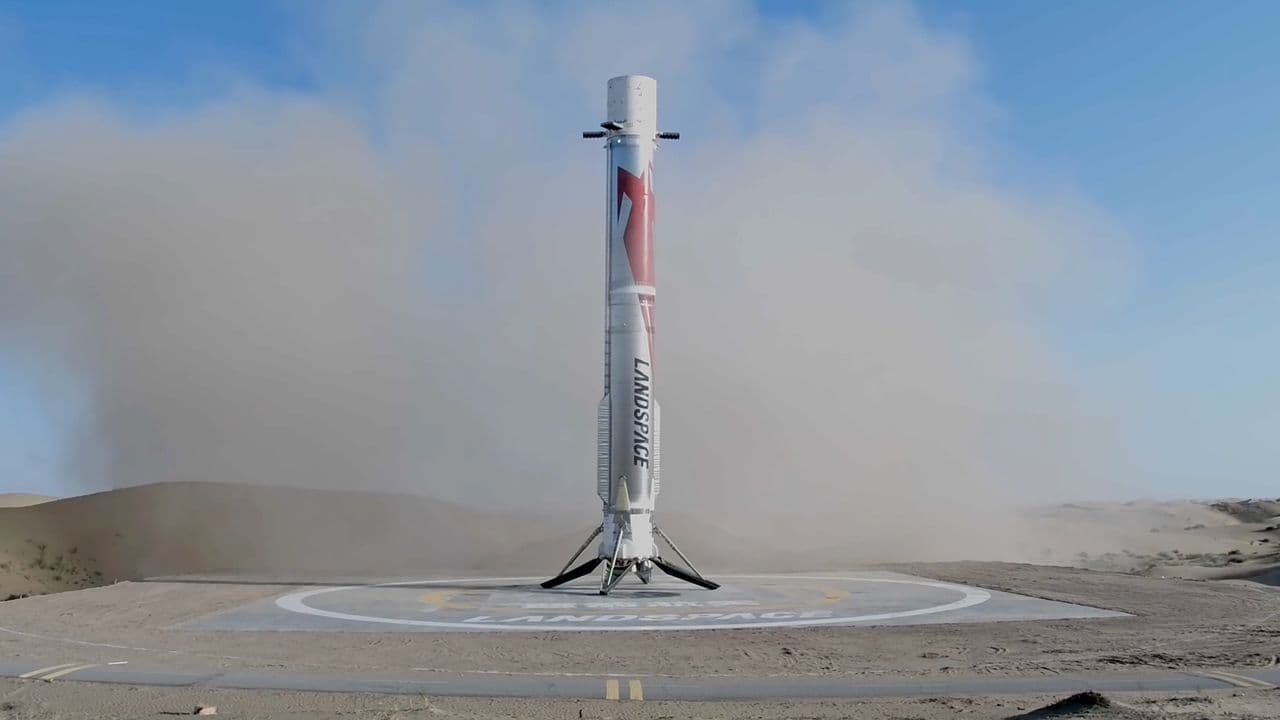
The first stage of LandSpace's Zhuque-3 rocket rests on its landing pad shortly after its historic touchdown on Aug. 18, 2026. (The Beijing startup LandSpace successfully landed the first stage of its Zhuque-3 rocket this evening (Aug. 18), becoming the first Chinese company ever to do so during an orbital launch.It was just the second Chinese orbital rocket touchdown overall. The first was pulled of on July 10 by a Long March 10B, which is built by the state-owned China Aerospace Science and Technology Corporation (CASC).The Long March 10B had some help returning to Earth, settling softly into a net-like device affixed to a ship at sea. But Zhuque-3 came down on terra firma and stayed upright thanks to a set of landing legs, like those sported by SpaceX's workhorse Falcon 9 rocket."This mission marks China's first-ever successful recovery attempt of the first stage of an orbital-class launch vehicle using landing legs, and China's first successful booster recovery on land," LandSpace said via X this evening."It is a pivotal flight test for Zhuque-3 as it transitions from the technological demonstration and verification phase toward the engineering application phase of reusability," the company added. "This mission further verified the design correctness and reliability of the Zhuque-3 reusable launch vehicle system, validated its first-stage recovery capability and engineering maturity."Zhuque-3 broadly resembles the Falcon 9, which made its first landing way back in 2015 and now has more than 600 of them under its belt. Both feature a reusable booster and an expendable upper stage, and they're about the same height — 230 feet (70 meters) for the Falcon 9 and 216 feet (66 m) for Zhuque-3.Their lifting power is similar as well. Zhuque-3 can haul about 40,350 pounds (18,300 kilograms) to low Earth orbit, while the Falcon 9's LEO payload capacity is 50,265 pounds (22,800 kg).The two rockets use two very different fuels, however — a combination of liquid oxygen (LOX) and rocket-grade kerosene for the Falcon 9, compared to LOX and liquid methane for Zhuque-3. This "methalox" mixture is also used by Starship, the fully reusable megarocket that SpaceX is developing to help humanity settle the moon and Mars, among other spaceflight tasks. LandSpace's Zhuque-3 rocket launches on its second-ever mission on Aug. 18, 2026. The flight was a success, and Zhuque-3's first stage returned to Earth for a landing — the first ever for a private Chinese orbital rocket. (m. EDT (2335 GMT; 7:35 a.m. on Aug. 19 Beijing time) — was the second overall for the Zhuque-3. The rocket first flew on Dec. 2, 2025, on a mostly successful debut; Zhuque-3's upper stage reached orbit as planned, which is rare for a first flight.LandSpace tried to bring the booster back for a touchdown that day as well, but the attempt failed. Zhuque-3 suffered "an abnormal combustion" as it neared the ground, according to the state-run outlet Xinhua (translation by Google), and ended up exploding near the designated landing pad.Today's mission, however, was an unqualified success for the Zhuque-3: The rocket's upper stage delivered a satellite called Honghu 03, which was developed by Hongqing Technology, to its designated orbit, LandSpace wrote in another X post today.MISSION SUCCESS | ZhuQue-3 Y2 Reusable Launch Vehicle Achieved Full Success in Orbital Insertion and First-Stage RecoveryOn August 19, 2026, at 07:35 (UTC+8), the ZhuQue-3 (ZQ-3) Y2 reusable launch vehicle lifted off from the Dongfeng Commercial Space Innovation Pilot Zone.… pic.twitter.com/fshijOxgtcAugust 19, 2026Zhuque-3 is part of a concerted Chinese push toward rocket reusability, an efficiency-boosting feature that has helped make the Falcon 9 the world's leading launcher by far. (The SpaceX
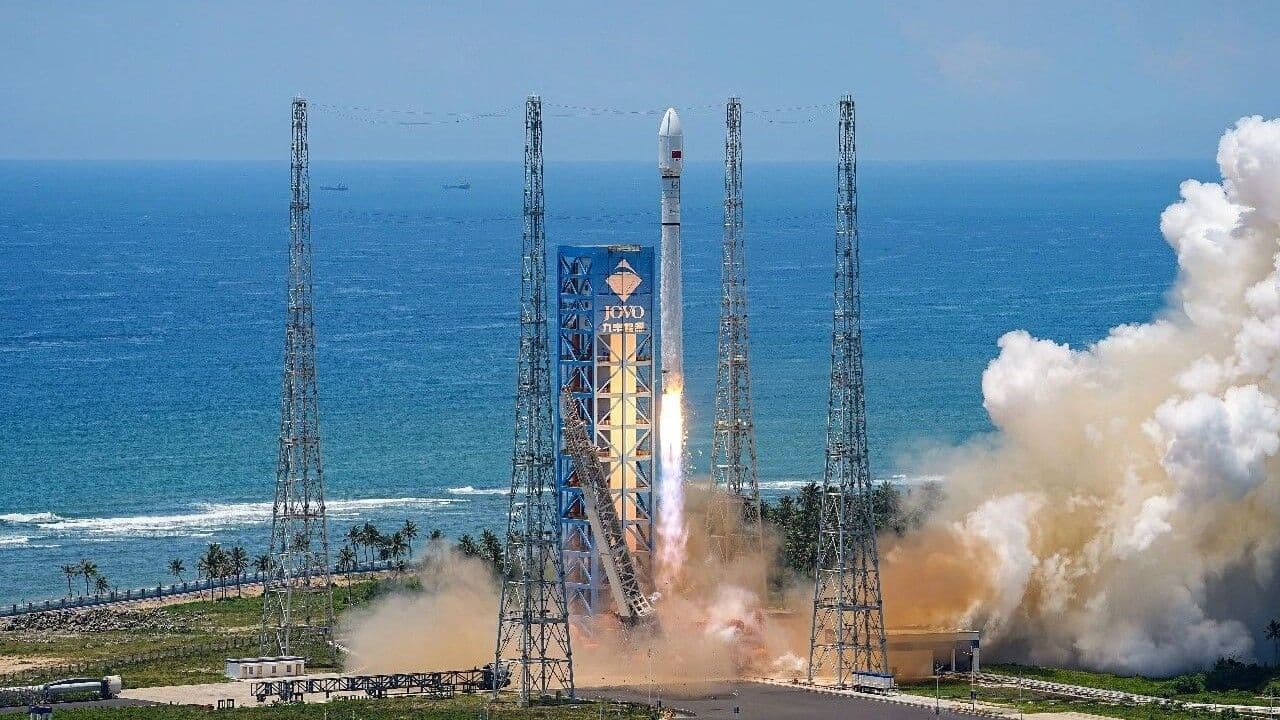
China just completed not one but two space missions, less than a week after a Long March 7A rocket explosion briefly grounded its fleet.The state-owned China Aerospace Science and Technology Corporation (CASC) returned to flight with the launch of a Long March 12 rocket from the Hainan Commercial Space Launch Site in Wenchang. The rocket lifted off on Aug. 16 at 12:10 a.m. EDT (0410 GMT; 12:10 p.m. local time in China) and delivered a stack of 24 internet-beaming satellites into low Earth orbit (LEO).It was the first launch since China's Long March 7A exploded mid-flight on Aug. 10. Footage of that mission showed the Long March 7A's fairing section and the upper portion of the launch vehicle bending backward about 85 seconds after liftoff, resulting in the total loss of the rocket and its payload, the Zhongxing-4B communications satellite. China's Long March 12 rocket lifted off with a stack of 24 internet satellites on Aug. 16, 2024. ( The launch occurred on Aug. 16 at 11:02 p.m. EDT (0302 GMT and 11:02 a.m. local time in China on Aug. 17), and delivered the "SEO" satellite for the United Arab Emirates to its planned orbit, according to the China National Space Administration.Of the pair launched over the weekend, the Long March 12 is much more similar to the Long March 7A; the two stand 203 feet (62 meters) and 197 feet (60 m) tall, respectively. But the two rockets are designed with different purposes. The slightly wider Long March 12 is a two-stage rocket optimized for delivering relatively heavy payloads to LEO and sun-synchronous orbits, while the three-stage Long March 7A is designed for higher-altitude missions to geostationary transfer orbit and beyond.In contrast, the Long March 2C stands only about 141 feet (43 m) tall. The two-stage rocket is used primarily for smaller payloads to LEO, with a lifting capacity of only about 3.9 tons, and has a long list of launches dating back to 1982. The newest of the three, the Long March 12, was introduced in 2024 and has now launched seven missions — all successful. Last week was the Long March 7A's second failure in a total of 18 launches since the rocket's debut in 2020.CASC hasn't provided an update on the Long March 7A incident, other than a statement indicating that the cause is under investigation. As that continues, China has more launches on the horizon.The second flight of the Zhuque-3 rocket, a launch vehicle designed for reusability from Chinese company Landspace, is scheduled to launch Tuesday evening (Aug. 18), and a Long March 5 rocket carrying the Chang'e 7 robotic mission to the moon's South Pole is expected to lift off on Sunday (Aug. 23). Josh Dinner is Space.com's Spaceflight Staff Writer. He is a writer and photographer with a passion for science and space exploration, and has been working the space beat since 2016. Josh has covered the evolution of NASA's Artemis program and humanity's return to the moon, commercial spaceflight partnerships and crewed missions from the Space Coast, NASA science missions and more. He also enjoys building 1:144-scale model rockets and spacecraft. Find some of Josh's launch photography on Instagram, and follow him on X, where he mostly posts in haiku.
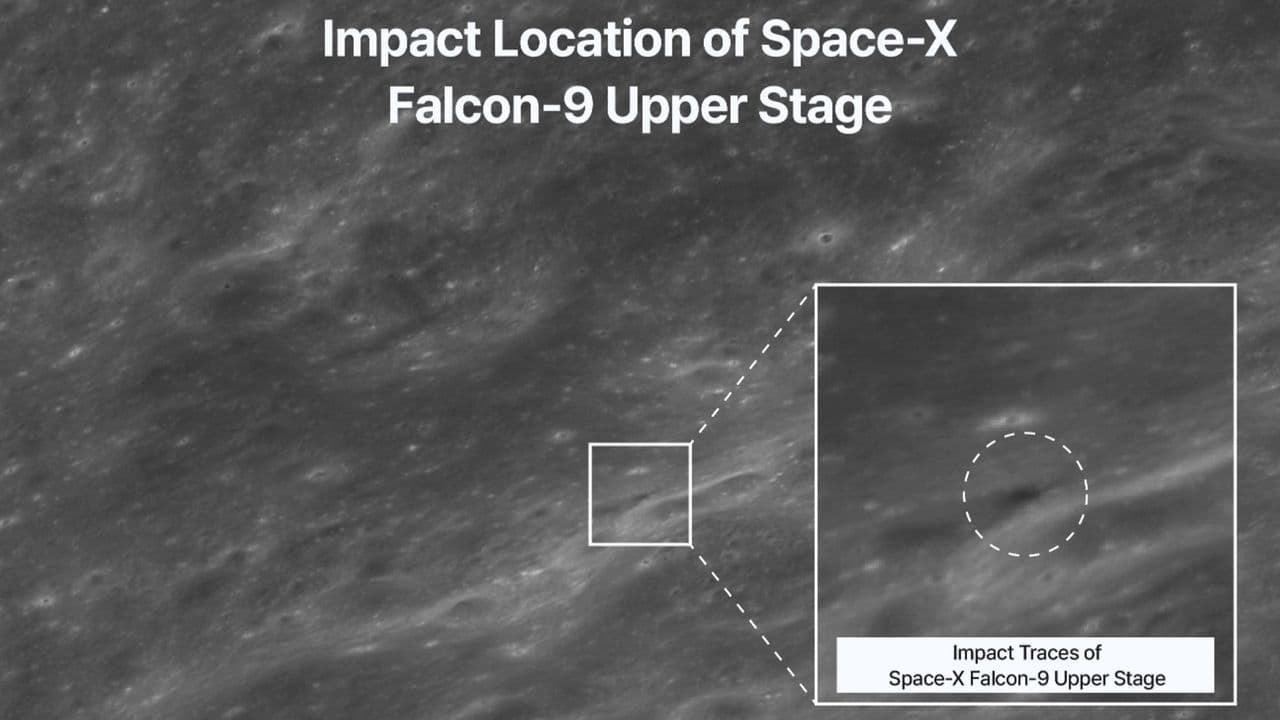
South Korea's Danuri lunar orbiter captured this image of the crater blasted out by a SpaceX Falcon 9 upper stage when it hit the moon on Aug. 5, 2026. (5-ton SpaceX rocket body slammed into terrain near Einstein Crater on Aug. 5.That impact site was imaged by South Korea's moon-orbiting Danuri spacecraft, as well as by NASA's Lunar Reconnaissance Orbiter (LRO). Reportedly, a Chinese commercial space debris monitoring satellite tracked and recorded the 5,400-mph (8,690-kph) moon punch, too.Wandering through space for over a year, the leftover Falcon 9 upper stage had sent Firefly Aerospace's Blue Ghost-1 lander on its way to the moon back on Jan. 15, 2025. Also sent moonward on that flight was the Hakuto-R Mission 2's Resilience, a robotic lunar lander developed by the Japanese company ispace. While the moon has reclaimed its serenity, the implications of the uncontrolled collision continue to reverberate.Close encounterInterestingly, there was also the prospect of a too-close-for-comfort conjunction of the Falcon 9 upper stage and Danuri."We noticed roughly late June that there is an incoming Falcon 9 upper stage toward the moon, and also knew that it would be close to Danuri," Eunhyeuk Kim, a senior researcher at the Korea Aerospace Research Institute (KARI), told Space.com.There was a huge uncertainty in the predicted trajectory of the upper stage, Kim said, while the orbit information of South Korea's Danuri lunar orbiter was quite accurate. "Therefore, we could not neglect the probability of an incoming and close encounter." Before-and-after imagery of the impact site. ( 28, said Kim. That eclipse will see 96% of the moon's visible surface passing through Earth's dark umbral shadow.Kim said that the orbiter's maneuver brought a slight change in the phase of the spacecraft's orbit, which canceled the probable conjunction between the upper stage and Danuri.At the time of the Aug. 5 impact, Danuri was flying over the moon's south pole area, far away from the hit zone, said Kim. Illustration of the moon, with an arrow pointing to the Falcon 9's upper stage impact site on Aug. 5, 2026. ("As space agencies and private companies build out permanent lunar infrastructure, uncontrolled rocket stages evolve from a minor nuisance into a tangible operational risk," Sladen told Space.com. "A direct hit is the obvious worst-case scenario, but distant impacts also generate ground shocks and high-speed ejecta that can degrade sensitive equipment over time."Sladen noted that lunar impacts have been a constant throughout history, with meteorites and comets bombarding the surface unhindered by an atmosphere. "Over the past 65 years, artificial objects have added a new dynamic to these events," he added. An artist’s concept of astronauts working on the lunar surface. ( Given the moon's lack of a substantial atmosphere, there is no air resistance to slow debris down. An impact therefore hurls high-speed ejecta (fine regolith and rock fragments) across vast distances at bullet-like speeds."While this isn't a major threat to isolated missions today, as we establish permanent lunar infrastructure, high-velocity ejecta poses a genuine hazard to surface habitats, solar arrays and working astronauts," Sladen said.To mitigate this issue, Sladen suggested that the industry will likely need designated impact zones or strictly controlled, targeted de-orbit protocols to ensure that spent hardware lands far from active install
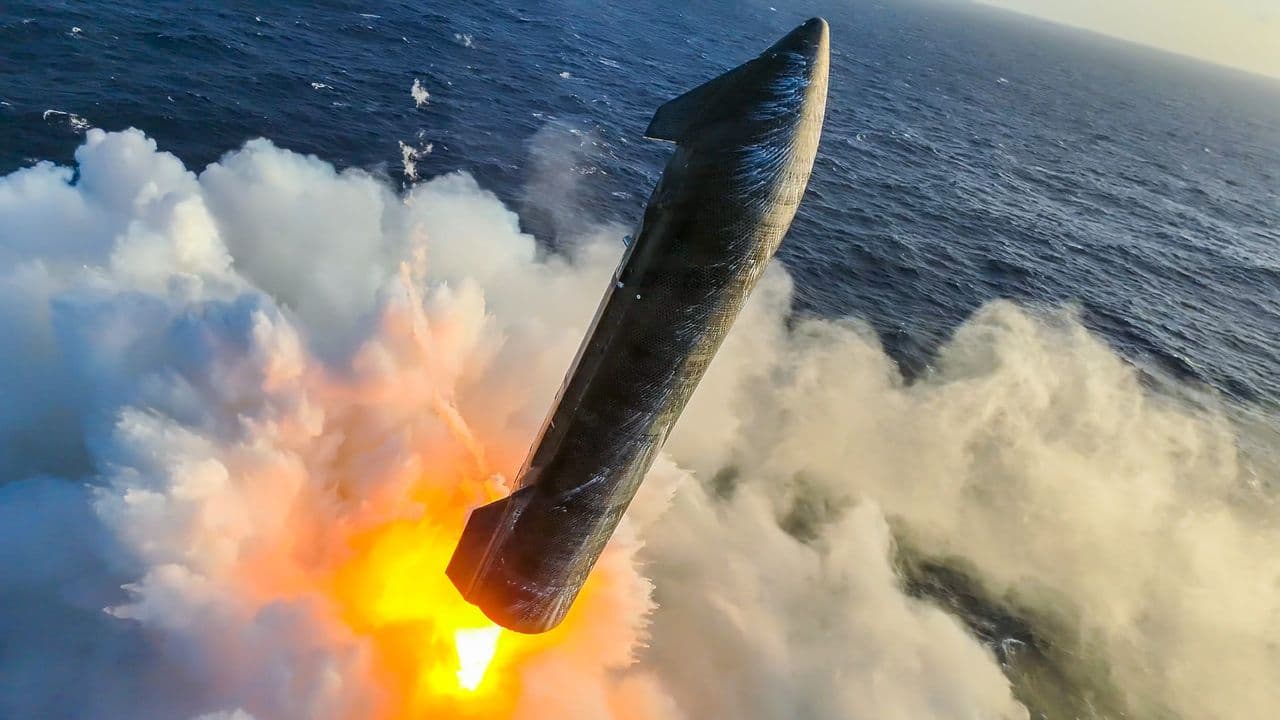
Starship's upper stage splashes down softly in the Indian Ocean on July 24, 2026, wrapping up the vehicle's 13th test flight. (The company aims to launch the 14th test flight of its Starship megarocket before August is out, Elon Musk said today (Aug. 4) during SpaceX's first-ever quarterly earnings call. Starship will deploy viable payloads into orbit on Flight 14, something it has never done before — and there will be other unprecedented action as well."I'd say things look very good, and that's why we, assuming we receive regulatory approval to do so, will attempt to catch the Ship with the tower on the next flight, which is tentatively scheduled for the end of this month," Musk said during today's call."Ship" is the 171-foot-tall (52 meters) upper stage of Starship, which also features a giant first-stage booster called Super Heavy. Both of these elements are designed to be fully and rapidly reusable — a breakthrough that, combined with Starship's immense power, will revolutionize spaceflight, according to SpaceX.And "things look very good" is a reference to Starship Flight 13, which lifted off on July 24. Musk was talking specifically about Ship's performance on that suborbital jaunt, which ended with the upper stage's soft splashdown in the Indian Ocean, off the coast of Western Australia.Ship's heat shield survived the harrowing downward trip through Earth's atmosphere in great shape on Flight 13, according to SpaceX (as did the entire vehicle, which is still in one piece to this day). And that gives SpaceX confidence to plan for a tower catch on Flight 14 — a crucial component of Starship's future reusability."I don't want to jinx it or anything, but I think I'd consider the heat shield problem solved at this point," Musk said.Starship's two launch towers at its Starbase site in South Texas feature large "chopstick" arms, which stack Super Heavy and Ship atop the pad — and can also catch the vehicles when they come back to Earth at the end of their missions.SpaceX has already executed a tower catch with Super Heavy on three Starship test flights, but it has not yet tried to do so with Ship. So Flight 14 could be momentous, provided SpaceX gets permission from regulators to make an attempt.Flight 14 will also carry up a batch of SpaceX's V3 Starlink satellites, a larger and more capable version of the spacecraft that currently populate the company's broadband megaconstellation. Flight 13 toted 20 Starlink V3s, but Ship deployed them into suborbital space; the satellites will be placed into an operational orbit on the upcoming mission, if all goes to plan, Musk said.SpaceX goes publicMusk founded SpaceX as a private company back in March 2002. It stayed that way until this past June 12, when SpaceX went public via the richest IPO in history, which raised $86 billion and valued the company at $1.77 trillion.SpaceX now has to provide earnings reports every quarter, starting with Q2 of this year. And these first publicized numbers show considerable improvement compared to a year ago, according to the company.The newly released report states that total revenue in the March-June time period was up 92% over the same stretch in 2025 — $7.8 billion versus $4.1 billion. And SpaceX had a net loss during this span of $541 million, down from a net loss of $1.0 billion in Q2 2025.More than half of this quarter's revenue — about $4.3 billion — came via the company's Starlink satellite-internet megaconstellation. That number crystallizes a truth that has been apparent for a while now — SpaceX is not just a launch company anymore.Rockets will bring in a smaller and smaller share of SpaceX revenue over the coming years, if all goes according to plan. Launch will continue ceding this financial ground to Starlink, but also, increasingly, to SpaceX's artificial intelligence (AI) operations.Indeed, SpaceX sees itself becoming more and more of an AI o
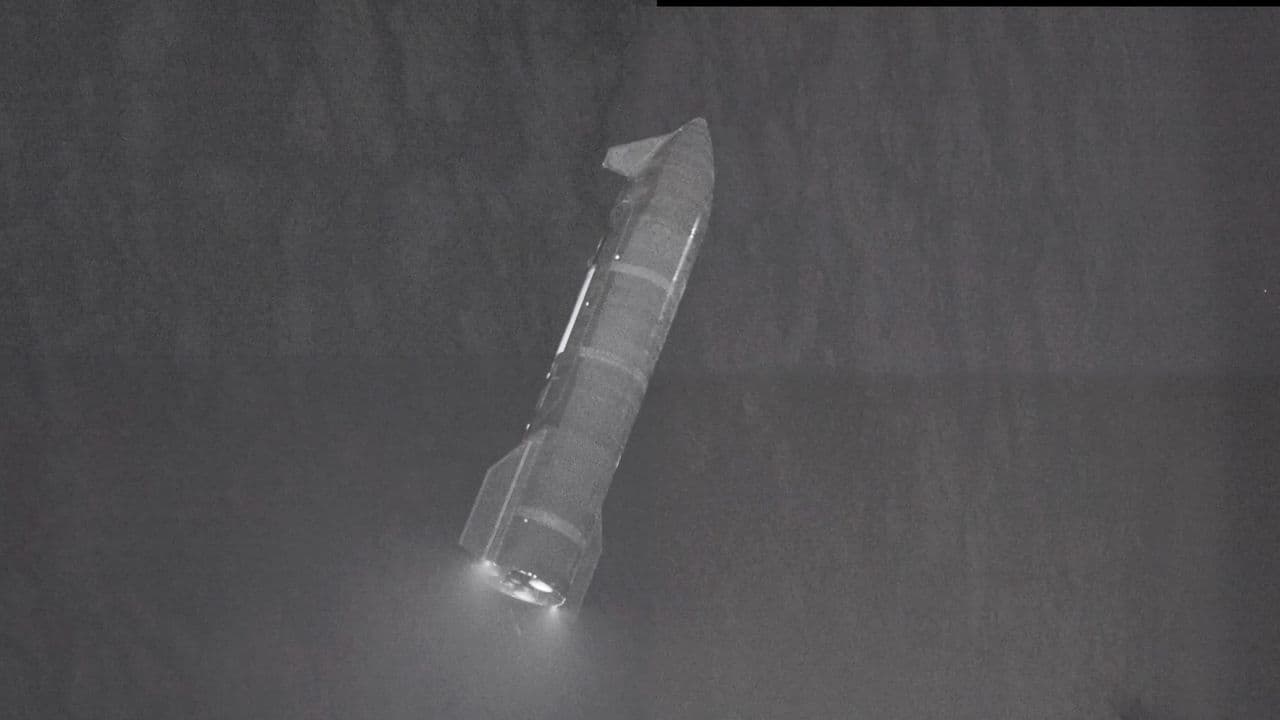
The upper stage of SpaceX's Starship megarocket, seen on July 24 during the vehicle's 13th test flight by one of the company's Starlink V3 satellites. (Starship, the biggest and most powerful rocket ever built, launched on its 13th test flight from South Texas last Friday (July 24). The suborbital jaunt was similar in many respects to past Starship test missions, with one big exception: This time, the vehicle deployed a batch of functional, next-gen Starlink internet satellites into space.Six of those "Starlink V3" spacecraft carried cameras, so that SpaceX could get good views of the heat shield on Starship's upper stage, which is known as Starship, or simply Ship. The satellites did that job and more, capturing amazing views of Ship as it cruised away from them high above Earth.View of Starship in space from a Starlink V3 satellite on Flight 13.This composite is made of imagery from four separate cameras on a single satellite. Six of the satellites were equipped with cameras to scan Starship’s heat shield and transmit imagery down to operators to… pic.twitter.com/sNTHHz5vLrJuly 31, 2026SpaceX shared one such view on X Friday evening (July 31) — a 65-second video that stitches together imagery taken by four different cameras on a single Starlink V3 satellite.The video starts with an up-close view of the shiny, 171-foot-tall (52 meters) Ship. We see more of the vehicle as the footage rolls and the two spacecraft get farther and farther apart. Toward the end, we see Ship in its entirety, and we get a sense of its activity; three of its six Raptor engines are firing, and small puffs of white vapor indicate that the vehicle is engaging its fine-tuning reaction control thrusters.Like all Starship test missions to date, Flight 13 targeted a suborbital trajectory. So the 20 Starlink V3 satellites, the first ever to reach space, did not stay up for long; they came back down to Earth about 20 minutes after deploying into the final frontier.Their successors will get higher — and there will be many of them. According to a filing with the U.S. Federal Communications Commission, SpaceX wants to operate a megaconstellation of 100,000 Starlink V3 satellites.Starship will be key to building and maintaining this constellation, which will require many launches of the brawny, fully reusable rocket. (SpaceX currently operates a constellation of nearly 11,000 Starlink satellites, but those V2 craft are considerably smaller than the 4,400-pound V3 iteration.) SpaceX's Starship upper stage splashes down in the Indian Ocean to wrap up its 13th test flight on July 24, 2026. ( After deploying the satellites and successfully reigniting one of its Raptors in space, it splashed down on target in the Indian Ocean off the coast of Western Australia about 65 minutes after liftoff.The vehicle survived its harrowing return trip through Earth's atmosphere in one piece and remains intact today, as far as we know; SpaceX recently shared a photo of the vehicle bobbing in the Indian Ocean five days after splashdown.But Starship's giant first-stage booster, known as Super Heavy, had a few issues on Flight 13. Its landing burn employed only five of a planned 13 Raptor engines, for example, and the booster hit the waters of the Gulf of Mexico at a higher velocity than intended. (Super Heavy has a total of 33 Raptors, all of which fire at liftoff.)Starship remains in the development phase, but SpaceX wants to get the megarocket operational soon. It's slated to fly on NASA's Artemis III astronaut mission to low Earth orbit in mid-2027 and to land a crew near the moon's south pole on Artemis IV in late 2028. Michael Wall is the Spaceflight and Tech Editor for Space.com and joined the team in 2010. He primarily covers human and robotic spaceflight,
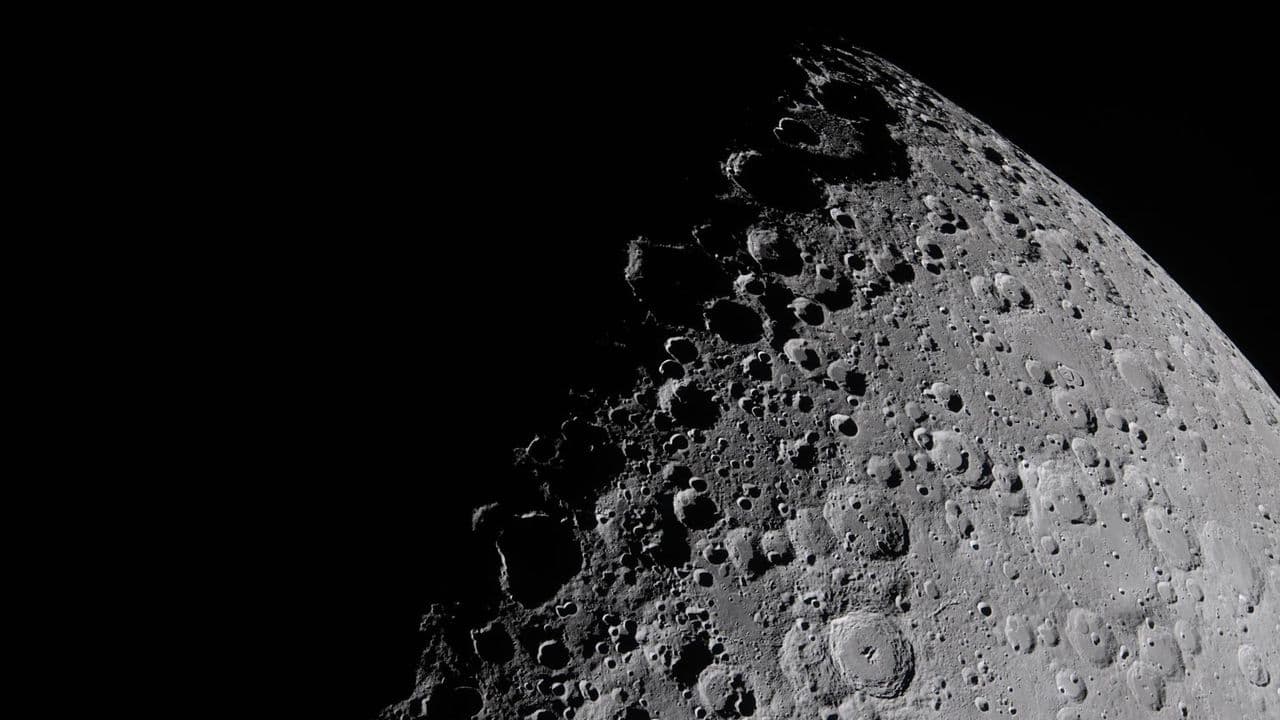
A portion of the moon captured by the Artemis II crew during their ten-day mission in April 2026. ( 5, Earth's moon is due for a human-made, high-speed impact from an identified flying object: a spent SpaceX Falcon 9 upper stage. The event will lead to a literal "dust up" on the lunar landscape.That Falcon 9 upper stage is a leftover from the launch that sent Firefly's Blue Ghost-1 lander to the moon on Jan. 15, 2025. Onboard the same flight was the Hakuto-R Mission 2, called Resilience, a robotic lunar lander developed by the Japanese company ispace.And according to a new study by an international team published on the open-source arXiv server, the resulting impact plume may briefly be bright enough to see against the dark sky near the moon's edge. That means it might be visible to moongazers with sufficiently sensitive telescopes.This head-on collision of the errant stage is expected to occur near the Einstein and Bell craters near the western lunar limb. It may well be visible to ground and space-based assets. Indeed, putting aside all the unknowns and modeling uncertainties, some specialists suggest if you've got the time and observational prowess, it might be worth a look.Visible ejecta spikeUsing special physics simulations to model the impact, William Jo, a graduate research assistant at the University of Texas, Austin and colleagues predict the debris plume from the impact will have the central ejecta spike reaching roughly 47 miles to over 60 miles (75 kilometers to 100 kilometers) altitude."Our calculations suggest the plume should be several orders of magnitude brighter than the dark-sky background for the first few minutes after impact," Jo told Space.com. "So the plume should be visible, though I'd stress this is a single nominal case. The real one will look different, and the numbers are on the optimistic side. But the point worth making is that the flash isn't really the story here."Jo emphasized that there's great slam-dunk science to be had. "Watching this one gives us a rare chance to open up ejecta-plume science and calibrate those models against a real event, which matters for every future thing we deliver to the moon," Jo said. Time evolution of the target ejecta column density, rendered on the lunar surface at the predicted impact site near Einstein crater by William Jo et al. ()Implications for future moon missionsAccording to new research led by Benjamin Fernando of the Los Alamos National Laboratory in New Mexico, the impact flash and resultant ejecta plume are "potentially observable" from ground- and space-based observational facilities."This event provides an opportunity to attempt the recording of an artificial impact in real-time; although many of the properties of the event (such as visual magnitude) are imprecisely predicted at present," Fernando and colleagues report.Moreover, this rocket stage meets moon occasion yields an opportunity to test a pipeline for localizing impacts on the lunar surface for future seismic experiments, investigating the dust and plume dynamics from impact events on the moon, and considering hazards from artificial space debris impacts that future astronauts on the lunar surface might have to avoid, Fernando and team members point out."The maximum ballistic range of resolved particles is found to be slightly under 1,000 km, which is far enough to be significant from the perspective of presenting a hazard to future astronauts or infrastructure across much of the lunar surface," Fernando et al wrote in the study. A SpaceX photo of one of the company's Falcon 9 second stages, taken in 2022. A similar second stage is expected to impact the moon in August 2026. ( LRO will be passing over the projected rocket stage crash site about seven day
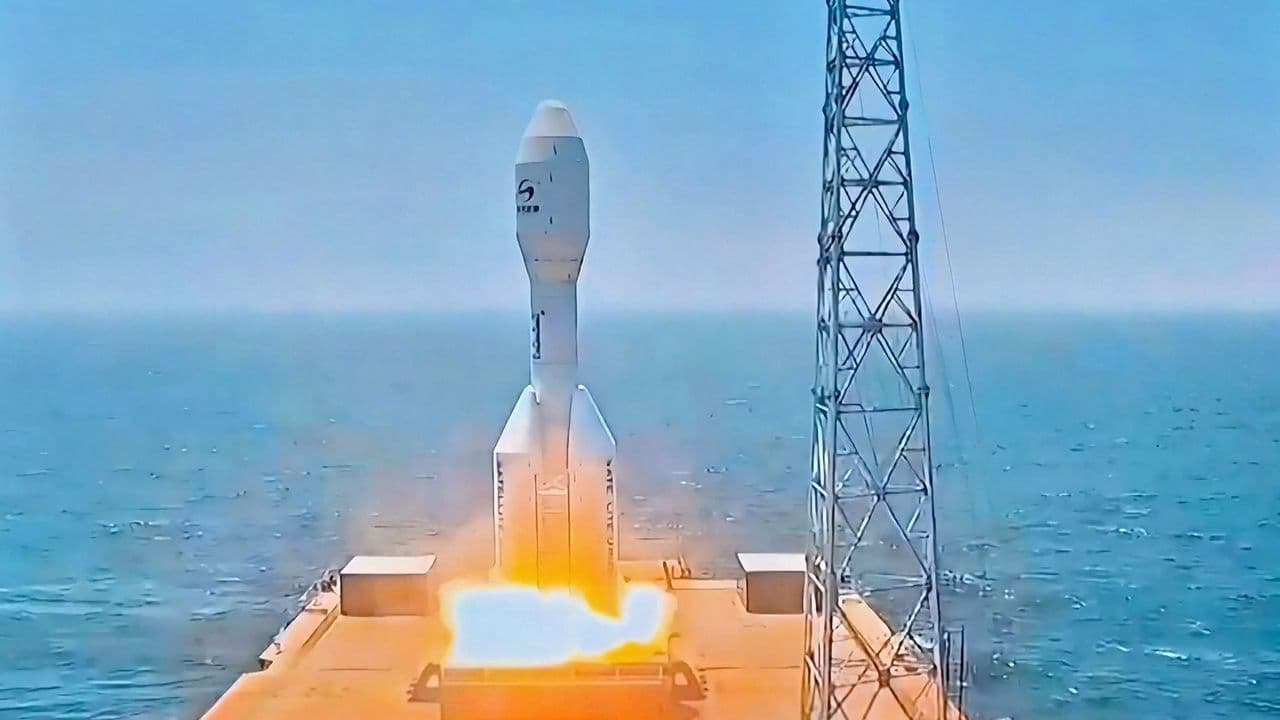
The world's most powerful solid-fuel rocket just aced its third-ever mission.Gravity-1, a distinctively squat and stubby rocket, launched Tuesday night (July 21) from the deck of a ship stationed off the coast of Shanghai.Liftoff occurred at 10:54 p.m. EDT (0254 GMT and 10:54 a.m. Beijing time on July 22), according to the state-run Chinese outlet Xinhua, which further reported that all nine satellites reached "their designated orbits." Details about those satellites were not provided. Orienspace's Gravity-1 rocket launches nine satellites to orbit from a ship at sea on July 21, 2026. ( The rocket stands about 100 feet (30 meters) tall — less than half the height of SpaceX's workhorse Falcon 9 vehicle.Gravity-1 consists of three core stages and four strap-on boosters, all of which feature solid rocket motors. The launcher can haul up to 14,300 pounds (6,500 kilograms) of payload to low Earth orbit (LEO), making it the most powerful solid rocket in the world. (For comparison: The liquid-fueled Falcon 9 can deliver a maximum of 50,265 pounds, or 22,800 kg, to LEO.)The Chinese vehicle now has three flights under its belt, all of which launched from ships at sea and achieved full mission success. Gravity-1's first two flights occurred in January 2024 and October 2025.There won't be such a long gap before Gravity-1 flies again, if all goes to plan. The rocket is expected to launch a batch of Chinese internet satellites in the next few months, according to the state-run outlet CGTN.And Orienspace's ambitions don't end with Gravity-1. The company is also developing Gravity-2 and Gravity-3, larger, more powerful rockets that will feature liquid-fueled core stages and solid rocket boosters.Gravity-2 could be ready to fly by the end of the year, CGTN reported. And that vehicle will likely lift off from an ocean-based pad as well."Sea launch of solid-propellant rockets paves the way for future launch of liquid rockets at sea," said Gravity-1 chief designer Xu Guoguang, according to CGTN. "We are also considering other methods, such as launching from drilling platforms." Michael Wall is the Spaceflight and Tech Editor for Space.com and joined the team in 2010. He primarily covers human and robotic spaceflight, military space, and exoplanets, but has been known to dabble in the space art beat. His book about the search for alien life, "Out There," was published on Nov. 13, 2018. Before becoming a science writer, Michael worked as a herpetologist and wildlife biologist. He has a Ph.D. in evolutionary biology from the University of Sydney, Australia, a bachelor's degree from the University of Arizona, and a graduate certificate in science writing from the University of California, Santa Cruz. To find out what his latest project is, you can follow Michael on Twitter.

Live updates from SpaceX launch of Northrop Grumman spacecraft from Florida Florida Today MRV-MEP Mission SpaceX SpaceX launches Northrop mission to extend the life of aging satellites SpaceNews Live coverage: SpaceX to launch novel geosynchronous robotic servicing satellite on decade-long mission Spaceflight Now SpaceX will launch a satellite repair drone with robot arms to Earth orbit today: How to watch it live Space
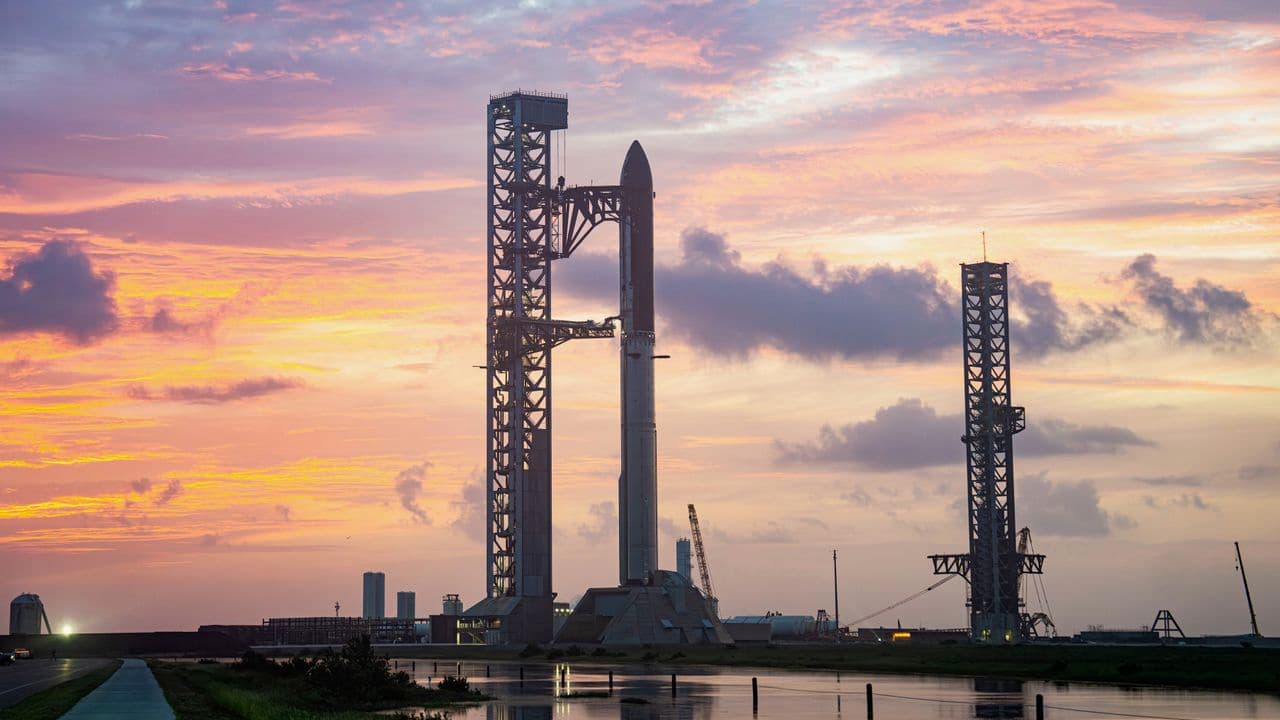
SpaceX's Starship rocket stands on the pad ahead of its 13th test flight. (Elon Musk's company is now targeting Thursday (July 23) for Flight 13 of Starship, the giant, fully reusable vehicle it's developing to help get people to the moon and Mars, among other spaceflight tasks.If all goes to plan, the 408-foot-tall (124.4 meters) Starship will lift off from SpaceX's Starbase site in South Texas on Thursday during a 90-minute window that opens at 6:45 p.m. EDT (2245 GMT; 5:45 p.m. local Texas time). You can watch the action live here at Space.com, courtesy of SpaceX.It will be the second launch attempt for Starship Flight 13. The first came last Thursday (July 16) and ended in an abort, which occurred just as the giant rocket's 33 first-stage Raptor engines were firing up."To be confident of a good flight, 2 Raptors will be removed & replaced. Most probable launch timing is early next week," Musk said on July 16 via X, the social media platform he owns.SpaceX first targeted today (July 20) for Flight 13's second try. On Sunday (July 19), however, the company announced that it had pushed that date back to no earlier than Thursday.Flight 13 will be the second launch of Starship Version 3 (V3), the latest, most advanced iteration of the megarocket. V3 is the variant that will land astronauts on the moon for NASA's Artemis program and fly SpaceX's first Mars missions, if all goes to plan.The plan for the upcoming suborbital launch is similar to that of Flight 12, which lifted off on May 22. Starship's Super Heavy first stage will aim to steer itself back to Earth for a controlled splashdown in the Gulf of Mexico, while the Ship upper stage will do the same halfway around the world, off the coast of Western Australia.SpaceX accomplished the latter objective on Flight 12 but not the former; Super Heavy suffered engine issues during its return to Earth and ended up hitting the Gulf waters hard.Flight 13 will do a few new things, however. For example, it will carry 20 of SpaceX's next-gen Starlink V3 internet satellites, which have never flown to space before. SpaceX plans to build a constellation of 100,000 Starlink V3 spacecraft in low Earth orbit over the coming years, and Starship will do all of the heavy lifting.These 20 Starlinks won't stay aloft for long, however. Since Ship is flying on a suborbital trajectory, the satellites will come back to Earth relatively quickly — about 20 minutes after deployment, according to SpaceX's Flight 13 mission description.Starship debuted in April 2023. All of its test flights to date have been suborbital. Michael Wall is the Spaceflight and Tech Editor for Space.com and joined the team in 2010. He primarily covers human and robotic spaceflight, military space, and exoplanets, but has been known to dabble in the space art beat. His book about the search for alien life, "Out There," was published on Nov. 13, 2018. Before becoming a science writer, Michael worked as a herpetologist and wildlife biologist. He has a Ph.D. in evolutionary biology from the University of Sydney, Australia, a bachelor's degree from the University of Arizona, and a graduate certificate in science writing from the University of California, Santa Cruz. To find out what his latest project is, you can follow Michael on Twitter.
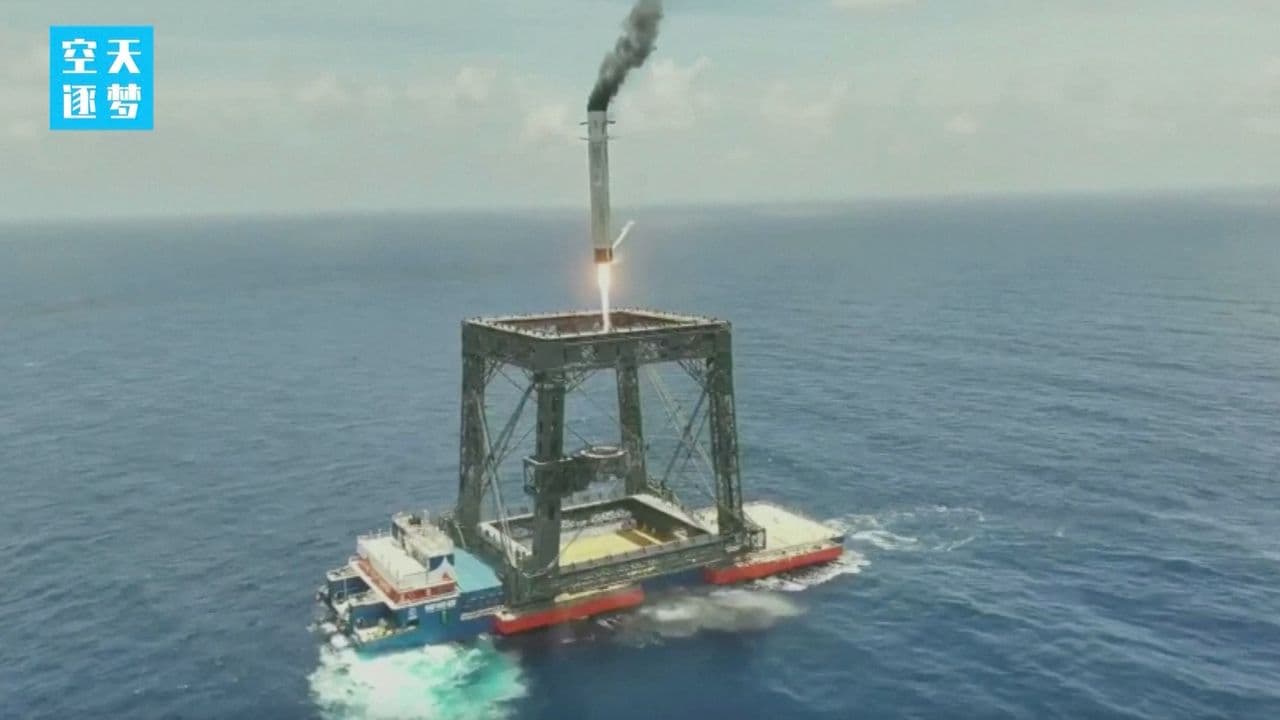
The first stage of a Chinese Long March 10B rocket comes down for a landing at sea after successfully sending a satellite to orbit on July 10, 2026. (The nation has recovered a rocket during an orbital launch for the first time ever, pulling off the feat during the Long March 10B's maiden liftoff on Friday (July 10). And that recovery was unique: The rocket's first stage nestled softly into a net-like structure carried by a ship at sea."This mission marks my country's first successful controlled recovery of a launch vehicle and the world's first network-based recovery of a launch vehicle," the China Aerospace Science and Technology Corporation (CASC) announced via social media shortly after the launch. (Translation by Google.) "It signifies a historic breakthrough for my country in the field of reusable rocket technology and will lay a solid foundation for accelerating the improvement of my country's space access capabilities."The Long March 10B is a two-stage rocket that stands about 207 feet (63 meters) tall, according to the state-owned CASC, the main contractor for China's space program.The vehicle's first stage burns kerosene and liquid oxygen (LOX) propellants, whereas the second stage uses LOX and liquid methane. In reusable mode, the Long March 10B can loft about 16 tons of payload to low Earth orbit.And the rocket flew with a payload on its debut liftoff — a satellite that successfully reached "its predetermined orbit," according to the CASC update. That post did not provide any details about the spacecraft or its orbit. It did give a brief rundown of the first-stage recovery, however."Approximately 6 minutes after the first and second stages separated, the first stage returned vertically and was successfully recovered at a sea-based recovery platform using a net system," CASC officials wrote, noting that launch occurred from the Hainan Commercial Space Launch Site on Friday at 12:15 a.m. EDT (0415 GMT; 12:15 p.m. Beijing time.) "The launch and first-stage recovery missions were a complete success."China plans to refly the first stage by the end of the year, they added.Until now, vertical landings of orbital-class rockets had been performed only by SpaceX, which does them on a regular basis. Indeed, Elon Musk's company has landed orbital rockets more than 600 times to date.Such extensive reuse has allowed SpaceX to fly more cheaply and efficiently than its competitors and dominate the launch market — something that China is working hard to emulate.The Long March 10B's "reusable configuration significantly reduces launch costs, offering advantages of large payload capacity and high cost-effectiveness," CASC officials wrote in the post-launch update.Other partially reusable Chinese rockets are in the works as well, including CASC's Long March 12A and the Zhuque-3, a vehicle built and operated by the Beijing-based company Landspace. Both of those rockets debuted this past December, with similar results: They reached orbit as planned, but their first stages didn't stick the landing.The Chinese companies CAS Space, Galactic Energy and Deep Blue Aerospace are developing reusable vehicles of their own — Kinetica-2, Pallas-1 and Nebula 1, respectively. So, before too long, Chinese rockets could be returning to Earth with a frequency that rivals SpaceX's workhorse Falcon 9. Michael Wall is the Spaceflight and Tech Editor for Space.com and joined the team in 2010. He primarily covers human and robotic spaceflight, military space, and exoplanets, but has been known to dabble in the space art beat. His book about the search for alien life, "Out There," was published on Nov. 13, 2018. Before becoming a science writer, Michael worked as a herpetologist and wildlife biologist. He has a Ph.D. in evolutionary biology from the University of Sydney, Australia, a bachelor's degree from the University of Arizona, and a graduate certificate in science writing from the U

Discussion (0)