
Loading dispatches...
← Return to NewsroomScience
'Significant areas of Mars may have once been covered by water': Scientists find hidden clue in Spirit rover data
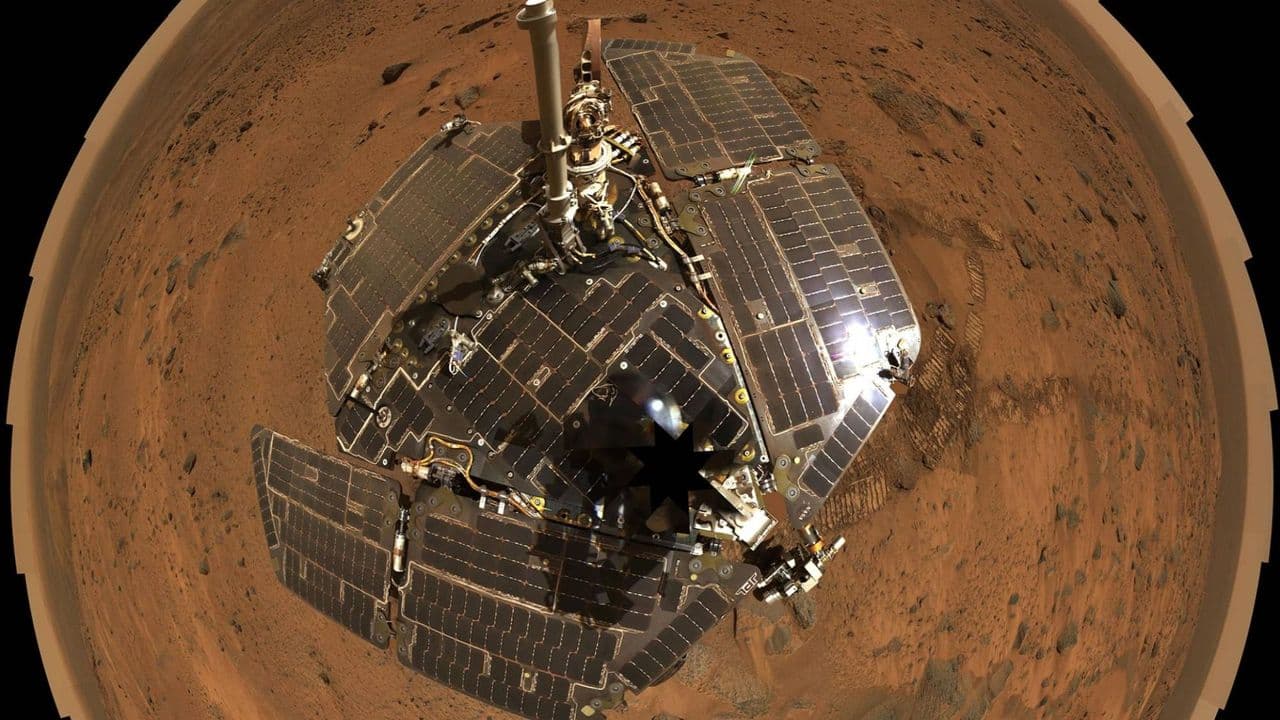
More than 20 years after NASA's Spirit rover began exploring Mars, scientists have uncovered a hidden clue in its archival data that adds to mounting evidence that the Red Planet was once rich in liquid water.Researchers reanalyzed measurements collected by Spirit between 2004 and 2010, revealing widespread traces of crystalline hematite and altered magnetite in ordinary Martian soil — iron-bearing minerals that point to ancient chemical changes consistent with interactions between water and rock. The findings suggest liquid water may have been more widespread across Mars than scientists previously thought, according to a statement from Edith Cowan University (ECU) in Australia.The team combined hundreds of individual measurements from 32 undisturbed soil sites inside Gusev Crater, where Spirit landed in January 2004, creating the most detailed iron-mineral profile yet assembled for typical Martian soil, according to the statement."One of the most important discoveries was finding crystalline hematite in ordinary Martian soil," Paulo de Souza, lead author of the study and an ECU professor, said in the statement. "This mineral's widespread presence suggests not only that water was present, but that significant areas of Mars may have once been covered by water."Crystalline hematite has long been considered one of the strongest mineral indicators of past water on Mars. While it can also form through volcanic or hydrothermal activity, it commonly develops when iron-bearing rocks interact with liquid water.The discovery is particularly significant because previous analyses concluded that crystalline hematite was largely absent from Spirit's landing site. According to the researchers, the mineral's signature was simply too faint to stand out in individual rover measurements. By combining thousands of spectra collected over the mission, however, the team was able to tease the signal out of the background noise.The researchers also identified altered magnetite, suggesting the original volcanic minerals in the Martian soil were chemically transformed over time. Together, the altered magnetite and crystalline hematite provide new evidence that water played an important role in reshaping the planet's surface. And, because similar dust and soil blanket much of Mars, the findings could have implications well beyond Gusev Crater, suggesting water-related chemical processes may have been more widespread across the planet than previously believed.The results add to a growing body of evidence that Mars was once far more habitable than it is today. During its mission, Spirit discovered water-altered rocks and minerals in the Columbia Hills, while NASA's Curiosity rover later found evidence that Gale Crater once hosted long-lived lakes. More recently, Perseverance has been exploring the remnants of an ancient river delta inside Jezero Crater, where scientists hope to determine whether the environment could once have supported microbial life.Beyond revealing another chapter of Mars' watery past, the research also highlights the lasting scientific value of spacecraft data long after a mission has ended."This work shows that important discoveries are not always made by collecting new data," de Souza said in the statement. "Sometimes they come from looking at existing data with fresh eyes and better analytical techniques."Their findings were published June 26 in the journal Interactions.
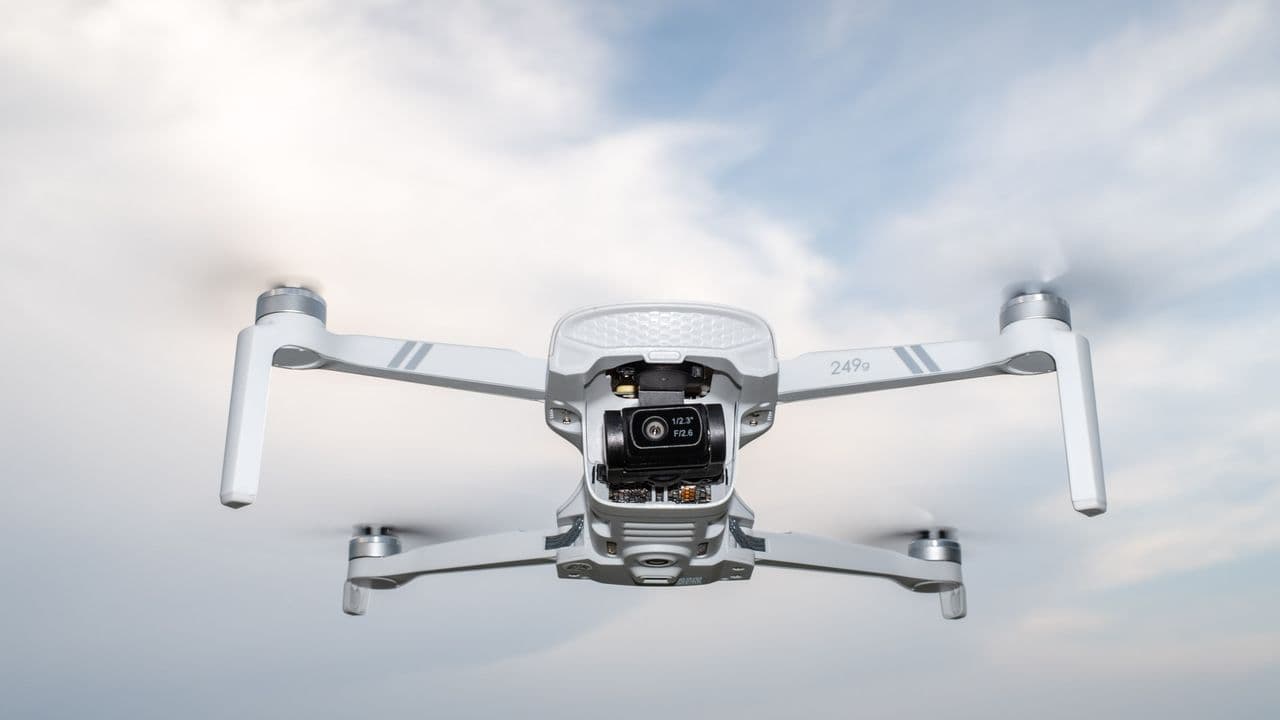
Despite having a small sensor, the Holy Stone HS900 produces impressive image quality and sports features and functionality you’d expect in a more expensive drone. Pros +Flies well +Some impressive features +Solid build quality Cons -Small sensor -No obstacle avoidance -RAW photos are poor Why you can trust Space.com Our expert reviewers spend hours testing and comparing products and services so you can choose the best for you. Find out more about how we test and review products. Key specsCamera: 48MP 1/2.3-inch CMOSVideo resolution: Up to 4KFrame rates: 4K 30 FPS / FHD up to 60 FPSBattery: 2250 mAh up to 30 minutes flightCharger type: USB-C cableVideo transmission range: 6.2 milesDimensions: : Folded 5.63 x 3.26 x 2.44 in / 143 x 82.8 x 62 mm / Unfolded 6.59 x 8.57x2.44 in / 167.4 x 217.8 x 62 mmWeight: 8.78 oz / 249 gThe sub-250 g drone market shows no signs of reducing competition, with manufacturers racing to offer advanced features at increasingly affordable prices. While DJI maintains its dominance as the market leader, brands such as Holy Stone have been steadily improving their offerings to compete in this popular segment of the drone market.The Holy Stone HS900 Pro is being sold as the company's most capable consumer drone to date, and is aimed at beginners and enthusiasts looking for premium features without the premium price tag.In reality, this is much more difficult than it sounds because the beginner market is so competitive that even DJI beginner models are impressively affordable. We’ll have to wait and see if the HS900 Pro is good enough to be one of the best beginner drones. ( Features such as Follow Me, Point of Interest, Waypoint Flight and various automated shooting modes make it easy to capture dynamic footage with minimal experience.At the heart of the drone is a 48MP camera capable of capturing 4K video. While it lacks obstacle avoidance technology found on some competitor models, the HS900 Pro delivers a reasonable blend of performance, image quality and flight features, but it undoubtedly has a handful of shortcomings that will hopefully be ironed out with firmware updates.Back to top The folding design is useful for storage and transportation. ( This type of design is great for beginners and more experienced pilots because the folding element makes these drones easy to carry all day on trips out or in a camera bag with other kit.The drone is just 5.63x3.26x2.44 in / 143x82.8x62 mm when folded, and 6.59x8.57x2.44 in / 167.4x217.8x62 mm unfolded. Most sub-250 g drones are around these dimensions, so there’s nothing out of the ordinary here, and build quality is fantastic - no complaints either. The airframe is made of a lightweight yet strong plastic, which is, once again, in keeping with similar drones. Image 1 of 3 The HS900 PRO has basic sensors, but obstacle avoidance is absent. (This is a folding controller where the phone attaches to handles that fold out at the bottom of the controller in a similar way to the old DJI Mavic 2 controller and accommodate smartphones of all sizes. This is nice and compact at 6.0x1.85 x3.23 in / 152.5x47x82 mm when folded. Detachable control sticks that can be stowed away at the bottom of the controller.The HS900 Pro controller provides all of the controls you need and more for operating the drone and the camera; you have the control sticks, a power button, a Return to Home button (RTH), a speed control button, a gimbal dial, a customisable Fn button with

Discussion (0)