NTA casually ignored Supreme Court order to overhaul system after 2024 leak: FAIMA petition
The NTA “casually” ignored recommendations of the Radhakrishnan Committee and the top court’s directions after the 2024 leak.

The NTA “casually” ignored recommendations of the Radhakrishnan Committee and the top court’s directions after the 2024 leak.


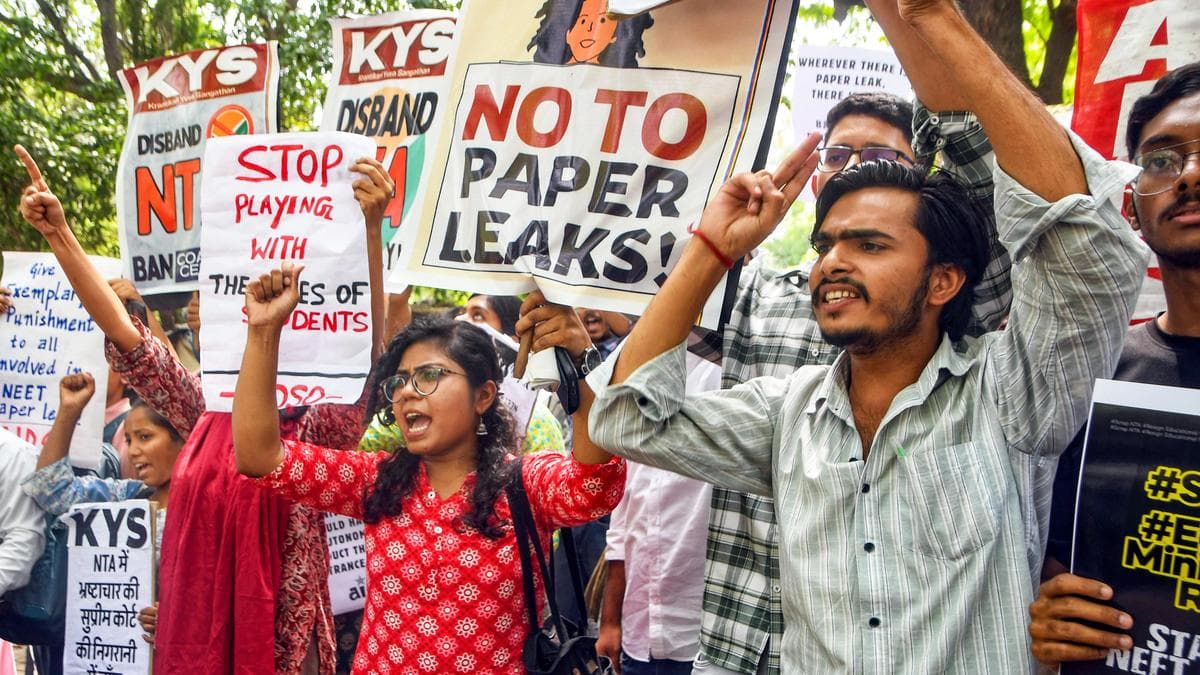
The Federation of Indian Medical Association (FAIMA) has flagged the “recurring, systemic, and catastrophic” failure of the National Testing Agency (NTA) in conducting the National Eligibility cum Entrance Test (NEET-UG) and has urged the Supreme Court to take a “stricter approach”.The NTA “casually” ignored recommendations of the Radhakrishnan Committee and the top court’s directions after the 2024 leak. “Mechanism should be in place to ensure that any non-compliances will lead to exemplary penalties,” FAIMA said in a petition.FAIMA said “repeated digital breaches” and “administrative paralysis” in the NTA that cause multiple paper leaks warrant that the Supreme Court should invoke its extraordinary jurisdiction under Article 142, which it had earlier used to “strip the Medical Council of India of its independent policy making powers”.The petition wanted the apex court to “step in and order the creation of a modern, foolproof, and transparent system so that the futures of millions of students are never put at risk again”.Over-reliance on vendorsThe petition said NTA relies heavily on unverified private service providers for logistics, including centre management and security, funnelling public funds into lowest bidder infrastructure despite repeated warnings against it by Parliamentary Standing Committees and the apex court when it heard the NEET UG 2024 paper leak case.It said that the top court had pointed out lapses in NTA’s system in 2024. These included unauthorised access to strongrooms, transportation of highly sensitive examination materials on e-rickshaws and through private couriers, the absence of any prescribed time limit for the submission of OMR sheets, and a complete lack of direct oversight over the invigilators. In 2024, the rear door of a strongroom in Hazaribagh was opened and unauthorised persons were permitted to access the question papers before the exam. “Despite these lapses being explicitly pointed out by SC, the NTA has failed to implement meaningful corrective action,” FAIMA said. “NTA continues to rely on risky, old-fashioned methods like physically printing question papers and using private couriers for transport making it prone to leak,” the petition said, adding, “It is also excessively dependent on third parties to outsource the management of exam centers and to the transport of exam materials thereby destroying the secrecy of this examination.”Future leaksThe petition said that attempting to re-conduct NEET-UG 2026 using the exact same flawed methods and private contractors, without first implementing the Radhakrishnan Committee’s safety measures, is “highly irresponsible”. “It practically guarantees that another paper leak will happen, causing further trauma to the students,” it said.In 2024, the Supreme Court had cautioned that the NTA, which is entrusted with the conduct of competitive exams, cannot afford missteps and then course-correct later. Flip-flops are an anathema to fairness, it had said.The petition said that though NTA had assured candidates that the exam process will not be tampered with, it had to cancel NEET-UG 2026. “Such contradictory and reactive administrative conduct demonstrates absence of institutional preparedness, lack of responsible decision-making, and complete failure to maintain the degree of certainty, and fairness which were expected from a national examination body entrusted with the future of lakhs of students,” the petition said.Cosmetic upgradesWhile the Radhakrishnan Committee suggested that the NTA upgrade its logistics, storage and transportation protocols, the NTA continued to rely on a massive, outdated physical chain of custody. It did not transition to a secure and encrypted digital delivery system.“By irresponsibly outsourcing these critical duties to lowest-bidder private contractors and unverified logistical partners, the NTA left the question papers completely exposed. This total failure in physical security allowed criminals to easily access, cop

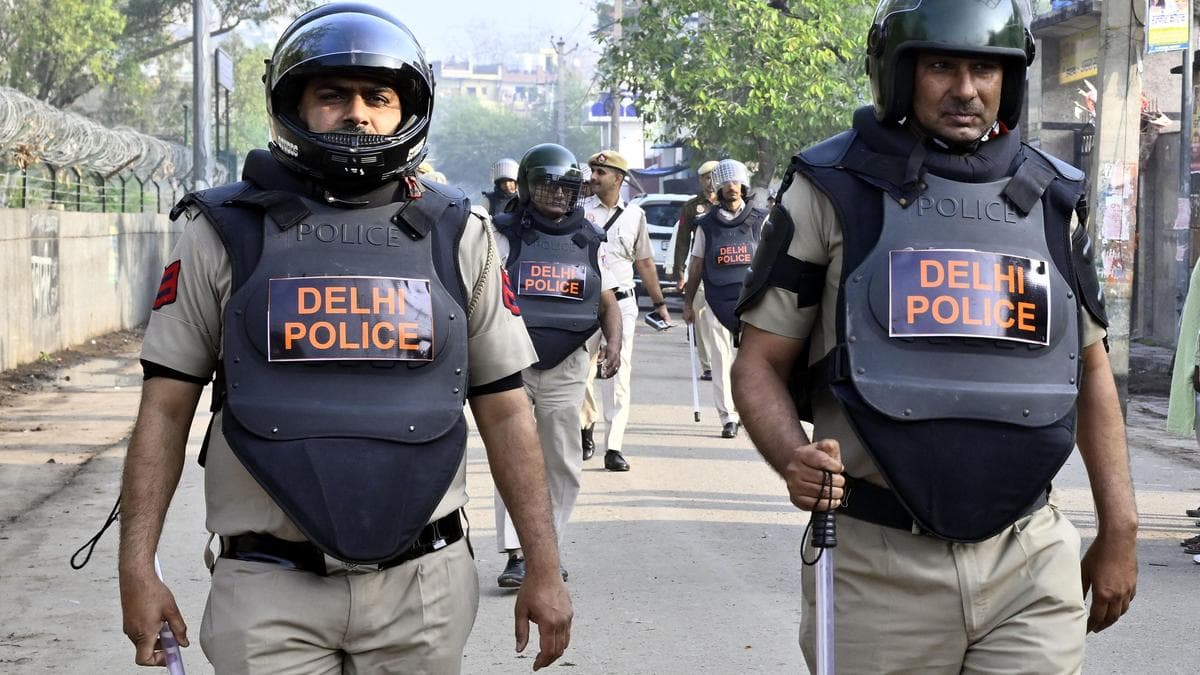
A file image of Delhi Police standing guard in Delhi. | This prompted the Delhi Police and other security agencies to intensify vigil across several sensitive locations, sources said on Saturday (May 9, 2026).A source said security has been increased at the Bharatiya Janata Party (BJP) headquarters on Deen Dayal Upadhyaya (DDU) Marg and nearby government establishments, with additional deployment of armed personnel, barricading and intensified vehicle checks.According to sources, agencies have received alerts regarding possible attempts to target prominent offices and crowded areas in central Delhi using suicide attacks, vehicle-borne improvised explosive devices (IEDs), shootings and coordinated strikes.Sources said anti-sabotage checks are being carried out at important government buildings, political offices, markets, transport hubs and other crowded places across the city.Bomb disposal squads, sniffer dog units and quick reaction teams, including the Delhi Fire Service, have also been asked to stay alert."Police have been directed to maintain strict vigil on suspicious movements, unattended objects and vehicles parked in sensitive zones," said the source.Security arrangements have also been strengthened at settlements and areas considered vulnerable from a law-and-order perspective; local police are conducting random checking drives and verification exercises.The source said all district units have been instructed to remain alert and maintain close coordination with intelligence agencies and central paramilitary forces.Senior officers are continuously monitoring the situation and reviewing security arrangements across the city, said the source. Published - May 10, 2026 10:30 am IST

A file image of Punjab’s Industries Minister Sanjeev Arora | Mr. Arora, 62, was arrested on Saturday (May 9, 2026) evening at his official residence in Chandigarh by the Enforcement Directorate (ED) in a GST fraud case following raids against him.The central agency had also searched the premises of a company linked to Mr. Arora, Hampton Sky Realty Ltd, in Gurugram. The company said it had faith in the legal process and was fully cooperating with all the statutory authorities.Mr. Arora was brought by the ED sleuths to Gurugram, Haryana, from Chandigarh by road, the officials said.The special Prevention of Money Laundering Act (PMLA) court in Gurugram sent Arora to seven-day ED custody. The agency had sought his 10-day remand, they said.The Minister's lawyer told reporters that the ED registered the case on May 5 and arrested Mr. Arora on May 9. He claimed this was a "politically motivated" case.According to the ED, the probe under the PMLA pertains to "fake" GST purchases of mobile phones worth more than ₹100 crore and subsequent exports to "round trip" alleged illegitimate funds from Dubai to India.The agency alleged that multiple fake GST purchase invoices were acquired from "non-existing" firms in Delhi to falsely claim Input Tax Credit (ITC).Punjab Chief Minister Bhagwant Mann and Aam Aadmi Party (AAP) supremo Arvind Kejriwal condemned the ED action, accusing the Centre of using agencies like the ED and the Central Bureau of Investigation as "weapons" to scare opposition leaders into joining the BJP.The BJP hit back, saying Mr. Kejriwal and his party were rattled as they knew that "their days are numbered in Punjab". Published - May 10, 2026 08:20 am IST

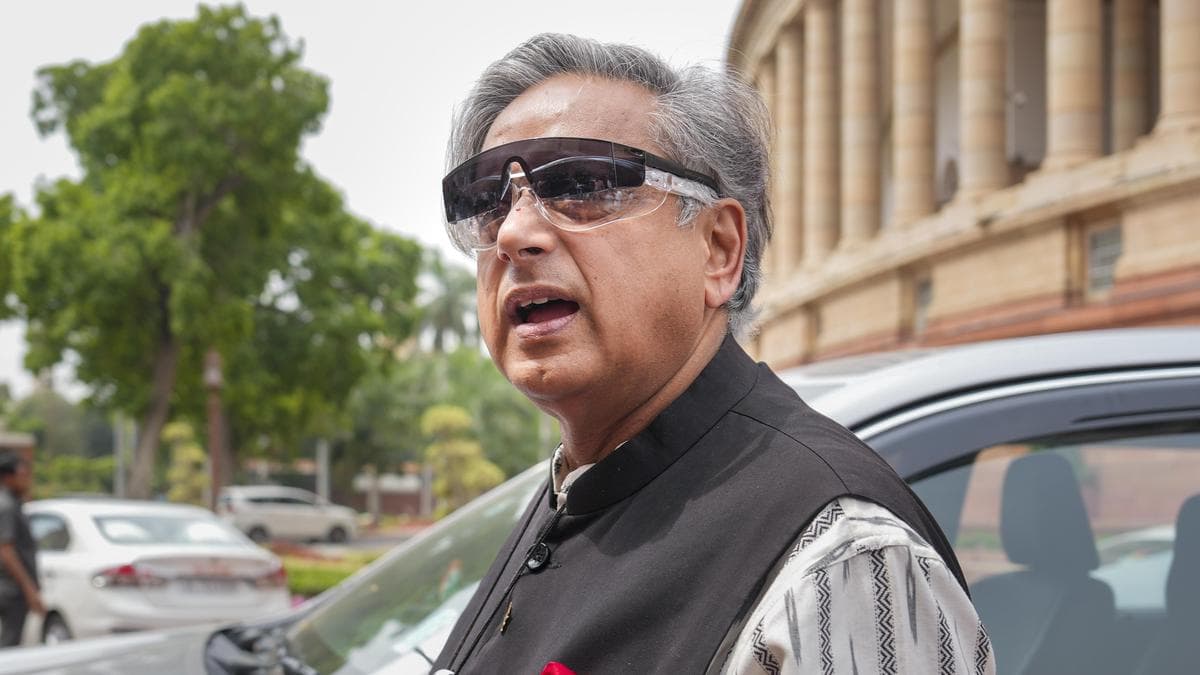
FIle photo of Congress MP Shashi Tharoor. | Justice Mini Pushkarna also issued notices to defendants in suit including social media platforms such as X and Meta, owner of Instagram.Senior Advocate Amit Sibal, appearing for Mr. Tharoor, submitted before the court that there were three specific deepfake videos in circulation and that recourse had already been taken under the applicable rules by notifying the Secretary, Ministry of Electronics and Information Technology (MeitY), as well as the Deputy Commissioner of Police, Delhi.Mr. Sibal said that while certain versions of the videos had been taken down, they continued to resurface online under different URLs. “They keep coming back like the ten heads of Ravan,” he remarked.He further argued that Mr. Tharoor, being a public figure and Chairman of the Parliamentary Committee on External Affairs, was being falsely shown making politically sensitive statements, “even in the context of India’s relation with foreign states”.Mr. Sibal highlighted that these deepfake videos are could be misused by foreign States, as some of it have appeared on websites based in Pakistan.The senior counsel also told the court that several media fact-checkers had already concluded that the videos were fabricated, yet members of the public continued to believe them to be authentic. “His (Mr Tharoor) own reputation and good will is being tarnished, by these deepfake video which are making statements which he has never made,” Mr. Sibal contended.Counsel appearing for Meta informed the court that all the identified Instagram posts had been taken down earlier in the day. X, however, had not filed any reply in the matter at the time of hearing.Mr. Tharoor is the sitting Member of Parliament from the Thiruvananthapuram Lok Sabha constituency.Several public figures, like actors Aishwarya Rai Bachchan, Abhishek Bachchan and Salman Khan, Art of Living founder Sri Sri Ravi Shankar, journalist Sudhir Chaudhary and podcaster Raj Shamani had earlier approached the high court seeking protection of their personality and publicity rights. The high court granted them interim relief. Published - May 08, 2026 11:50 am IST
Discussion (0)