
Loading dispatches...
← Return to NewsroomWorld
'Ebola has tortured us': Fear as outbreak spreads faster than first thought
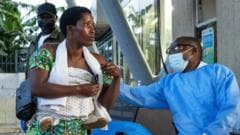
One man in the Democratic Republic of Congo's Ituri province, the epicentre of the outbreak, said infected people were dying "very fast", and added: "Ebola has tortured us."Officials said more than 513 cases were suspected in DR Congo as of Tuesday, while one person has died in neighbouring Uganda.The WHO's Dr Anne Ancia told the BBC that the more the agency investigates the outbreak, the clearer it becomes cases have spread to other areas.Modelling by the London-based MRC Centre for Global Infectious Disease Analysis released on Monday suggested there had been "substantial" under-detection, and that it could not rule out there had already been more than 1,000 cases.The study suggested that the current outbreak is "larger than currently ascertained" and that its "true magnitude remains uncertain".A man who spoke to BBC News and identified himself as Bigboy said people are "really scared" and doing what they can to protect themselves.He said locals are taking precautions such as washing hands with clean water, but added that he wished they could get access to other protective supplies such as face masks.Another Ituri local, Alfred Giza, said people in the community are aware of the threat and waiting to receive face masks to protect themselves, but that he would not know what to do if a family member or friend contracted the disease. ReutersThe outbreak, which started in DR Congo, has also spread to neighbouring UgandaThe Red Cross warned that Ebola can escalate quickly if cases are not identified early, communities lack information and health systems are overwhelmed, adding that "we are seeing all those conditions" in the current outbreak.On Tuesday, DR Congo President Félix Tshisekedi called for "calm" and urged Congolese citizens to remain vigilant, after holding a crisis meeting on Monday evening.WHO chief Tedros Adhanom Ghebreyesus, who declared the outbreak an international emergency last week, said he was "deeply concerned about the scale and speed of the epidemic".It is feared the outbreak may have been ongoing for several weeks before it was first detected on 24 April.There is no vaccine for the strain of Ebola virus fuelling the latest rise in cases, but the WHO is evaluating whether other drugs may provide protection.World Health Organization/Handout via ReutersWHO is sending tonnes of health supplies to DR Congo, including personal protective equipment (PPE) and medicineSpeaking to BBC Newsday, Ancia said DR Congo's Ituri province was a "very unsecured area with lots of movement of population", making it difficult for the agency to investigate and help control the disease.She continued: "The more we are investigating this outbreak, the more we realise that it has already disseminated at least a little bit across border and also in other provinces."The outbreak has spread to the province of South Kivu, where the population has been affected by a humanitarian crisis for many years, she added.There has also been a case in eastern DR Congo's biggest city, Goma, which has a population of around 850,000 people and under the control of Rwandan-backed rebels.High levels of insecurity in several provinces mean people move around often, increasing the risk and spread of the virus, she said.Several African countries are taking precautions by tightening border screenings and preparing health facilities. Neighbouring Rwanda has also closed its borders with DR Congo. Uganda has told people to avoid hugging and shaking hands.Germany's health ministry told the BBC a US citizen was
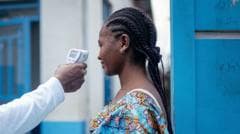
Just nowJames Gallagher,Health and science correspondent,Emery Makumeno,BBC Africa, KinshasaandHafsa KhalilGetty ImagesAn Ebola outbreak in the Democratic Republic of Congo has been declared a public health emergency of international concern, by the World Health Organization (WHO).The latest outbreak is challenging because it involves a rare strain of Ebola for which there is no vaccine, and cases have been found in an area affected by conflict.The WHO has told the BBC that the outbreak may be spreading faster than originally thought. What is Ebola and what are the symptoms?Ebola is a rare but deadly disease caused by a virus.Ebola viruses normally infect animals, typically fruit bats, but outbreaks among humans can sometimes start when people eat or handle infected animals.It takes two to 21 days for symptoms to appear. They come on suddenly and start like the flu, with fever, headache and tiredness. As the disease progresses, vomiting and diarrhoea develop and it can lead to organ failure. Some, but not all, patients develop internal and external bleeding.The virus spreads from one person to another by contact with infected bodily fluids such as blood or vomit.Why is this Ebola outbreak different and is there a vaccine?This outbreak is caused by the rare Bundibugyo species of Ebola, which had not been seen for over a decade. Bundibugyo has only caused two previous outbreaks, when it killed about a third of those infected.Initial blood tests for Ebola in the affected areas were negative as they were designed to identify the more common species of the disease.There is no approved vaccine for Bundibugyo, but experimental ones are in development. It is possible that a vaccine for another species of Ebola called Zaire may offer some protection.There are also no drugs that target Bundibugyo, making it harder to treat.A further complication is that the outbreak is taking place in a conflict zone, with a quarter of million people displaced from their homes and people moving across porous borders into neighbouring countries.However, the WHO's declaration of a public health emergency of international concern does not mean we are in the early stages of a Covid-style pandemic. The risk Ebola poses outside east Africa is minimal.How did the current Ebola outbreak in DRC start?The first known case was a nurse who developed symptoms on 24 April, which means the virus had been spreading undetected for weeks.She died in Bunia, the capital of eastern DR Congo's Ituri province, according to Congolese health minister Samuel Roger Kamba.The nurse's body was repatriated to Mongwalu, one of two gold-mining towns where the majority of cases have been reported.Kamba said one of the reasons the virus spread so quickly was the number of people exposed to the body during the funeral ceremony.The Africa Centres for Disease Control and Prevention told the BBC World Service that funerals were a particular concern, as they also helped spread the disease during previous outbreaks. Director Dr Jean Kaseya said public health information campaigns were "providing information on how to handle funerals" and the importance of basic hygiene and sanitation, as well as providing protection measures for health workers. Kamba said there have been delays in reporting Ebola cases because infected communities believe the disease to be "witchcraft" or a "mystical illness", resulting in people seeking treatment from prayer centres and witchdoctors rather than hospitals.How many cases have been reported and where are they? WHO chief Tedros Adhanom Ghebreyesus said he was "deeply concerned about the scale and speed of the epidemic".As at 19 May, officials said more than 513 cases were suspected in DR Congo, where at least 131 people have died. Another person died in Kampala, the capital of neighbouring Uganda.But modelling by the London-based MRC Centre for Global Infectious Disease Analysis released on 18 Ma
The shooting took place on Monday morning as officers were investigating a call about a possibly suicidal teen who had run away from home. At 11:43 local time (19:43 BST), police were called to a shooting at the Islamic Center of San Diego, and found three victims who had been shot in the front of the building. Shortly after, they received another call that shots had been fired nearby at a landscaper from a vehicle. When officers arrived at the second scene, they found the suspects - ages 17 and 18 - dead of self-inflicted wounds.Among the deceased victims was a security guard who worked at the centre and heroically prevented more people from dying, officials said without providing further details.The incident is being investigated as a hate crime, according to the FBI, due to writings found by one of the suspect's mother.Police were first called to the centre at 11:43 local time (19:43 BST) and "observed what appeared to be three deceased victims out front", San Diego Police Chief Scott Wahl said during a news conference on Monday."There were no officers involved in firing their weapons," Wahl said, and there was no sign of any gunman.Before the attack, the mother of one of the suspects had called officers at 9:42 local time, and reported that when her son left, he took several of her guns and her car.The woman said he had gone with a companion, and both were dressed in camouflage. A note the youth left behind included "generalised hate rhetoric and hate speech". Wahl said police found the suspect's behaviour to be "not consistent" with someone who is considered suicidal. Investigators then went to a local high school, where one of the teens studied, as well as a shopping mall where the car had been reported seen.Wahl added that the motive for the attack is currently not known, but presumed to be a hate crime due to the location and the prominence of the mosque. He added that the note contained no specific threat to the mosque, or to any other location or individual.When the shooting took place, officers were still speaking to the mother and were only a few blocks away from the mosque. Those officers, upon finding the three victims outside the building, rushed inside and began following active shooter protocols. While they were clearing rooms, more reports came in of another shooting nearby.The suspects had allegedly opened fire from their car at the landscaper, who was uninjured. Wahl said he may have been shot in the head, with the bullet deflected by his hard hat, although this has yet to be confirmed.When police arrived at the second scene, they discovered the dead bodies of both suspects.Children were present when the incident unfolded on Monday. The Islamic Center campus houses the Al Rashid School, which offers religion and language courses.Aerial video from the scene on Monday showed children holding hands and being escorted through a parking lot of the centre as police responded.Nearby schools were placed on lockdown as police responded to the area.The FBI asked for the public to supply any information that may be able to assist with the investigation.Getty ImagesA witness speaking to CBS News, the BBC's US partner, said he heard up to 30 gunshots from what sounded like "a semi-automatic weapon".He said he first heard about a dozen shots, then a pause, then another possibly dozen shots.The man, who is retired and was eating lunch at home, said he called 911 and that police arrived within "five to 10 minutes".The mosque gets very busy during holidays, he said."It's a good thing it didn't happen on a Friday, because the streets would be full of people," he added.Imam Taha Hassane, the director of the Islamic Center of San Diego said at a news conference: "It
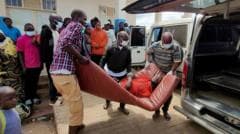
Just nowThomas Mukhwana,Africa correspondent, NairobiandYang TianReutersHospitals in DR Congo have been treating patients in recent daysThe World Health Organization (WHO) has declared an Ebola outbreak in the Democratic Republic of Congo a public health emergency of international concern.The agency said the outbreak in DR Congo's eastern Ituri province, which has seen around 246 suspected cases and 80 deaths reported, does not meet the criteria of a pandemic emergency.But it warned it could potentially be "a much larger outbreak" than what is currently being detected and reported, with significant risk of local and regional spread.The current strain of Ebola is caused by the Bundibugyo virus, the health agency said, for which there are no approved drugs or vaccines.Early symptoms include fever, muscle pain, fatigue, headache and sore throat, and are followed by vomiting, diarrhoea, a rash and bleeding.The WHO said there are now eight laboratory-confirmed cases of the virus, with other suspected cases and deaths across three health zones including Bunia the capital of Ituri province, and the gold-mining towns of Mongwalu and Rwampara.One case of the virus has been confirmed in the capital Kinshasa, believed to be in a patient returning from Ituri.The WHO said that the virus has spread beyond DR Congo, with two confirmed cases reported in neighbouring Uganda. Ugandan officials said a 59-year-old man who died on Thursday had tested positive.ReutersDR Congo's deadliest outbreak was between 2018 and 2020, during which nearly 2,300 people diedIn a statement, the Ugandan government said the patient who died was a Congolese citizen whose body has already been returned to DR Congo. A laboratory has also confirmed an Ebola case in the eastern city of Goma, currently controlled by the M23 rebels, the AFP news agency reported on Sunday.The WHO said the ongoing security situation and humanitarian crisis in DR Congo, combined with high population mobility, the urban location of the hotspot, and the large number of informal healthcare facilities in the region increased the risk of spread. Countries bordering the DR Congo are considered high risk due to trade and travel.The WHO advised that DR Congo and Uganda establish emergency operation centres to monitor, trace, and implement infection-prevention measures.To minimise spread, the health agency said confirmed cases should be immediately isolated and treated until two Bundibugyo virus-specific tests conducted at least 48 hours apart are negative.For countries bordering regions with confirmed cases, governments should enhance surveillance and health reporting.The WHO added that countries outside the affected region should not close their borders or restrict travel and trade as "such measures are usually implemented out of fear and have no basis in science".WHO director general Dr Tedros Adhanom Ghebreyesus warned there are currently "significant uncertainties to the true number of infected persons and geographic spread" of the outbreak.Ebola was first discovered in 1976 in what is now DR Congo, and is thought to have spread from bats. This is the 17th outbreak of the deadly viral disease in the country.It is spread through direct contact with bodily fluids and through broken skin, causing severe bleeding and organ failure.There is no proven cure for Ebola, with the average fatality rate is around 50%, according to the WHO.Africa CDC previously said it was concerned by the high risk of further spread due to the urban settings of Rwampara and Bunia, and mining activities in Mongwalu.The health agency's executive director Dr Jean Kaseya added that "significant population movement" between the affected areas and neighbouring countries also meant regional co-ordination was essential.Around 15,000 people have died from the virus in African countries over the past 50 years.DR Congo's deadliest outbreak was between 2018 and 2020, during which nearly 2,300 people died.Last year, 45 people died after

DR Congo accounts for all except two of the more than 300 suspected cases, both of which were reported in neighbouring Uganda.The World Health Organization (WHO) has declared an Ebola outbreak in the Democratic Republic of the Congo (DRC) and Uganda a “public health emergency of international concern” after more than 300 suspected cases and 88 deaths were reported.In a social media post on Sunday, WHO Director-General Tedros Adhanom Ghebreyesus said the outbreak does not meet the criteria for a pandemic emergency but that neighbouring countries are at high risk of further spread.Recommended Stories list of 3 itemslist 1 of 3US officially withdraws from the World Health Organizationlist 2 of 3DR Congo announces new Ebola outbreaklist 3 of 3US’s new scramble for Africa is biomedical imperialismend of listHealth authorities have confirmed the current outbreak is caused by the Bundibugyo virus disease (BVD), a rare type of Ebola disease that has no approved therapeutics or vaccines. Although more than 20 Ebola outbreaks have taken place in the DRC and Uganda, this is only the third time BVD has been reported.The WHO said the outbreak could be much larger, given the high positivity rate of the initial samples and the increasing number of suspected cases being reported.The DRC accounts for all except two of the cases, both of which were reported in neighbouring Uganda, the WHO said.Officials first reported the spread of the virus in the DRC’s eastern province of Ituri, close to Uganda and South Sudan, on Friday. On Saturday, the Africa Centres for Disease Control and Prevention (ACDCP) reported 336 suspected cases and 87 deaths.Uganda on Saturday confirmed one case it said was imported from the DRC, saying the patient died at a hospital in its capital, Kampala. The WHO then confirmed a second case had been reported in Kampala, adding that the two cases did not appear to be linked and both patients had travelled from the DRC.The DRC-Uganda outbreak poses a public health risk to neighbouring countries, the United Nations health agency said, advising countries to activate their national disaster and emergency management mechanisms and undertake cross-border screening and screening at main internal roads.The WHO advised immediate isolation of confirmed cases, allowing only restricted national travel and no international travel until 21 days after exposure.It urged countries not to close their borders or restrict travel and trade, as this could lead to people and goods making unmonitored border crossings.The often-fatal and highly contagious virus, which causes fever, body aches, vomiting and diarrhoea, spreads through direct contact with the bodily fluids of infected people, contaminated materials or those who have died from the disease, according to the ACDCP.
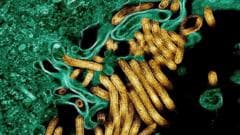
Just nowHafsa KhalilandEmery Makumeno,BBC Africa, KinshasaUniversal Images Group via Getty ImagesNearly 2,300 people died in DR Congo's deadliest Ebola outbreak between 2018 and 2020Africa's top health agency has declared an Ebola outbreak in the Democratic Republic of Congo's eastern Ituri province.Around 246 cases and 65 deaths have been reported, mainly in the gold-mining towns of Mongwalu and Rwampara, said the Africa Centres for Disease Control and Prevention (CDC Africa). Its statement on Friday added that it was convening a meeting with DR Congo, Uganda, South Sudan and other international partners to discuss response efforts and cross-border surveillance.Ebola was first discovered in 1976 in what is now DR Congo, and is thought to have spread from bats. This is the 17th outbreak of the deadly viral disease in the country.It is spread through direct contact with bodily fluids, causing severe bleeding and organ failure.Early symptoms include fever, muscle pain, fatigue, headache and sore throat. There is no cure for Ebola.Preliminary tests conducted at the Institut National de Recherche Biomédicale (INRB) in the capital, Kinshasa, have detected the virus in 13 of 20 samples analysed, following consultations with DR Congo's Ministry of Health and National Public Institute.Of the 65 deaths, four were reported among lab-confirmed cases, CDC Africa said.Additional suspected cases have also been reported in Ituri's provincial capital, Bunia, with laboratory confirmation pending.The Congolese government has not yet officially declared an outbreak. A staffer told the BBC a press conference was expected later on Friday.Ituri has been under military rule since 2021, with the civilian authority replaced by a military general in an attempt to neutralise dozens of armed groups which have operated in the area for many years. These include the Allied Democratic Forced (ADF), affiliated to the Islamic State group.Around 50,000 people have died from the virus in different African countries over the past 50 years.DR Congo's deadliest outbreak was between 2018 and 2020, during which nearly 2,300 people died.Last year, 45 people died after an outbreak in the central Kasai province.Getty Images/BBCBBC Africa podcasts
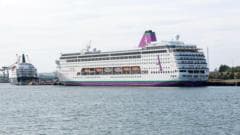
Just nowAmy WalkerGetty ImagesThe Ambition cruise ship, pictured last year, is currently docked in BordeauxMore than 1,000 passengers are being held on a UK-operated cruise ship in France after 49 people fell ill from gastroenteritis.Local authorities in Bordeaux said three passengers had been isolated in their cabins on the Ambition, while other passengers will not be able to disembark in the port.They added that there was "no reason" to link the outbreak to the hantavirus outbreak on a separate cruise ship.Ambassador Cruise Line told the BBC a 92-year-old man had passed away onboard on Sunday, but he did not report any related symptoms and his cause of death is yet to be established by a coroner.The cruise operator added: "We are providing every support to the deceased's friends and family and extend our most sincere condolences to them at this difficult time."It said in a separate statement that "a number of guests and crew onboard Ambition have displayed or are displaying symptoms consistent with gastrointestinal illness".It said enhanced sanitation and prevention protocols had been implemented across the ship "in line with established public health procedures following the initial reports of illness".The cruise line said that as of 11:00 BST on Wednesday, 48 passengers were displaying symptoms consistent with gastrointestinal illness, as well as one crew member.There are currently 1,187 guests and 514 crew members on board the ship, according to its operator.The cruise ship set sail from Belfast on 8 May, before heading to Liverpool the next day.In its statement, Ambassador said there was a reported increase in cases after guests boarded in Liverpool.It added that health and safety measures introduced since the initial reports of illness included increased cleaning and disinfection in public areas, as well as ongoing guidance to guests about hand hygiene and reporting symptoms to the onboard medical team.As part of a scheduled stop at Bordeaux in southwestern France, the operator said it had advised French health authorities of the situation.
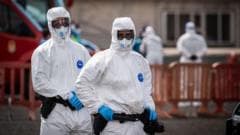
Just nowJaroslav Lukiv and Jessica RawnsleyAndres Gutierrez/Anadolu via Getty ImagesThe first passengers from the MV Hondius depart for Tenerife Airport on 10 MayThere is "no sign" of a larger hantavirus outbreak after the evacuation of the last passengers from a disease-stricken cruise ship, the head of the UN health agency has said.But the World Health Organization's (WHO) chief Tedros Adhanom Ghebreyesus warned "the situation could change" and there could be more confirmed virus cases.The MV Hondius left Tenerife on Monday and is sailing to the Dutch port of Rotterdam. Two flights carrying the final 28 passengers landed in nearby Eindhoven on Tuesday.Three people have died after travelling on the ship. A French national and a Spaniard who previously returned home have tested positive. The WHO has confirmed nine cases, with two others suspected.The French woman is in intensive care in hospital in Paris and doctors say she has "the most severe form" of the disease and is being treated with an artificial lung. The Spanish patient is described as having mild respiratory symptoms.Twelve employees at a Dutch hospital are now in quarantine over possible exposure to the virus after treating one of the evacuated passengers.The hospital in the city of Nijmegen said on Monday that this was a precautionary measure, as the workers did not follow strict protocols while handling the patient's blood and urine samples.At Tuesday's press conference in Madrid, Ghebreyesus said: "At the moment, there is no sign that we are seeing the start of a larger outbreak."But of course the situation could change and, given the long incubation period of the virus, it's possible we might see more cases in the coming weeks."And he stressed that "our work is not over" to contain the outbreak from the cruise ship.Symptoms can include fever, extreme fatigue, muscle aches, stomach pain, vomiting, diarrhoea and shortness of breath.WHO officials previously said the risk of a major outbreak is very low.On Tuesday, Spain's health ministry said one of the 14 Spaniards currently quarantining in Madrid after being evacuated from the vessel had tested positive for hantavirus.The passenger has a "low-grade fever and mild respiratory symptoms" but is in a stable condition, the ministry added.In Italy, biological samples are being taken from a man with symptoms who travelled on the same plane as a woman who later died from the virus.The samples will be sent to Italy's main infectious diseases hospital, the Spallanzani in Rome, ANSA news agency reported.Elsewhere, French President Emmanuel Macron said the situation in France was "under control". Health Minister Stéphanie Rist said that while one French woman was in intensive care, four other citizens who had been repatriated had tested negative in hospital and 22 so-called "contact cases" were being kept in hospital in isolation for at least two weeks.Two British nationals with confirmed cases are currently being treated in the Netherlands and South Africa.The Dutch-flagged vessel is expected to take six days to sail to Rotterdam and provisionally arrive on the evening of 17 May. Exact procedures upon arrival remain under discussion, the ship's operator Oceanwide Expedition said, but the vessel will undergo sanitation.The final six passengers - four Australians, one Briton and one New Zealander - and some crew members left the ship on Monday.Overall, 122 passengers and crew of the MV Hondius have been repatriated to the Netherlands and their home countries on government-chartered flights over the past few days. As of Monday evening, Oceanwide Expeditions said 27 people remained on board the ship - 25 crew members and two medical staff.These included 17 people from the Philippines, four from the Netherlands (including the two medical staff), four from Ukraine, one from Russia and one from Poland.Ukraine's foreign ministry said the Ukrainians on board would help with the ship's transfer to the Netherlands and would quarantin

The National Quarantine Center is located at the University of Nebraska Medical Center in Omaha. Nebraska Medicine hide caption toggle caption Nebraska Medicine Sixteen of the 18 passengers transferred to the U.S. from a cruise ship where there was an outbreak of hantavirus arrived in Omaha, Neb., on Monday for evaluation after disembarking the vessel in Spain's Canary Islands over the weekend. Of the 15 U.S. citizens and one dual U.S.-British citizen who arrived in Nebraska, all but one are currently being housed in the National Quarantine Unit. That patient tested positive for the virus and was being housed in the Nebraska Biocontainment Unit, officials said at a Monday news conference. The 15 people in the quarantine unit will continue to be monitored for signs of the illness. Passengers carry their belongings in plastic bags after being evacuated from the MV Hondius after docking in the Granadilla Port on Sunday in Tenerife, part of the Canary Islands, Spain. Chris McGrath/Getty Images hide caption toggle caption Chris McGrath/Getty Images Nebraska may seem an unlikely location to process these individuals, but it is home to the National Quarantine Unit — the only federally funded quarantine unit in the U.S. — and the separate Nebraska Biocontainment Unit. They are highly specialized facilities located at the University of Nebraska Medical Center (UNMC) and widely considered among the best in the world. The $1 million, five-room biocontainment unit was dedicated in 2005. It was a joint project with Nebraska Health and Human Services and the UNMC. It is set up to safely provide medical care for patients with highly hazardous and infectious diseases and was used in 2014 to treat two doctors infected with Ebola. The National Quarantine Unit was completed in late 2019. It cost nearly $20 million, according to the Associated Press. Both facilities were used during the COVID-19 epidemic. "We are prepared for situations exactly like this," Dr. Michael Ash, CEO of Nebraska Medicine, said in a statement. "Our teams have trained for decades alongside federal and state partners to make sure we can safely provide care while protecting our staff and the broader community. We are proud to support this national effort." Two additional U.S. passengers on the cruise ship — a couple, with one showing symptoms of hantavirus — were transferred for monitoring to Emory University Hospital, where another advanced biocontainment facility is located. When the biocontainment unit was first dedicated more than 20 years ago, the biggest concerns were anthrax attacks and severe acute respiratory syndrome, more commonly known as SARS, Dr. Phil Smith, who spearheaded the efforts at Nebraska Medical Center to create the biocontainment unit, told the AP in 2020. Smith died last year. A hallway leading to rooms at the Nebraska Biocontainment Unit at the University of Nebraska Medical Center. Nebraska Medicine hide caption toggle caption Nebraska Medicine The quarantine unit features 20 negative-pressure rooms designed to keep potentially harmful particles from escaping by maintaining lower air pressure inside than outside the rooms. The single-occupancy rooms provide patients with attached bathrooms, exercise equipment and Wi-Fi, according to the medical center. "We have protocols in the quarantine unit that provide for safe care of these of these persons, including just all the activities of daily living so that they can … have a comfortable stay but also have it in an area that's protected and limits spread of the pathogen," Dr. Michael Wadman, the medical director of the National Quarantine Unit, said at a Friday news conference. The biocontainment unit, by contrast, is a patient-care space where people are able to receive medical treatment, Dr. Angela Hewlett, medical director of the biocontainment unit, told reporters Monday. She emphasized that the facility — which has a 10-bed capacity — operates independently from the quara

Experts blame climate change CNN Experts wonder ‘Where is the CDC?’ as a hantavirus outbreak unfolds on a cruise ship AP News



Discussion (0)