
Loading dispatches...
← Return to NewsroomWorld
Nigerian migrants flee South Africa after spike in xenophobic protests

Nigeria’s diplomatic mission in South Africa says many of those returning no longer feel safe to continue living or working in the country.Published On 11 Jun 2026
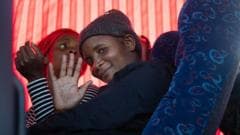
The Malawians were "among a number of foreign nationals" who had "sought refuge in temporary camps" in Mossel Bay, according to a statement from Lilongwe.Ghana, Nigeria and Zimbabwe have also organised repatriation efforts after raising concern about xenophobia in South Africa. Anti-migrant groups are demanding undocumented migrants leave the country - and have set 30 June as a deadline.In a national address on Sunday aimed at easing tensions, South African President Cyril Ramaphosa announced a raft of new measures to crackdown on illegal migration.But he also warned South Africans not to take the law into their own hands. He told South Africans there was "no space for xenophobia, racism, sexism, Afrophobia or any other forms of intolerance" in the country.A group of 74 Zimbabweans arrived home on Sunday "following xenophobic attacks" after being driven from Mossel Bay in transport organised by the Zimbabwean authorities, state-run media report.At the end of last month, Ghana organised a repatriation flight from Johannesburg for nearly 300 of its citizens. A group of about 680 more arrived in Ghana's capital, Accra, at the weekend. Meanwhile, Nigeria has postponed the first planned evacuation flight for 270 of its citizens that was due to leave on Monday.Nigeria's foreign affairs spokesperson Kimiebi Imomotimi Ebienfa said the evacuation "has been rescheduled for Wednesday... due to unforeseen logistical considerations".Officials say more than 500 Nigerians have so far been screened and cleared for return as part of a wider government response to the anti-migrant tensions in South Africa.Nigeria's President Bola Tinubu has approved five evacuation flights in total, with screening and registration of affected citizens extended to Wednesday as authorities continue processing applicants.Additional reporting by Makuochi OkaforGetty Images/BBCBBC Africa podcasts

The halt is part of a circuit breaker mechanism designed to prevent panic trading and was triggered for the third time this year after a sharp sell-off in technology stocks.Japan's Nikkei 225 index slid by around 4.5% - the most in three months - as shares of major tech companies fell.Oil prices also rose on Monday, fuelling concerns of inflation, after Iran and Israel exchanged strikes for the first time since a ceasefire was agreed between the sides and the US in April.Traders are nervously watching a "messy mix" of several shocks to the market mainly tied to the tech sector and accelerated by rising energy prices, said chief investment strategist Charu Chanana from Saxo.Tech stocks have seen a strong run in recent weeks, but investors are "repositioning" over fears the investments into artificial intelligence may be overvalued, she said.Markets like the Kospi and Nikkei are particularly exposed to such shocks given their exchanges are dominated by tech stocks.Part of the decline on Friday followed fears of a hike in US interest rates, due to a lower-than-expected US unemployment rate in April as well as persistently high inflation linked to the war in the Middle East.Trading in South Korea has resumed since the circuit breaker was triggered, with the Kospi index down by about 7.9% in the early afternoon.The share prices of major South Korean tech companies were sharply lower, including those of chipmakers Samsung and SK Hynix.South Korean President Lee Jae-myung said on Monday that the stock market was expected to experience volatility but he believed domestic shares were still "slightly undervalued".Overall, the tech-heavy Kospi has seen huge gains in recent months due to a wave of investment in the country's tech companies.Investors are more looking for clear signs that AI demand has translated into "real revenue", Chanana said. "The burden of proof has gone up."Other Asian stock exchanges, like the Hang Seng Index and the Shanghai Composite were also down on Monday. Taiwan's Taiex was also down sharply after shares of semiconductor giant TSMC fell by 3%. The chipmaker is a key supplier to Nvidia, whose boss Jensen Huang said the recent slide in tech stocks presented a buying opportunity for investors. The price of the global benchmark Brent jumped by 4.6% to $97.34 (£73.05) a barrel in Asia on Monday, while US-traded crude rose by 4.3% to $94.40 after strikes were exchanged between Iran and Israel.Tehran has warned that the attacks are the start of a full week of strikes and are a response to a "repeated violation" of a ceasefire agreed on 17 April between the US, Israel and Iran.Israel later hit back with attacks on military targets in Iran, despite US President Donald Trump urging the country not to retaliate."We are very close to a final deal with Iran. It is going to be a good deal. I don't want it to blow up because of what is happening now," Trump told news outlet Axios.It is too early to say whether the strikes mark a full escalation of the war, but traders are again pricing in risks to global oil markets, said Associate Professor Jiajia Yang from James Cook University in Australia.The strikes show that many political issues remain unresolved and oil prices are expected to be volatile unless diplomatic efforts succeed, Yang said.Oil prices have surged since US and Israel launched strikes on Iran on 28 February and have continued to make huge swings throughout the subsequent ceasefire.Prices have hovered around the $95 mark in the past week as traders weigh the conflict's long-term impact on global energy flows.The war has disrupted the flow of oil and gas shipments from the Gulf after Iran threatened to strike vessels that try to cro
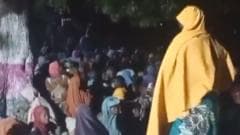
21 minutes agoLucy Fleming@HQNigerianArmyThe former hostages received medical screenings and were gathered under trees overnightAt least 360 people kidnapped by Boko Haram jihadists from a mainly Muslim community in Nigeria's north-eastern Borno state in March have been freed from a remote mountain hideout.The circumstances of how they were freed are disputed. The army says it had launched an unprecedented intelligence-led operation that had been weeks in the planning and taken the Islamist militants by surprise.But a local group, the Borno South Youth Initiative, says it mediated the unconditional release, putting the number of those freed at 416.Mass abductions by groups for ransom have become a common tactic in Nigeria. Boko Haram gained notoriety in 2014 for kidnapping more than 200 schoolgirls from Chibok.That spawned a range of groups that use kidnapping to raise funds, focusing on soft targets such as schools, churches, mosques and remote villages.It is illegal to pay ransoms in Nigeria, but analysts say payments by desperate families, intermediaries or, in some cases, state authorities have fuelled the abductions.Military spokesperson Lt-Col Haruna M Sani described the assault on Boko Haram's Mandara mountain hideout, "under cover of darkness", as one of the military's "most significant hostage rescue operations" in the north-east. The authorities say the hostages are receiving medical care."Sadly, two infants died due to exhaustion from prolonged captivity and harsh terrain," Daniel Bwala, a special adviser to President Bola Tinubu, posted on X.He said the government, which has been coming under fierce criticism for the widespread insecurity across Nigeria, commended the troops.The captives are from around Ngoshe, a mainly Muslim community near the border with Cameroon.In early March, the area came under attack from Boko Haram fighters reportedly as people were breaking their Ramadan fast.Samaila Kaigama, president of the Borno South Youth Alliance (Bosaya), told journalists that his group had been advocating for their release and had been in contact with the militants.On Sunday morning, the military released videos and photos of the freed captives as they sat under trees overnight.Several news outlets also had a video of a local government official telling them that the authorities were doing their utmost to secure the area so that they could go home to their farms.He also explained that it was thought some of those captured were believed to have escaped into Cameroon and efforts were being made for their safe return.Boko Haram began its military campaign to impose Islamic rule in northern Nigeria in 2009. It no longer controls the huge swathes of territory it once did, but it, and other splinter groups, remains active and dangerous.Earlier this year, a small contingent of US soldiers deployed to Nigeria to train the West African nation's armed forces and help them with intelligence in their battle against growing security threats.These are complex, overlapping and include the Islamist insurgency, kidnapping gangs, clashes over land and separatist unrest.You may also be interested in:Getty Images/BBCBBC Africa podcasts
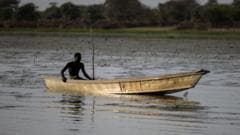
2 hours agoMakuochi OkaforBBC Africa, LagosAFP via Getty ImagesFishermen in the Lake Chad region live and work among jihadist fighters Dozens of Nigerian fishermen are feared dead after Chad's military launched air strikes on Boko Haram militants in the Lake Chad region, a local fishermen's leader has told the BBC.Abubakar Gamandi Usman, chairman of Lake Chad Basin Fisheries Association of Nigeria, said several of the union's members were missing and estimated more than 40 had died.No bodies have yet been recovered but Usman believes some fishermen were hit by the strikes, while others drowned after attempting to flee in overloaded boats.Authorities in Chad and Nigeria have not commented, but on Sunday Chad's presidency said it had carried out retaliatory "intensive air strikes" on Boko Haram strongholds.In a statement on Facebook, the presidency said it had responded to "unjustified attacks" by Boko Haram, which took place last Monday and Wednesday and targeted Chadian military bases near Lake Chad, reportedly killing at least 24 soldiers and two generals.The Lake Chad basin is a huge region of waterways and swampland shared by Nigeria, Chad, Niger and Cameroon. It has long been a stronghold for Boko Haram and its rival faction, Islamic State West Africa Province (Iswap). "After Boko Haram attacked Chadian forces, they retreated to islands they operate from. Fishermen also inhabit these islands," Usman told the BBC.After Chad's air force began circling overhead on Friday, panic broke out, with both Boko Haram fighters and fishermen attempting to flee.The search for the missing fishermen has been slow, Usman said, as some parts of Lake Chad are very deep. The local community also has limited access to canoes, as many are controlled by Boko Haram, Usman added."Boko Haram controls access to the fishing grounds, transporting fishermen to and from the fish market to the fishing site. Boko Haram collects taxes from these fishermen," he said.Recently, the region has seen a rise in attacks on security forces, as well as kidnappings and raids on communities.Chadian military operations have been accused of causing civilian deaths before - in October 2024, the air force was said to have killed dozens of Nigerian fishermen during air strikes targeting Boko Haram fighters on Tilma Island in Lake Chad.Nigeria's authorities have not publicly commented on allegations that fishermen have been caught up in the recent strikes.More stories about Nigeria from the BBC:Getty Images/BBCBBC Africa podcasts

The MV Hondius cruise ship is anchored at a port in Praia, Cape Verde, Monday, May 4, 2026. Arilson Almeida/AP hide caption toggle caption Arilson Almeida/AP CAPE TOWN, South Africa — A cruise ship with nearly 150 people aboard was waiting for help off the coast of Cape Verde in the Atlantic Ocean on Monday after three passengers died and at least three other people were left seriously ill in a suspected outbreak of the rare hantavirus, according to the World Health Organization and the ship's operator. The MV Hondius, a Dutch ship on a weekslong polar cruise from Argentina to Antarctica and several isolated islands in the South Atlantic, had requested help from local health authorities after making its way to the island of Cape Verde, off the West Africa coast. But no one has been allowed to disembark, Netherlands-based operator Oceanwide Expeditions said. Cape Verde's Health Ministry said Monday that for now, it will not allow the ship to dock because of public health concerns and that it would stay in open waters close to shore. Hantavirus is a rodent-borne illness spread by contact with rodents or their urine, saliva or droppings. WHO says that while it is rare, hantavirus may spread between people. It was unclear how an outbreak could have started, and WHO said it was investigating while working to coordinate the evacuation of two sick crew members. Another sick person — a British man evacuated to South Africa on April 27 — tested positive for the virus, authorities said. He is in critical condition and isolated in intensive care, health officials said. The body of one of the passengers who died — a German — remains on the ship, according to an Oceanwide Expeditions statement. A 70-year-old Dutch man died onboard April 11, and his 69-year-old wife died later in South Africa after leaving the ship, officials said. Her blood later tested positive for the virus, making two confirmed cases, South Africa's health minister said. Among the 87 remaining passengers, 17 are Americans, 19 are from the U.K. and 13 from Spain, according to Oceanwide Expeditions. Sixty-one crew members also are onboard. Cruise operator says 2 ill crew members urgently need care Two sick crew members — one British, one Dutch — have respiratory symptoms and need urgent medical care, Oceanwide said in its statement. Cape Verde has sent a medical team of two doctors, a nurse and a laboratory specialist to the ship over three trips, said Dr. Ann Lindstrand, a WHO official in Cape Verde. She told The Associated Press in an interview that they were planning for medical evacuations, in which passengers would be taken from the ship via ambulance to an airport. "It's been very tricky for Cape Verdean authorities," Lindstrand said. "What they have to deal with is a public health event. And of course, they have been thinking about the protection of the population here." Oceanwide said it would consider moving to one of the Spanish islands — Tenerife or the port of Las Palmas — if it can't evacuate passengers in Cape Verde. WHO said it was working with local authorities and Oceanwide on a "full public health risk assessment." "Detailed investigations are ongoing, including further laboratory testing, and epidemiological investigations," WHO said. "Medical care and support are being provided to passengers and crew." Lindstrand told AP there was a possible new case on the ship, in a person showing mild fever symptoms, but health workers were still assessing. A view of the m/v Hondius Cruise ship anchored at a port in Praia, Cape Verde, Monday, May 4, 2026. Arilson Almeida/AP hide caption toggle caption Arilson Almeida/AP The cruise started in Argentina The ship left Ushuaia in southern Argentina on April 1, according to Argentine provincial authorities. Health officials there said they confirmed no passengers had hantavirus symptoms when the Hondius departed. But because symptoms can appear up to eight weeks after exposure, "the passengers

Peter Obi and Rabiu Kwankwaso, who finished third and fourth respectively in the 2023 presidential race, have both joined the Nigeria Democratic Congress (NDC), raising the prospect of a joint ticket to challenge President Bola Tinubu.They were previously in the African Democratic Congress (ADC), along with former Vice-President Atiku Abubakar, who came second in the last election.While this could be seen as a fragmentation of the opposition, supporters of Obi and Kwankwaso say it will give their alliance greater focus.Both men are former governors and command significant grassroots followings.Obi is hugely popular among young voters across the south, while Kwankwaso wields considerable influence in the north.The move comes just nine months after Obi, Kwankwaso and Abubakar joined the ADC but that alliance quickly became mired in legal battles over party leadership - something Obi blamed on the government."The same Nigerian state and its agents that created unnecessary crises and hostility within the Labour Party that forced me to leave now appear to be finding their way into the ADC," Obi said on Sunday.He was the Labour Party candidate in the 2023 election.Allies of President Tinubu have denied that they have been trying to sabotage opposition parties.Obi, 64, and Kwankwaso, 69, were formally received at the NDC's national headquarters in Abuja by the party's national leader, Senator Seriake Dickson, on Sunday.Speaking afterwards, both men called for national unity, greater opportunities for young people, and an end to the infighting that has plagued Nigeria's opposition.However, their decision risks upsetting allies within the coalition built around the ADC, which had been positioning itself as the main vehicle for opposition unity.Some figures within the bloc have privately expressed a sense of betrayal, raising fresh doubts about whether Nigeria's fragmented opposition can sustain a coordinated challenge against President Tinubu, 74.In a statement, the Nigerian presidency played down the significance of the defections, suggesting they reflected "the normal fluidity of democratic politics" rather than any fundamental shift.A presidential spokesperson said the government remained focused on governance."Political alliances will come and go," the spokesperson said. "But our priority is delivering economic reforms, improving security and ensuring stability for all Nigerians."Political analyst Bala Yusuf told the BBC the move could reshape Nigeria's electoral landscape."If the NDC fields Obi as its presidential candidate and Kwankwaso as vice-president, they will definitely give the ruling APC a run for their money at the polls," he said.They have not yet said who the presidential candidate will be - an issue that has broken up several previous Nigerian political alliances.It remains to be seen how Abubakar will respond, given that he was a key figure who went to great lengths to bring opposition heavyweights into the ADC.Meanwhile, the party's leadership crisis continues to play out in the courts.The Supreme Court last week ordered that the dispute over who runs the party be sent back to the Federal High Court for another hearing – a decision that further reduces the time available for the ADC to get its house in order before the election campaign begins in earnest.Elections are scheduled for early January next year - they will be the country’s eighth since the end of military rule in 1999.More about Nigeria from the BBC:Getty Images/BBCBBC Africa podcasts
Just nowPaul NjieandJoseph WinterKIM LUDBROOK/EPA/ShutterstockThe 'March and March' demonstration in Johannesburg in April called for all illegal foreign immigrants to leave the countryNigeria is planning to repatriate its nationals in South Africa willing to return home voluntarily, amid growing fears that recent attacks on foreigners there could escalate.Foreign Minister Bianca Odumegwu-Ojukwu said 130 applicants had already registered for the exercise, adding that the number was expected to rise.She expressed President Bola Tinubu's concern about the attacks in the southern African nation, and condemned the violence against foreign nationals and demonstrations characterised by "xenophobic rhetoric, hate speeches and incendiary anti-migrant statements".Nigeria has summoned South Africa's acting High Commissioner over the issue.Nigeria will formally convey its "profound concern" at a meeting later on Monday over the incidents in South Africa, saying they could affect existing relations between the countries, according to a foreign ministry statement.The meeting will focus on recent marches held by anti-immigrant groups and "documented instances of mistreatment of Nigerian citizens and attacks on their businesses", it said.On Sunday, Nigeria's foreign minister said: "Nigerian lives and businesses in South Africa must not continue to be put at risk, and we remain committed to working to explore with South Africa ways to put an end to this."She cited the killing of two Nigerians in separate incidents involving local security personnel, insisting that her government was demanding justice.She said the Nigerian president's priority was for the safety of citizens and "consequently, arrangements are currently under way to collate details of Nigerians in South Africa for voluntary repatriation flights for those seeking assistance to return home".Four Ethiopian nationals have also been killed in recent weeks, local media reported, while there have been attacks on citizens of other African countries.As Africa's most industrialised country, people from elsewhere in the continent have long travelled to South Africa to seek work.South African President Cyril Ramaphosa has condemned the attacks but also cautioned foreigners to respect local laws.He used his Freedom Day address last week - marking the country's first democratic elections in 1994 - to remind South Africans of the support other African nations had given in the struggle against the racist system of apartheid.But some South Africans accuse foreigners of being in the county illegally, taking jobs from locals and having links to crime, especially drugs trafficking.Anti-immigrant groups have been stopping people outside hospitals and schools demanding to see their identity papers.At the time, one Nigerian man told BBC Pidgin: "It is not okay because we are blacks, we are brothers... everybody comes here just to survive."A security guard, who was unable to go to work because of the protest, told the BBC: "It's not what we expected as fellow Africans.""It's just making us scared - imagine if we're scared in our own African continent - what if we go to Europe?" he asked.Anti-immigrant sentiment rose earlier this year after reports that the head of the Nigerian community in the port city of KuGompo (formerly East London) had been installed in a traditional role that can be translated as "king". Some South Africans in the local area saw this as an attempt to grab political power.South Africa is home to about 2.4 million migrants, just less than 4% of the population, according to official figures. However, many more are thought to be in the country unofficially.Most come from neighbouring countries such as Lesotho, Zimbabwe and Mozambique, which have a history of providing migrant labour to their wealthy neighbour. A smaller number come from Nigeria.Additional reporting by Khanyisile Ngcobo in JohannesburgYou may also be interested in:Getty Images/BBCBBC Africa podcasts


Discussion (0)