
Loading dispatches...
← Return to Newsroomgeneral
‘PIL now paisa, political interest litigation’: Supreme Court’s top 5 remarks on Day 11 of Sabarimala hearing
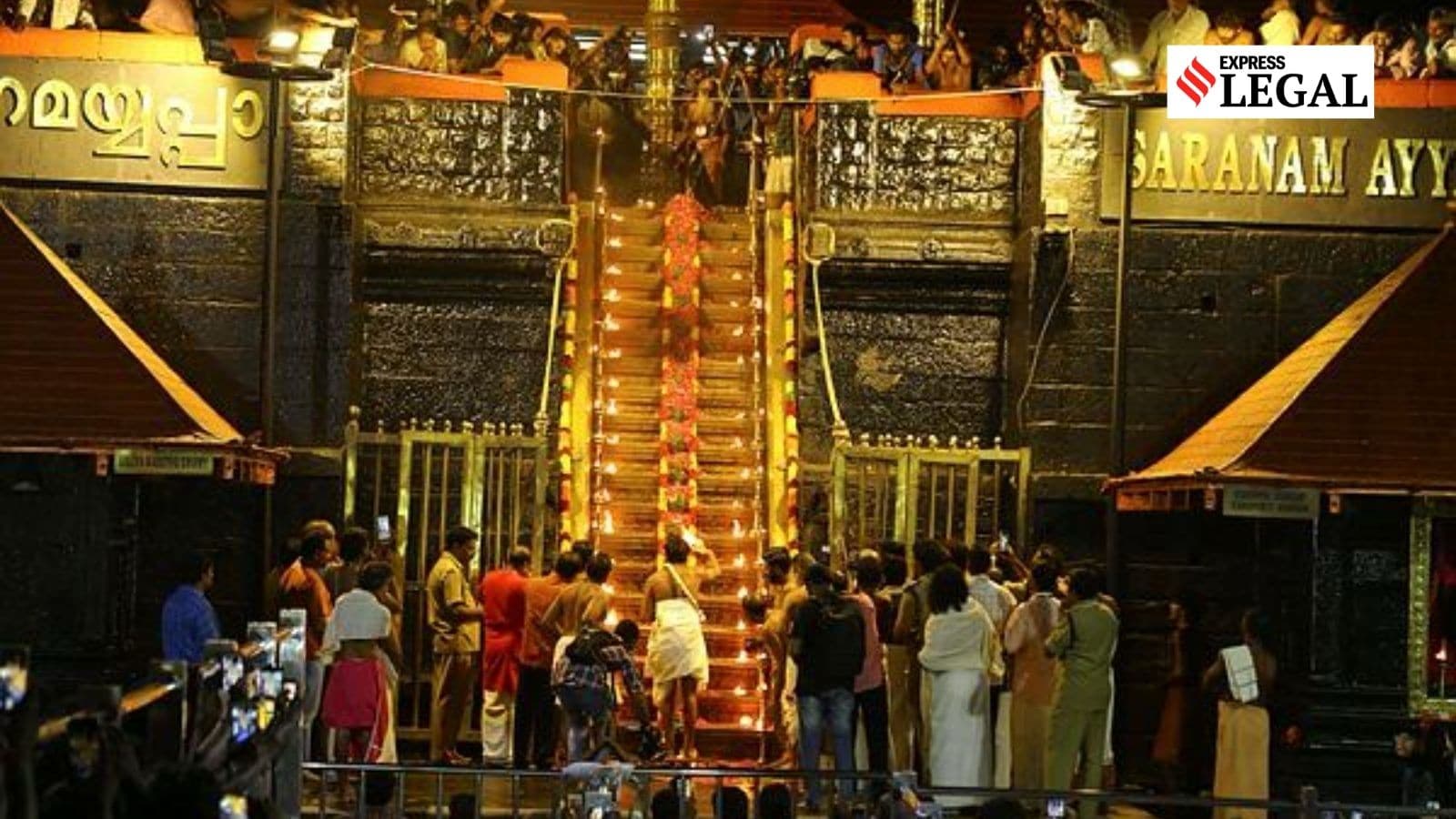
On the 11th day of the Sabarimala reference case, the nine-judge bench of the Supreme Court made some striking remarks, ranging from the relation of faith and belief to the question of the entry in the temple to the types of PILs based on the different types of vested interest.1. Justice Nagarathna said, “Young Lawyers Association has no other business? Can’t they work for the welfare of the bar or assist the bench for the legal system of this country?… this kind of work? …..work for the bar, work for younger members, work for their welfare…. Those who are struggling in the country from rural areas, they have difficulty coming to the cities to argue cases.”She added, “They have brilliant minds. People have come from the villages with different minds. They have no wherewithal, work for them. Rather than doing this time, in the Supreme Court.” Justice Nagarathna was responding to the question posed by the counsel on the role of the Young Lawyers Association from the side of the review petitioners.” 2. While addressing the counsel’s submission regarding the faith and belief in deity and its relation with the permission to entry into the temple, Justice Nagarathna stated, “This is quite serious. A person who has full faith and belief in the lord or the deity, the goddess, will follow what is required for the performance of worship. If any such devotee is saying, I will break all niyams (rules), and then I will enter, such a person cannot be encouraged by this court….We are on the question of belief, we are not on superstition.” Justice Nagarathna said public interest litigation has now become private interest litigation, publicity interest litigation, paisa (money) interest litigation, and political interest litigation.“We are on a serious issue. Anybody saying who has faith and belief in a particular deity, lord, goddess, or even religion, also, such a person will not say, I will break the niyams and this court must give me the support,” She remarked. 3. Underscoring the significance and the role of PIL, Justice Nagarathna said, “It is easy to get articles written for the sake of filing a PIL. We are very much aware… we have entertained a PIL when we were in the High Court. We are entertaining PILs here for genuine causes…for getting relief to the public, who are in real need of it. Not for articles being written in the newspapers, which are the basis of PILs entertained by these courts.” She continued that public interest litigation has now become private interest litigation, publicity interest litigation, paisa (money) interest litigation, and political interest litigation.Story continues below this ad 4. When Senior Advocate Darius Khambata arguing on the behalf of the Parsi woman married to a Hindu man and facing discrimination over marrying Non-Parsi, Justice Sundresh said,” It’s all boiling down to the common law, common law of conversion, that the merger of the woman’s personality into the man upon marriage, that is what upholds with regard to the merger of the woman in the marriage, and says that in a secular law, perhaps the issue which may crop up on facts is wheather the common law will prevail over a statutory provision.” 5. Addressing the question posed by Senior Advocate Khambata, what if a religious practice is casteist? Will it not have to be tested? Justice Nagarathna said, “That was not religious practice at all. A religious practice will not extend to the exclusion of certain castes. That is not religion, nor is it religious practice. She clarified, “Article 14 really does not enter the space of Article 25(1). The reason being Article 14 says the state shall not deny any person equality before the law or equal protection of the law. That is the state should.. Here, Article 25 (1), it’s not really against the state. It is recognising an inalienable right to freedom of conscience…but subject to these riders, because we have a written Constitution. We are in the 1950s. We have a written Constitution. Therefor

New DelhiMay 5, 2026 12:29 PM IST The Rajasthan Public Service Commission (RPSC) had issued an advertisement inviting applications for the posts of assistant prosecution officer on March 7, 2024. (rajasthan.gov.in)Supreme Court news: Ruling that candidates must possess the required qualifications by the last date of application, not later, the Supreme Court has set aside the Rajasthan High Court’s order allowing ineligible law students to sit for the state Public Service Commission’s (RPSC) preliminary examination, underscoring that neither the advertisement nor the governing rules allowed for resubmission or late submission of the requisite documents. Justice Vikram Nath upheld the Rajasthan Public Service Commission’s (RPSC) appeal challenging the decision of the high court, which allowed ineligible candidates to sit for the exam, noting that the advertisement permits cancelling initially admitted applications upon detection of ineligibility.“A conjoint reading of the advertisement and the governing rules makes it evident that the relevant date for determining eligibility, including educational qualification, is the date of submission of the application. This is for the reason that the eligibility of a candidate is assessed on the basis of the particulars and documents furnished at the time of application, and there is no provision for subsequent supplementation or re-submission of such documents at a later stage,” the May 4 Supreme Court order noted. Justice Vikram Nath did not agree with the high court’s view that if two interpretations of the rules were possible, the one that favours the candidates should be chosen. (AI-enhanced image)Eligibility on date of submitting application The key issue before the Supreme Court was whether the relevant date for acquiring the minimum essential qualification was the date of submission of the application pursuant to the advertisement, or any time before the commencement of the interview process. The essential educational qualification prescribed under the advertisement required a candidate to possess a law or an integrated law degree from a university established by law in India, the Supreme Court noted. It was observed that the seventh clause in the advertisement clearly specified that an initially admitted application was liable to be cancelled upon detection of ineligibility on account of age, educational qualification, or other prescribed conditions. The Supreme Court established from reading the advertisement and the governing rules together that determining the eligibility, including educational qualification, was based on the submission of the application, and therefore, there was no provision for resubmission or late submission of the requisite documents. Ad allowed only one interpretation: Court The Supreme Court did not align with the high court’s view that if two interpretations of the rules were possible, the one that favours the candidates should be chosen. An approach based on considerations of enlarging the pool of candidates or promoting competition could not be invoked when the advertisement allowed only one interpretation. The prescribed eligibility condition unequivocally required possession of the degree at the relevant point in time, the Supreme Court underlined. Accepting the respondent’s contention by approving the eligibility of the candidates qualifying anytime before the interview would create an uncertain selection process and would warrant an unnecessary administrative burden on the RPSC to track such later qualifications. Candidates with no LLB degree On March 7, 2024, the applicant, Rajasthan Public Service Commission (RPSC), issued an advertisement inviting applications for the posts of assistant prosecution officer. Pursuant to that, the respondents who had not yet obtained their degree and were to appear for their final-year examination submitted their online application forms. On November 19, 2024, a press note


Discussion (0)