
Loading dispatches...
← Return to NewsroomPolitics
Maharashtra to table ‘Women Farmers Empowerment Bill’ during upcoming Monsoon Session
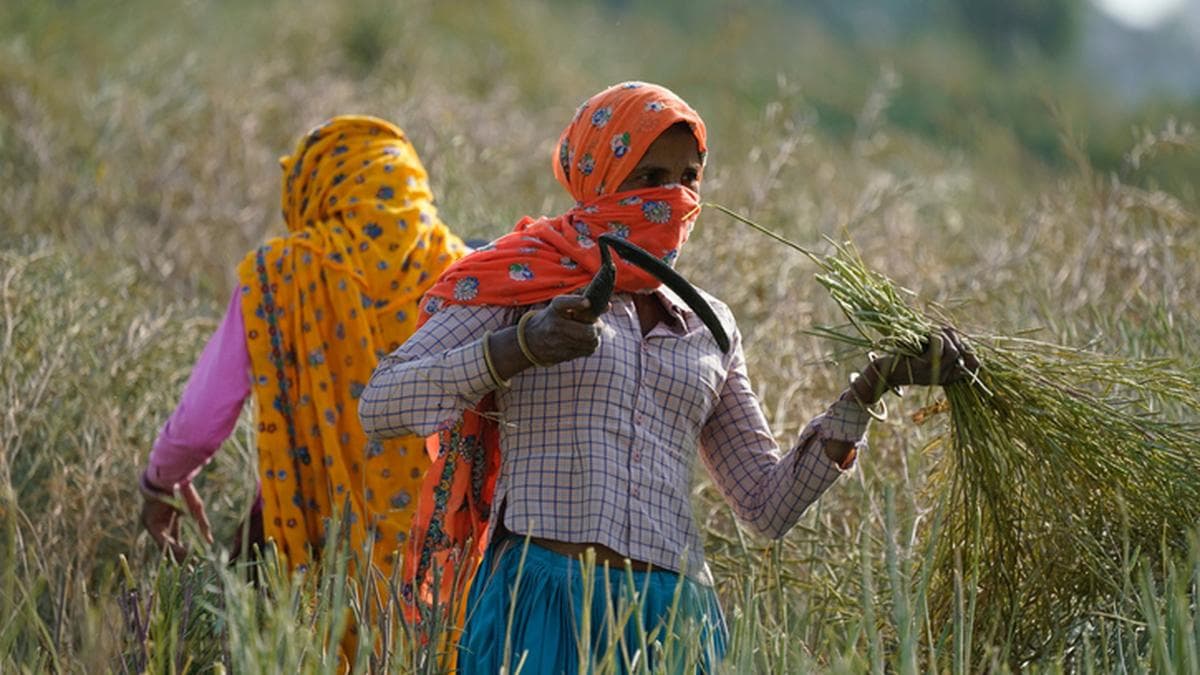
Representative image. | Mr. Fadnavis reviewed a preliminary presentation on the draft Bill at a meeting attended by Deputy Chief Minister Sunetra Ajit Pawar, Agriculture Minister Dattatray Bharane and Minister of State for Agriculture Ashish Jaiswal at his official residence on Friday.“Women account for more than 81% of participation in Maharashtra’s agricultural sector. However, most agricultural policies and government schemes remain male-centric. Since land ownership is often a prerequisite for availing benefits under agricultural schemes, a large number of women farmers are excluded from these benefits. Women cultivating family- or community-owned land, as well as those engaged in allied activities such as fisheries, livestock rearing, poultry farming and collection of forest produce, are often not recognised as farmers. It is against this backdrop that the proposed legislation has been drafted,” he said.Digital systemThe Chief Minister directed officials to undertake a detailed study for developing an effective digital system through which women farmers can access State government loan schemes, agricultural subsidies, seeds, fertilisers, crop insurance, extension services, market facilities, transportation, storage infrastructure and social security schemes. Published - June 13, 2026 03:53 am IST

A delegation of farmers from the Karnataka State Sugarcane Growers Association submitting a memorandum against the privatisation of electricity distribution to the CESC official in Mysuru on Friday. | A. Sriram The Karnataka State Sugarcane Growers’ Association, led by Hallikerehundi Bhagyaraj, met in Mysuru on Friday and has decided to urge the government to drop its move to privatise electricity distribution in the State.After holding a meeting at the Jaladarshini Guest House in Mysuru, the farmers representing the Association met Sharanamma S. Jangin of the Chamundeshwari Electricity Supply Corporation (CESC) at the latter’s office and submitted a memorandum voicing concern over the proposed move to privatise electricity.The memorandum said that the privatisation of a public utility like the Karnataka State Electricity Transmission Corporation (KPTCL) would cause irreparable harm to the agriculture and the farming community.Free electricity for agriculture was introduced after a prolonged struggle during the tenure of former Chief Minister S. Bangarappa. “If the sector falls into the hands of private companies, there is a possibility that such support may be discontinued. The pressure to install smart meters could also adversely affect the agricultural sector,” Mr. Bhagyaraj warned.Pointing out that the Tata Power Company Limited, a Mumbai-based power generation and distribution company, had sought electricity distribution rights in 15 districts of Karnataka, including Mysuru, Chamarajanagar, and Hassan, which come under CESC, the farmers’ body urged the government to ensure that KPTCL does not grant a distribution licence for these areas.Claiming that electricity tariffs charged by the private company in the cities it already operates in are higher than the rates in Karnataka, Mr. Bhagyaraj sought to question the continuation of free power supply to irrigation pumpsets for agriculture and other free and subsidised electricity supply schemes in Karnataka.“Who will be responsible for providing free electricity to agriculture? Who will ensure electricity supply for welfare schemes such as Gruha Jyothi and Bhagya Jyothi that benefit poor and socially disadvantaged households? Who will take responsibility for supplying quality electricity to remote villages even when it is not profitable?” the Association asked the government in its memorandum.Electricity supply is a fundamental responsibility of the government. “If private companies take over this responsibility, they may impose their own terms and conditions, leading to inadequate power supply and the failure of agricultural activities,” he said while warning that farmers may be forced to abandon agriculture in such a situation.The farmers claimed that the Tata Power Company has sought distribution licences in 15 districts of Karnataka, including Chikkaballapur, Kolar, Bengaluru Rural, Ramanagara, Tumakuru, Chitradurga, Shivamogga, Dakshina Kannada, Udupi, Mysuru, Hassan, Chamarajanagar, Belagavi, Uttara Kannada, and Dharwad.Contending that the assets of the electricity transmission corporation have been created using public funds, and many farmers have lost land for these projects, the farmers’ body urged the government not to privatise the electricity transmission and distribution sector. “Thousands of employees have served in the sector, and some have even lost their lives in the line of duty. Therefore, privatising such assets is inappropriate,” he said. Published - June 12, 2026 07:55 pm IST

Guntur District Collector C.M. Sai Kanth Varma addressing the gathering during the 63rd Foundation Day celebrations of Acharya N.G. Ranga Agricultural University at Lam in Guntur district on Friday. | VIJAY KUMAR Scientists should intensify research aimed at making agriculture more profitable for farmers by leveraging modern technologies, Guntur District Collector C.M. Sai Kanth Varma said on Friday.Addressing the 63rd Foundation Day celebrations of Acharya N.G. Ranga Agricultural University (ANGRAU) at Lam, Mr. Varma said the university had played a key role in strengthening the country’s food security through the development of improved crop varieties, particularly in paddy cultivation.Describing ANGRAU as a matter of pride for Guntur district, he urged scientists to focus on practical innovations that could enhance farmers’ incomes through small but effective improvements in cultivation practices. He also stressed the need for value addition to agricultural produce to help farmers secure better returns from their harvests.The Collector called for greater research on healthy food systems in view of the increasing incidence of lifestyle diseases. He emphasised the importance of promoting environmentally sustainable farming practices and reducing dependence on harmful chemical inputs.Referring to rising temperatures and increasing climate variability, Mr. Varma said scientists should develop solutions that would help farmers withstand adverse weather conditions. He assured the university of the district administration’s support for such initiatives.Speaking on the occasion, ANGRAU Vice-Chancellor P.V. Satyanarayana outlined the university’s future plans, including crop diversification, development of nutrient-rich crop varieties and the use of artificial intelligence to address agricultural labour shortages. He also announced plans to establish Agri-Tech Skill and Incubation Centres across the State.Scientists, students, farmers and alumni participated in the programme. Published - June 12, 2026 07:28 pm IST
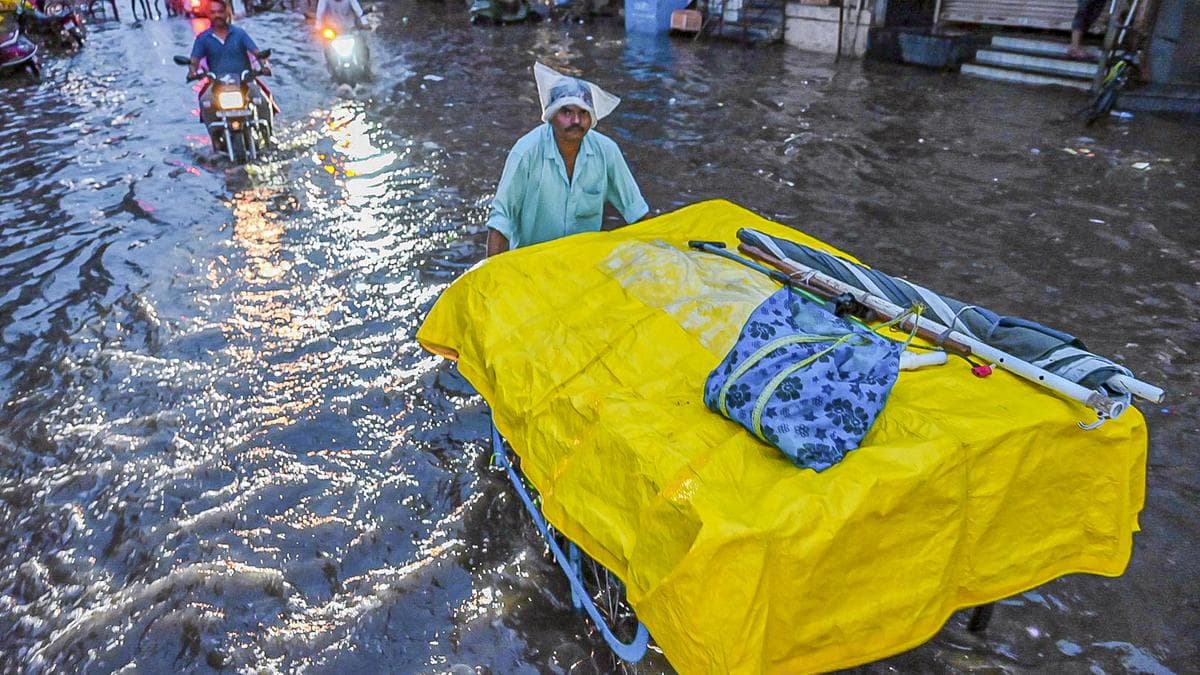
A man pushes a cart through a waterlogged road due to heavy rainfall, in Sangli, Maharashtra, Sunday, June 7, 2026. | The Agriculture and Disaster Management Department has forecast rainfall in parts of Sindhudurg and Ratnagiri districts until June 9. In other regions of Maharashtra, the monsoon’s progress and rainfall intensity are expected to remain low over the next week.Chief Minister Devendra Fadnavis posted on X on Sunday, relaying the agriculture department’s appeal: farmers should not rush into sowing based on impending stormy rains. He also advised people to avoid taking shelter under trees, tin sheds, electric transformers, electric poles, and power lines during lightning and thunder.Parts of Vidarbha, Marathwada, Khandesh, and Madhya Maharashtra may see cloud cover and thunderstorms with rain in the afternoon hours over the coming days. The department noted that this rain will not be sufficient for sowing on a large scale. Farmers have been advised not to begin sowing based only on forecasts of thunderstorms and isolated rainfall.Temperatures will remain elevated across several parts of the State until at least June 12. Maximum temperatures in Vidarbha and Khandesh may cross 40 degrees Celsius, while Marathwada is likely to see temperatures between 35 and 40 degrees Celsius.The southwest monsoon entered parts of Konkan last week. Weather officials said its advance through the rest of Maharashtra will likely remain slow in the coming days. Published - June 09, 2026 02:59 am IST

Union Minister Pralhad Joshi. File. | The domestic cooking gas LPG price has been raised by ₹29 per cylinder, marking the second increase in three months as state-owned fuel retailers continue to grapple with elevated global energy costs.“We also feel very sad and sorry about the hike in gas cylinder prices, but before criticising, everyone should understand the situation in the entire world. The world is reeling under very serious crises,” Mr. Joshi said, speaking to reporters here on Sunday.“No transshipment is happening, and LPG is available from a very limited number of sources,” the Union Minister for Consumer Affairs, Food and Public Distribution and New and Renewable Energy said.Aimed at ensuring that no hardship is caused to LPG and petrol/diesel consumers, the Government of India under Prime Minister Narendra Modi is trying to enhance procurement resources, the Minister said.He added that procurement is happening from countries that are quite far from India.“Transportation costs are high, the base cost is also high, and insurance costs have increased due to 40–45 days of transshipment. So we are also equally worried about the common man, but at the same time, the price hike is inevitable,” he added.The increase follows a ₹60-per-cylinder hike on March 7 after the conflict in West Asia disrupted global energy supplies and drove up international fuel prices.State-run oil marketing companies were estimated to be losing about ₹703 per LPG cylinder sold before the latest revision.The Union Government said Indian households “continue to pay among the lowest prices” for cooking gas globally despite a sharp rise in international PG prices triggered by disruptions due to the West Asia crisis that began on February 28 following a joint attack by the U.S. and Israel on Iran.In a statement, the government said the cost of supplying a domestic LPG cylinder has risen to more than ₹1,600 following a surge in international prices that followed the outbreak of war in West Asia.India’s LPG import costs are linked to the Saudi Contract Price (CP), the global benchmark for the fuel. The benchmark has risen about 46% since February after disruptions linked to the Strait of Hormuz tightened supplies from the Gulf region, it added.Alleging that the Congress government in Karnataka is plagued by “corruption, nepotism, and factionalism”, Mr. Joshi took a dig, saying that “internal dissatisfaction” within the ruling party was evident.He added that soon after Chief Minister D.K. Shivakumar assumed office, one Minister resigned and a few others publicly expressed their displeasure.“The situation itself shows that all is not well within the government and the administration,” he added. Published - June 08, 2026 10:54 am IST
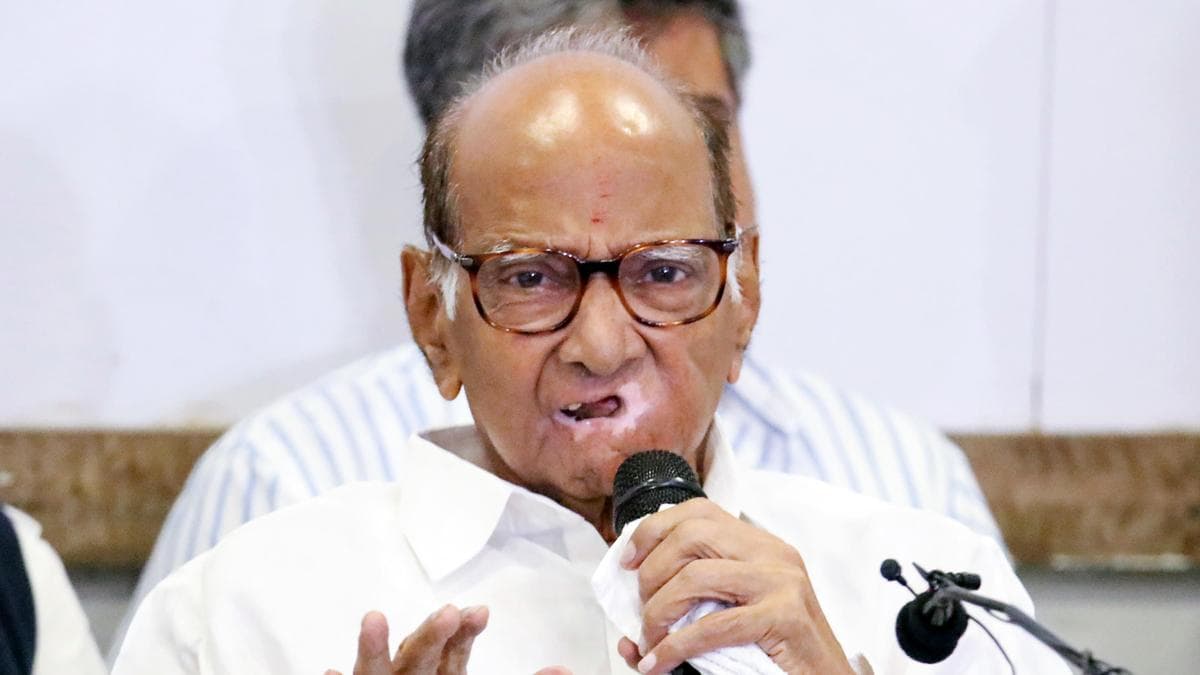
NCP-SCP chief Sharad Pawar. File | People across the country were facing hardship due to inflation, the former Union Minister claimed and questioned the government's stand that price rise was under control."The hike may have started with just two rupees, but over time the increases have kept piling up, and today we can see how far the prices have risen. All of this has a direct impact on the finances and daily lives of ordinary people," Mr. Pawar said.Prime Minister Narendra Modi had initially claimed his government would keep inflation under control, the NCP (SP) supremo said.However, it now appears that their (Centre's) idea of "control' is to deliver these price shocks step by step, he added. "Those responsible will have to pay a political price," he said in response to media queries on the LPG price hike.Maharashtra Congress leader Vijay Wadettiwar accused the BJP of abandoning its earlier stand on price rise, and said the ruling party was no longer showing the same concern for issues affecting ordinary people as it had done while in the opposition.In a statement, Mr. Wadettiwar said BJP leaders used to stage protests whenever cooking gas prices were increased during the UPA regime, but remained silent despite repeated hikes in fuel and LPG prices since coming to power."Commercial LPG cylinder prices have risen sharply over the past few months and petrol, diesel and CNG prices have also witnessed multiple revisions in recent years. Inflation was severely affecting household budgets and placing an additional burden on middle-class and economically weaker families," the Congress leader claimed.Domestic cooking gas LPG price has been raised by ₹29 per cylinder, marking the second increase in three months as State-owned fuel retailers continue to grapple with elevated global energy costs.The increase follows a ₹60-per-cylinder hike on March 7 after the conflict in West Asia disrupted global energy supplies and drove up international fuel prices.Meanwhile, the Union Government on Sunday (June 7) said Indian households continue to pay among the lowest prices for cooking gas globally despite a sharp rise in international PG prices triggered by disruptions due to the West Asia crisis that began on February 28 following a joint attack by the U.S.-Israel on Iran.In a statement, the government said the cost of supplying a domestic LPG cylinder has risen to more than ₹1,600 due to a surge in international prices following the outbreak of war in West Asia.India's LPG import costs are linked to the Saudi Contract Price (CP), the global benchmark for the fuel. The benchmark has risen about 46% since February after disruptions linked to the Strait of Hormuz tightened supplies from the Gulf region, according to the statement. Published - June 07, 2026 05:54 pm IST
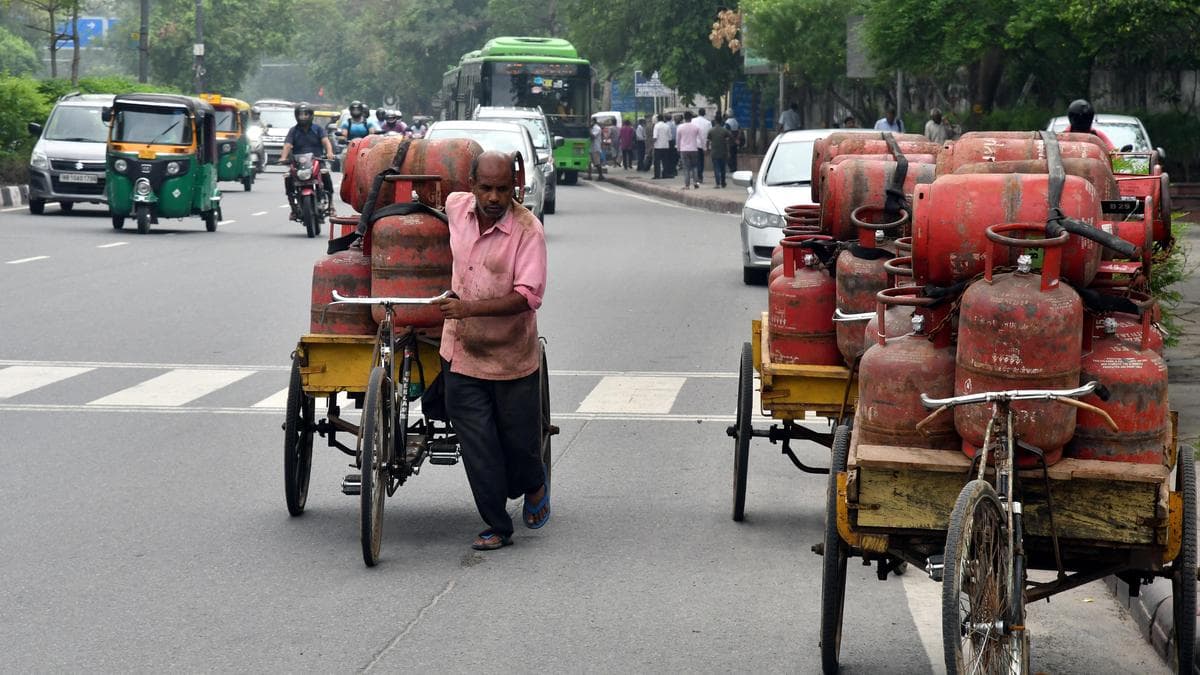
The price of a 14.2-kg LPG cylinder in Delhi will rise to ₹942 from ₹913 with effect from June 7, according to industry sources. File | The latest hike implied that price of the 14.2-kg cylinder — meant for domestic consumers have increased ₹89 per cylinder cumulatively since the conflict broke out. Prices were last hiked by ₹60 per cylinder on March 7. Other than domestic LPG, prices of commercial LPG and the 5-kg FTL were kept unaltered on Sunday (June 7, 2026).LPG Price Hike: Government says rates in India among world's lowest despite 46% jump in global benchmarkPrices of the two cylinder variants have cumulatively increased ₹1,345 per cylinder and ₹323 per cylinder respectively across multiple tranches. 14.2 kg LPG cylinder priceCitiesOld priceNew priceDelhi ₹913₹942Chennai₹928.50₹957.50Mumbai₹912.50₹941.50Kolkata₹939₹968Hyderabad ₹965₹994Explaining the current scenario, the government informed on Sunday (June 7, 2026) that India’s state-run oil-marketing companies were continuing to incur under-recoveries of about ₹700 on every domestic LPG cylinder at present. It elaborated that had the present retail prices of domestic cylinders been in line with Saudi Contract Price in June, the cost of supplying the 14.2-kg cylinder — adhering to the import-linked pricing — would have been more than ₹1,600 per cylinder. Thus, according to the government, the effective price of the first four Ujjwala cylinder being at ₹642 per cylinder and the non-Ujjwala cylinder at ₹942 per cylinder — reflects a discount of about 45% to the benchmark international prices. “The effective Ujjwala price of the first four cylinder at ₹642 (per cylinder) is at a discount of about 60% to the actual international prices of an LPG cylinder, and the non-PMUY price of ₹942 (per cylinder) is at a discount of about 45% to the international price,” the statement read. The conflict in West Asia and the resulting closure of the Strait of Hormuz has directly impacted about 54% of India’s LPG consumption that utilised the route. Seeking to ease off pressure on the bottled hydrocarbon gas, the government instituted multiple supply maintenance orders for commercial LPG, spanning across multiple tranches — increasing the allocation to 70% of requirements of the pre-crisis levels. This is inclusive of a 10% reform linked allocation for transitioning to piped natural gas. Amidst the supply maintenance and allocation orders, India’s domestic production of LPG has increased from 32,000 metric tonnes per day to 52,000 metric tonnes per day. Published - June 07, 2026 12:40 am IST
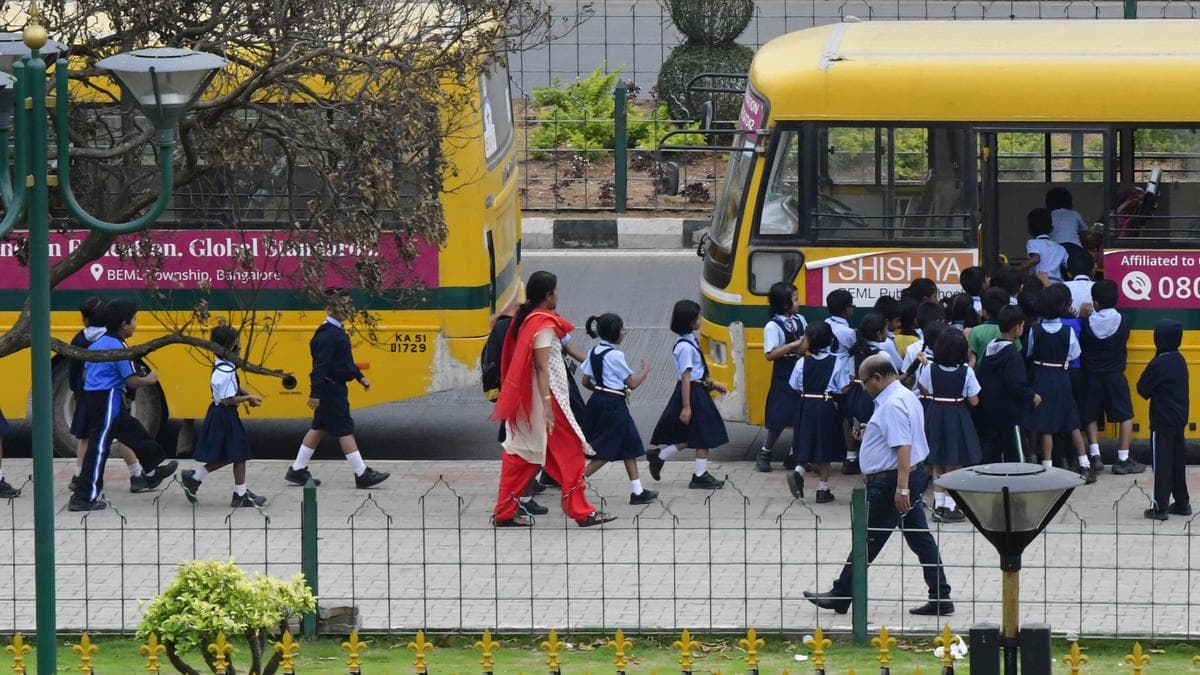
Parents of school-going children, already burdened by rising fuel prices, said a hike in the school transport fee would strain their budgets further. File | As of Wednesday, the petrol price stood at ₹110.93 per litre, while the diesel price stood at ₹98.80 per litre.D. Shashikumar, general secretary of the Associated Management of English Medium Schools in Karnataka, said, “Every year, school fees rise by 5% to 10%, but transport fees have remained unchanged. We have been using overall fee collections to cover the maintenance and fuel costs of buses and vans. However, with the recent surge in fuel prices, we are now obligated to increase transport or school bus fees. While some schools collect transport charges annually, others do so on a monthly basis.”He added, “The transport fee depends on the location of the school and the distance from the students’ homes to the school. It also varies depending on the type of school. At present, schools charge somewhere around ₹1,500 to ₹2,500 per month, which might increase to ₹3,000 to ₹3,500.”Lokesh Talikatte, president, Karnataka Recognised Unaided Private School Association (KRUPA), said, “Around 11,000 schools from across Karnataka, including CBSE and ICSE schools, have registered with our organisation. We are planning to increase the transport fee by 8% to 10%. This will be done after conducting a meeting with the parents. We have also started informing them about the increase in the transport fee. Some parents have already responded that it is an added financial burden on them. At present, schools under KRUPA are charging somewhere around ₹11,000 to ₹18,000, which will increase to around ₹22,000.“He also said that KRUPA has received requests from teachers to increase their salaries due to the increase in fuel prices, but no decision has been taken yet.Meanwhile, parents of school-going children, already burdened by rising fuel prices, said a hike in the school transport fee would strain their budgets further. Raghava M, whose daughters study in a CBSE school in Vijayanagar, said, “At present, I pay ₹36,000 a year as transport fee for both my daughters. Even a ₹2,000 increase would be an added burden. The school fee itself is ₹75,000 annually. I work in a salon and earn about ₹2,000 a day. For middle-class families like ours, it is a significant strain.”Freeda M., another parent, said, “My son is in class 6, and his school is six kilometres away from home. As heavy vehicles ply on the road connecting Kengeri, I prefer sending him by school van rather than buying a cycle. If the transport fee increases, we may opt out next year and send him by BMTC buses. At present, we cannot opt out as we have already submitted the forms and paid the first instalment of the school fee.”Krishnappa, whose daughter is studying in a school 2.5 kms away from home in Hulimavu, said the school had already increased the transport fee by ₹4,000 before the fuel price hike to factor in inflation. “We are already paying ₹40,000 per year for transport. I fear there will be one more hike with the continuous hikes in fuel prices,” he said. Published - May 27, 2026 09:43 pm IST
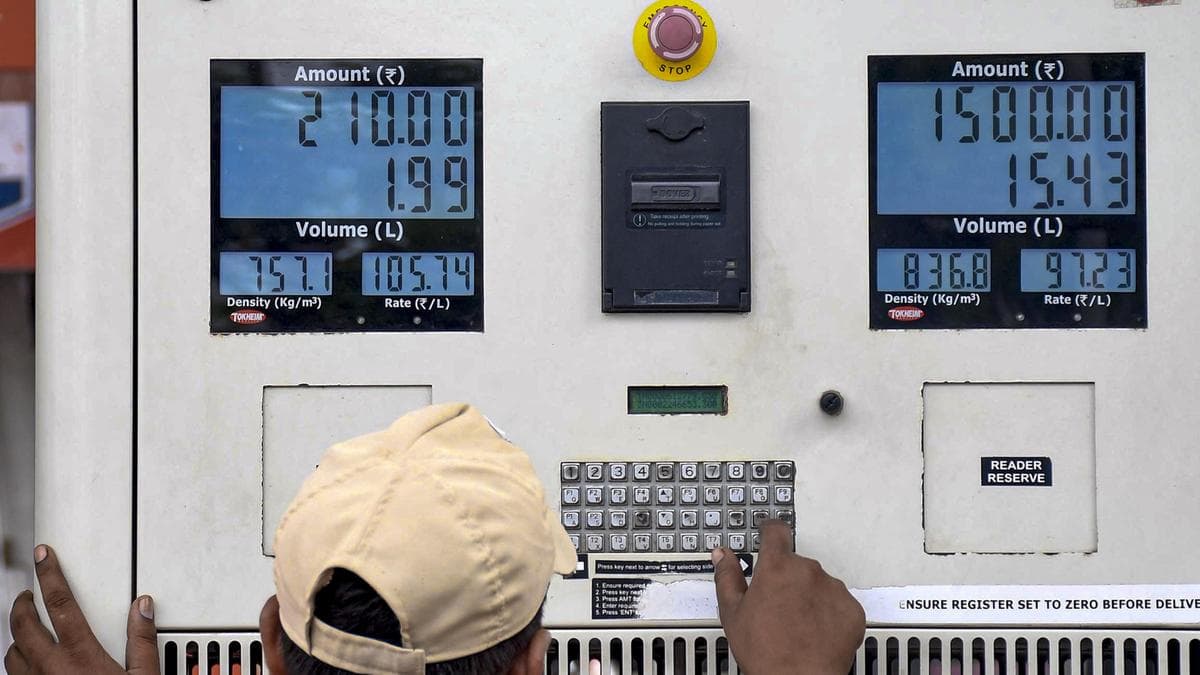
The Strait of Hormuz is no longer just a geopolitical flashpoint; it has become the fault line of the global energy economy. As tensions in West Asia continue to disrupt shipping through one of the world’s most critical maritime corridors, countries across the globe are confronting a harsh reality: energy security is now inseparable from geopolitics. For India, which depends on imports for the overwhelming majority of its crude oil needs, the crisis has exposed both the strength of recent policy interventions and the limits of shielding consumers indefinitely from market realities.The immediate impact of the conflict has been visible in global crude markets. Brent prices have surged sharply amid fears of prolonged disruption to Gulf supplies, while freight costs and marine insurance premiums have climbed to multi-year highs. Shipping routes are being diverted around the Cape of Good Hope, extending delivery timelines by weeks and significantly increasing transportation expenses. Global gas markets, too, remain under pressure following disruptions linked to the shutdown of key liquefied natural gas export infrastructure in Qatar. Despite this turbulence, the crisis has not hit Indian consumers as ferociously as it should be so far. Petrol and diesel prices at Indian fuel pumps have remained relatively stable, hovering near ₹95 per litre in many cities, even as fuel prices in several advanced economies rose steeply, by about 25% on average. Petrol prices in Germany and the United Kingdom have crossed the equivalent of roughly ₹220 and ₹204 per litre, respectively, while Hong Kong continues to record some of the world’s highest fuel prices at nearly ₹291 per litre. This stability is not a coincidence. It has been achieved through an extraordinary combination of state intervention, supply diversification, and financial absorption by public sector oil companies.Comment | India’s green transition still runs on coalInterventions that come at a steep costOver the past few years, India has quietly built a more resilient energy architecture. The country expanded its sourcing basket beyond the Gulf, increased strategic reserves, and strengthened ties with suppliers in Russia, the United States, West Africa, and the Atlantic basin. Union Petroleum Minister Hardeep Singh Puri recently reiterated that India’s crude supply position remains secure despite disruptions around the Strait of Hormuz, pointing to the country’s growing ability to source oil from non-Gulf origins and maintain refinery throughput at high levels.Taking advantage of the exit of the United Arab Emirates (UAE) from the Organization of the Petroleum Exporting Countries, India signed an agreement with the UAE to store 30 millions of crude oil in India’s Strategic Petroleum Reserve. The government’s response since the latest escalation has been swift. Refineries were directed to maximise LPG production to meet rising domestic demand, especially given the dramatic expansion of cooking gas access under the Ujjwala scheme. LPG connections in India have risen from roughly 14.5 crore in 2014 to more than 33 crore today, fundamentally transforming household energy consumption patterns. Gas allocation was prioritised for households, public transport networks, and fertilizer plants to avoid cascading disruptions across essential sectors. Domestic LPG production was reportedly increased by nearly 50% during the peak of the crisis response, while all 25 fertilizer plants continued receiving around 70% of their gas requirements to maintain agricultural supply chains. Naval deployments in the Gulf of Oman, diplomatic engagement with multiple countries, and efforts to secure alternative shipping arrangements underline how seriously India has treated the crisis. These measures have bought the country valuable time. But they have also come at a steep cost.
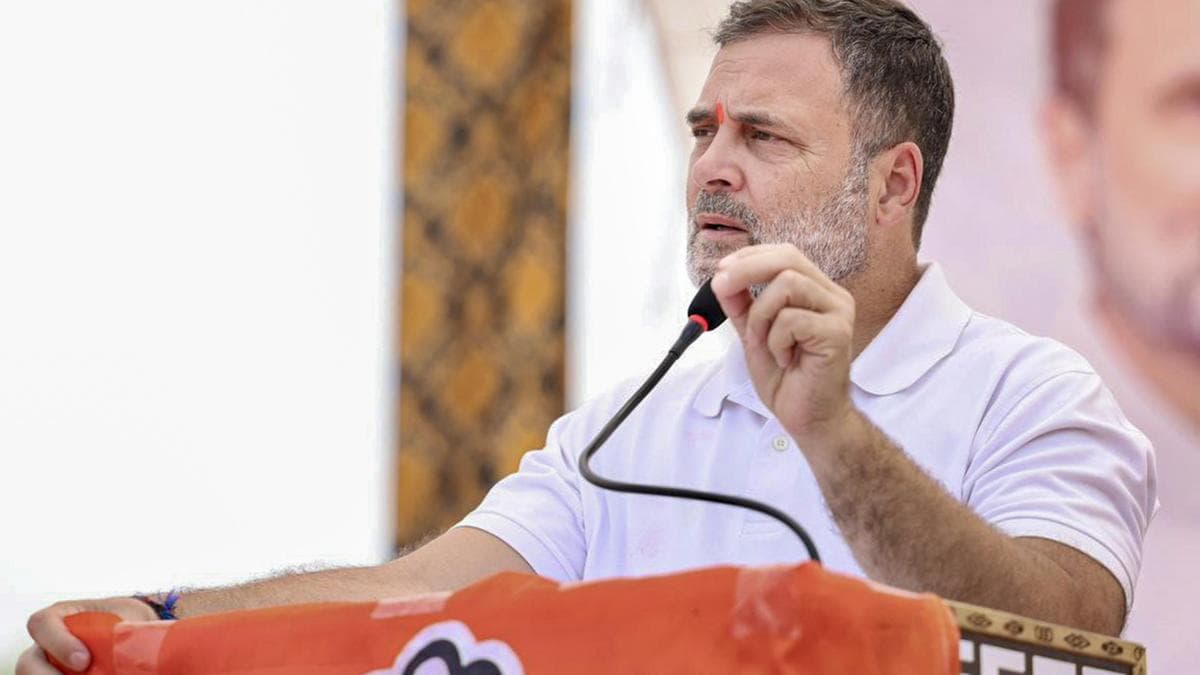
File image of Congress MP and Lok Sabha LoP Rahul Gandhi. Photo: X/@INCIndia via PTI. Congress leader Rahul Gandhi on Monday (May 25, 2026) launched a scathing attack on Prime Minister Narendra Modi over the latest fuel hike, saying ‘mehangai manav’ has struck again, and he has just one job of making promises during elections and attacking people's pockets at other times.Petrol and diesel prices were raised by ₹2.61-2.71 per litre on Monday (May 25, 2026), marking the fourth increase in less than two weeks as state-owned fuel retailers continued to pass on rising international oil prices to consumers."’Mehangai manav’ Modi strikes again. He raises petrol and diesel prices in instalments — ensuring that your pockets are quietly picked, bit by bit," Mr. Gandhi said in his post in Hindi on X."For months, I had been warning of an impending economic storm. But Modi Ji, true to form, was busy with elections at the time and the moment the elections ended, he hiked the prices of petrol and diesel by ₹8," the Leader of Opposition in the Lok Sabha said.And, this upward trend will only continue, he added."'Mehangai manav' Modi has just one job: promises during elections, and attacking people's pockets at other times," Mr. Gandhi said.With the latest revision, cumulative increases in petrol and diesel prices have nearly touched ₹7.5 per litre since fuel price revisions resumed on May 15 after a prolonged freeze, stoking concerns over inflationary pressures and higher transportation costs across the economy.The latest revision pushed petrol prices higher by ₹2.61 per litre and diesel by ₹2.71, according to industry sources.Petrol prices were raised to ₹102.12 a litre in Delhi from ₹99.51 previously, while diesel rates were increased to ₹95.20 per litre from ₹92.49.The back-to-back increases follow a prolonged freeze in retail fuel prices and come amid elevated crude oil prices in the global market, tightening refining margins, and a weaker rupee, which have sharply raised the cost of imports.Petrol and diesel prices were increased on May 15 by ₹3 per litre each, and on May 19 by 90 paise a litre. This was followed by an 87-paise per litre increase in petrol and a 91-paise hike in diesel rates on May 23.After Monday's (May 25, 2026) increase, petrol at PSU pumps in Mumbai now costs ₹111.21 per litre and diesel ₹97.83, while prices in Kolkata rose to ₹113.51 and ₹99.82, respectively. In Chennai, petrol is priced at ₹107.77 and diesel at ₹99.55.Prices vary across states due to local taxes.State-owned Indian Oil Corporation (IOC), Bharat Petroleum Corporation Ltd (BPCL) and Hindustan Petroleum Corporation Ltd (HPCL) together control 90 per cent of India's fuel market.The back-to-back increases come after global crude oil prices surged more than 50% since late February following U.S.-Israeli strikes on Iran and disruptions to shipments through the Strait of Hormuz, a critical global oil transit route.Fuel retailers had in the first two-and-half-months of the conflict kept pump prices low despite rising input costs, a move the government said was aimed at shielding consumers from inflation. Opposition parties, however, accused the government of delaying price revisions until after key state elections.The May 15 increase came after the ruling Bharatiya Janata Party (BJP) expanded its electoral footprint by winning three of five state and UT elections, including West Bengal. Published - May 25, 2026 12:26 pm IST


Discussion (0)