
Loading dispatches...
← Return to Newsroomgeneral
Justice buried in files: Chandigarh magisterial probe reports expose pattern of inaction
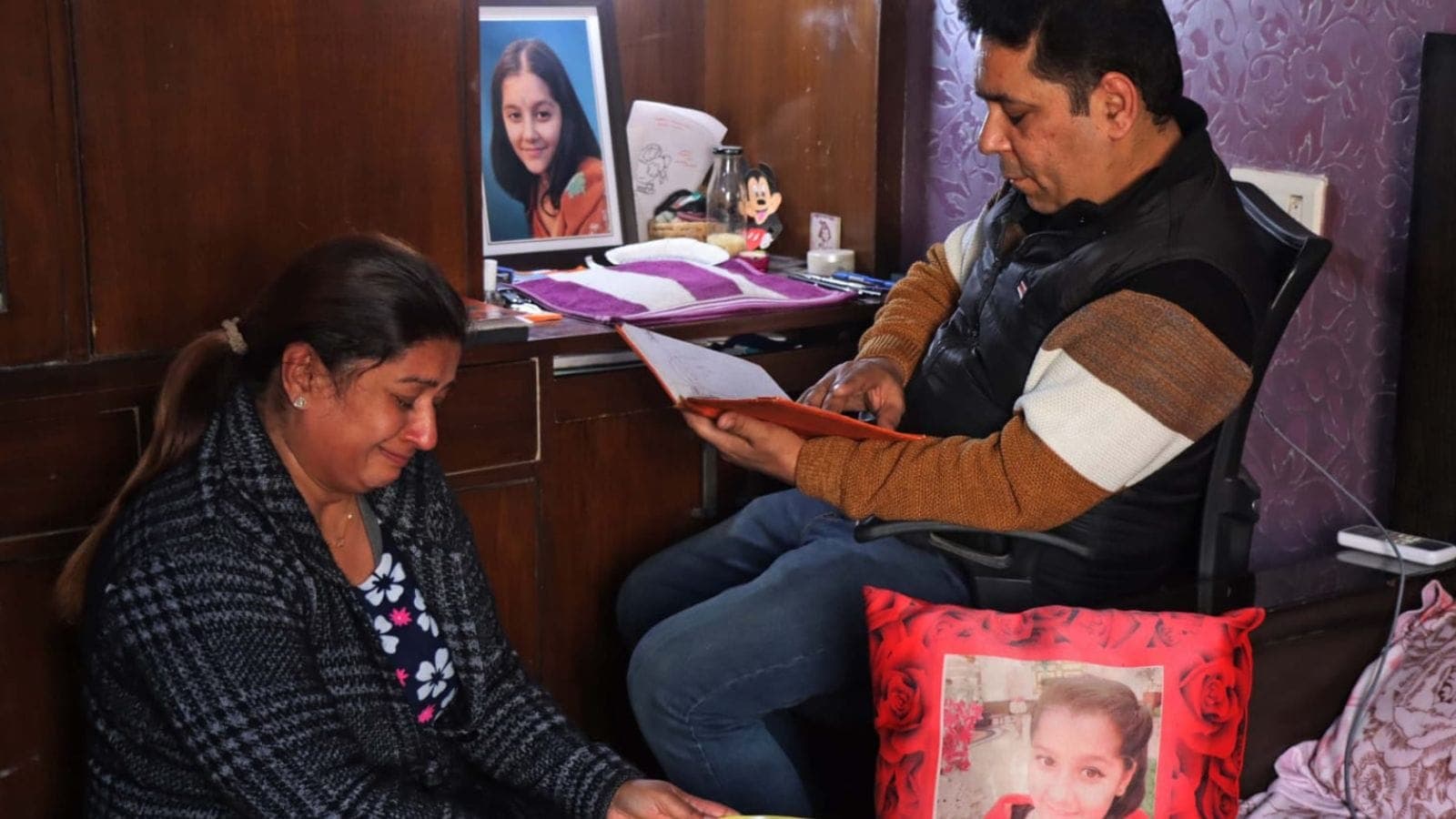
Every major tragedy in Chandigarh over the past few years was followed by a familiar official response — the announcement of a magisterial inquiry promising accountability and corrective action.But an investigation by The Indian Express into several such probe reports reveals a recurring pattern: findings acknowledged, lapses documented and recommendations made, yet little visible action followed on the ground.The reports accessed by The Indian Express show how inquiries into some of Chandigarh’s most disturbing incidents remained confined largely to paperwork, while victims’ families continue to await accountability and closure.One of the most glaring examples was the February 22, 2020 fire at an illegal paying guest (PG) accommodation in Sector 32, where three girl students died and two others suffered serious injuries. The magisterial inquiry held not only the owners and PG operators responsible, but also indicted Estate Office officials and beat police personnel for negligence in failing to detect and report the illegal setup despite it operating for a long time. The inquiry report, accessed by The Indian Express, stated that around 28 girls were living in cramped cabins constructed using PVC, fibre and wooden sheets inside a residential building illegally converted into a PG facility. The report noted that the premises lacked fire safety measures, emergency exits, ventilation and proper escape routes. “There was very less space for exit” and “no fire safety measure available in the said premises,” the inquiry observed.Story continues below this ad The Inquiry Officer concluded that the negligence of Estate Office officials and beat police staff “cannot be pardonable as it resulted in loss of three precious lives”. Officials of the Estate Office, including the SDO(Building), Area JE and SIE (Misuse Wing), had claimed they were unaware of the illegal PG operations as no complaints had been received. However, the report observed that such large-scale misuse and overcrowding could not have escaped notice had proper inspections been carried out. The inquiry also held beat police officials negligent for failing to verify tenant and PG records or report the illegal accommodation despite regular patrolling in the area. “Their failure to inspect, verify, report and enforce rules allowed the illegal and unsafe PG setup to continue until the fatal fire occurred,” the report stated.Story continues below this ad Despite the findings and recommendations, no significant action followed against the officials named in the report. Electrocution death of teenager Mayank: Probe recommends action, family still awaits closure Another case that raised serious questions involved the death of 17-year-old Mayank, who was electrocuted near a transformer in Sector 8 on July 17, 2024. Mayank, son of an Enforcement Directorate officer, had been returning from a gym when he came into contact with the transformer while crossing railings near the Sector 8 market. Following public outrage, the Chandigarh Administration ordered a magisterial inquiry and also sought an assessment from the Central Electricity Authority (CEA).Story continues below this ad The inquiry report concluded that the incident involved “a miscalculated short cut attempted by the deceased, coupled with losing balance”. However, it simultaneously acknowledged major shortcomings in maintenance and safety mechanisms. The report stated that “important up-gradations are pending on electricity department’s part” and observed that more proactive reporting by maintenance staff could have helped install better safety measures. It further noted that the Municipal Corporation Chandigarh also failed to notify the Electricity Department despite the road being under its maintenance jurisdiction. The inquiry recommended disciplinary proceedings against Electricity Department maintenance staff, besides action against the XEN and SDO for supervisory lapses. It also advised the Municipal Corporation to
A fact-finding committee constituted by the National Commission for Women (NCW) has found evidence of “pervasive sexual harassment”, systemic bullying, religious harassment and serious violations of the Sexual Harassment of Women at Workplace (Prevention, Prohibition and Redressal) Act, 2013, at the Nashik office of Tata Consultancy Services. In a press statement issued on Monday, the NCW said it had taken suo motu cognisance of complaints by several women employees and constituted a fact-finding committee under the direction of NCW chairperson Vijaya Rahatkar. The committee comprised Justice Sadhna Jadhav, retired judge of the Bombay High Court, former Haryana DGP BK Sinha, Supreme Court advocate Monika Arora, and NCW senior coordinator Lilabati. The panel visited Nashik on April 18 and 19 and interacted with complainants, members of the Internal Committee constituted under the POSH Act, police officials and other witnesses. The Commission said the inquiry culminated in a report exceeding 50 pages with over 25 recommendations, which was submitted to Maharashtra Chief Minister Devendra Fadnavis on May 8. According to the report, the committee observed a “deeply disturbing and toxic workplace environment” marked by sexual harassment, abuse of authority and sustained mental harassment of women employees. “The accused persons had assumed effective control of the TCS, Nashik. They used to target young and vulnerable girls,” the NCW said in the statement, adding that complainants had allegedly faced sexual, emotional and mental harassment, including alleged molestation attempts.The report alleged that women employees were subjected to repeated religious insults and anti-religious commentary at the workplace. According to the committee, the accused allegedly denigrated Hindu mythology, beliefs, traditions and practices and attempted to portray Islam as “a far superior religion to Hinduism”. The report stated that the accused indulged in degrading and belittling the Hindu faith and created a coercive atmosphere through repeated anti-religious commentary directed at women employees. Multiple people have been arrested in the Nashik TCS case so far. (Express Photo)Systemic bullying The committee further described the case as one involving “systemic bullying”, including stalking, humiliating conduct, demeaning comments and behavioural patterns that caused female employees to feel humiliated and disrespected. The report stated that women employees faced sustained mental harassment at the workplace. According to the findings, many women employees wished to lodge complaints, but were unable to do so due to fear, social stigma, and the absence of a trustworthy complaint mechanism and environment. The report stated that employees feared exposing their families to social stigma and also feared professional repercussions, including transfers and termination. The NCW report further said the Nashik office was effectively controlled by the accused persons identified as Danish, Tausif and Raza Memon, who were allegedly protected by senior official Ashwini Chainani. The committee observed that no employee had the courage to raise complaints and that those who did so feared adverse professional consequences, including transfers and termination. It further stated that Chainani’s “silence and insensitivity” had effectively endorsed the alleged acts of the accused. The committee also noted that younger employees, particularly from Generation Z, appeared especially vulnerable to the alleged anti-religious discourse and workplace pressure. Among the security lapses flagged in the report was the alleged failure of CCTV systems at the office. The committee observed that although CCTV cameras had been installed, they were found to be non-functional.Story continues below this ad No compliance with POSH Act The report also flagged what it termed “zero compliance” with provisions of the POSH Act. According to the findings, the Internal Committee under the POSH
The HHRC observed that installing the 'Tsunami Jhula’ amounted to a 'grave violation of tender condition and demonstrates unauthorized installation' without due approval. (File Photo)The ‘Tsunami Jhula’ amusement ride that collapsed at the Surajkund International Crafts Mela in February, killing a police inspector and injuring multiple visitors, was not included in the original list of rides submitted by the contractor during the bidding process. The fatal installation also operated without due approval amidst hazardous site conditions and “poor workmanship”, the state human rights commission was told last month. Hearing a suo motu case along with multiple complaints on April 7—the order was released Saturday afternoon—the Haryana Human Rights Commission (HHRC) took on record a state Tourism Department report that pinpointed “sheer negligence” by three Haryana Tourism Corporation (HTC) officials: Activity Head Nitin Kataria, Executive Engineer Satish Deswal, and Junior Engineer Nishant.The coram of Justice Lalit Batra, judicial member Kuldip Jain and member Deep Bhatia noted, quoting from compliance reports submitted to it, the three HTC officials have been charge-sheeted for major penalty under the Haryana Civil Services Rules for dereliction of duty. The HHRC order noted that the “ride in question namely ‘Tsunami Jhula’, which led to unfortunate fatal and non-fatal accident, was not even included in the list of rides submitted by the contractor at the time of bidding”. The Commission observed that installing the swing amounted to a “grave violation of tender condition and demonstrates unauthorized installation” without due approval. A separate report from the state chief electrical inspector exposed a severe lack of safety norms across the fairground. The inspector’s findings, accompanied by site photographs, depicted “hazardous conditions such as open electrical distribution boxes, exposed and loosely hanging wires, improper jointing and unprotected cables laid in areas accessible to the public”. The report cautioned that these conditions “could have resulted in serious accidents including electric shock, short-circuit or fire incidents”. Faridabad police chief told to expedite probe The tragedy unfolded on the evening of February 7, 2026, when the giant swing snapped from one side while carrying passengers. As police personnel rushed to rescue trapped visitors, the structure suddenly broke from the other side, crashing down on Inspector Jagdish of the Haryana Police. He succumbed to his injuries during treatment at Supreme Hospital, Eros Garden. Many visitors and other police officers also sustained serious injuries. An FIR was registered at the Surajkund police station against the operator from Himachal Fun Fair Company, Mohammad Shakir, and his staff. However, the HHRC flagged a significant disconnect in the ongoing police probe. While the HTC inquiry indicted its own senior officials for gross negligence, the Commission remarked that the police investigating team currently “has no clue of those delinquents”.Story continues below this ad The Commission has directed the Faridabad police commissioner to expedite the investigation and submit an action taken report. A day after the collapse of the swing, the Faridabad Police had arrested the swing operator and a staff member. A police spokesperson said on Saturday that the owner of the swing, Shubham Gupta, was arrested from Faridabad and sent to judicial custody earlier this week. Abhimanyu Hazarika is a Senior Correspondent with The Indian Express, based in Gurgaon. He covers southern Haryana. Education - Post-Graduate Diploma in Print Media, Asian College of Journalism (Class of 2020) - B.A. (Hons) Liberal Arts with a major in Political Science, Symbiosis School for Liberal Arts (Class of 2019) Professional Experience Before joining The Indian Express, he worked with Bar & Bench (legal journalism) and Frontline magazine, where h
Discussion (0)