BREAKING
Sacked Ukrainian defence minister calls for presidential election
Global Edition·Wednesday, Aug 19, 2026

TENTAGRAPH

VERITAS IN CONTEXTU|Digital Broadsheet of Record
Sign In
  • All Stories
  • World
  • India
  • Politics
  • Business
  • Technology
  • Science
  • Health
Tentagraph

Authoritative, verified digital news designed to reveal how critical events and narratives develop over time.

About UsEditorial DeskPrivacy PolicyTerms of Service

© 2026 Tentagraph. All rights reserved.

Latest Dispatches

1635 Stories Available
Top 10 medical universities in Georgia for international students in 2026
general
Editorial·Jun 23

Top 10 medical universities in Georgia for international students in 2026

# Top 10 medical universities in Georgia for international students in 2026 **TBILISI, Georgia** — Georgia has become one of the most attractive destinations for international medical education, drawing students from across Asia, Africa and the Middle East. With globally recognized degrees, English medium programs, affordable tuition fees and modern teaching facilities, the country's medical universities continue to gain international attention. Here are the top 10 medical universities in Georgia for international students in 2026. ## 1. Tbilisi State Medical University (TSMU) Tbilisi State Medical University remains the gold standard for medical education in Georgia. Established in 1918, it is widely recognized for its academic excellence, experienced faculty and extensive clinical training opportunities. The university continues to attract students seeking a well established and internationally respected medical degree. ## [2. Grigol Robakidze University (GRUNI)](www.gruni.in) Grigol Robakidze University has emerged as one of the leading destinations for international medical students. Known for its modern curriculum, advanced simulation laboratories and student focused approach, GRUNI has built a strong reputation for delivering quality medical education while maintaining a supportive learning environment. ## 3. David Tvildiani Medical University David Tvildiani Medical University is recognized for its rigorous academic standards and strong emphasis on scientific and clinical training. The university has earned a reputation for producing graduates who perform well in international licensing examinations and postgraduate programs. ## 4. Georgian American University (GAU) Georgian American University combines international teaching standards with a modern learning environment. Its medical faculty emphasizes practical training, critical thinking and research based education, making it a growing choice among international students. ## 5. Caucasus University Caucasus University is one of Georgia's most respected private institutions. The university's medical program offers modern facilities, experienced faculty and a strong focus on preparing students for global healthcare careers. ## 6. Batumi Shota Rustaveli State University Located in the coastal city of Batumi, Batumi Shota Rustaveli State University offers comprehensive medical education supported by strong academic traditions and expanding clinical partnerships. Its international student population has grown steadily in recent years. ## 7. Avicenna Batumi Medical University Avicenna Batumi Medical University has gained recognition for its dedicated medical programs and practical training opportunities. The university continues to attract international students seeking quality education in a focused medical learning environment. ## 8. BAU International University Batumi BAU International University Batumi is known for its innovative teaching methods, international partnerships and modern educational infrastructure. The university places significant emphasis on clinical exposure and global medical standards. ## 9. Georgian National University SEU SEU has rapidly expanded its presence in Georgia's higher education sector. Its medical faculty offers contemporary curricula, modern facilities and growing opportunities for clinical training, making it a popular choice among international applicants. ## 10. Ivane Javakhishvili Tbilisi State University Faculty of Medicine As part of Georgia's oldest and most prestigious university, the Faculty of Medicine at Ivane Javakhishvili Tbilisi State University provides students with a strong academic foundation, research opportunities and access to a wide network of healthcare institutions. ## Why international students choose Georgia Several factors continue to make Georgia an attractive destination for medical education: * English medium medical programs * Internationally recognized degrees * Affordable tuition and living expenses * Modern laboratories and simulation centers * Diverse international student community * Growing clinical training opportunities As global demand for medical education continues to rise, Georgia's leading universities remain committed to expanding academic excellence, research opportunities and practical training, further strengthening the country's reputation as a preferred destination for aspiring doctors.


3 updates
Read Story →
India increased LNG imports by 28% in June
general
تسنیم·11h ago

India increased LNG imports by 28% in June

India Hotel Fire Kills Nine, Several Others Injured تسنیم

16 updates
Read Story →
Suriyas Vishwanath and Sons cant surpass Karuppu after 5 days, earns Rs 128.60 cr worldwide
general
Indian Express·11h ago

Suriyas Vishwanath and Sons cant surpass Karuppu after 5 days, earns Rs 128.60 cr worldwide

2 min readNew DelhiUpdated: Aug 19, 2026 12:51 PM IST Suriya starrer Vishwanath and Sons Box Office Collection Day 5 (Photo: Primark Productions / Instagram)Vishwanath & Sons box office collection day 5: Suriya-starrer Vishwanath & Sons has earned Rs 128.60 crore worldwide in just five days of its release. According to industry tracker Sacnilk, the film earned Rs 7.33 crore gross across 5,021 shows in India, with an occupancy of 24.1 percent on its fifth day. Overseas, the film collected Rs 2 crore, taking its total overseas gross to Rs 45 crore. The year 2026 has been exceptionally successful for Suriya as he has had two massive hits with Karuppu and Vishwanath & Sons. Karuppu earned Rs 310 crore worldwide. The film opened at Rs 17.93 crore, followed by Rs 27.98 crore on day 2 and Rs 32.84 crore on day 3 in India.Vishwanath & Sons opened at Rs 15.35 crore across 5,034 shows, with an occupancy of 42.2%. The film saw a massive jump on day 2, collecting Rs 22.25 crore, followed by Rs 20.55 crore on day 3. The film earned Rs 108.22 crore worldwide during its opening weekend, including Rs 41 crore from overseas. In comparison to Karuppu, Vishwanath & Sons is far behind. Karuppu had earned Rs 161.04 crore worldwide in its first five days. On the fifth day, the film earned Rs 12.75 crore net in India. ALSO READ | Apoorva Makhija aka The Rebel Kid moves to New York for MBA: ‘This degree of no use’ Directed by Venky Atluri, the filmmaker behind Sir and Lucky Baskhar, Vishwanath & Sons is a romantic comedy also written by Atluri. The film revolves around a father reconnecting with his child’s surrogate mother and also stars Mamitha Baiju and Raveena Tandon in the lead roles. Vishwanath & Sons marks Suriya’s 46th film. The actor is currently working on two other projects, which are set to release next year.Story continues below this ad Similarly, Mamitha Baiju has also had an active year, with Vishwanath & Sons marking her second release of the year after Jana Nayagan. She is also gearing up for another romantic comedy, the Malayalam-language film Bethlehem Kudumba Unit. She has two more Tamil releases lined up for next year. It remains to be seen whether Vishwanath & Sons can surpass the lifetime collection of Karuppu, which earned Rs 310 crore worldwide.

Verified Dispatch
Read Story →
Soft blocking: Why people are quietly distancing themselves on social media instead of blocking
general
Indian Express·12h ago

Soft blocking: Why people are quietly distancing themselves on social media instead of blocking

The Constitution contains many provisions to safeguard the interests of underprivileged communities. These are sometimes described in public debate as exceptions to the constitutional promise of equality. That understanding is increasingly difficult to sustain. Written by: Kumar Kartikeya 7 min readAug 19, 2026 12:25 PM IST First published on: Aug 19, 2026 at 12:21 PM IST A few days ago, my mother was talking to our new house help. It was an ordinary conversation of the kind that takes place every day in Indian homes. They spoke about her family, her work and the difficulties she had faced in finding employment. At some point, she said something that stayed with us — that she had regularly been denied work because she was dark-skinned. In some of the more affluent parts of Gurugram, she said, she had found it particularly difficult to get domestic work. Many of the refusals, according to her, had little to do with her ability to work and everything to do with how she looked. There was something unsettling about hearing this in Gurugram, a city that likes to think of itself as modern, prosperous and cosmopolitan. The people making such decisions are not necessarily uneducated or living in some remote corner of the country. They are people living in apartments, working in corporations, sending their children to expensive schools and speaking comfortably about equality and merit. My house help’s experience, by itself, cannot establish a case of discrimination. But her story raises a larger question that our public often avoids: How much has the social hierarchy that the Constitution sought to dismantle actually disappeared from our everyday lives? We have become accustomed to thinking of discrimination in its most visible forms. Untouchability, segregated settlements and denial of access to public spaces are rightly remembered as some of the ugliest manifestations of discrimination. The Constitution contains many provisions to safeguard the interests of underprivileged communities. These are sometimes described in public debate as exceptions to the constitutional promise of equality. That understanding is increasingly difficult to sustain. The Supreme Court has expressly recognised that affirmative action is connected to substantive equality. In its reservation jurisprudence, the Court has observed that Articles 15(4) and 15(5) are not exceptions to equality but particular expressions of it. The Constitution does not assume that treating unequals as equals will necessarily produce equality. This is the constitutional idea of affirmative action, and it is worth remembering because our public debate about reservation has reduced it to a much narrower question of who gets a seat or a job. Affirmative action is not charity. It is not a reward for being born into a particular community. Nor is it an admission that members of reserved communities are inherently less capable. Its underlying premise is that a society which has systematically denied opportunity cannot correct that history merely by announcing that the competition is now open to everyone. If a person has been excluded from education, property, employment and social institutions for generations, the formal removal of the barrier does not automatically place that person at the same starting point as someone who inherited access to those institutions. Much of the argument against reservation begins with a proposition that sounds compelling: Why should a person today receive a benefit because of something that happened generations ago? If a person from a Scheduled Caste family is educated, financially secure and living in a city, why should caste continue to matter? The difficulty with that argument is that it assumes caste is merely an economic disadvantage inherited from the past. It is not. Caste has historically been a system of social ordering, occupation, status and exclusion. Its consequences were not limited to who had money and who did not. It was about who could

5 updates
Read Story →
generalCarLelo·12h ago

Skoda Slavia Facelift Launch Set For August 18 In India

New Skoda Superb – 2.0 Diesel, Luxury Features and India Launch Details CarLelo

3 updates
Read Story →
Kerala is having fewer children. This is bad news for teachers
general
The Indian Express·13h ago

Kerala is having fewer children. This is bad news for teachers

Kerala is having fewer children. This is bad news for teachers The Indian Express

2 updates
Read Story →
Indian-Origin Man, 40, Arrested For Groping Young Woman In Canada Park
general
NDTV·14h ago

Indian-Origin Man, 40, Arrested For Groping Young Woman In Canada Park

Indian-Origin Man, 40, Arrested For Groping Young Woman In Canada Park NDTV

2 updates
Read Story →
Daily Briefing: NTA overhaul, Tata succession battle, Nalanda meal scare
general
The Indian Express·15h ago

Daily Briefing: NTA overhaul, Tata succession battle, Nalanda meal scare

Daily Briefing: NTA overhaul, Tata succession battle, Nalanda meal scare The Indian Express

Verified Dispatch
Read Story →
Maha govt makes snakebite notifiable disease, reporting of cases compulsory
general
Business Standard·15h ago

Maha govt makes snakebite notifiable disease, reporting of cases compulsory

Maha govt makes snakebite notifiable disease, reporting of cases compulsory Business Standard

2 updates
Read Story →
Master Plan for Delhi-2047: Changes to slum rehab framework
general
Indian Express·16h ago

Master Plan for Delhi-2047: Changes to slum rehab framework

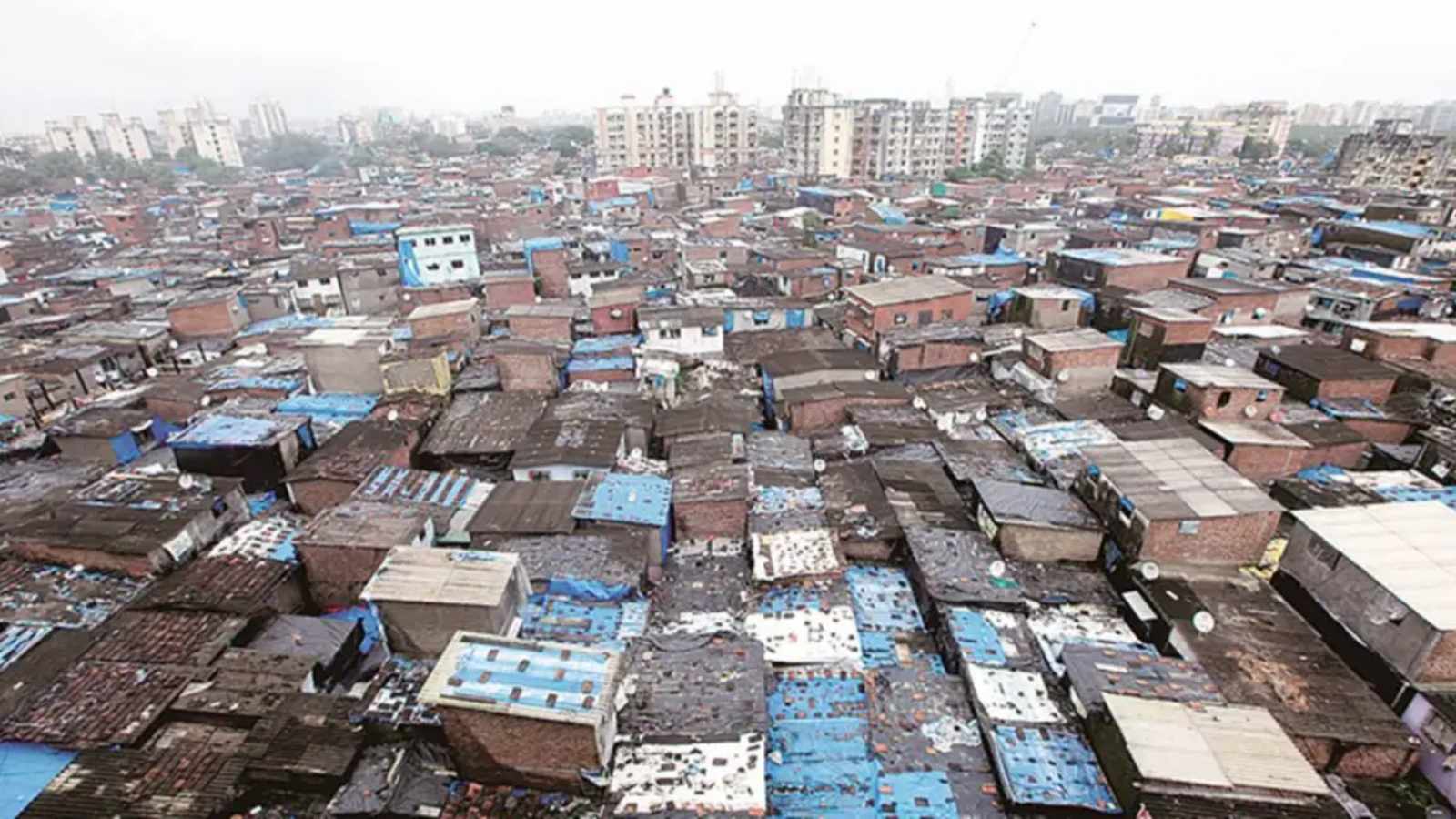
4 min readNew DelhiAug 19, 2026 08:14 AM IST At present, slum rehabilitation in the Delhi is governed by the Delhi Slum and JJ Cluster Rehabilitation and Relocation Policy, 2026, which was cleared in June. (Representational image) More floors, more space to sell — Delhi’s new slum rehabilitation framework is offering private developers a bigger incentive to take up projects that have moved slowly. Under the draft Master Plan for Delhi (MPD)-2047, developers will now be allowed to build high-rises on slum land and sell a larger share of it for profit under the public-private partnership (PPP) model. Flats for all The changes come as the Delhi Assembly, last week, passed amendments to the Delhi Urban Shelter Improvement Board (DUSIB) Act, widening eligibility criteria, virtually making all slum dwellers eligible for a flat in place of their current dwelling unit. The amendments extended the cut-off date for eligible slum dwellers by 10 years, making those living in units that existed on or before January 1, 2025, eligible for rehabilitation.At present, slum rehabilitation in the Capital is governed by the Delhi Slum and JJ Cluster Rehabilitation and Relocation Policy, 2026, which was cleared in June. There are about 750 slums in Delhi. Around half are located on land owned byuniongovernment agencies, including the Railways, Land and Development Office and Delhi Development Authority (DDA), which is the nodal agency for rehabilitation of these slums. The other half is located on land owned by the Delhi government, where the nodal agency is DUSIB, which comes under the Urban Development department. Slow rehab process The rehabilitation process, however, has progressed at an excruciatingly slow pace. So far, only two in-situ projects – in Ashok Vihar and Kalkaji – have been completed, both by the DDA. Together, they have provided around 4,700 flats. Under the PPP model, developers build houses for eligible slum dwellers on part of the slum land. The remaining land is developed commercially and sold. The underlying rationale is that the developer recovers the cost of building units for slum dwellers by making profits from the “free sale” component. Since many slums are located on high value land in central parts of the city, the model was expected to work.Story continues below this ad However, DDA has struggled to attract private developers, who have cited reasons like small land parcels, difficult locations near drains and railway tracks, and frequent litigation. Previous tenders issued by DDA for PPP rehabilitation of slum dwellers have received lukewarm response from developers. Attractive PPP model The new MPD-2047 seeks to make the PPP model more attractive. The Floor Area Ratio (FAR) of both the rehabilitation and commercial component has been increased to 500. In the previous draft of MPD-2041 and MPD-2021–applicable until the new plan is notified–the residential component had a FAR of 400 and the commercial component a FAR of 300. A higher FAR means more dense construction is allowed, either in the form of larger floors or more floors.Story continues below this ad The proportion of land that can be used for commercial sale has also gone up – from 40% earlier to 60%. The minimum share of land to be used for rehabilitation has, meanwhile, fallen from 60% to 40%. “Previously, developers did not show interest in the policy. By allowing them to build more, we hope they will participate in the rehabilitation. But we have made sure it will not be at the cost of slum dwellers,” a DDA official said. According to the new plan, all eligible beneficiaries are to be accommodated at the same site, failing which they may be relocated to other feasible sites. For slums located on physically or financially unviable sites — where density constraints, land configuration or redevelopment costs make on-site rehabilitation impractical — the plan permits relocation of residents to available vacant EWS housing stock or other slum schemes. Separat

Verified Dispatch
Read Story →
Another day under water: Heavy rain cripples Mumbai commute
general
Indian Express·16h ago

Another day under water: Heavy rain cripples Mumbai commute

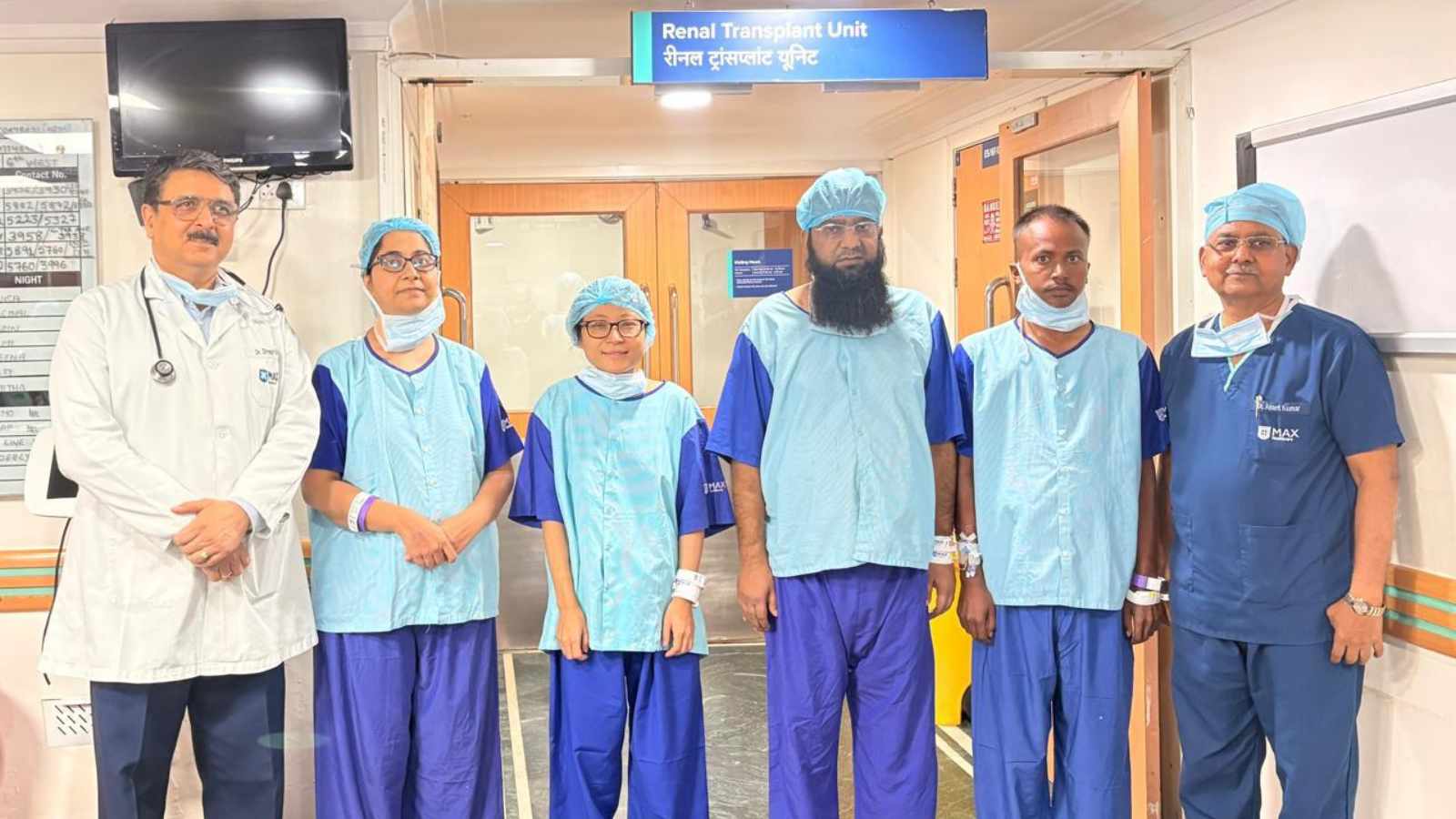
This one sounds like a film script: Four families from four corners of India, who had never met, brought together by the same desperate calculation — if they could not save their own, perhaps they could save each other’s.There was a family from Nagaland. Another from Kashmir. Yet another from Punjab. And the last from Bihar. Beyond different communities and faiths, they had a loved one, who needed a kidney transplant and was running out of time. Each of the four patients also had someone willing to donate one. But there was a problem. The kidneys belonged to the wrong people. In each family, the willing donor was a near relative of the patient — the category of donor contemplated under India’s transplant law — but the two were biologically incompatible. In several of the patients, the problem was not simply blood-group compatibility. Three of the four recipients were highly sensitised and had positive cross-match results, meaning their blood contained antibodies capable of attacking the cells of a particular donor.The families had found a possible answer: don’t give the kidney to the person you love. Give it to someone else’s loved one instead. Donor A would give to Recipient B. Donor B would give to Recipient C. Donor C would give to Recipient D. And Donor D would give to Recipient A. This was a circle of strangers, each saving a family they had never met, in the hope that another stranger would do the same for theirs. But there was another obstacle. The law. Why four pairs were so much harder to approve than two Kidney-swap transplantation is not new in India. The basic idea is relatively simple: when a willing donor cannot donate to their intended recipient because of biological incompatibility, another donor-recipient pair can enter the exchange. The two donors effectively swap recipients. The difficulty grows rapidly as more pairs are added. A transplant team has to establish not merely that each donor is compatible with somebody, but that the entire chain works. A kidney has to move in such a way that the chain closes. Immunological testing is central to that process. Tests such as the single antigen bead, or SAB, test can identify antibodies in a recipient that may react against specific human leukocyte antigens on a prospective donor’s kidney. Previous pregnancies, blood transfusions and transplants can all contribute to sensitisation. In a four-way exchange, there are many more possible combinations — and every link matters. “We have tried three-way swaps manually, but matching donors with unrelated recipients is a very tedious and complex task,” Dr Anant Kumar, who led the operation, told The Indian Express. For the four families who had already spent years waiting, the question was no longer simply whether a compatible kidney existed. It was whether the law would allow them to use it.Story continues below this ad Crossing legal hurdles The proposal for a four-way kidney swap was rejected by the Authorisation Committee, a legal body established under India’s Transplantation of Human Organs and Tissues Act (THOTA). The Appellate Authority upheld that decision, taking the view that Section 9(3A) of THOTA only contemplated an exchange between only two incompatible donor-recipient pairs. A larger chain, the authorities held, would require an amendment to the law. On May 26, 2026, the Delhi High Court stepped into that gap. In Shivani Khurana & Ors. v. Union of India & Ors., Justice Purushaindra Kumar Kaurav set aside the orders of the Authorisation Committee and the Appellate Authority. The court held that Section 9(3A) should not be read as restricting swap transplantation to two donor-recipient pairs. The references in the provision to a “first donor” and “second donor”, it held, were illustrative of the mechanism rather than a statutory ceiling on the number of pairs. There was, in other words, a gap between what the technology and medicine could make possible and what officials believed the wording of the law allowed

20 updates
Read Story →
generalIndian Express·17h ago

After threat by industrialists to migrate, Maharashtra Minister Uday Samant promises to resolve grievances

Maharashtra Chief Minister Devendra Fadnavis. (ANI Photo) 5 min readMumbaiAug 19, 2026 06:46 AM IST First published on: Aug 19, 2026 at 06:46 AM IST The Mahayuti-led Maharashtra government has framed new rules empowering the Chief Minister, Devendra Fadnavis, to override a decision taken by any minister, provided that the CM’s action is in public interest and the reasons for doing so are recorded in writing. This provision is part of the Maharashtra Government Rules of Business, 2026, notified by the General Administration Department on August 14, which has replaced the 1975 regulation of government business.

4 updates
Read Story →