
Loading dispatches...
← Return to Newsroomgeneral
Amrit Bharat Station Scheme: Railways fast-tracks modernisation of Tamil Nadus 95-year-old Tambaram station
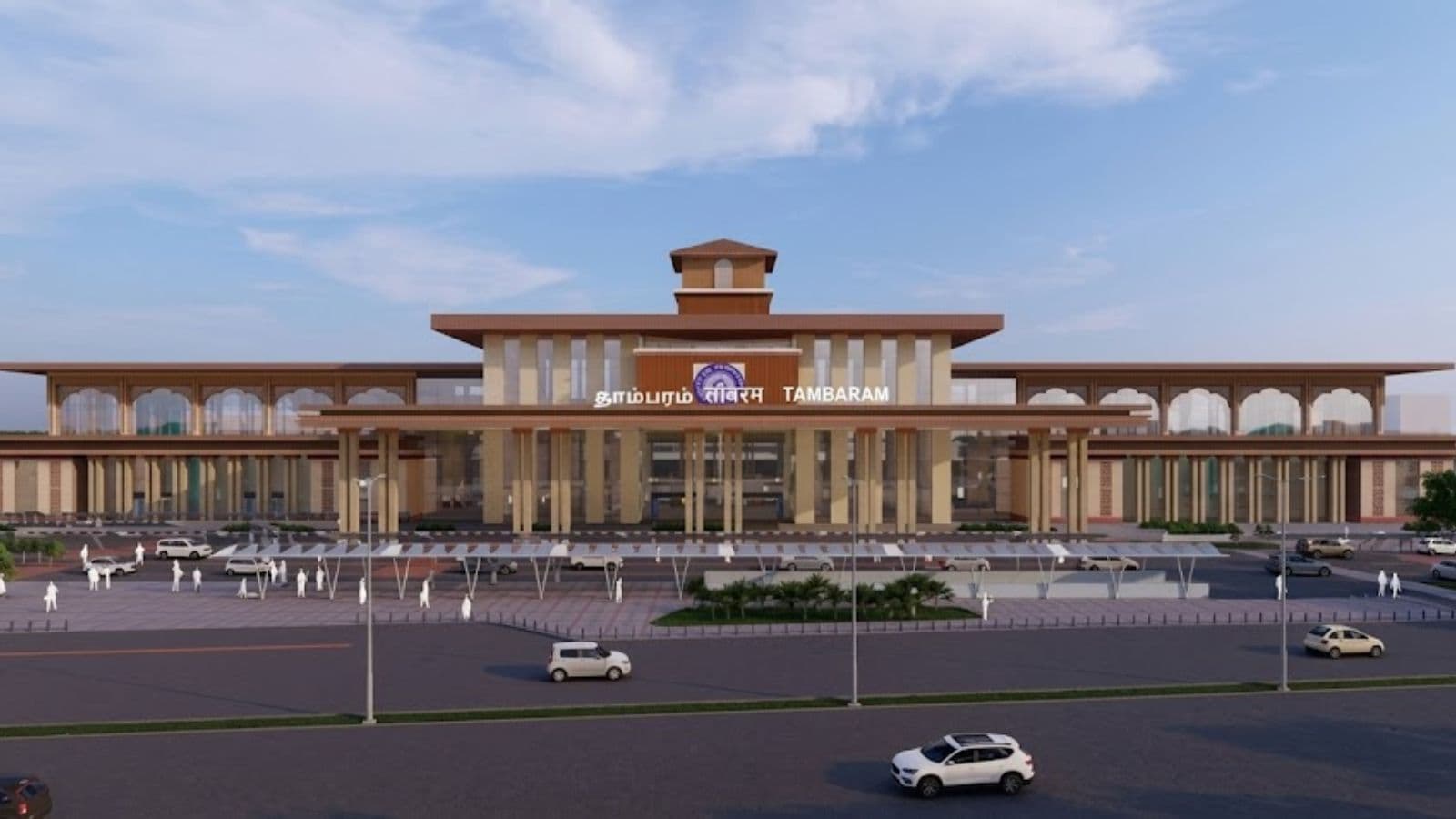
Tambaram station modernisation under the Amrit Bharat Station Scheme (Image: RLDA/ Photo enhanced using AI)Redevelopment of Tambaram railway station: The Ministry of Railways has ramped up the redevelopment work of Tamil Nadu’s Tambaram railway station. The station’s modernisation is underway under the Amrit Bharat Station Scheme. The station falls under the administrative control of Chennai Division of Southern Railway (SR) zone. “Chennai Division of Southern Railway is rapidly advancing major passenger infrastructure augmentation works at Tambaram Railway Station under a comprehensive modernization plan valued at approximately Rs 24 crore,” the release said. About Tambaram railway station in Tamil Nadu The Tambaram railway station is Chennai’s third major terminal after Chennai Central and Chennai Egmore. It handles nearly 1.67 lakh passengers daily, including suburban commuters, long-distance and interstate travellers. As one of the country’s busiest railway terminals, Tambaram station has emerged as an important mobility hub in the Chennai suburban network. The history of Tambaram railway station dates back to 1931. According to Southern Railway, the work for suburban train services started in 1928 and became operation in 1931 between Chennai Beach and Tambaram with Electric suburban train services. Redevelopment of Tambaram railway station In a statement, A Elumalai, Public Relations Officer (PRO) of the Chennai Division, said that as part of the ongoing redevelopment work, a new 8-metre-wide Foot Over Bridge (FOB) connecting the eastern and western sides of the station across all 10 platforms has been commissioned. He added that the facility has been designed to ease congestion, improve inter-platform movement and ensure smoother passenger dispersal during peak hours. “The existing FOB will continue to function alongside the new bridge to distribute passenger flow effectively,” he said. As part of the makeover plan, Tambaram railway station will be equipped with nine lifts and 10 escalators across its platforms. To enhance passenger amenities, several facilities have been planned, including additional road access to the new 8-metre-wide Foot Over Bridge (FOB), a circulating area with parking on the west side, shelters and coach guidance boards on the platforms.Story continues below this ad “Execution at Tambaram Railway Station is technically challenging due to continuous suburban and long-distance train operations. All works are being carried out in a live operational environment without disruption to train services, requiring phased execution, strict safety protocols and coordinated inter-departmental planning,” the railway official said. Anish Mondal is a journalist with over nine years of experience covering the railways and roadways. Currently a member of the Indianexpress.com editorial team, Anish specializes in high-impact sectors. Professional Journey Anish began his career at the public broadcaster Rajya Sabha Television (now Sansad TV), where he developed a foundational understanding of legislative processes and national governance. In 2018, he transitioned to digital financial journalism at FinancialExpress.com, spending nearly six years refining his expertise in market trends and corporate reporting. Before joining The Indian Express in 2025, he served as a key contributor at ETNowNews.com. Education & Expertise Anish’s reporting is backed by a rigorous academic background in communication and the humanities: Master of Journalism and Mass Communication (MJMC) – Apeejay Stya University Post Graduate Diploma in Journalism and Production (PGTVRJP) – Apeejay Institute of Mass Communication Bachelor of Arts (English Honours) – University of Calcutta Areas of Coverage Connectivity: Detailed reporting on the expansion of Indian Railways and National Highway networks. ... Read More Stay updated with the latest - Click here to follow us on Instagram© IE Online Media Ser
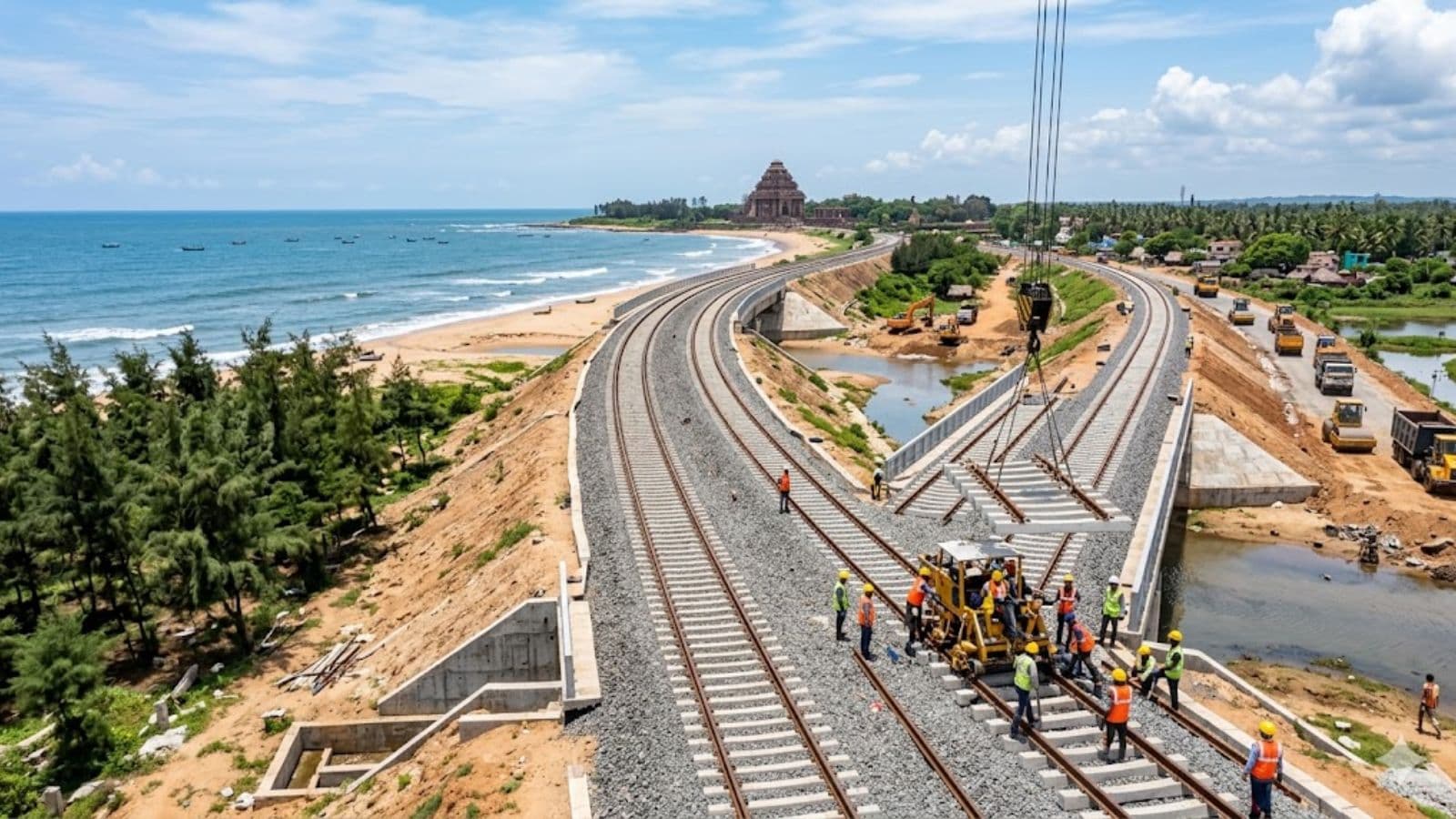
The Puri-Konark railway project is being executed under the administrative jurisdiction of the East Coast Railway (ECoR) zone. (Image generated using AI)Puri-Konark rail line project progress: The Ministry of Railways has accelerated work on the Puri-Konark new rail line project, which is expected to emerge as a key link in Odisha’s proposed coastal rail triangle (Bhubaneswar-Puri-Konark). The project was sanctioned by the Railway Board on February 19, 2024, and was later declared a Special Railway Project on March 7, 2024. It is being executed under the administrative jurisdiction of the East Coast Railway (ECoR) zone. Speaking to Indianexpress.com, Deepak Rout, Chief Public Relations Officer (CPRO) of ECoR said that the proposed 32-km-long Puri-Konark rail link is expected to transform pilgrimage connectivity in Odisha. He said the project will connect the Jagannath Dham in Puri with the Konark Sun Temple. The official further said that although the two towns are located barely 35 km apart along the Bay of Bengal coast, they currently do not have direct rail connectivity.“The proposed new rail line between Puri and Konark — a 32km greenfield corridor that promises to ease access for millions of pilgrims and tourists visiting the iconic Jagannath Temple and the UNESCO-listed Sun Temple each year,” Raut said. Land acquisition for Puri–Konark rail project progresses: Railways The railway official said that ECoR has moved ahead with the land acquisition process as the 521-acre Puri-Konark rail line project progresses through various statutory approvals. “For the financial year 2026-27, a significant outlay of Rs 138.38 crore has been allocated to maintain construction and land acquisition momentum,” Deepak Rout told Indianexpress.com. “The proposed alignment traverses the tehsils (sub-districts) of Puri and Gop, requiring acquisition of approximately 521.48 acres of land — of which 438.81 acres is private land spread across 36 villages, and 82.67 acres is government land across 33 villages. No forest land is affected, a reassurance that has somewhat eased the concerns of environmental groups. Acquisition is progressing under the Railway (Amendment) Act, 2008, with the Competent Authority for Land Acquisition (CALA) issuing a series of Section 20A notifications — the statutory step that formally initiates land acquisition proceedings. In Puri tahasil, notifications have been issued for nine villages covering 108.43 acres, while in Gop tahasil, notifications cover twenty-four villages with a total area of 242.14 acres,” he said. Significance of Odisha’s Puri-Konark railway line project According to the Railway official, the 32-km-long Puri-Konark line project is expected to catalyse tourism infrastructure development across intervening coastal villages, many of which have seen limited economic activity. He noted that the alignment avoids all forest land as a critical environmental consideration given the proximity of the ecologically sensitive region. Anish Mondal is a journalist with over nine years of experience covering the railways and roadways. Currently a member of the Indianexpress.com editorial team, Anish specializes in high-impact sectors. Professional Journey Anish began his career at the public broadcaster Rajya Sabha Television (now Sansad TV), where he developed a foundational understanding of legislative processes and national governance. In 2018, he transitioned to digital financial journalism at FinancialExpress.com, spending nearly six years refining his expertise in market trends and corporate reporting. Before joining The Indian Express in 2025, he served as a key contributor at ETNowNews.com. Education & Expertise Anish’s reporting is backed by a rigorous academic background in communication and the humanities: Master of Journalism and Mass Communication (MJMC) – Apeejay Stya University Post Graduate Diploma in Journalism and Production (PGTVRJP) – Apeejay Institute
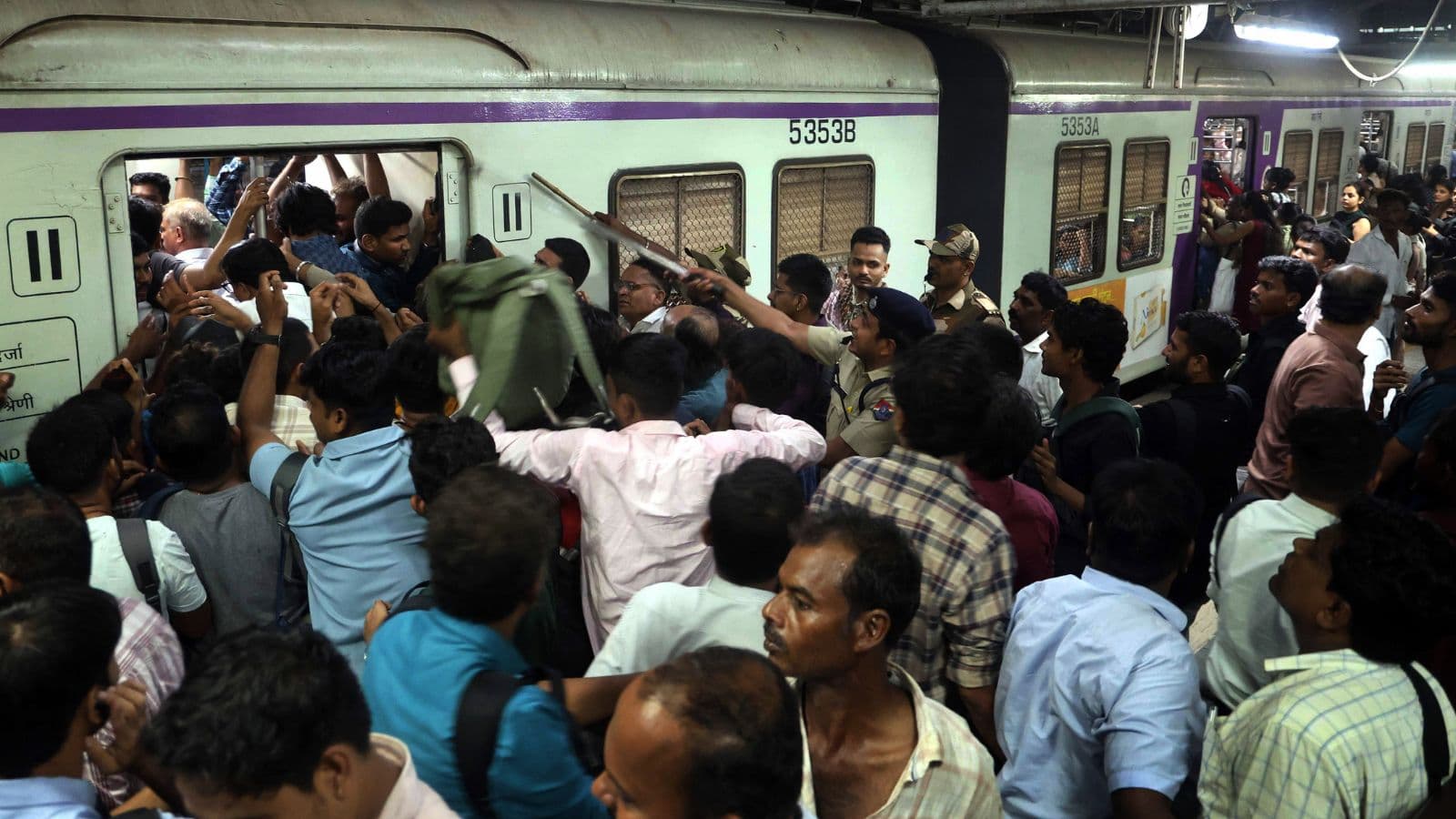
Between 5.15 pm and 5.45 pm, train managers, commonly known as guards, staged a ‘work-to-rule’ strike at Chhatrapati Shivaji Maharaj Terminus. Three pairs of suburban services between CSMT and Kalyan were cancelled. Several others were delayed. Platforms got crowded during rush hour. Normal services resumed after railway authorities sat down with guard representatives. The trigger was a single circular issued eight days ago.On May 7, Central Railway’s Principal Chief Operations Manager issued Correction Slip 15, introducing revised rules for how guards and motormen communicate while a train is moving. Under the new protocol, as a train approaches the next station, the guard must send an advance bell signal to the motorman, giving him time to anticipate the stop and begin braking. If the motorman doesn’t respond and the train comes in too fast, the guard must apply the brakes himself. The reasoning is straightforward. In April, a Badlapur-bound fast local overshot the platform at Vikhroli. In March, an AC local to Kalyan stopped two coaches past the designated halt point at Bhandup. No one was hurt in either case, but both incidents triggered internal safety reviews. The new circular is Central Railway’s response. Platforms got crowded during rush hour. Normal services resumed after railway authorities sat down with guard representatives. (Express photo by Deepak Joshi)Q: What does a guard actually do?Story continues below this ad Most commuters think of the guard as the person waving a flag at the rear of the train. The job is considerably more involved than that. Guards are stationed in the last coach and are responsible for signalling the all-clear for departure once passengers have boarded safely. They communicate with the motorman through a system of bell codes: two bells means ready to go, one bell means stop immediately. During the journey, guards monitor the train for anything unusual, from strange sounds to brake binding, and flag it to the motorman. They can apply emergency brakes if the train approaches a station above 40 kmph. They also ensure that the public address system, flasher lights and tail lamps are all working. The motorman, at the front, drives the train and is guided by trackside markers like EMU halt boards to stop at the right spot. Q: Why are guards unhappy? Guard associations say the new circular adds to a workload that is already physically demanding. A guard’s eight-hour shift covers entire round trips, often without breaks, requiring constant attention throughout. In summer, with temperatures inside coaches climbing, the conditions are particularly punishing.Story continues below this ad “The job already demands constant attention throughout the journey. Adding more responsibilities without addressing existing concerns is unfair,” said a guard, who did not want to be named. Guards also pointed out that Western Railway already follows a similar advance-signal practice, and trains have still overshot platforms there. So the measure, they argue, isn’t a guaranteed fix. Q: What is Central Railway saying? Railway officials say the circular is about safety, not about burdening guards. “Guards are familiar with their routes and can gauge distances between stations. The advance signal is a preventive step that adds an extra layer of safety,” a senior official said. A meeting between CR and representatives of the Central Railway Mazdoor Sangh has been scheduled for May 18 to work through the concerns.Story continues below this ad Central Railway has also recently rolled out a GPS-based Signal Location Announcement System, called SILAS, on suburban trains. It alerts motormen 350 metres and 250 metres before an upcoming signal, reducing the chance of human error. It also tells the motorman the next halt based on the route selected by the guard, adding another layer of coordination between the two. The strike lasted less than 30 minutes. The underlying disagreement will take longer to resolve.
Initially pegged at Rs 120 crore, the cost of the project is now expected to exceed Rs 245 crore. (File Photo)The Union Railway Ministry has granted in-principle approval for the construction of a new suburban railway station between Thane and Mulund. Union Railway Minister Ashwini Vaishnaw conveyed the approval in a letter to Maharashtra Chief Minister Devendra Fadnavis. The CM took to social media, claiming that the proposed station would make transportation in the Mumbai Metropolitan Region more efficient and dynamic.The new station is expected to cater to commuters from Ghodbunder, Pokhran Road and the Wagle Estate area. As per official estimates, it could reduce footfall at Thane and Mulund stations by 31% and 24%, respectively. With Thane station currently handling over six lakh passengers daily, the project is aimed at easing congestion at one of the region’s busiest transit hubs. Conceptualized in 2019, the project will be spearheaded by Central Railway (CR) and financed by Thane Smart City Limited. While the Railways will develop the core infrastructure, including tracks and platforms, the Smart City body will execute work on the circulating area. The station is also set to include facilities such as vehicular parking, a deck and a bus terminal. Initially pegged at Rs 120 crore, the cost of the project is now expected to exceed Rs 245 crore. The station will come up on a 14.83-acre plot originally earmarked for the Thane Mental Hospital, which was transferred to the Railways in 2023 after permission from the Bombay High Court. The project had faced delays due to funding constraints with the Smart City body. Subsequently, Thane MP Naresh Mhaske sought financial support from the Union Railway Ministry, which the authority obliged.Story continues below this ad In March 2026, the Thane Municipal Corporation passed a unanimous resolution to name the station after late Shiv Sena leader Anand Dighe. Following the approval, the CR will prepare a Detailed Project Report (DPR), including revised cost estimates, before seeking final sanctions to commence work.



Discussion (0)