
Loading dispatches...
← Return to NewsroomScience
NASA's X-59 jet is ready to break the sound barrier for the 1st time this month
Will the X-59 finally break the sound barrier?
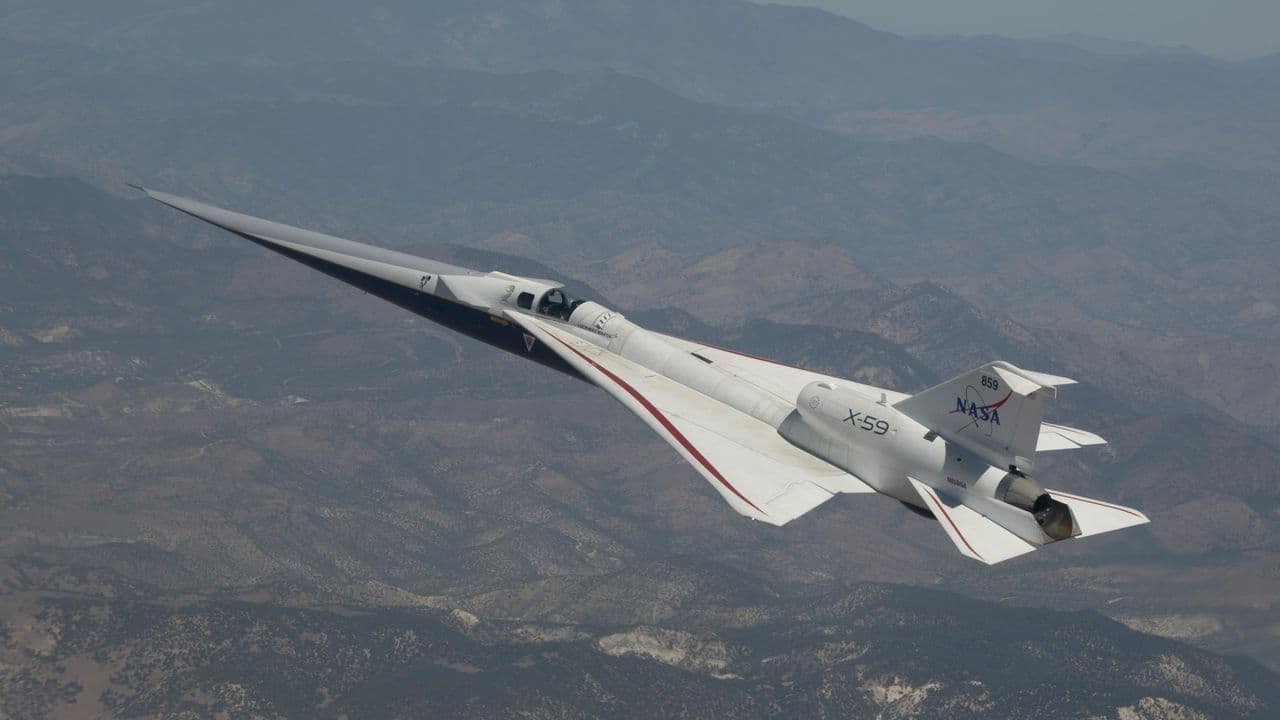
Will the X-59 finally break the sound barrier?
Will the X-59 finally break the sound barrier? (The X-59 is a supersonic aircraft designed with a radical elongated geometry that aims to reduce the volume of the sonic booms it can create when breaking the sound barrier. NASA's goal with the X-59 is to help develop "quiet" supersonic technologies that could lead to aircraft designs that minimize the impact of sonic booms on the ground below, which could potentially enable current restrictions on supersonic flight to be lifted.After making its first test flight in October 2025 and going on 14 test flights since March 2026, the X-59 is finally ready to take on its first supersonic flight sometime this month, NASA says. According to the agency, the aircraft will reach Mach 1.4 (925 miles per hour or 1,489 kilometers per hour) at approximately 55,000 feet (16.7 kilometers). "What comes next is the first time this one-of-a-kind aircraft will fly supersonic," said Cathy Bahm, project manager for NASA's Low Boom Flight Demonstrator. "Completing the first mission-conditions flight is especially meaningful — it's the moment where we begin validating the aircraft in the environment it was designed for," Bahm said in a statement.NASA recently completed several key milestones in the X-59 testing program ahead of this first supersonic flight attempt. Just last month, the jet retracted its landing gear for the first time, revealing how the aircraft will look when in full flight. NASA's X-59 quiet supersonic research aircraft flies above the agency's Armstrong Flight Research Center in Edwards, California. (95, or around 627 mph (1,009 km/h) and made its first pair of test flights in a single day. Engineers and technicians working on the program now have a much better understanding of the aircraft and its unique systems. NASA's X-59 quiet supersonic research aircraft flies over Rogers Dry Lake near the agency's Armstrong Flight Research Center in Edwards, California, on Tuesday, May 12, 2026. ( Because the nose of the X-59 is so elongated, pilots wouldn't be able to see what's in front of the aircraft out of a forward windscreen — if it even had one.The X-59 was designed without a forward windscreen at all, and instead uses a series of cameras that feed into an augmented reality display. Through the XVS, X-59 pilots get a view of what's in front of the aircraft with its nose completely removed from the picture. A rendering the XVS system inside the X-59 cockpit. The XVS provides pilots with an augmented reality view to compensate for the jet's lack of a forward facing windscreen. ( NASA has also been validating test instruments to help measure shockwaves the X-59 produces. One of NASA's F-15B research jets performing a calibration flight of a shock-sensing probe designed for the X-59 test campaign as it flies over Edwards, California on Aug. 6, 2024. (That phase will be key for NASA's overall goal for the mission: reducing the impact of the sonic boom that is perceived on the ground below the aircraft as it flies over at above the speed of sound.Supersonic flight has been prohibited above land within a certain distance of the U.S. since 1973 due to how disruptive the thunderous sonic booms are to people on the ground. NASA hopes the technologies developed for the X-59 can enable supersonic fli
Spiral galaxy's brilliant heart shines bright in a new picture from NASA's Webb telescope ABC News - Breaking News, Latest News and Videos Spiral galaxy’s brilliant heart shines bright in a new picture from NASA’s Webb telescope AP News A beacon of light in swirls of dust European Space Agency 45 Million Light-Years Away, Scientists Finally Captured the Violent Heart of a Galaxy Being Consumed by Its Own Black Hole The Daily Galaxy NASA reveals ‘beacon of light’ 45 million light‑years away Nonstop Local News Montana
Discussion (0)