
Loading dispatches...
← Return to Newsroomgeneral
Punjab vigilance arrests former chief of power corporation, Ludhiana builder
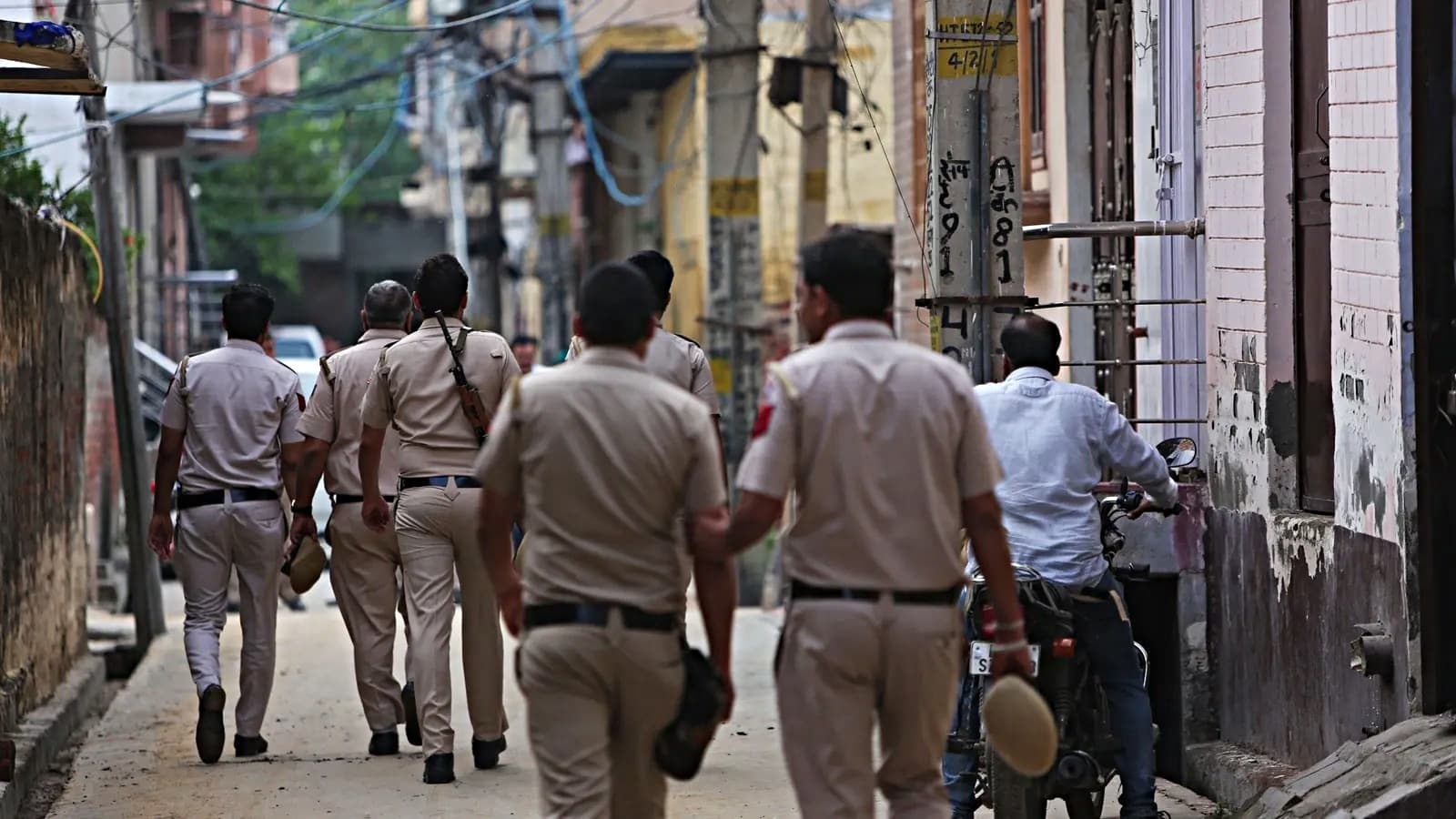
According to Vigilance Bureau officials, the case emerged from a vigilance inquiry dated May 10, 2021, following which an FIR was registered this year. (File Photo)The Punjab Vigilance Bureau on Wednesday arrested former chairman-cum-managing director (CMD) of Punjab State Power Corporation Limited (PSPCL) K D Chaudhary, retired senior executive engineer Sanjeev Prabhakar, and Ludhiana-based builder Amit Garg in connection with alleged irregularities in the installation of a 66 KV electricity substation in Basant Avenue colony over a decade ago. The arrests were made by the Economic Offences Wing of the Vigilance Bureau, Ludhiana, in a case linked to alleged financial loss caused to PSPCL during the installation of the 66 KV Basant Avenue substation in 2014-15.Inquiry led to FIR According to Vigilance Bureau officials, the case emerged from a vigilance inquiry dated May 10, 2021, following which an FIR was registered this year. An official spokesperson of the Vigilance Bureau said the coloniser of Basant Avenue, allegedly in collusion with concerned PSPCL field officers, got the 66 KV substation installed inside the private colony at government expense instead of bearing the cost himself, as required under applicable norms and electricity guidelines. Sources in the Vigilance Bureau claimed that the installation of the substation had cost nearly Rs 10 crore and alleged that the expenditure was incurred by PSPCL despite the infrastructure primarily benefiting the private colony. Alleged violations in approvals, load assessment The Vigilance Bureau further alleged that if the electricity load of interconnected colonies developed by the same coloniser had been assessed collectively and proper verification of no-objection certificates (NOCs) carried out, the entire expenditure for the substation could have been recovered from the builder. Officials also alleged that guidelines issued by the Ministry of Power regarding the installation of substations were not properly followed.Story continues below this ad According to the Vigilance Bureau, the substation is located around 3 km from Pakhowal Link Road in an underdeveloped area surrounded by fields, and even now lacks a proper paved road approach. The agency alleged that these shortcomings were neither highlighted in the original proposal nor reflected in subsequent office notings before approval was granted. The proposal related to the substation was allegedly forwarded by then XEN Sanjeev Prabhakar and approved by then CMD K D Chaudhary despite objections and deficiencies, the Vigilance Bureau claimed. Basant Avenue, though considered a posh private colony in Ludhiana, falls under rural panchayat jurisdiction and remains outside the municipal corporation limits. Engineers’ association backs former CMD Meanwhile, members of the Punjab State Electricity Board Engineers Association reached Ludhiana from different parts of the state to express solidarity with Chaudhary.Story continues below this ad Ajaypal Singh Atwal, general secretary of the association, said, “We are not much aware of the details of the case but we are concerned about the age of Chaudhary Saab as he is 75 years old now. We only know that it is a 12-year-old case.” Chaudhary was the first CMD of PSPCL and had resigned in March 2017 after the Congress government came to power in Punjab. Political buzz within PSPCL circles The arrests also triggered discussions within PSPCL circles, with some employees informally claiming that the revival of the old case could be politically linked and aimed at diverting attention from developments surrounding the arrest of Punjab Power Minister Sanjeev Arora. The alleged irregularities pertain to the period when the Shiromani Akali Dal-BJP alliance government was in power in Punjab.Story continues below this ad The Vigilance Bureau said further investigation in the case is ongoing.

Chandigarh’s commercial landscape is undergoing a dramatic transformation as the city is rapidly embracing a round-the-clock lifestyle. In what signals the rise of a full-fledged night economy, more than 179 establishments — ranging from multinational fast-food giants and quick-commerce firms to local cafes, bakeries and convenience stores — have submitted undertakings to the Labour Department, UT, seeking permission to operate 24×7.What was once considered a city that largely shut down early is now steadily evolving into a 24×7 consumption hub — something that storeowners say is driven by changing lifestyles, food delivery demand and the rise of convenience-based retail.According to records submitted before the Deputy Commissioner UT, as many as 179 establishments across the city sought permission to operate 24 hours a day. It increased from 48 last year to 179 now. The list includes major national brands, multinational food chains, cloud kitchens, cafés, grocery stores, bakeries, pharmacies and even local eateries that are now aligning themselves with the growing night-time economy. “As most of us are opening at night, it clearly reflects a shift in consumer behaviour and business strategy. Chandigarh was once known for its early market closures and disciplined timings like I remember in restaurants things would start packing up by 9.30 pm. But now Chandigarh is now steadily moving towards becoming a city that stays awake all night,” Ketan Kalra, owner of Super Donuts, said. According to the list of outlets that are open are major national and international brands including McDonald’s, KFC, Domino’s Pizza, Pizza Hut, Subway, Baskin Robbins and Yo! China. Convenience retail giant 24 Seven, operated by Godfrey Phillips India Limited, has also significantly expanded its late-night presence with outlets spread across sectors 15, 22, 26, 35 and 38.Story continues below this ad As per details, multiple facilities of Blinkit have applied for 24-hour operations across sectors 17, 34, 37 and Burail, underlining how demand for groceries, essentials and food delivery has surged beyond traditional business hours. Business managers say residents increasingly expect instant access to food, medicines, beverages and daily essentials at any time of the day. Not just this, the details also reflect that the hospitality and café culture in Chandigarh is also witnessing a major evolution. Popular local names such as Classic 44, Baba Chicken, Chai Sutta Bar, Audi Chaiwala, Roll Xpress, The Belgian Waffle Co., MG Bakers, Cakes & Stuff, Food Nation, Downtown Café and Kitchen 21, Don Clooney Pizzeria & Café, Caffe Sicily, Manny’s, Belly Boy Foods and Desi Urban Chai are among the establishments that have moved towards 24×7 operations. Several well-known food hotspots of the city are now emerging as dedicated late-night zones. Sector 8’s inner market, already famous for its bustling food culture, has seen a particularly high concentration of establishments opting for 24×7 functioning.Story continues below this ad Outlets such as The Fire Empire, Pizza QSR, Tikka World, Superdonuts, Get Desserted, Chefette Food, Milk Shake & Co., World of Wings and Nihari Foods are among those catering customers through the night. Meanwhile, sectors 15, 22, 26, 34 and 35 are fast becoming the backbone of Chandigarh’s expanding night economy. From fast-food chains and dessert parlours to cafés, grocery stores and cloud kitchens, businesses across these sectors are adapting to the city’s growing appetite for after-hours dining and shopping. Industry experts believe the shift is being fuelled by a combination of factors — increasing urbanisation, app-based delivery services, changing work patterns, student populations, IT professionals and the rise of convenience-driven lifestyles. The post-pandemic boom in home delivery culture has further accelerated the demand for businesses to remain operational beyond midnight.Story continues below this ad Chandigarh Deputy Commissi
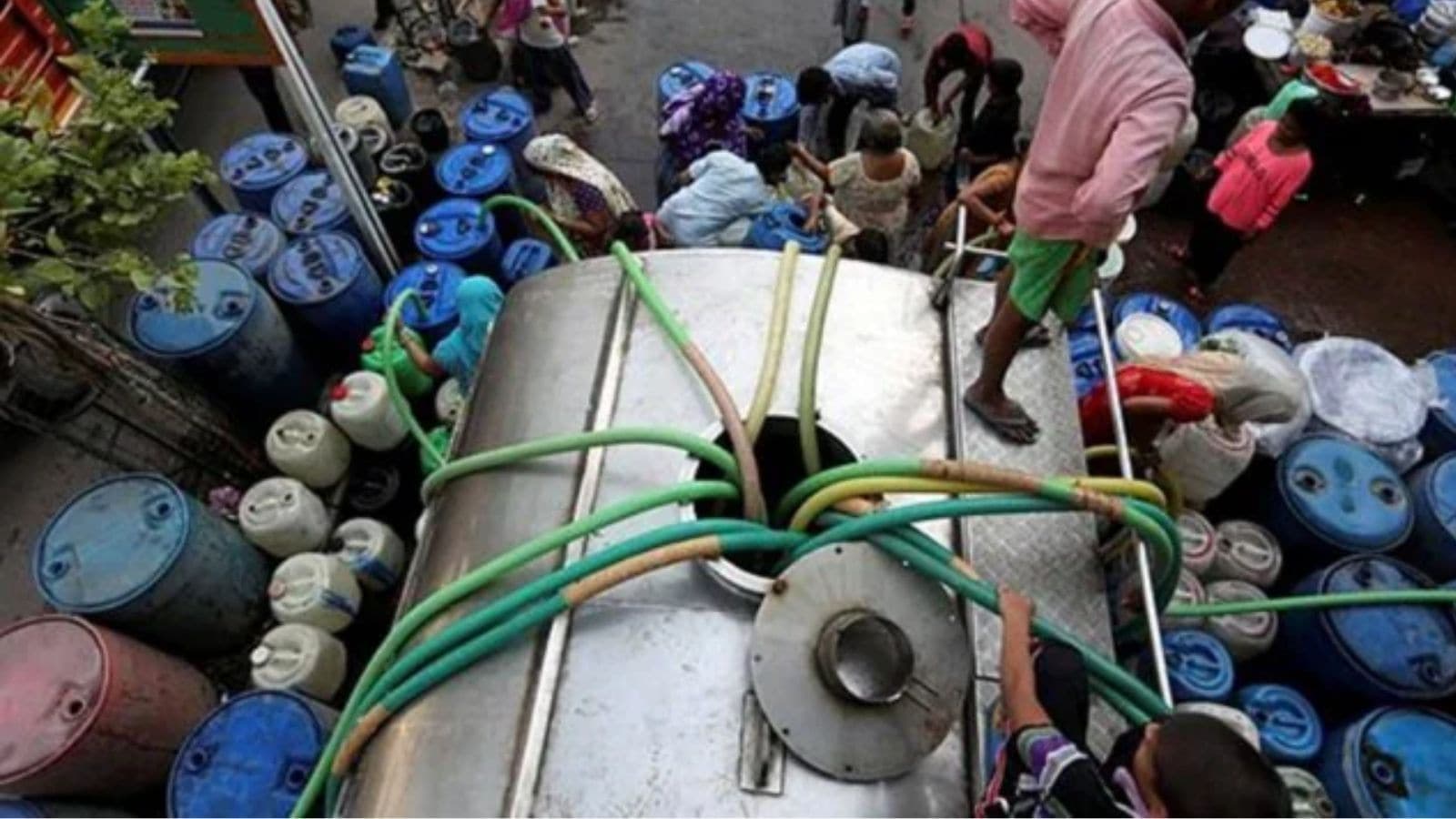
Mumbai’s water supply is set to get a massive boost of 3,000 million litres per day (MLD)—nearly doubling the current supply—by 2030, as the Brihanmumbai Municipal Corporation (BMC) is set to construct two water treatment plants (WTP) at Bhandup and Panjrapur.This is part of the BMC’s move to upgrade Mumbai’s water supply infrastructure to meet future demand. The move also comes in line with the Mahayuti securing a majority in the civic elections held in February. The Mahayuti had promised to upgrade Mumbai’s water supply network.The move also comes during the summer, when the BMC implements supply cuts to avoid water shortages. Mumbai has a water demand of 4,300 MLD, but the civic body is now able to supply only 3,850 MLD. A WTP is an engineering facility where water is treated to make it fit for potable usage. Mumbai draws its potable water from seven different lakes—Tulsi, Vihar, Tansa, Bhatsa, Modak Sagar, Upper Vaitarna, and Middle Vaitarna. At present, water from these lakes is transported to the Bhandup filtration plant, where it is filtered; the treated water is then sent to households and institutions. The Bhandup plant is Mumbai’s sole WTP, established in 1978. Over time, the facility has become old. Meanwhile, Mumbai’s water demand has also increased, and the Bhandup plant is equipped to treat a maximum of 2,810 MLD. With several water supply projects underway, the BMC has proposed augmenting the supply chain, under which the Bhandup plant will have a capacity to treat 2,000 MLD of water daily, while the Panjrapur facility will have a capacity to treat 910 MLD. These two facilities will be equipped to treat and supply 3,000 MLD of water daily, which will be nearly double the quantum supplied today.Story continues below this ad “In the next five years, several water supply projects are going to come up, including the 400-MLD desalination plant and the 450-MLD Gargai dam project. In total, the city will get an additional 850 MLD of water daily starting in 2029. As a result, there is a need to upgrade the filtration system, or else our existing facility will be inadequate,” an official told The Indian Express. The official said that once these two new facilities at Bhandup and Panjrapur become operational, the old WTP will be upgraded, providing another backup support for treating 2,000 MLD of water regularly. The cost of these two plants has been pegged at Rs 4,210 crore, and the BMC aims to commission them by 2030. The project is being awarded to the French giant Veolia, which will execute it with Welspun. Seven sewage treatment plants In addition to the desalination plant and the Gargai dam projects, the BMC is also constructing seven sewage treatment plants (STP) at a cost of Rs 27,700 crore at Worli, Dharavi, Bhandup, Ghatkopar, Bandra, Versova, and Malad. These STPs will treat Mumbai’s sewage water to make it pollutant-free and fit for non-potable usage.Story continues below this ad These seven STPs will have a combined capacity to treat 2,464 MLD, out of which 50 per cent or 1,232 MLD will be used for potable purposes. As a result, in addition to the 850 MLD of water that will come from the desalination plant and Gargai dam, an additional 1,232 MLD of water will also be pushed to the WTPs for treatment. In total, Mumbai will require daily treatment of 5,132 MLD of water by 2030.
Former Union Minister and Chandigarh MP Manish Tewari has urged Punjab Governor and UT Administrator Gulab Chand Kataria to introduce targeted welfare measures for the city’s urban poor and lower middle-class households, including 300 units of free electricity and 20,000 litres of free water a month for families earning below Rs 20,000.In a four-page communication, Tewari highlighted the economic distress faced by vulnerable sections and called for policy intervention to ensure affordability and dignity in basic living. He said many families were struggling with rising food inflation, the escalating cost of living, and mounting financial pressures.Referring to his visits across Chandigarh over the past 23 months, including urban villages and rehabilitation colonies, Tewari said he had witnessed first-hand the hardship faced by residents. “Many families are unable to pay lease rentals or licence fees for their small flats in relief and rehabilitation colonies, leading to cancellation notices and heavy interest demands from the Administration,” he said. Arguing that Chandigarh has the fiscal space for such relief, Tewari cited budget figures from Demand No. 53 of the Ministry of Home Affairs in the Union Budget 2026-27. He noted that Chandigarh’s actual spend in 2024-25 was Rs 6,598.19 crores, with net expenditure of Rs 5,858.93 crores, including Rs 1,027.87 crores on Power and Renewable Energy. For 2025-26, Rs 917.87 crores had been earmarked for Power and Renewable Energy, but revised estimates brought that figure down sharply to Rs 279.82 crores after power distribution in Chandigarh was privatised on February 1, 2025, with Chandigarh Power Distribution Limited (CPDL), a subsidiary of Eminent Electricity Distribution Limited (EEDL), taking over operations from the Engineering Department’s Electricity Wing. For 2026-27, only Rs 171.86 crores has been estimated for Power and Renewable Energy. Tewari said this represented a reduction of Rs 856.01 crores compared to the actual spend in 2024-25. “That is the fiscal space the Chandigarh Administration must leverage to provide 300 units of free electricity to families with a monthly income below Rs 20,000,” he said. He suggested the Administration seek Rs 856-1,000 crores through Supplementary Demands for Grants in September-October 2026 to reimburse CPDL for free power supplied from July 1, 2026. “This is the model already being followed in Delhi and Punjab, where governments reimburse distribution companies for free or subsidised power supplied to consumers,” he said.Story continues below this ad Tewari also argued that Chandigarh, as a Union Territory funded directly by the Centre, was better placed than Punjab to provide such relief. He noted that Punjab, despite a projected debt liability of Rs 4.47 lakh crores by March 31, 2027, and a debt-to-GDP ratio of 46.65 per cent, continues to provide free power. He further pointed to the Centre’s large welfare spending, citing schemes such as the Pradhan Mantri Garib Kalyan Yojana, which provides free food grains to 81.5 crore people at an annual cost of Rs 2.27 lakh crores; PM-KISAN, under which Rs 6,000 is given annually to 9.32 crore farmers at a cost of Rs 63,500 crores; and MGNREGA, with an annual budget of Rs 86,000 crores that provided employment to 7.88 crore people in 2024-25. On free water, Tewari recalled that on March 11, 2024, Congress and AAP councillors passed a resolution in the Chandigarh Municipal Corporation’s General House to provide free water to residents. Though the resolution was initially rejected by then Administrator Banwari Lal Purohit, the General House reaffirmed it on July 10, 2024. Tewari said the resolution remains valid but has not been implemented. He said estimates placed the cost of supplying free water to all Chandigarh residents at Rs 39.65 crores as of March 30, 2024. Restricting the benefit to households earning below Rs 20,000 a month would cost only about a quarter of that amount, which, he sa

Discussion (0)