
Loading dispatches...
← Return to Newsroomgeneral
Bihar Board BSEB extends class 11 spot admission, apply at exam.biharboardonline.org
New DelhiJul 3, 2026 10:26 AM IST BSEB has extended the class 11 spot admission deadline to July 9. (image: ai generated)The Bihar School Education Board (BSEB) has extended the deadline for class 11 spot admission for the academic year 2026-28. This allows students another opportunity to secure admissions in the intermediate (+2) institutions across the state. The new deadline is now July 9. Students can apply for it via the official portal at exam.biharboardonline.org. The BSEB had earlier scheduled the spot admission through the Online Facilitation System for Students (OFSS) from June 25 to July 1, 2026.The students who wish to secure admission can approach their respective schools and principals of their preferred intermediate institution, against vacant seats in their desired stream and subjects. The Board has further clarified in their official notification that students who have qualified class 10th from CBSE, CISCE and other recognised boards are also eligible to submit their applications for spot admissions based on the seat availability in the preferred institutions. The candidates who were selected in the previous OFSS merit lists and opted for the slide-up facility but were unable to secure admission in the upgraded institution are required to apply once again through the spot admission process. The board has stated that such students’ previous admission applications stand cancelled. If they fail to submit a fresh application for spot admission, they won’t be eligible to appear for the intermediate annual examination 028. Important instructions for the intermediate institutions: – The vacant seats should be displayed in at least three prominent places in the campus to ensure visibilityStory continues below this ad – Grant admission as per the seat availability in the respective stream and subjects – Regularly update the details of admitted students on the OFSS portal – Complete the final list of all the admissions by July 10 The intermediate institutions which are finding it difficult to update the admissions earlier due to technical difficulties have been permitted to complete the online update during the spot admission period.Story continues below this ad For more information on the spot admission process or in case of further doubts, students are advised to visit the official website of BSEB.
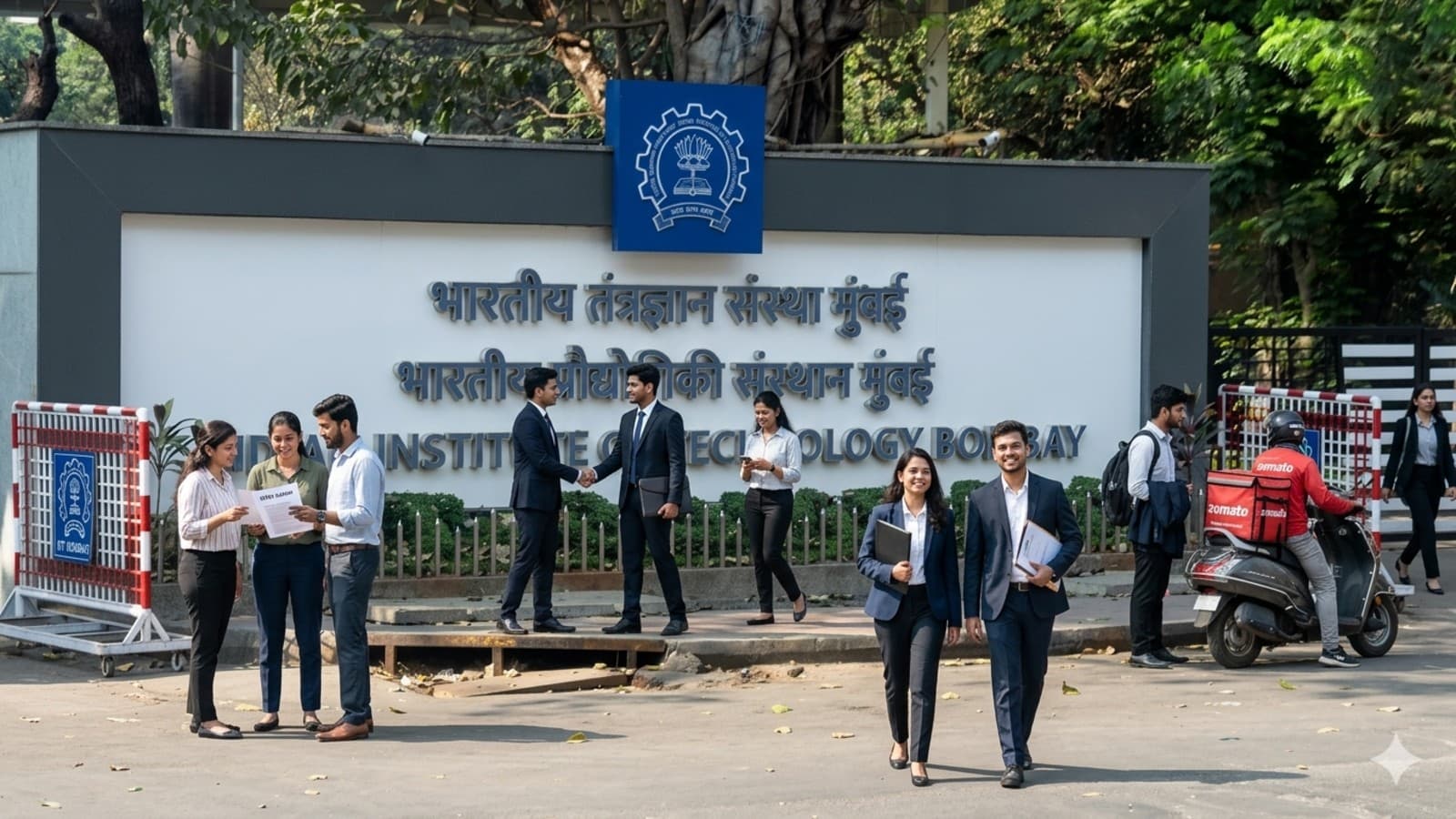
IIT Bombay will focus on areas such as AI, sustainability and clean technology to offer courses at this sub-campus. The Indian Institute of Technology (IIT) Bombay on Friday announced its first ever sub-campus outside India, in the US, which will be in collaboration with the State University of New York (SUNY) at Old Westbury. Marking its first expansion outside of India, the premier technology institute plans to set-up the engineering education wing for the US-based public university which has been offering various courses in streams such as Arts, Science, Business etc.Beginning with offering certificate courses from 2027, the institute plans to develop full-fledged degree programmes in future, which would be open for the global student population, including those in US and India. “Through a Letter of Intent (LoI) signed by Director of IIT Bombay Prof Shireesh Kedare and the President of SUNY Old Westbury Dr Timothy E Sams, the two institutions have agreed to partner in the development of new educational and research opportunities that would be offered on the Long Island, New York, campus,” stated the media release issued by the institute. It added that apart from work towards creating new academic offerings at all levels in science and engineering that will be focused on emerging fields such as artificial intelligence, this association involves developing plans for collaborative research activities. Speaking about the development, in a virtual press conference Prof Kedare said that this is a major milestone for the institute. He said that it is different from the various existing joint-degrees and exchange programmes, “With this collaboration we will offer our courses on US land,” he said. IIT Bombay will focus on areas such as Artificial Intelligence (AI), sustainability and clean technology etc. to offer courses at this sub-campus. “These will be certificate courses which can begin from 2027. Whereas starting complete programmes will happen in due course of time,” said Prof Kedare, highlighting that admission to courses offered at the sub-campus will not be through the JEE-Advanced.Story continues below this ad Responding to questions on why the institute chose to launch its overseas academic offering through a collaboration instead of establishing an independent campus, Prof. Kedare said, “Setting up an entirely new campus would have required us to acquire land and obtain various approvals. By partnering with an existing university in the US, we can avoid these formalities and concentrate on developing courses and academic programmes.” SUNY Old Westbury President Timothy Sams, said, “IIT Bombay is recognised as a world-class institution. We are excited to establish a direct partnership that advances teaching, innovation and excellence in disciplines like physics and engineering with a goal of creating a robust IIT Bombay presence on our campus so that together we can prepare the next generation of leaders who will fuel success across our region, state, nation and world.” © The Indian Express Pvt Ltd Pallavi Smart is a Principal Correspondent with The Indian Express, Mumbai Bureau. Her reporting is singularly focused on the education sector, demonstrating exceptional Expertise and Authority across the entire spectrum of learning, from foundational schooling to advanced higher education. She is a highly Trustworthy source for policy, institutional developments, and systemic issues affecting students, teachers, and parents in Maharashtra. Expertise Senior Role: As a Principal Correspondent at The Indian Express, her designation reflects her seniority, specialized knowledge, and the editorial rigor applied to her reporting. Core Authority & Specialization: Pallavi Smart is the definitive voice for Education news in the region. Her coverage scope is comprehensive: Policy and Regulatory Changes: Reports on major shifts in educational policy, including the restructuring of entran
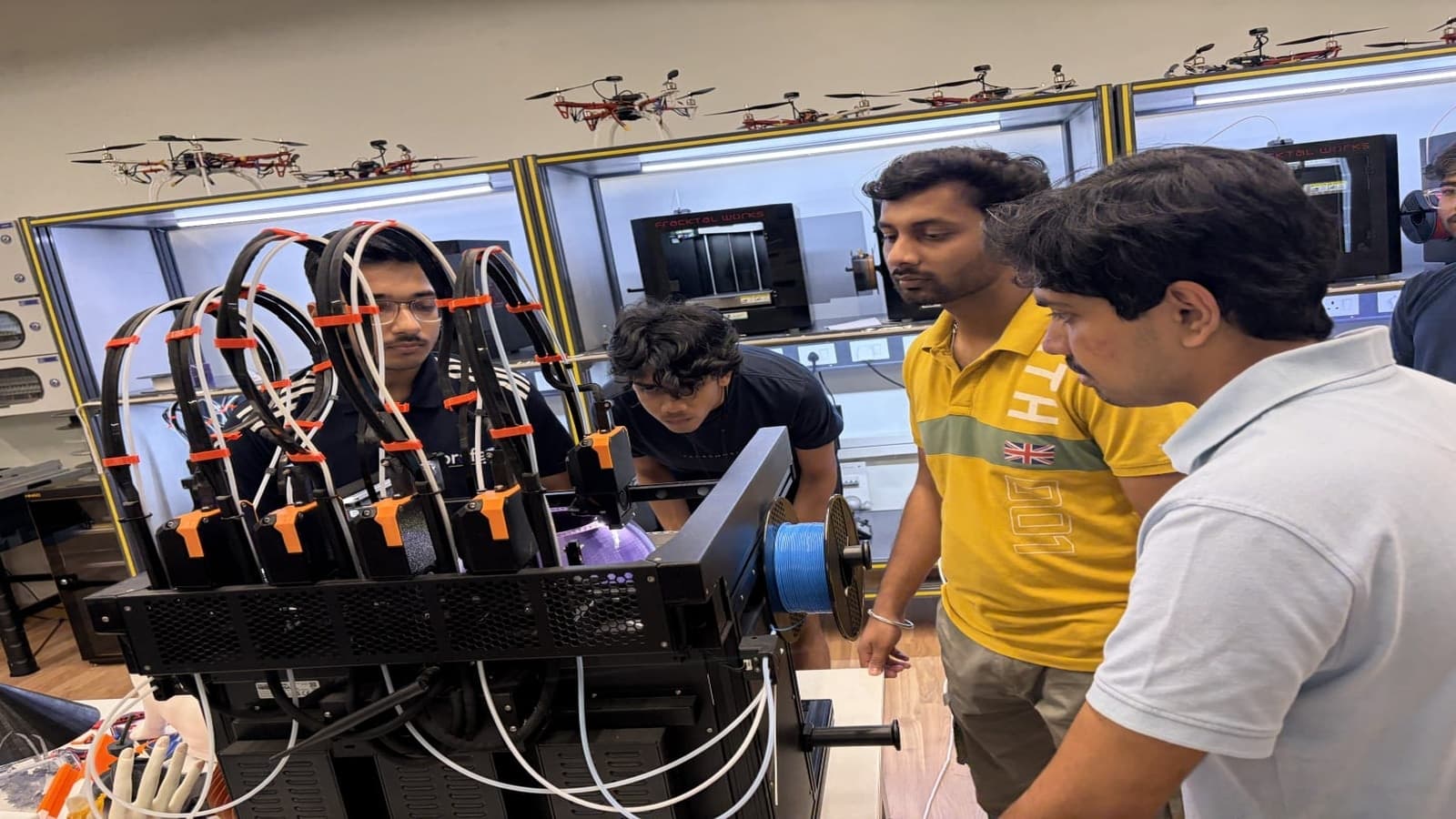
New DelhiJun 9, 2026 01:55 PM IST IIT Jammu launches Unified Engineering BTech programme for the 2026-27 academic year.The Indian Institute of Technology (IIT) Jammu has introduced a new BTech programme called Unified Engineering, designed for students who want to move beyond conventional single-discipline engineering pathways. The programme is open to JEE Advanced aspirants and offers a fully redesigned, hands-on curriculum that integrates multiple engineering domains. For more information, candidates can visit the official portal of IIT Jammu at iitjammu.ac.in. The programme emerges from a recognition that the lines between mechanical, electrical, and computer engineering are increasingly blurring as technology evolves. Rather than confining students to isolated departments, Unified Engineering is structured to help them connect ideas across disciplines and apply them to complex, real-world problems. For more information on the JoSAA counselling, students can visit the IE Education Portal.The curriculum is built around a Grand Challenge framework that emphasises teamwork, innovation, and real-world impact over traditional rote learning. Students will gain expertise in transformative domains including Artificial Intelligence, Intelligent Systems, Robotics, Smart Mobility, Electric Vehicles, and Sustainable Energy Technologies. Generative AI tools are also integrated into the learning environment as part of a future-ready education model. “We wanted to create a programme where learning feels like an active engineering experience rather than a classroom chore. Unified Engineering is built to give students the mindset, skills and adaptability they need to lead the next generation of tech innovation,” said Dr. Navneet Kumar, Programme Chair, Unified Engineering, IIT Jammu. Graduates will be prepared for cross-functional roles including systems engineers, product development engineers, automation specialists, and AI professionals. The programme is backed by IIT Jammu’s active placement network and its upcoming innovation park, providing students with direct exposure to startups and top global companies including Amazon, Samsung, Intel, Siemens, ABB, Nokia, TCS, IBM, and Hitachi Energy. Similarly, in IIT Jodhpur has also introduced a four-year Bachelor of Science programme in Mathematics and Computing for the academic year 2026-27. The programme is primarily designed to bridge theoretical mathematical frameworks and modern computational applications. This would further equip the graduates with skills in applied mathematics, algorithm design, programming and data analytics, making them ready for successful careers across technology, finance, data science, and research. The introduction of new programmes across IITs has been widely welcomed as a step toward aligning technical education with the demands of an evolving industry landscape. The variety of programmes on offer has grown steadily in recent years.
New DelhiJun 8, 2026 05:27 PM IST The Board had cancelled Class 10 and 12 examinations in Bahrain, Iran, Kuwait, Oman, Qatar, Saudi Arabia and the United Arab Emirates after escalating tensions in the region (Representative Image/AI) The Supreme Court on Monday agreed to examine a plea filed by a student from Saudi Arabia seeking directions to the Central Board of Secondary Education (CBSE) to declare his Class 12 improvement examination result. A bench comprising Justices Manmohan and Vijay Bishnoi issued notice to the CBSE and its regional office on the petition filed by Pransu Jigarkumar Patel. The court asked the Board to seek instructions in the matter, observing orally that the issue concerned the student’s academic future and admission prospects.READ MORE | CBSE files complaint with Delhi Police over cyber attacks on Post-Result Services Portal “This is about the career of a child, he will miss all his admissions… Whatever it is, burn the midnight oil,” the bench remarked during the hearing. Patel has challenged the CBSE’s failure to declare his result despite the assessment mechanism put in place for students affected by the cancellation of board examinations in several Gulf countries earlier this year. According to the petition, Patel appeared as a private candidate in the CBSE Class 12 Improvement Examination 2026 from Al Jubail, Saudi Arabia, in Physics, Chemistry, Mathematics, English and Computer Science. He contended that the non-declaration of his result has jeopardised his higher education plans and deprived him of admission opportunities. The plea further stated that representations sent to the CBSE on May 17, May 21 and May 30 seeking resolution of the issue did not receive a response.Story continues below this ad The case arises from the disruption of CBSE examinations across seven West Asian countries amid the Iran-Israel-US conflict earlier this year. The Board had cancelled Class 10 and 12 examinations in Bahrain, Iran, Kuwait, Oman, Qatar, Saudi Arabia and the United Arab Emirates after escalating tensions in the region. The CBSE examinations had commenced on February 17. Following the outbreak of hostilities and the widening conflict in West Asia, the Board first announced the postponement of examinations scheduled from March 2 onward in the affected countries. As the situation failed to improve, CBSE subsequently cancelled all remaining Class 10 examinations on March 5 and the remaining Class 12 examinations on March 15. Around 52,000 students were registered for CBSE board examinations across the seven countries, including nearly 29,000 Class 10 students and 23,000 Class 12 students. The UAE accounted for the largest share of candidates, followed by Kuwait and Bahrain. To address the disruption, CBSE announced a special assessment scheme for affected students and allowed those who had missed examinations because of the conflict to appear in the subsequent improvement examination cycle. The Board had stated that students covered under the special arrangement would be treated on par with candidates who had completed all their examinations.Story continues below this ad The Board had also clarified that students in the affected countries who were unable to appear for certain subjects would be permitted to take those papers during the improvement examination session, subject to the applicable eligibility conditions. The Supreme Court will now consider Patel’s plea seeking declaration of his result under the framework announced by CBSE for students impacted by the cancellation of examinations in the Gulf region. (With PTI inputs) © IE Online Media Services Pvt Ltd
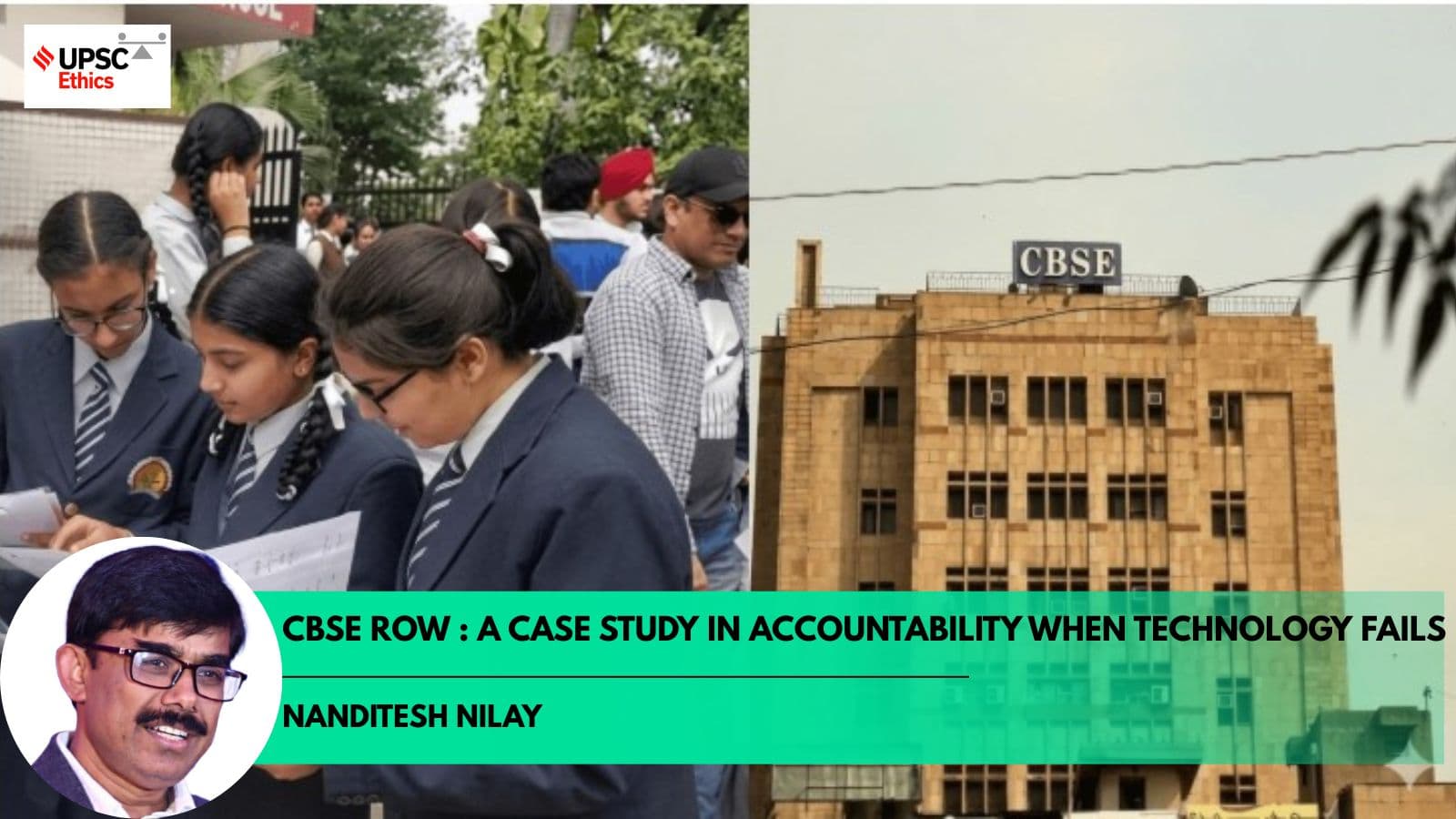
(UPSC Ethics Simplified is a special series under UPSC Essentials by The Indian Express that examines current affairs through an ethical lens, helping aspirants connect real-world events with GS Paper IV concepts. Today’s article analyses the recent CBSE OSM row, after NEET paper leak, as a new chapter in administrative ethics, accountability, ethical governance, and institutional responsibility. For aspirants, the key question is not whether UPSC will ask about a particular controversy, but how such issues can be understood ethically: an approach that helps develop both better answers and a stronger foundation for public service.)Large scale concerns over CBSE’s digital evaluation system have once again highlighted a critical ethical dilemma in an increasingly digital age. While technology promises efficiency, speed, and standardisation, the recent controversy reminds us that fairness cannot be automated. When an error in a digital system affects the future of thousands of students, the issue extends far beyond technology; it becomes a question of accountability, responsibility, and citizen-centric governance.The ethical dilemma: who is accountable when technology fails? The controversy presents a classic governance dilemma. Public institutions increasingly rely on digital systems to improve efficiency and reduce human error. Yet citizens expect fairness, transparency, and accountability irrespective of whether a decision is made by a person or through technology. When evaluation errors affect students’ academic futures, who bears responsibility? Can accountability be attributed to a software glitch, or does it ultimately rest with the institution that designed, deployed, and supervised the system? For affected students, the distinction between a technical failure and an administrative lapse offers little consolation. What matters is that a system entrusted with evaluating them has failed to deliver the fairness and certainty it promised. Technology as a tool, not a substitute for responsibility A key lesson for UPSC aspirants is that technology itself is neither ethical nor unethical. It is a tool whose impact depends upon how it is designed, implemented, monitored, and corrected. Digital governance can undoubtedly improve efficiency, consistency, and service delivery. However, technology cannot replace ethical responsibility. Human judgment remains indispensable in ensuring fairness, addressing grievances, and correcting unintended consequences. Public institutions cannot treat technology as a shield behind which responsibility disappears. When technological systems fail, accountability must remain visible, accessible, and responsive. Citizens interact with institutions, not algorithms; therefore, institutions must remain answerable for the outcomes produced by the systems they deploy. Human consequences and the need for empathy Ethical governance is not merely about correcting technical errors; it is also about recognising their human consequences.Story continues below this ad For many students, examinations represent years of effort, sacrifice, and aspiration. Academic outcomes often carry expectations from families, peers, educational institutions, and the students themselves. Errors in evaluation can therefore create not only uncertainty regarding results but also significant emotional and psychological distress. This is where emotional intelligence, an important component of the UPSC Ethics syllabus, becomes relevant. Institutions must recognise the anxieties experienced by affected citizens and respond with empathy, timely communication, and effective grievance redressal mechanisms. A technically correct response may not always be an ethically adequate one. Ethical governance requires institutions to acknowledge distress, communicate transparently, and reassure citizens that corrective action is being taken. Sarthak Sidhant, one of the students affected by the CBSE’s ‘On-Screen Marking’ (OSM) system, arrived at the
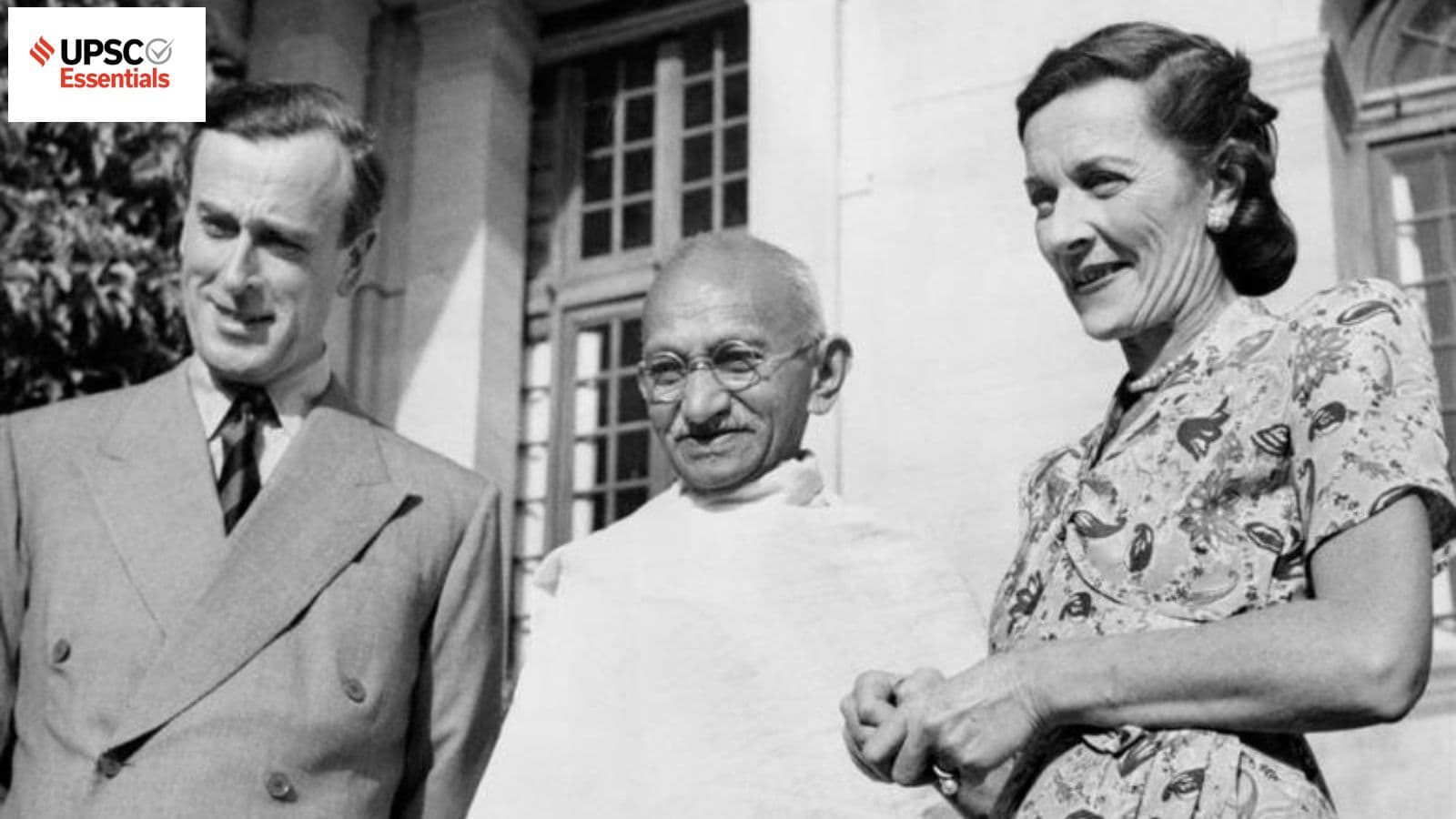
UPSC Essentials brings to you its initiative for the practice of Mains answer writing. It covers essential topics from both the static and dynamic portions of the UPSC Civil Services syllabus across various GS papers. The questions are carefully selected on the basis of their relevance to the UPSC examination and current developments, helping aspirants focus on themes that matter most for Mains. This answer-writing practice is designed as a value addition to your UPSC CSE Mains preparation. Attempt today’s GS-1 questions and check your progress.🚨 Click Here to read the UPSC Essentials magazine for May 2026. Share your views and suggestions in the comment box or at manas.srivastava@indianexpress.com🚨QUESTION 1 What were the key provisions of the June 3 Declaration (Mountbatten Plan)? Why was it accepted by both the Indian National Congress and the Muslim League? QUESTION 2 Cloudbursts have emerged as a recurring climate-related hazard in India’s mountainous regions. What are cloudbursts? Explain why they occur predominantly in mountainous regions. Discuss their impact and suggest measures to reduce disaster risks associated with them. QUESTION 1: What were the key provisions of the June 3 Declaration (Mountbatten Plan)? Why was it accepted by both the Indian National Congress and the Muslim League? Relevance: The June 3 Declaration was a crucial milestone in India’s transition from colonial rule to independence and Partition. It provides insight into constitutional developments, communal politics, and the process of decolonisation in Modern Indian History. Note: This is not a model UPSC answer. It only provides you with a thought process which you may incorporate into the answers. Introduction:Story continues below this ad — When Lord Mountbatten arrived in Delhi on March 22, 1947, to assume office as Viceroy, he carried a clear mandate from British Prime Minister Clement Attlee: power was to be transferred to Indian hands no later than June 30, 1948. — He entered a country already gripped by escalating communal violence. The Calcutta killings of August 1946 had been followed by riots in Noakhali and Bihar, while tensions had spread to Bombay and other parts of the country. Punjab was also descending into conflict, with major outbreaks of violence in Amritsar, Taxila, and Rawalpindi. Body: You may incorporate some of the following points in your answer: The June 3 Declaration (Mountbatten Plan), issued on June 3, 1947, laid the groundwork for the partition of British India and the transition of power away from British administration. Its key provisions were:Story continues below this ad — The proposal recognised the division of British India and cleared the path for the formation of two separate states: India and Pakistan. — The Legislative Assemblies of Punjab and Bengal were to vote on whether their provinces should remain united or be divided. — The Sindh Legislative Assembly was granted the authority to decide whether Sindh should join India or Pakistan. — Referendums were scheduled for the North-West Frontier Province (NWFP) and the Sylhet region to determine their future membership.Story continues below this ad — If Punjab and Bengal were partitioned, a Boundary Commission would be formed to define the borders of the two new dominions. — The plan called for the establishment of two independent dominions: India and Pakistan, each with its own Constituent Assembly. — The princely states were obliged to join either India or Pakistan. — The transfer of power, which was originally scheduled for June 1948, was moved to August 15, 1947. How did the rival parties agree?Story continues below this ad — Several factors led the Indian National Congress to accept the June 3 Plan. The desire to contain the spiralling communal violence that had engulfed large parts of the country. Congress leaders believed that only a swift transfer of power to an Indian government could restore order and halt bloodshed. — Congress was also determine
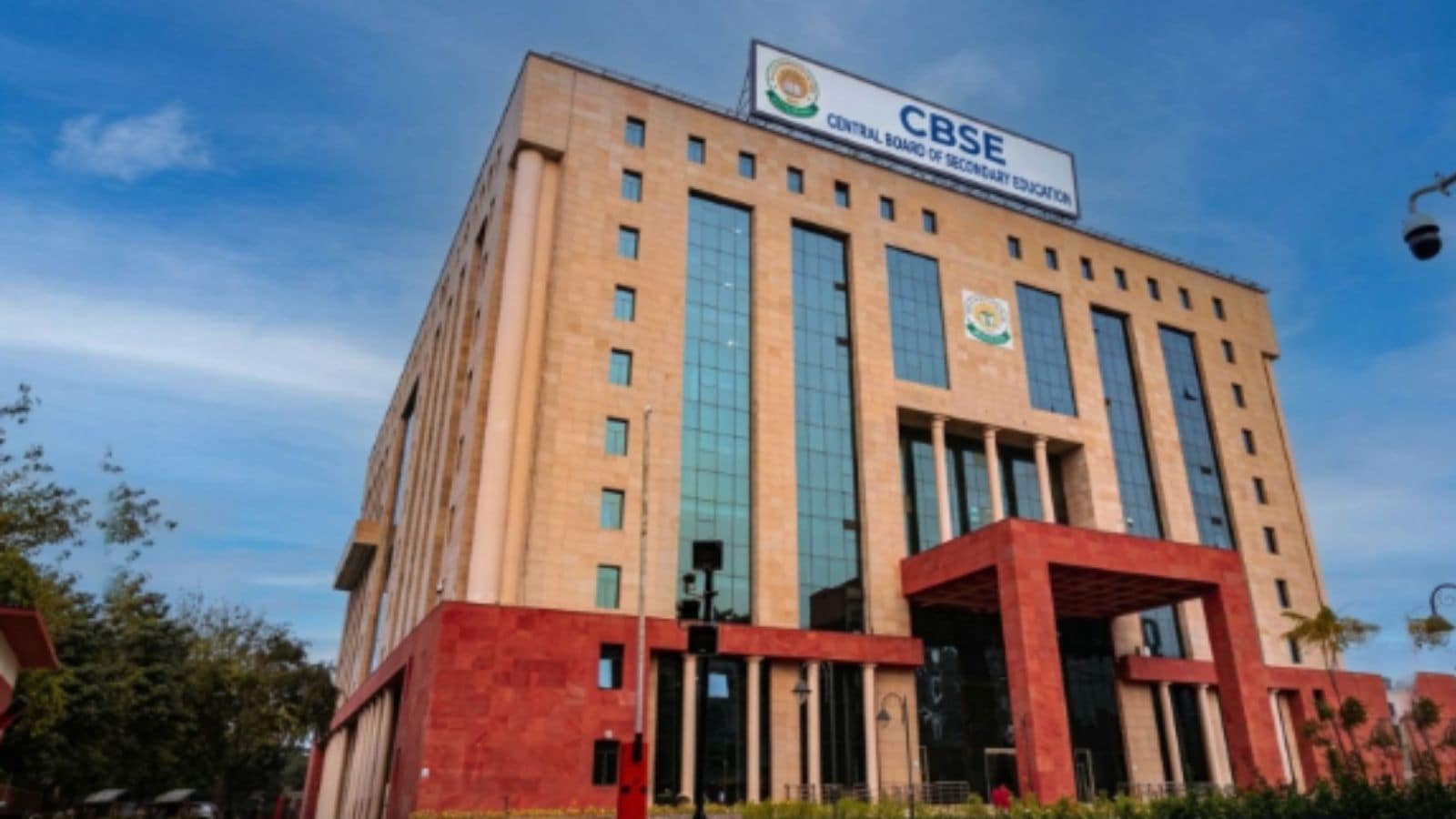
New DelhiUpdated: Jun 2, 2026 09:59 PM IST Seeking to reassure students that the platform remained functional, the CBSE added, “Our teams remain vigilant and responsive to ensure our dearest students are facilitated in all ways possible.”As thousands of Class 12 students logged in on Tuesday into Central Board of Secondary Education’s (CBSE) newly-launched re-evaluation portal, the Board said the portal was hit by multiple cyberattack attempts, including a denial-of-service attack that generated nearly 1.5 million hits within two minutes. The attacks came on the first day the Board opened its online window for students seeking verification of marks and re-evaluation of answers under a revamped post-result scrutiny process. The portal, which had experienced intermittent glitches earlier in the day, remained operational despite the attempted disruptions, according to CBSE.In a statement posted on X, the Board said that “malicious actors” had attempted to overwhelm its systems through a barrage of cyberattacks. The most significant incident, it said, was a denial-of-service attack that flooded the portal with roughly 1.5 million hits in a span of two minutes. The Board also reported more than one lakh attempts at unauthorised file access during the same period. “While thousands of students accessed the CBSE re-evaluation portal today, malicious actors attempted to disrupt services through a barrage of cyberattacks,” the Board said. Seeking to reassure students that the platform remained functional, the CBSE added, “Our teams remain vigilant and responsive to ensure our dearest students are facilitated in all ways possible.” The launch of the Post-Result Activities portal came a day later than originally scheduled. The portal, which CBSE had announced would open on June 1 for students seeking verification of marks and re-evaluation, remained inaccessible throughout Monday, prompting complaints from students and school principals. The portal eventually went live at 4 am on Tuesday and will remain open until midnight on June 6. The delay came amid mounting concerns over errors in this year’s Class 12 results linked to the Board’s first-time implementation of On-Screen Marking (OSM), a digital evaluation system. With university admission and counselling deadlines approaching, students said the disruption added to uncertainty over the re-evaluation process.Story continues below this ad A CBSE official, speaking on condition of anonymity, had told The Indian Express on Monday that technical teams were working to stabilise the platform. “The portal will open soon. IIT Madras and IIT Kanpur teams are working closely with us to make the platform as robust as possible,” the official had said, acknowledging the inconvenience caused to students. By 3 pm on Tuesday, more than 16,000 students had successfully submitted applications through the portal, while the system was simultaneously supporting over 8,000 users, the CBSE said. The portal allows students who have already obtained scanned copies of their evaluated answer books to seek redress for issues such as missing pages, missing supplementary sheets, blurred scans, incorrect answer books, evaluation against a different question paper set, and other discrepancies. Students may also request re-evaluation of specific answers if dissatisfied with the marking. As part of the process, students are required to log into the CBSE portal using their credentials and Aadhaar number. Applications and fee payments are being accepted exclusively online.Story continues below this ad The Board said it had made adjustments to the platform after receiving feedback from students. Among the changes was an extension of session time limits to make the application process “more convenient and seamless”. The launch of the portal comes amid heightened scrutiny of the Board’s examination and evaluation processes. This year, CBSE introduced a revised mechanism that allows students to first access scanned
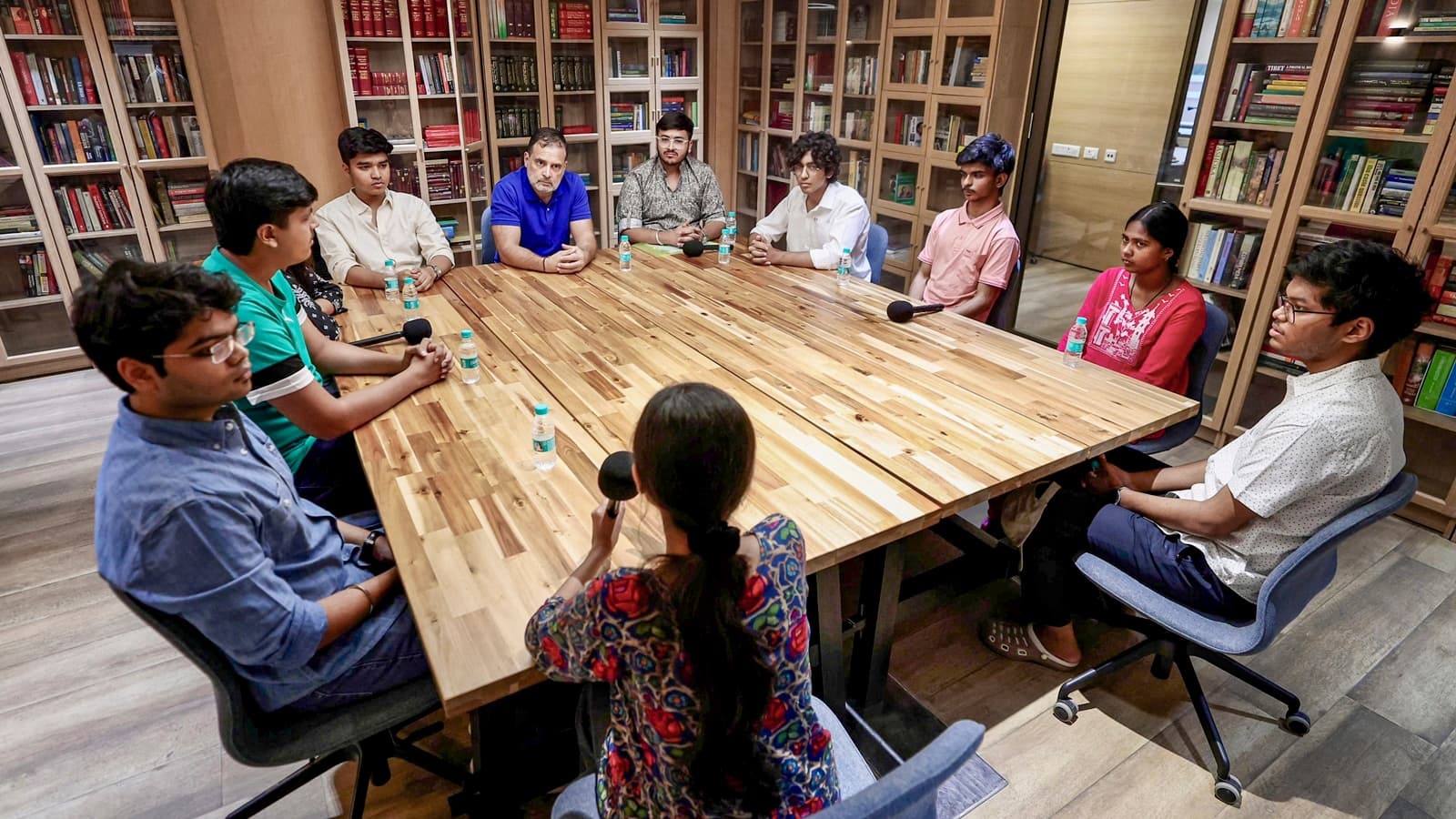
New DelhiUpdated: Jun 1, 2026 03:44 AM IST Leader of Opposition in Lok Sabha Rahul Gandhi interacts with a group of students in Delhi, Sunday. (PTI)LOK SABHA Leader of Opposition Rahul Gandhi on Sunday targeted the Centre over the CBSE On-Screen Marking (OSM) row, and put out a video of his interaction with a group of students, describing them as brave young Indians who asked the Modi government simple questions but received “insults instead of answers”. Asserting that the students deserved a bright future, Gandhi said: “We will make sure they get it.” Posting the video on social media, Gandhi described the interaction as a “revealing chat with my fellow ‘anti-national Soros agents’.” “Vedant and his friends are brilliant, brave young Indians who asked CBSE and the Modi government simple questions — but got insults instead of answers,” Gandhi said in his post on X, with the video of his interaction.Vedant, a Class 12 student, had alleged on social media that the answer script uploaded to him by CBSE during the verification process was not his own. He claimed the handwriting, answers, and even attempted questions did not match with what he had written in the examination hall. His posts went viral, prompting widespread scrutiny over the CBSE’s evaluation and OSM systems. Gandhi is seen having an informal chat with Vedant and other students about their experiences. He also joked about how they were labelled “Pakistanis” and “deep state agents” after raising what he called legitimate concerns and issues. LoP in Lok Sabha Rahul Gandhi during an interaction with CBSE board students (PTI) “You are students. You are asking for your answer sheets, that’s all. Now, suddenly, you have become anti-nationals. You have to accept the problem if you have to solve the problem. You are refusing to accept the problem and blaming the poor kids and saying ‘you are deep state, you are spies, terrorists’,” Gandhi says in the video, attacking the government over the OSM controversy. “Were you also called terrorists? Tell me!” Gandhi asks Vedant, his brother and some other students in the 90-second clip, apparently part of a larger interaction. Watch video A revealing chat with my fellow “anti-national Soros agents.” Vedant and his friends are brilliant, brave young Indians who asked CBSE and the Modi government simple questions – but got insults instead of answers. They deserve a bright and secure future. We will make sure they… pic.twitter.com/5InBxgJv1B — Rahul Gandhi (@RahulGandhi) May 31, 2026 Read More | ‘Portal working, but payment not reflecting’: CBSE Class 12th answer-book copy glitch During the interaction, Gandhi also jokes and tells the cameraperson: “Bhaiyya, show the faces of these ‘terrorists’!” After allegations on social media, the CBSE had clarified that its OSM portal was not compromised, and no security breach has come to light on the portal that was used for evaluation.
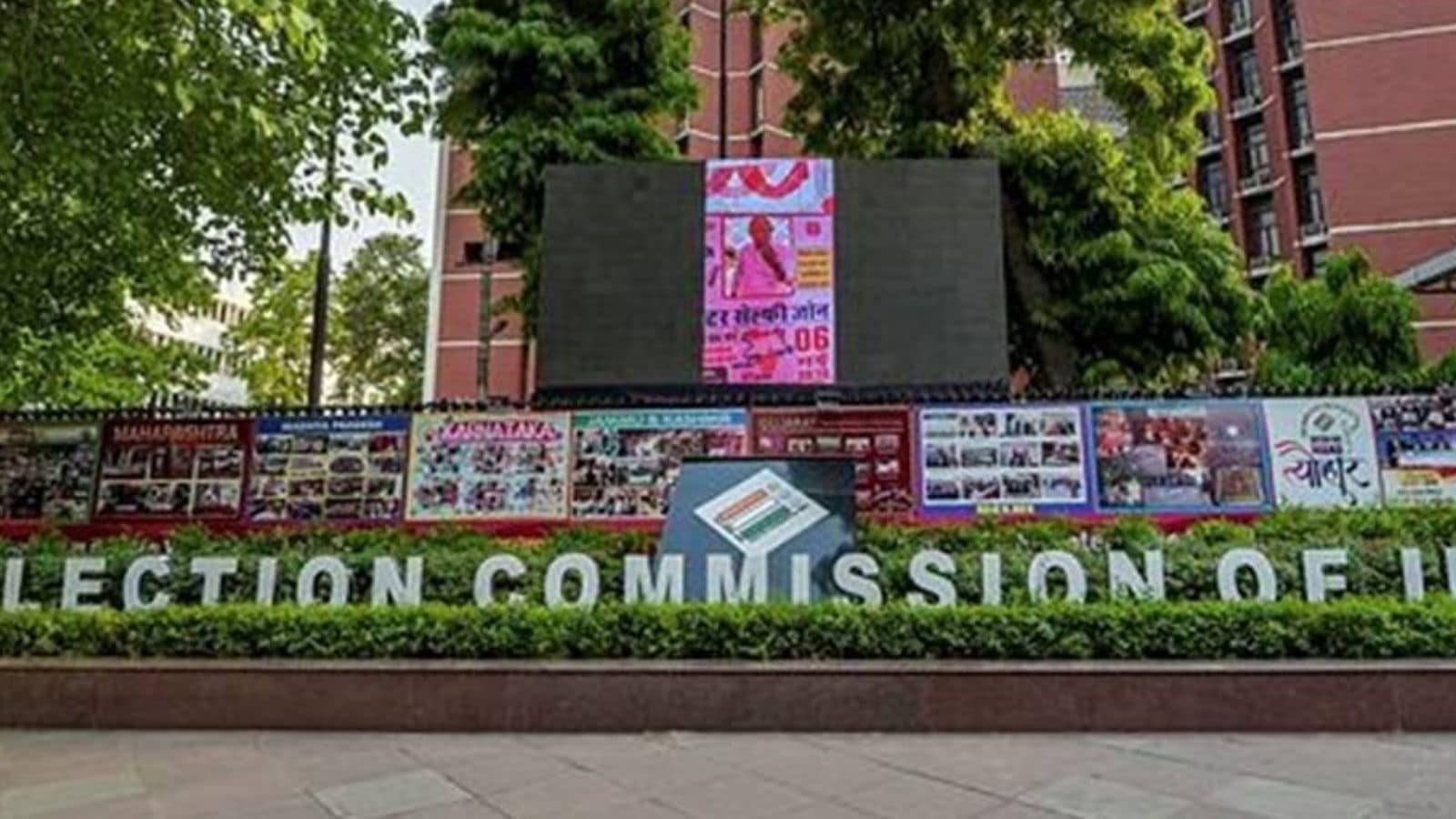
New DelhiMay 29, 2026 04:14 AM IST According to the EC, there are 20.91 lakh electors spread across 2,996 booths in Manipur. As per the schedule, electors will have till June 28 to fill the enumeration forms. THE Election Commission is considering deploying special Assistant Electoral Registration Officers (AEROs) for the internally displaced persons (IDPs) in Manipur, where thousands have been displaced since the ethnic clashes broke out in May 2023, for the Special Intensive Revision (SIR) of electoral rolls, The Indian Express has learnt. The SIR exercise, which involves Booth-Level Officers (BLOs) going house-to-house to have all registered electors fill enumeration forms in order to stay on the rolls, is set to start in Manipur on Saturday, as per the EC’s schedule announced earlier this month.After that, the Electoral Registration Officers (EROs) and AEROs are supposed to issue notices to those electors who have not been able to establish their eligibility by giving the details of themselves or their parents. Sources said the office of Manipur Chief Electoral Officer has submitted a proposal to the EC for appointing special AEROs for the IDPs, similar to the deployment of designated Assistant Returning Officers for the conduct of the 2024 Lok Sabha elections in the state. ExplainedWhy special AEROs for Manipur?Under The Representation of the People Act, 1950, Electoral Registration Officers and AEROs are appointed for maintaining the electoral rolls of Assembly constituencies. In the case of Manipur, where thousands of electors have been displaced from their home constituencies, the EC is considering appointing special AEROs to decide on eligibility of the electors staying in camps. A total of 18,620 IDPs were eligible to vote in the 2024 elections. The EC had set up 94 special polling stations for the IDPs in relief camps. As of now, the total number of IDPs has gone down from 62,000 in 2023 to around 57,000, according to government records. Sources said arrangements are likely to be made for around 14,000-15,000 IDPs who are eligible for participation in the SIR exercise. The EC recently announced the schedule of the third phase of SIR, which started in June last year. The third phase will cover 16 states and three Union Territories over the next few months. The exercise is set to start with house-to-house visits by BLOs in Odisha, Mizoram, Sikkim and Manipur from Saturday. According to the EC, there are 20.91 lakh electors spread across 2,996 booths in Manipur. As per the schedule, electors will have till June 28 to fill the enumeration forms. © The Indian Express Pvt Ltd Damini Nath is an Assistant Editor with the national bureau of The Indian Express. She covers the housing and urban affairs and Election Commission beats. She has 11 years of experience as a reporter and sub-editor. Before joining The Indian Express in 2022, she was a reporter with The Hindu’s national bureau covering culture, social justice, housing and urban affairs and the Election Commission. Expertise Key Coverage Areas: Damini Nath currently specializes in reporting on two crucial beats: Housing and Urban Affairs: Providing in-depth analysis and reporting on India's urban development, policy, and housing issues. Election Commission (EC): Offering authoritative coverage of electoral processes, policies, and the functioning of India's constitutional body responsible for conducting elections. Professional Background: Her extensive experience includes roles as a reporter and sub-editor, demonstrating a comprehensive understanding of the journalistic process from fieldwork to final production. Previous Role: Before joining The Indian Express in 2022, she served as a dedicated reporter with The Hindu’s national bureau, where her reporting portfolio included: Culture Social Justice Housing and Urban Affairs The Election Commission beat (a consistent area of focus). Trustworthiness Damini Nath's decade-plus career at two of
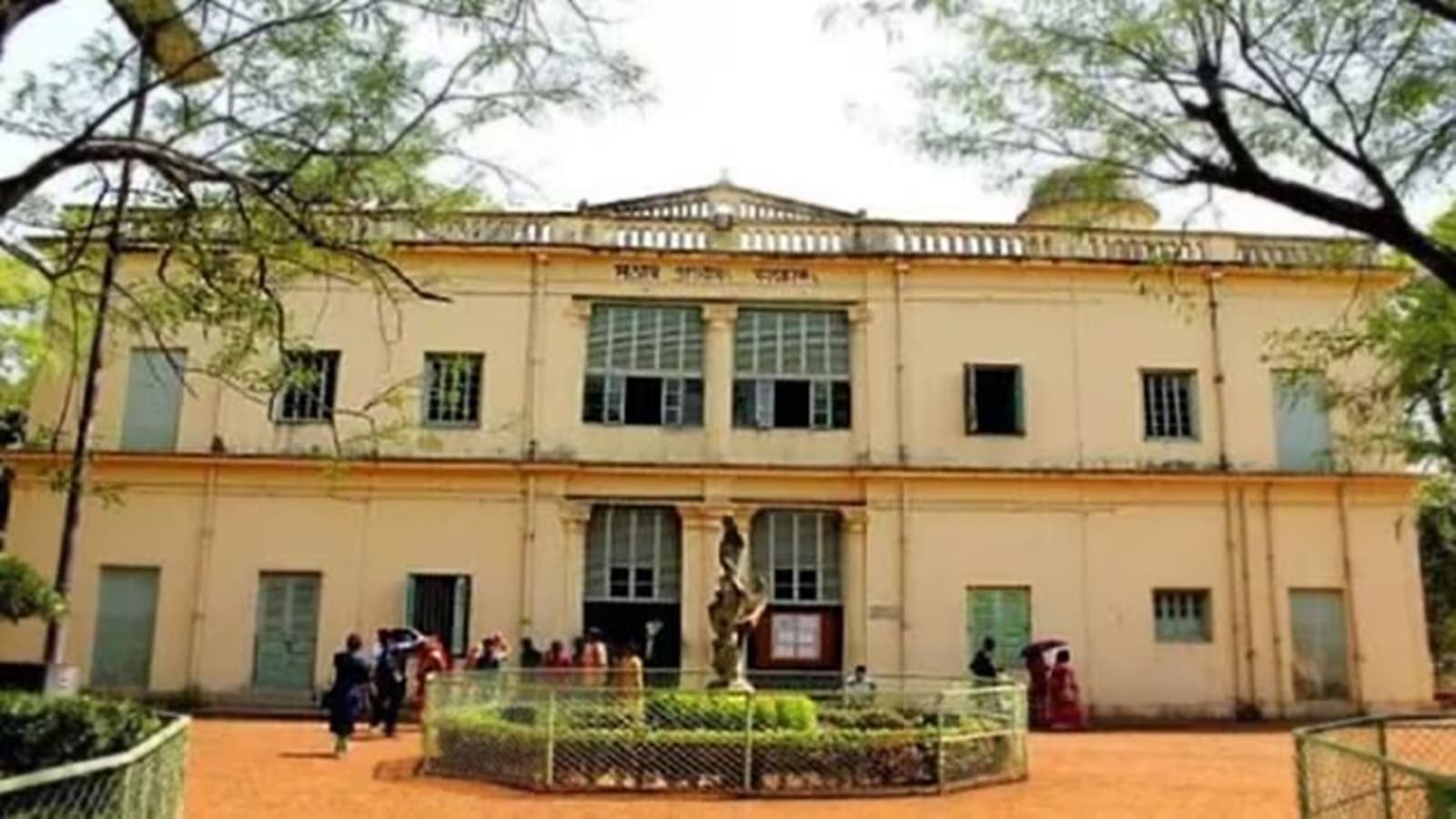
Visva-Bharati was founded by Rabindranath Tagore in 1921 (File photo).Medical science may soon be taught at Visva-Bharati, West Bengal’s only central university and a UNESCO World Heritage institution. The university authorities have initiated plans to establish an All India Institute of Medical Sciences (AIIMS)-standard medical college and hospital on its Santiniketan campus. They have approached the Centre for necessary clearances for the institution slated to be named Visva-Bharati Medical College and Hospital. Granted UNESCO World Heritage status in September 2023, the university’s expansion into medical education will mark a major milestone for the historic institution founded by Rabindranath Tagore.The university issued a notice inviting expressions of interest on May 22. The institution is seeking proposals from reputed consultancy firms, healthcare planning organisations, and medical education consultants to provide end-to-end services, including feasibility studies and the preparation of a detailed project report (DPR). According to the official notification, a pre-bid meeting is scheduled for May 29, with June 14 set as the final deadline for project submissions. The acting Public Relations Officer of Visva-Bharati, Athig Ghosh, said, “The Vice-Chancellor of Visva-Bharati has expressed interest in establishing a medical college and hospital on our campus. Applications have been submitted where necessary, and invitations have been sent to various organisations to submit DPR. We will have to wait and see what happens. We are hopeful that the DPRs will be submitted, and once received, we can send them to the Central government for approval. If we receive the approval, we will be able to proceed with the medical college and hospital.” Ghosh said the university faces no land constraints for the proposed project, which initially aims to accommodate a 100- to 200-bed hospital setup. “Once the medical college is operational, it will open up opportunities for aspiring medical students and significantly boost healthcare access for the local population,” he added. Residents and ashram members have highlighted the lack of advanced healthcare services in the Bolpur-Santiniketan area. These issues became evident during the Covid-19 pandemic, when elderly individuals struggled to access emergency care. Sources indicate that Visva-Bharati’s existing medical facilities, the Pearson Memorial Hospital and the Dinabandhu Andrews Memorial Hospital, are likely to be integrated into the new, expanded medical college framework to optimise resources.Story continues below this ad Bolpur’s primary private medical institution has frequently been under the scanner, facing raids and investigations by central agencies, including the Enforcement Directorate (ED) and the Central Bureau of Investigation (CBI), as well as questioning of its chairman, Malay Pit. Tanusree Bose is a dedicated journalist reporting for The Indian Express from Kolkata. Her work focuses sharply on the complex administrative, political, and judicial developments across West Bengal, establishing her as an authoritative voice in regional news coverage. Experience Current Role: Reports for the prestigious national daily, The Indian Express, providing her content with a high level of Trustworthiness. Geographical Expertise: Provides focused, in-depth coverage of West Bengal, demonstrating an intimate knowledge of the state's news and political nuances. Core Authority: Her reporting portfolio highlights deep Expertise in crucial, often sensitive, beats, including: State Politics and Governance: Covering the ruling Trinamool Congress (TMC), opposition strategies (BJP), and internal political controversies. Judicial and Administrative Affairs: Closely monitoring key developments in the Calcutta High Court, particularly major rulings related to employment, education, and social issues. Education Sector: Extensive reporting on signif


Discussion (0)