
Loading dispatches...
← Return to NewsroomScience
Rockets launch almost every day in the US. Here's why even more are ahead

Rockets launch almost every day in the US. Here's why even more are ahead USA Today What’s launching from Florida this week? SpaceX rocket launch schedule Yahoo How SpaceX’s Launch Boom Is Reshaping Space Coast Nightlife Space Coast Daily Pictures: 52 Space Coast launches and counting in 2026 Orlando Sentinel Space Coast launch schedule: sun-sentinel.com
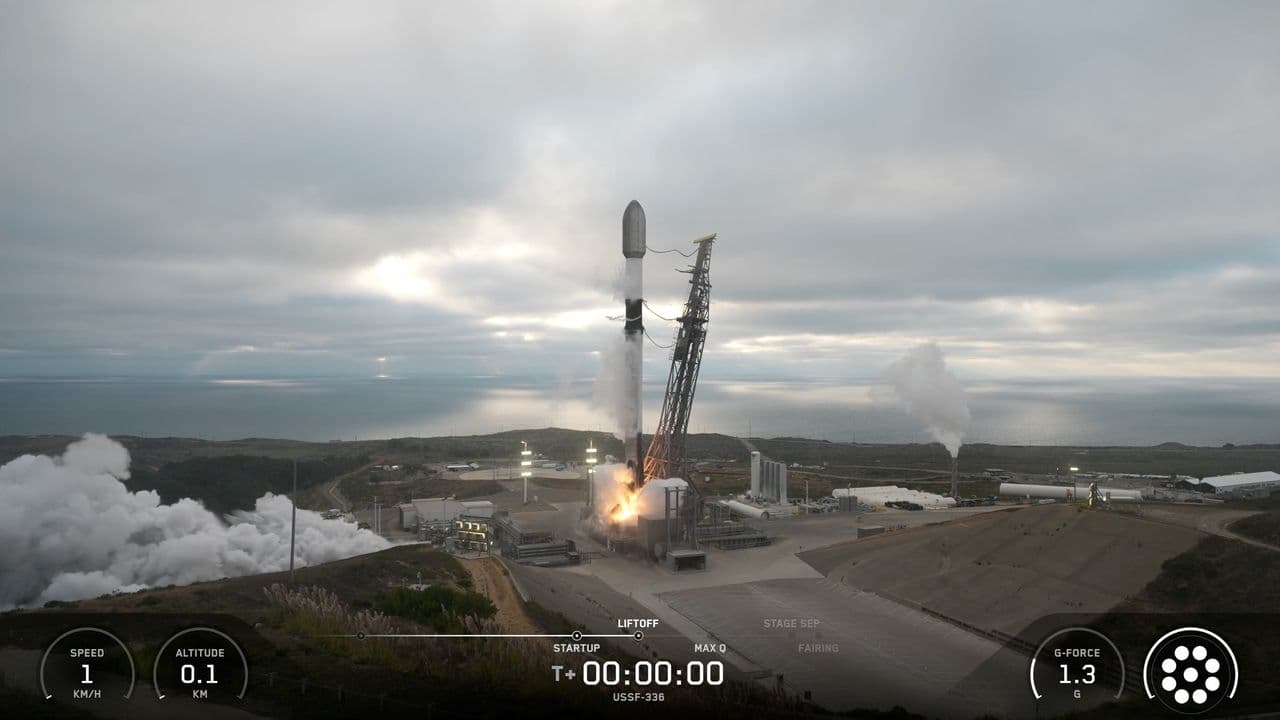
A SpaceX Falcon 9 rocket launches the classified USSF-366 mission for the U.S. Space Force from Vandenberg Space Force Base in California on Aug. 15, 2026. (Elon Musk's company launches far more frequently than any other outfit, and it operates the largest satellite constellation ever assembled — the Starlink broadband network, which consists of nearly 11,000 satellites (and counting).On Saturday evening (Aug. 15), SpaceX set another mark, for the shortest time between orbital flights: It launched two Falcon 9 rockets just 38 minutes apart, besting its old mark — set on Aug. 31, 2024 with two Starlink missions — by 27 minutes. A SpaceX Falcon 9 rocket launches eight satellites for the telecom company Globalstar from Florida's Cape Canaveral Space Force Station on Aug. 15, 2026. (m. EDT (0112 GMT on Aug. 16) and carried eight satellites to low Earth orbit (LEO) for Louisiana-based telecom company Globalstar.All eight spacecraft were deployed successfully, separating over a six-minute span beginning 56.5 minutes after liftoff, SpaceX announced via social media.While that Falcon 9 was powering its way to LEO, another one launched from Vandenberg Space Force Base, on California's central coast. That liftoff, at 9:50 p.m. EDT (6:50 p.m. local time; 0150 GMT on Aug. 16), kicked off a mission for the U.S. Space Force called USSF-366. A Globalstar satellite deploys from the upper stage of its Falcon 9 rocket on Aug. 15, 2026. ( However, rocket watchers have made a few inferences from the limited available information."It is possibly a batch of classified LEO satellites for a U.S. government entity based on SpaceX's Starshield satellite bus, based on locations of rocket stage drop zones being exact fits with previous Starlink Group 15 launches," NextSpaceflight.com wrote in its mission description. (Starshield is a SpaceX project that uses modified versions of Starlink craft to fly national security missions for the U.S. government.)It's unclear when and where the rocket's upper stage will deploy the USSF-366 payload(s); SpaceX's mission description doesn't reveal that information. And the company ended its livestream shortly after the first-stage landing, as is typical for national security flights.Both of Saturday's missions featured successful rocket landings. The Falcon 9 first stage that launched the Globalstar mission came back for a touchdown at Cape Canaveral about eight minutes after launch. It was the 14th flight for that particular booster.The USSF-366 Falcon 9 first stage, meanwhile, came back to Earth about 8.5 minutes after its launch, touching down in the Pacific Ocean on the SpaceX droneship "Of Course I Still Love You." That booster now has 18 missions under its belt.Saturday's doubleheader brought the tally of Falcon 9 launches in 2026 to 96. The vast majority of those — about 75% — have been Starlink missions. Michael Wall is the Spaceflight and Tech Editor for Space.com and joined the team in 2010. He primarily covers human and robotic spaceflight, military space, and exoplanets, but has been known to dabble in the space art beat. His book about the search for alien life, "Out There," was published on Nov. 13, 2018. Before becoming a science writer, Michael worked as a herpetologist and wildlife biologist. He has a Ph.D. in evolutionary biology from the University of Sydney, Australia, a bachelor's degree from the University of Arizona, and a graduate certificate in science writing from the University of California, Santa Cruz. To find out what his latest project is, you can follow Michael on Twitter.
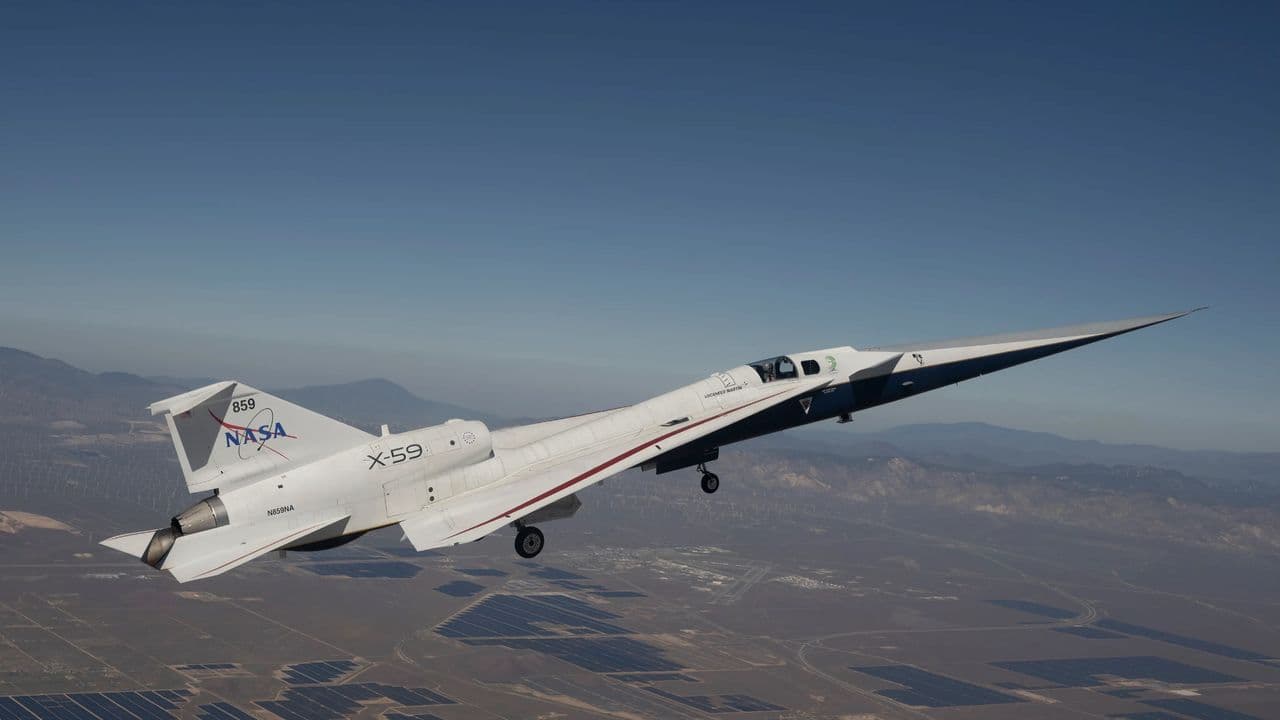
NASA's quiet supersonic X-59 aircraft is seen here during a flight on March 20, 2026. The agency will showcase its aerospace tech at its "Max Power" expo at Kennedy Space Center this November. (The event, which NASA announced today (Aug. 14), will be held Nov. 7 and Nov. 8 at Kennedy Space Center (KSC) on Florida's Space Coast. It's called "Max Power," which is also a famous Homer Simpson pseudonym.In the 13th episode of the show's 10th season, which first aired in February 1999, Homer legally changed his name to Max Power. He wanted to disassociate himself from a bumbling character on the (fictional) TV show "Police Cops" who shared his given moniker. The Simpsons: Max Power part 1 - YouTube Watch On Homer made the switch to Max Power — which he said he got off a hair dryer — without consulting his family, a move that did not go over well."Wait a minute!" his dad protested. "The family name is my legacy to you. I got it from my father, and he got it from his father, and he traded a mule for it. And that mule went on to save spring break."Homer's wife Marge was also displeased."But I fell in love with Homer Simpson," she said. "I don't want to snuggle with Max Power.""Nobody snuggles with Max Power," Homer — or rather Max — responded. "You strap yourself in and feel the Gs!"NASA's Max Power expo is about feeling the Gs as well, at least in part."The two-day event will feature immersive experiences for all ages to enjoy, including air shows, skydiving stunts, technology demonstrations, spaceflight hardware, military aircraft and behind‑the‑scenes access to America's spaceport," agency officials wrote in a description of the expo. "Attend talks led by NASA experts and meet astronauts from some of agency’s most famous missions!"NASA Administrator Jared Isaacman, an accomplished pilot as well as a private astronaut, said that he plans to participate in the expo's air show. And, if you're unable to attend this November, you'll likely have other chances down the road."Certainly, the idea is that this event, Max Power, becomes the first of many," Isaacman said during a press conference today. Michael Wall is the Spaceflight and Tech Editor for Space.com and joined the team in 2010. He primarily covers human and robotic spaceflight, military space, and exoplanets, but has been known to dabble in the space art beat. His book about the search for alien life, "Out There," was published on Nov. 13, 2018. Before becoming a science writer, Michael worked as a herpetologist and wildlife biologist. He has a Ph.D. in evolutionary biology from the University of Sydney, Australia, a bachelor's degree from the University of Arizona, and a graduate certificate in science writing from the University of California, Santa Cruz. To find out what his latest project is, you can follow Michael on Twitter.
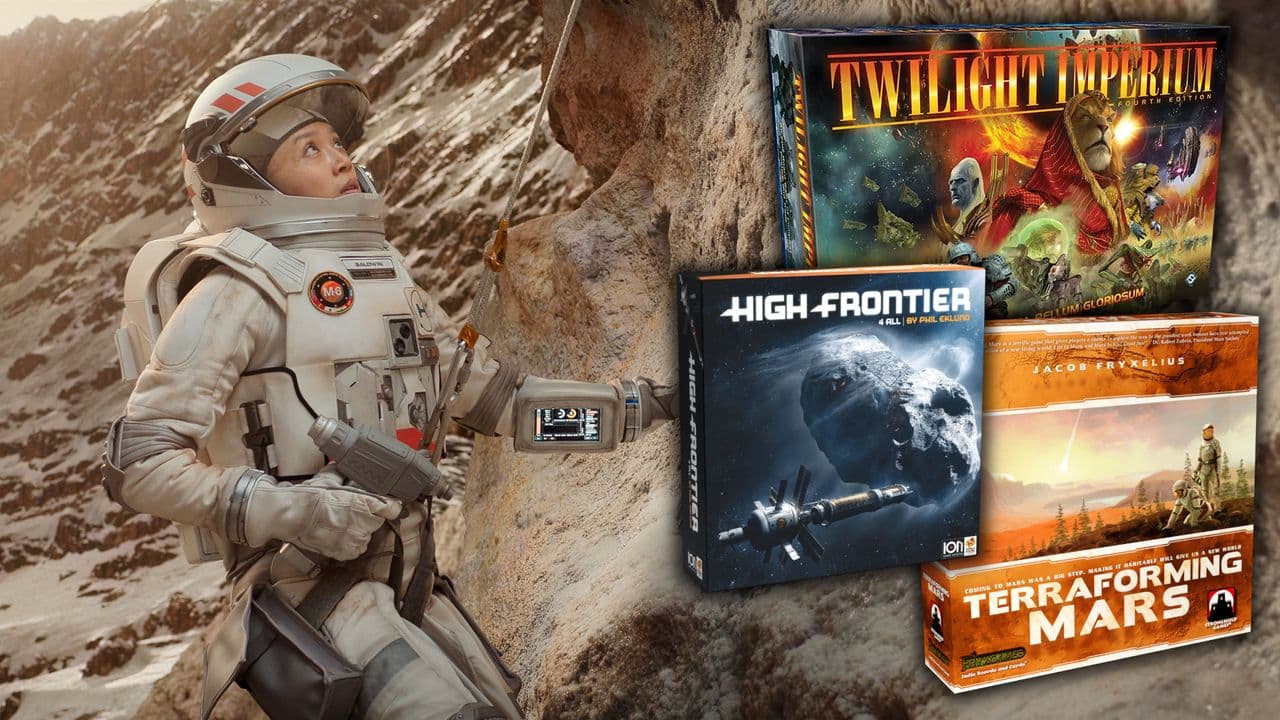
'For All Mankind' was pretty good, wasn't it? Sadly, the show's run has finished now, and while we've got spin-off 'Star City' picking up the mantle, it's still going to be a while before we get any more space politics drama on our screens. Luckily, we can find it on our tabletops instead, with these fantastic space board games.If you haven't seen it, For All Mankind is the story of an alternate history in which the space race between the U.S. and Russia never fizzled out. Instead, it becomes a multigenerational competition that drives everything from electric vehicle adoption to gender equality.If, like millions of other Apple TV subscribers, you've been rapt watching 'For All Mankind' and want to bring some of that hot diplomacy and betrayal to your own kitchen table, you're in luck. Several space-based board games let you get a taste of the space race intrigue without having to connive your way to the top of an actual space agency.Social deduction games have exploded in recent years with good reason. Some of the best tabletop games include some level of politicking, as well as the deal-making, deception, and favor trading that entails. Making social and technological advances often comes at the cost of high levels of international brinkmanship and some very gray ethics.So, are you ready to kick off the space race once again? Here are 7 space board games that capture the high drama of the era, but without all the devastating foreign policy implications of the real thing.1. Twilight Struggle ( It follows the conflict between the U.S. and Russia across five decades, and its space race track mirrors For All Mankind's geopolitical stakes.Every satellite you managed to hurl into the atmosphere or astronaut you successfully guide into space represents both a technical and a propaganda victory. It’s like watching Margo Madison and Sergei Nikulov battle with dice in place of launch vehicles.Buy "Twilight Struggle" at GMT Games2. Twilight Imperium (Players take on the role of interstellar empires competing to conquer the capital planet at the center of a huge galaxy. They achieve this by building space docks and warships, trading goods, and clashing in cosmic combat.The true brilliance of TI lies in its asymmetry, with each of the 17 factions having a variety of advantages and quirks that differentiate it from the others, and the way it drives players to negotiate with — and backstab — each other on the galactic stage.Laws and elections can quickly shift the balance of power in the game, and the rules can be subverted or twisted to your advantage through the deft deployment of crushing bureaucracy. It's a long game and not one for beginners, but there really is nothing quite like a session of Twilight Imperium.Buy "Twilight Imperium" at Asmodee3. High Frontier (4th Edition) (It channels For All Mankind’s scientific obsession and is a great showcase for the intersection of personal and national ambition and feasibility. Every decision feels freighted with international importance, and players are forced to grapple with mechanics like realistically mod

On Aug. 14, 1992, a space rock entered the atmosphere over Mbale, Uganda and exploded into hundreds of pieces!Debris from this meteorite shower was strewn over an area of about 2 by 4 miles (3.2 to 6.4 kilometers), and the biggest piece weighed more than 60 pounds (27 kilograms)! Scientists estimated that the original space rocket weighed more than 2,000 pounds (900 kg). A young boy was hit in the head with a small meteorite fragment, but thankfully no one was seriously injured or killed by any of the falling space rocks.In October 2012, a fragment of the Mbale meteorite was put up for sale by Heritage Auctions in New York City. This image shows a fireball over California on Oct. 17, 2012. (NASA classified Mbale as a type L5/6 ordinary chondrite, and calculated that its breakup in Earth's atmosphere occurred between about 15.5 miles (25 km) and 6 miles (10 km) in altitude. By October 1993, 863 fragments of the meteorite had been recovered, with an overall estimate of 330 pounds (150 kg) of material surviving the atmospheric plunge to reach Earth's surface. Hanneke Weitering is a multimedia journalist in the Pacific Northwest reporting on the future of aviation at FutureFlight.aero and Aviation International News and was previously the Editor for Spaceflight and Astronomy news here at Space.com. As an editor with over 10 years of experience in science journalism she has previously written for Scholastic Classroom Magazines, MedPage Today and The Joint Institute for Computational Sciences at Oak Ridge National Laboratory. After studying physics at the University of Tennessee in her hometown of Knoxville, she earned her graduate degree in Science, Health and Environmental Reporting (SHERP) from New York University. Hanneke joined the Space.com team in 2016 as a staff writer and producer, covering topics including spaceflight and astronomy. She currently lives in Seattle, home of the Space Needle, with her cat and two snakes. In her spare time, Hanneke enjoys exploring the Rocky Mountains, basking in nature and looking for dark skies to gaze at the cosmos. With contributions fromJosh DinnerStaff Writer, Spaceflight
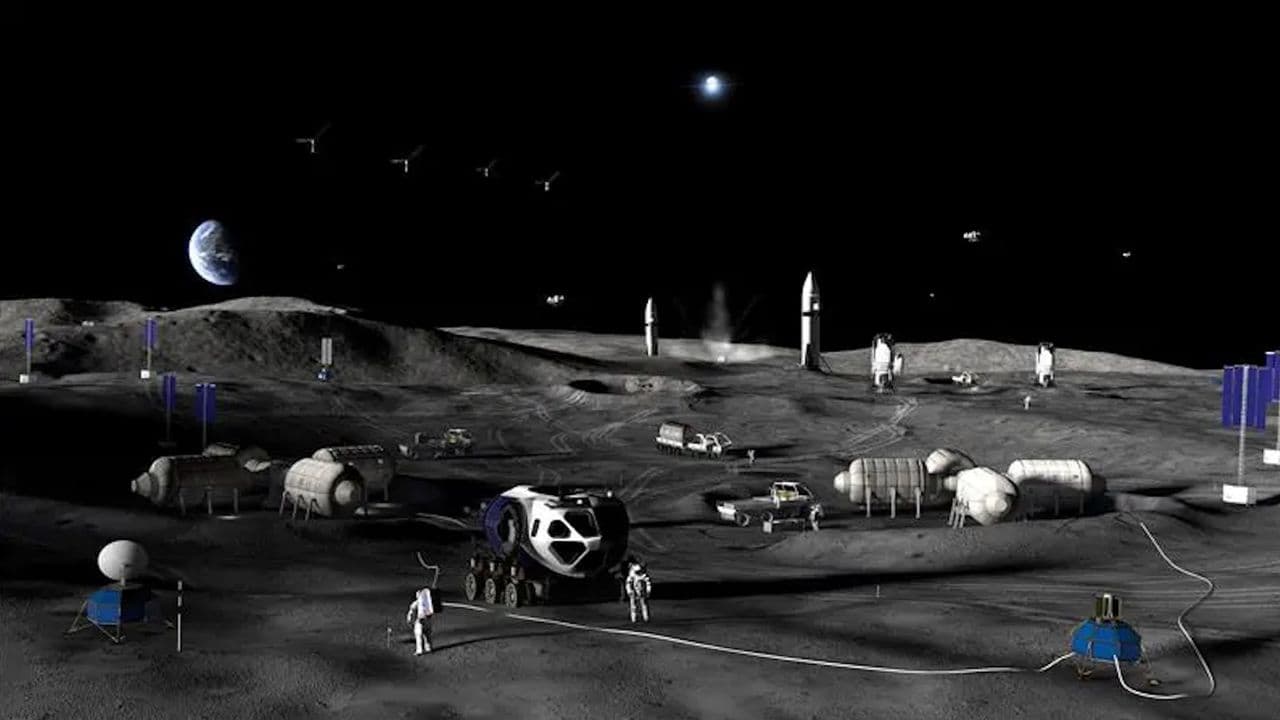
NASA plans a to build a permanent base on the moon with a step-by-step approach through 2032. (The invitation was extended last week at the Indian space agency ISRO's headquarters in Bengaluru during the ninth meeting of the U.S.-India Civil Space Joint Working Group. The CSJWG was established in 2005 as a mechanism for bilateral space cooperation and for addressing challenges and pursuing mutual spaceflight goals."Building on our successful collaboration in science, NASA reaffirmed its interest in @ISRO joining Moon Base. We're going back to the moon to stay — and we're bringing our partners with us," NASA officials said via X on Tuesday (Aug. 11).Building on our successful collaboration in science, NASA reaffirmed its interest in @ISRO joining Moon Base. We're going back to the Moon to stay — and we're bringing our partners with us. https://t.co/hU9ssn24FPAugust 11, 2026Beyond the lunar base invitation, "the two sides also agreed to advance discussions for cooperation on open scientific data sharing under the Accords," reads a Tuesday statement by the U.S. Embassy in India."The Accords" are the Artemis Accords, the U.S.-led diplomatic framework outlining principles for safe and responsible exploration of the moon and beyond. India signed on as the 27th signatory in 2023, joining a coalition that has now grown to 70 nations.Official statements have provided few details on what India's participation in the Moon Base program would entail in practice. The meeting, however, brought together senior space officials from both countries, including V. Narayanan, the chairman of ISRO and secretary of India's Department of Space, and Sergio Gor, the U.S. Ambassador to India, who addressed the opening session, according to the statement.The meeting was co-chaired by M. Sankaran, director of ISRO's U.R. Rao Satellite Centre, on the Indian side, and two people on the U.S. side — Wesley Brooks, assistant secretary of state for the U.S. Department of State's Oceans and International Environmental and Scientific Affairs, and Kathleen Karika, NASA associate administrator for International and Interagency Relations, the statement reads.Over the coming decade, via its Artemis program, NASA plans to build out a sprawling, city-like base near the moon's south pole, a region of particular interest thanks to permanently shadowed craters there that are thought to contain substantial deposits of water ice.Details of the planned architecture shared by NASA in May envision hilltop habitats to take advantage of sunlight and nuclear power systems located farther away to mitigate radiation risks. The space agency also plans to use small, hopping robots starting in 2028 to scout the south polar region ahead of moon base construction.This effort to gather information and secure access to the surface is the first of three planned phases. Phase 2, from 2029-2032, is intended to establish the base's initial operating capability. Phase 3, from 2032 onward, aims to achieve a semi-permanent crew presence on the lunar surface, NASA said during the May update. Senior space officials from India and the U.S. at the ninth meeting of the India-U.S. Civil Space Joint Working Group at ISRO headquarters in Bengaluru on Aug. 5-6, 2026, where NASA invited ISRO to join its Moon Base program. (For India, the invitation to join NASA's Moon Base program comes as the country pursues its own ambitious lunar exploration and human spaceflight roadmap. Its plans for the 2040s include developing a moon base, establishin
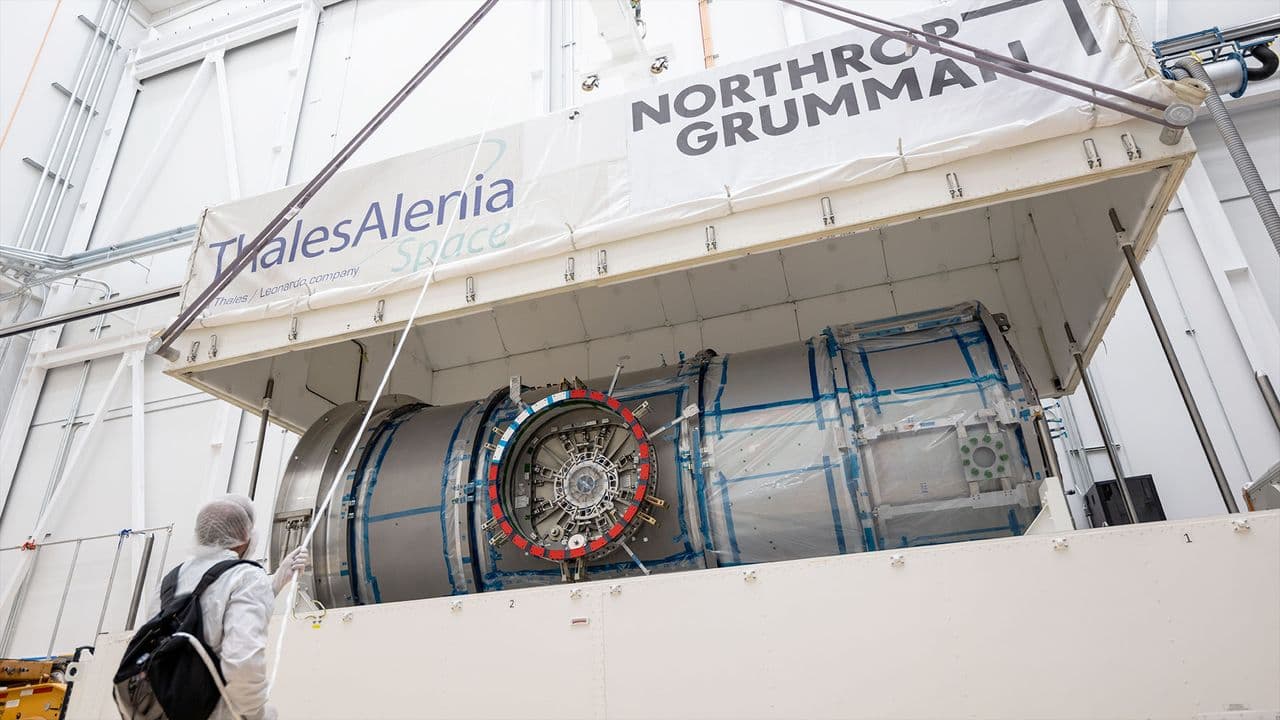
(Northrop Grumman is repurposing hardware and technology from the Habitation and Logistics Outpost (HALO) space station module for use on a new series of Lunar Infrastructure Demo (LID) missions. HALO was originally designed as the habitation module for NASA's since-cancelled moon-orbiting Gateway space station but found itself on the chopping block when the agency restructured the Artemis program architecture earlier this year.Rather than scrap the unfinished module outright, Northrop Grumman will adapt HALO's electrical and mechanical components to support the development of technologies for a moon base that can survive the cold, weeks-long night at the lunar south pole while sustaining the long-term habitation of astronauts inside.Part of NASA's reasoning for canceling Gateway was the need for expedience. As the agency's vision for Artemis and the return of astronauts to the lunar surface has evolved, China's plans to land the first taikonauts on the moon have steadily taken shape. Those ambitions, and the continued progression of China's lunar program, have kicked off a new space race in which the U.S. and NASA are intent on maintaining their first-place position.In March, NASA Administrator Jared Isaacman announced a shakeup to the Artemis program designed to enable a more step-by-step approach toward developing the technologies needed for a next-generation crewed lunar landing, and to achieve that landing on the shortest timeline possible.That timeline currently puts the first Artemis lunar landing with astronauts on the Artemis IV mission, scheduled for late 2028. Before then, however, NASA is planning nearly two dozen uncrewed missions to the moon to lay the groundwork for the infrastructure needed to precede astronauts' return. And, rather than let HALO rust in a warehouse, Northrop is doubling down on its commitment to the cause."To help NASA move faster … HALO’s power, data and mechanical interfaces will enable NASA to move with speed and begin gathering real lunar surface performance data sooner," the company said in a press release on Aug. 4. Northrop Grumman’s Lunar Infrastructure Demos (LID-1, LID-2 and LID-3) will reuse HALO derived technologies to rapidly mature lunar surface power, thermal, autonomy, communications and hosted payload services that can survive the lunar night and scale into persistent infrastructure near the moon’s south pole. ( Neither the company nor NASA gave a target timeline for these missions.NASA is targeting the south pole specifically because of the abundance of water ice that scientists have detected in that region on the moon. When harnessed appropriately, such ice concentrations can be used for a variety of applications to enable sustainable habitation on the lunar surface — the ultimate goal of the Artemis program — including potable water, radiation shielding and rocket fuel.NASA believes that overcoming the technological hurdle of "in-situ resource utilization" (ISRU), or the ability to rely on materials locally available to you in order to sustain your survival, is the gold standard of spaceflight that will open the door to humanity's long-term exploration of the cosmos. Manufacturing propellants off Earth, for example, would mean a substantial increase in the distance any particular mission to space can fly, because nearly 95% of a rocket's mass at launch is fuel. So,
Discussion (0)