
Loading dispatches...
← Return to Newsroomgeneral
Trump-Xi summit: Iran war, trade, Taiwan and AI on the agenda, why China has the upper hand
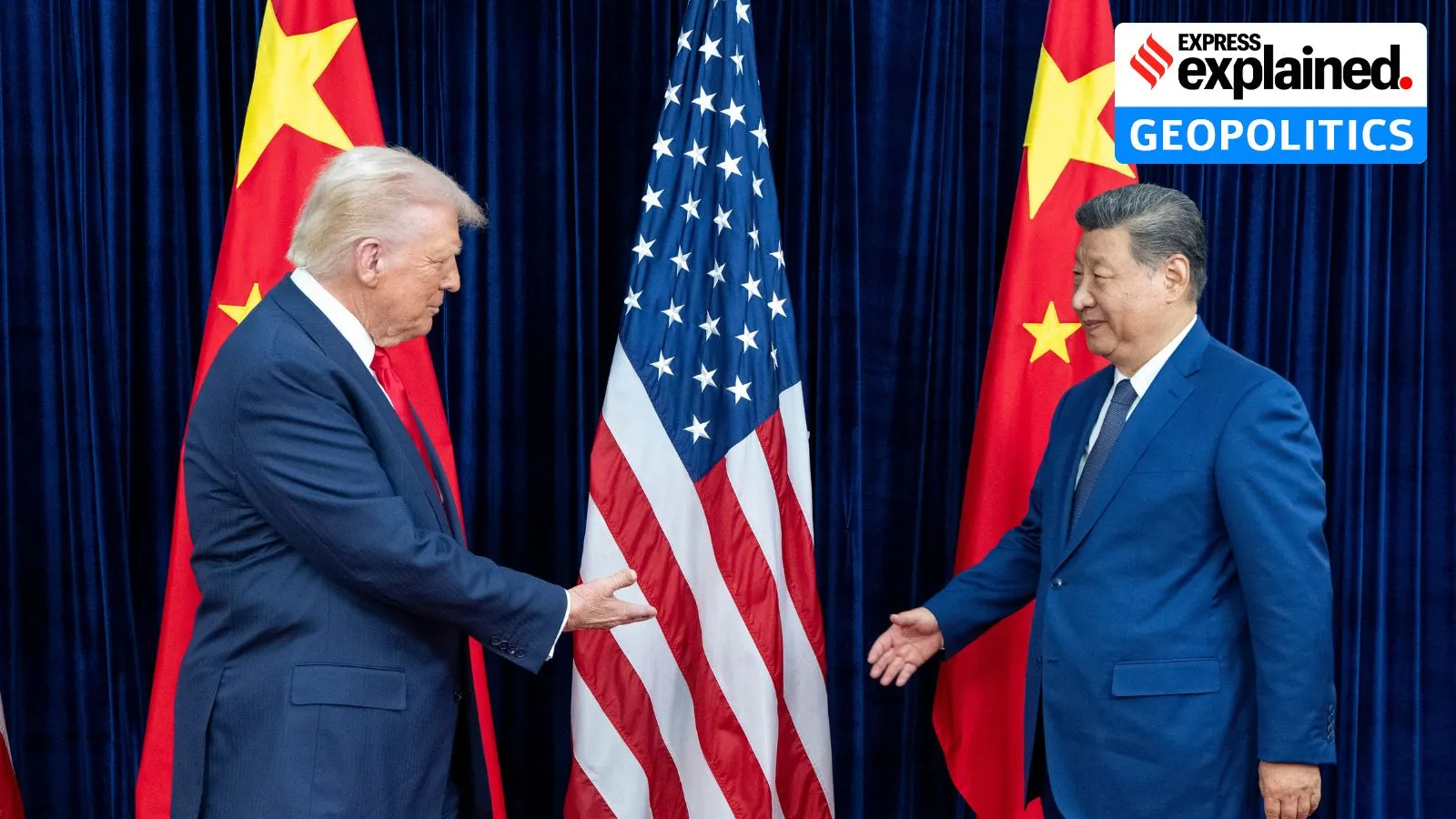
In November last year, when President Donald Trump announced that he had accepted an invitation to visit China in April, the meeting’s agenda appeared straightforward enough. Trade tensions between the world’s two biggest economies were spiralling into a full-blown tariff war, while Taiwan was the lingering flashpoint. Delayed by a month from its original schedule, the upcoming summit starting Wednesday now risks being consumed by a more compelling crisis: the war in Iran.While it is unclear where the West Asia conflict will go from here, even as an uneasy ceasefire continues to hold, two things are now evident: a resolution to the Iran war is ostensibly not that easy and China’s role will be crucial in whichever direction this conflict is headed. If Iran has to be brought back to the negotiating table in any constructive form, there seems to be a growing realisation in Washington DC that China is likely to play some kind of a role.Significance When Beijing officially confirmed the date of the state visit earlier this week, it marked the first visit to China from a sitting American president since Trump’s 2017 visit during his last term. This summit would be Trump’s seventh in-person meeting with President Xi Jinping. Trump is taking a big business delegation of over a dozen American CEOs with him, with Apple’s Tim Cook, Boeing chief Kelly Ortberg and Tesla’s Elon Musk part of his business entourage. The one conspicuous absence was Nvidia’s Jensen Huang, who did not figure on an initial list of executives provided by the White House earlier this week. Reuters, however, reported on Wednesday, quoting two sources familiar with the matter, that Huang will join Trump’s delegation to China. Nvidia’s new H200 chips, which have not yet been sold to China, remain a point of contention between the two sides. The choice of the people on the delegation is being read as harbingers of what the administration in Washington DC is pivoting towards in terms of its business priorities with China. “Trump visiting China and meeting with Xi Jinping this week, surrounded by businessmen instead of China hawks, is incredibly helpful in yielding positive outcomes from discussions,” according to Brian Tycangco, analyst at Baltimore-based Stansberry Research. Trump’s visit will include bilateral talks, a state banquet, and a visit to the Temple of Heaven during the course of the visit spanning May 13-15. Later this year, a reciprocal visit to Washington could be on the cards for President Xi, and signal if the relationship is likely to endure. Apart from Iran and the agenda for the business delegation, other key issues could be on the table: the likely direction of global trade and competition in advanced technologies such as AI. An investment deal is being seen as a possible wild card entry to the list. According to experts, Beijing could possibly indicate its willingness to buy Boeing aircraft and American soybeans, alongside announcing a ‘Board of Trade’ and a parallel ‘Board of Investment’ that seem to have been discussed in previous official-level talks. The two sides are also reportedly thinking of establishing an AI safety dialogue.Story continues below this ad Rising tensions across the Taiwan Strait do seem partly fuelled by the Trump administration’s mixed signals about its Taipei policy. Last December, the US had announced an $11billion arms deal with Taiwan, triggering protests from the Chinese government. Trump, however, has since downplayed the US willingness to defend Taiwan. “He considers it to be a part of China,” Trump said of Xi, adding that “(it’s) up to him, what he’s going to be doing (on Taiwan).” China, which has been keen to position itself as a stabilising power, was conciliatory ahead of the meeting. “President Xi and President Trump — looking back at their past meetings, one message stands out: the steady development of China-US relations brings certainty and stability to the world,” Mao Ning, the Spokesperson of the Ministr
NewsWorldUS NewsTargeting the 'shadow fleet': US hits 12 Iran-linked entities over secret oil shipments to China ahead of Trump-Xi summit The sanctions come days before US President Donald Trump is due to meet Chinese President Xi Jinping in Beijing. 2 min readMay 12, 2026 08:56 AM IST First published on: May 12, 2026 at 08:56 AM IST Treasury Secretary Scott Bessent listens as President Donald Trump speaks at a charter school in The Villages, Fla. (Photo: AP) The United States has imposed sanctions on 12 individuals and companies accused of helping Iran sell and transport oil to China. The US Treasury said the measures target three individuals and nine companies based in Hong Kong, the United Arab Emirates and Oman.In a statement, the Treasury said Iran’s Islamic Revolutionary Guard Corps uses front companies to hide its role in oil sales. It said these networks help move oil and channel revenue back to the Iranian government.The sanctions block any US-based assets held by those listed and ban US individuals and firms from dealing with them. Bessent says pressure will continue US Treasury Secretary Scott Bessent said Washington would continue to use sanctions alongside military pressure.Story continues below this ad “As Iran’s military tries to regroup, ‘Economic Fury’ will continue to deprive the regime of funding for its weapons programmes, terrorist proxies and nuclear ambitions,” he said. He also said the US would keep targeting the financial networks used by Iran. The sanctions come days before US President Donald Trump is due to meet Chinese President Xi Jinping in Beijing. The US is expected to raise Iran during the talks and press China, a major buyer of Iranian oil, to increase pressure on Tehran.Story continues below this ad Wider crackdown on Iran links The Treasury said the latest action builds on earlier sanctions targeting firms involved in Iran’s weapons and drone programmes. The US State Department has also announced a reward of up to $15 million for information that could disrupt the financial operations of the IRGC. Iran sends much of its oil to Asia, with China one of its largest trading partners. The conflict has also affected global energy markets, particularly around the Strait of Hormuz, a key route for oil shipments. The Express Global Desk at indianexpress.com which delivers authoritative, verified, and context-driven coverage of key international developments shaping global politics, policy, and migration trends. The desk focuses on stories with direct relevance for Indian and global audiences, combining breaking news with in-depth explainers and analysis. A major focus area of the desk is US immigration and visa policy, including developments related to student visas, work permits, permanent residency pathways, executive actions, and court rulings. The Global Desk also closely tracks Canada’s immigration, visa, and study policies, covering changes to study permits, post-study work options, permanent residence programmes, and regulatory updates affecting migrants and international students. All reporting from the Global Desk adheres to The Indian Express’ editorial standards, relying on official data, government notifications, court documents, and on-record sources. The desk prioritises clarity, accuracy, and accountability, ensuring readers can navigate complex global systems with confidence. Core Team The Express Global Desk is led by a team of experienced journalists and editors with deep expertise in international affairs and migration policy: Aniruddha Dhar – Senior Assistant Editor with extensive experience in global affairs, international politics, and editorial leadership. Nischai Vats – Deputy Copy Editor specialising in US politics, US visa and immigration policy, and policy-driven international coverage. Mashkoora Khan – Sub-editor focusing on global developments, with a strong emphasis on Canada visa, immigration, and study-related policy coverage. ... Read More



Discussion (0)