
Loading dispatches...
← Return to NewsroomScience
Cost estimate for 'Golden Dome' missile defense system balloons to $1.2 trillion
A notional illustration of the Golden Dome system intercepting a missile.
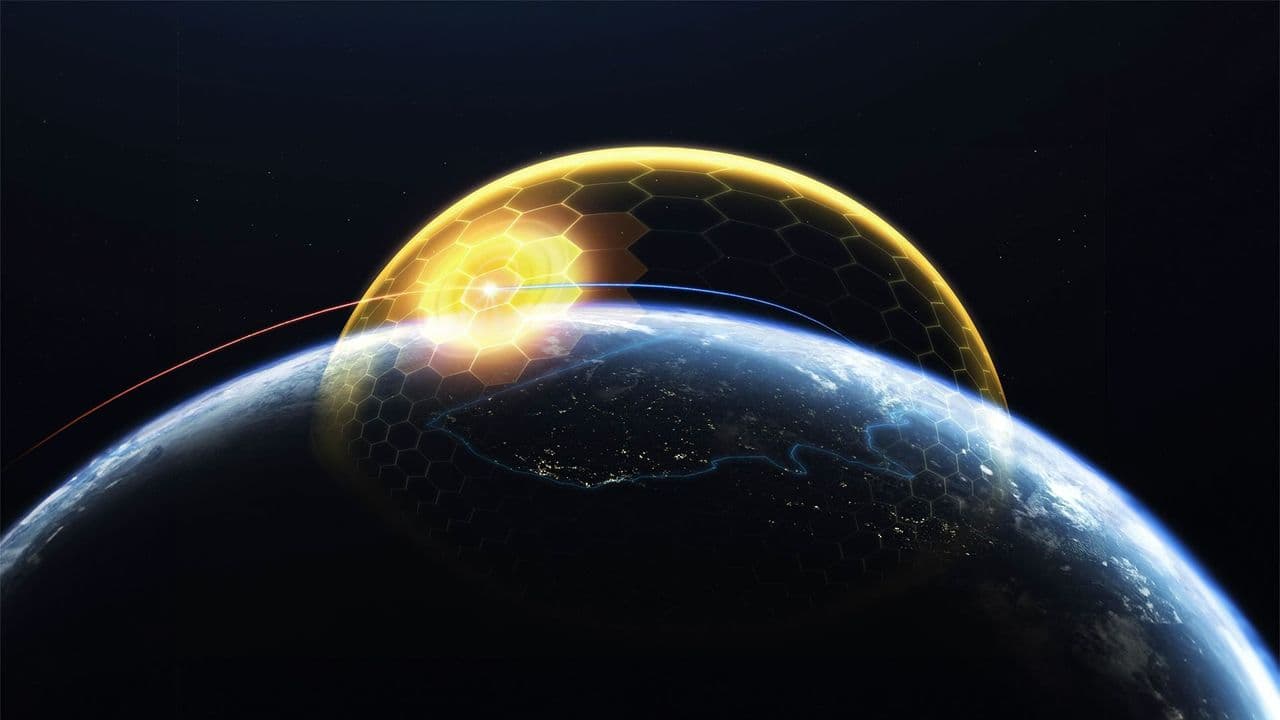
A notional illustration of the Golden Dome system intercepting a missile.
A notional illustration of the Golden Dome system intercepting a missile. (A new report by the nonpartisan Congressional Budget Office (CBO) estimates it will cost about $1.2 trillion to deploy the Golden Dome missile defense system and operate it for 20 years.The Golden Dome for America (GDA) is an envisioned shield that will protect the United States against ballistic and hypersonic missiles and other aerial threats. It will feature advanced missile-tracking satellites as well as space-based interceptors — satellites capable of shooting down missiles headed toward the U.S., which the Space Force wants to be ready by 2028.Those broad strokes are basically all we know, however; details of the architecture have not been released. So, the CBO had to get creative in its newly announced cost estimate, filling in gaps in the 2025 executive order that called for Golden Dome's creation.The agency did that, then crunched the numbers."A national missile defense system possessing capabilities broadly consistent with those outlined in the executive order would cost about $1.2 trillion to develop, deploy, and operate for 20 years, CBO estimates," the 12-page report reads.That notional system features four interceptor layers, one of which is space-based."The NMD system also includes additional sensors, communication systems and battle management systems to coordinate collective action among the layers," the report reads. "The layered structure of the overall system would provide the capacity to simultaneously engage multiple missiles launched by an adversary. Each layer would be able to operate independently if interaction with national command and control was disrupted."The vast majority of the $1.2 trillion price tag (about $1 trillion) would go toward acquisition costs — the money needed to develop, build and deploy the components of the interceptor and tracking layers, as well as conduct research into the system's performance and how to improve it."The most expensive component is the space-based interceptor layer, which accounts for about 70 percent of acquisition costs and 60 percent of total costs," the CBO report states.That layer, in the CBO's notional Golden Dome, consists of 7,800 satellites in a near-polar low Earth orbit — enough spacecraft "to engage a raid of 10 nearly simultaneously launched ICBMs [intercontinental ballistic missiles] during their boost phase. The ability to launch up to 10 ICBMs in rapid succession is considered representative of the capabilities of a regional adversary," the report reads.A "regional adversary" is one with limited capabilities — North Korea, for example. The report also discusses "peer or near-peer adversaries" — nations close to the United States militarily, such as China and Russia.The report notes that its overall cost estimate of $1.2 trillion is significantly higher than one given recently by Department of Defense (DoD) officials — $185 billion over the next 10 years."That difference suggests either that GDA's objective architecture is more limited than CBO's notional NMD system or that DoD expects significant funding from other accounts to contribute to GDA (or both)," the report states. "For example, procurement of interceptors might be funded directly through the services' missile procurement accounts instead of the GDA fund."The pricey notional system that CBO came up with would be able to "fully engage" an attack from a regional adversary, according to the report."However, the system could be overwhelmed by a full-scale attack mounted by a peer or near-peer adversary," it states. "Furthermore, 'fully engage' is not the same as 'fully defeat' because no defense works perfectly every time."Complete protection would therefore be incredibly expensive — probably priceless, in both senses of the word. Michael Wall is the Spaceflight and Tech Editor for Space
Discussion (0)