
Loading dispatches...
← Return to Newsroomgeneral
Inside Tenfa, a Magical Realist Story Set in the Fragile Landscape of Kinnaur
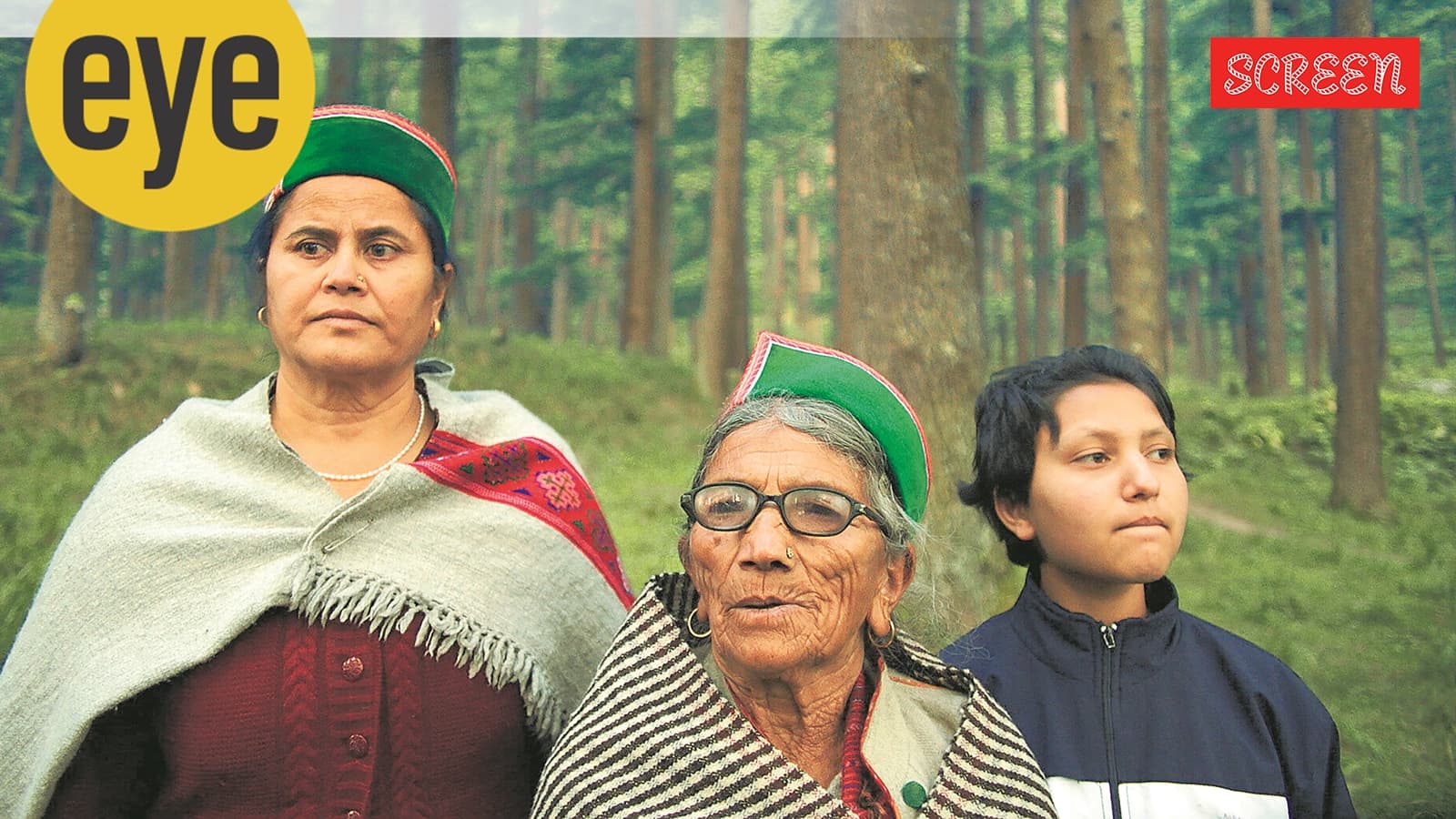
Over the past four years, filmmaker Nihaarika Negi has made multiple trips to Kinnaur, Himachal Pradesh, to reclaim her connections to her roots and ancestors. “I entered this process by listening to the stories of my family and the land as well as bearing witness to the ways in which the very ecology that sustained the tribe was being rapidly eroded by the march of industrialisation and progress,” says Negi, whose paternal side of the family belongs to the indigenous region of Kinnaur. During this period, Negi was moved by the “incredible acts of activism and preservation” that the community, especially the women, had undertaken and wanted to make a film that celebrated these everyday acts of heroism. And that’s how the idea of Tenfa (which in Kinnauri means a gift given by your elders) was born.The short film was showcased at the recent Indian Film Festival of Los Angeles (IFFLA). Tenfa started to take shape as Negi began spending time with Dolma, her bua (paternal aunt) during her visits to Kinnaur. Dolma, a midwife, soon became the central character and through her gaze the film unpacks larger themes of forgotten histories, building communities and the strength of storytelling. Nihaarika NegiAs someone who provides vital maternal healthcare in remote regions, in Tenfa, we see Dolma trekking to the village of Kandar to deliver the first baby to be born there in 10 years. Nestled in a rugged valley, the village lies almost abandoned following deadly landslides caused by massive hydroelectric construction. When the childbirth goes awry and without access to medical facilities, Dolma’s only hope to save the new mother’s life is to find a rare indigenous herb. The single person who can identify the plant is an elderly grandmother raising her granddaughter. “The three women journey across scarred ancestral land searching for the medicinal herb, their only guide being a folksong in a language that Dolma has forgotten and the granddaughter has never learnt,” says Negi. To build the narrative, Negi, an interdisciplinary artist, blends theatre, folktale and magical realism with cinematic elements. “My practice is centered around contemporary performance and participatory work. These are forms that inherently seek to question the boundaries of reality and fiction, of artistic agency and collective authorship, of the magical and the mundane. And I come to filmmaking through that lens,” says Negi, who holds a MA in Theatre Practice (Exeter) and an MFA from USC’s Peter Stark Producing Program. Negi wanted Tenfa, which is made in collaboration with the community, to reflect the multi-lingual reality of the region. The film features three languages that are spoken there: Hamskad (or Kinnauri), Pahadi Kinnauri and Hindi. “Since Kinnauri culture hasn’t really been depicted in mainstream storytelling, it was important for us to authentically represent the community before and behind the camera. Since we enter the film through the character of Dolma, we wanted to situate the film around my village, Sungra, in Nichar Valley.” The members of Negi’s family also are part of the cast.Story continues below this ad “Making this film was my way of attempting to understand how I could begin to archive and document the language, the landscape, the songs and the people through a form that seems deeply connected to the Kinnauri ethos: storytelling,” Negi says. In collaboration with her producing partners on this film – Storiculture and StarHooper Studio – she also wants to start a storytelling lab in Kinnaur for Kinnauris. The aim is to facilitate the meeting of elders and folklorists with narrative storytelling mentors to help them share their own stories on a bigger stage. Negi is currently engaged with the post-production for her first feature film, Birds of a Feather, which she has written, co-directed and produced
The incident took place at Parigam village in Pulwama. Villagers said that the butcher allegedly sold the “contaminated meat” on Tuesday.A quiet Wednesday morning quickly turned into panic and confusion in a south Kashmir village after word spread that a butcher had allegedly sold the meat of an animal that was bitten by a dog. While police registered a case, health officials rushed to launch an emergency vaccination drive against rabies. By Thursday afternoon, as many as 108 people from the village had already received the vaccine.The incident took place at Parigam village in Pulwama. Villagers said that the butcher allegedly sold the “contaminated meat” on Tuesday. Alerted by the panic, health officials did not want to leave anything to chance. They soon made announcements from mosques asking people to report to the Primary Health Centre (PHC) in the village for vaccination. “On Wednesday, we vaccinated 75 people,” said Dr Jureeda Qayoom, Medical Officer at PHC Parigam. “By Thursday afternoon, the total number of vaccinations has reached 108.” With the sheer number of people showing up for vaccination, the PHC had to designate a specific area just for this purpose. Dr Qayoom asked people not to panic, saying that if the meat is cooked before consumption, it is unlikely that those who consume it will get infected. However, the medical officer also asked villagers to watch for symptoms like excessive salivation, behavioural changes, or nausea. “We generally cook meat, and there are little chances of transmission,” she said, adding, “However, during the washing, if someone has an injury or abrasion, there are chances of transmission.”Story continues below this ad A villager who had reached the PHC to vaccinate himself and his family said he had bought meat on Sunday. “We had it at our home. Though the incident came to light later, I didn’t want to leave anything to chance. So I vaccinated myself and my family,” he said. Police have registered a case at Pulwama police station under the section dealing with offences or malicious acts likely to spread dangerous and life-threatening diseases. An assistant sub-inspector has been tasked with investigating the case. Bashaarat Masood is a Special Correspondent with The Indian Express. He has been covering Jammu and Kashmir, especially the conflict-ridden Kashmir valley, for two decades. Bashaarat joined The Indian Express after completing his Masters in Mass Communication and Journalism from the University in Kashmir. He has been writing on politics, conflict and development. Bashaarat was awarded with the Ramnath Goenka Excellence in Journalism Awards in 2012 for his stories on the Pathribal fake encounter. Expertise and Experience Two Decades of Frontline Reporting: Bashaarat has spent 20 years documenting the evolution of Kashmir, from high-intensity conflict and political shifts to socio-economic development. Award-Winning Investigative Journalism: He is a recipient of the prestigious Ramnath Goenka Excellence in Journalism Award (2012). This honor was bestowed for his reporting on the Pathribal fake encounter, a series of stories that highlighted his ability to handle sensitive human rights and security issues with investigative rigor. Specialized Beats: His authoritative coverage spans: Political Transitions: Tracking the shift from statehood to Union Territory, electoral dynamics, and the pulse of local governance. Security & Conflict: Providing nuanced reporting on counter-insurgency, civil liberties, and the impact of the conflict on the civilian population. Development: Documenting the infrastructure, healthcare, and educational landscape within the Valley. Academic Background: He holds a Masters in Mass Communication and Journalism from the University of Kashmir, providing him with a localized academic and professional foundation that is rare in regional reporting. ... Read More Stay updated with the latest - Click here

Discussion (0)