
Loading dispatches...
← Return to Newsroomgeneral
Over 800 Italian firms contributing to Indias growth story: PM Modi after meeting Meloni
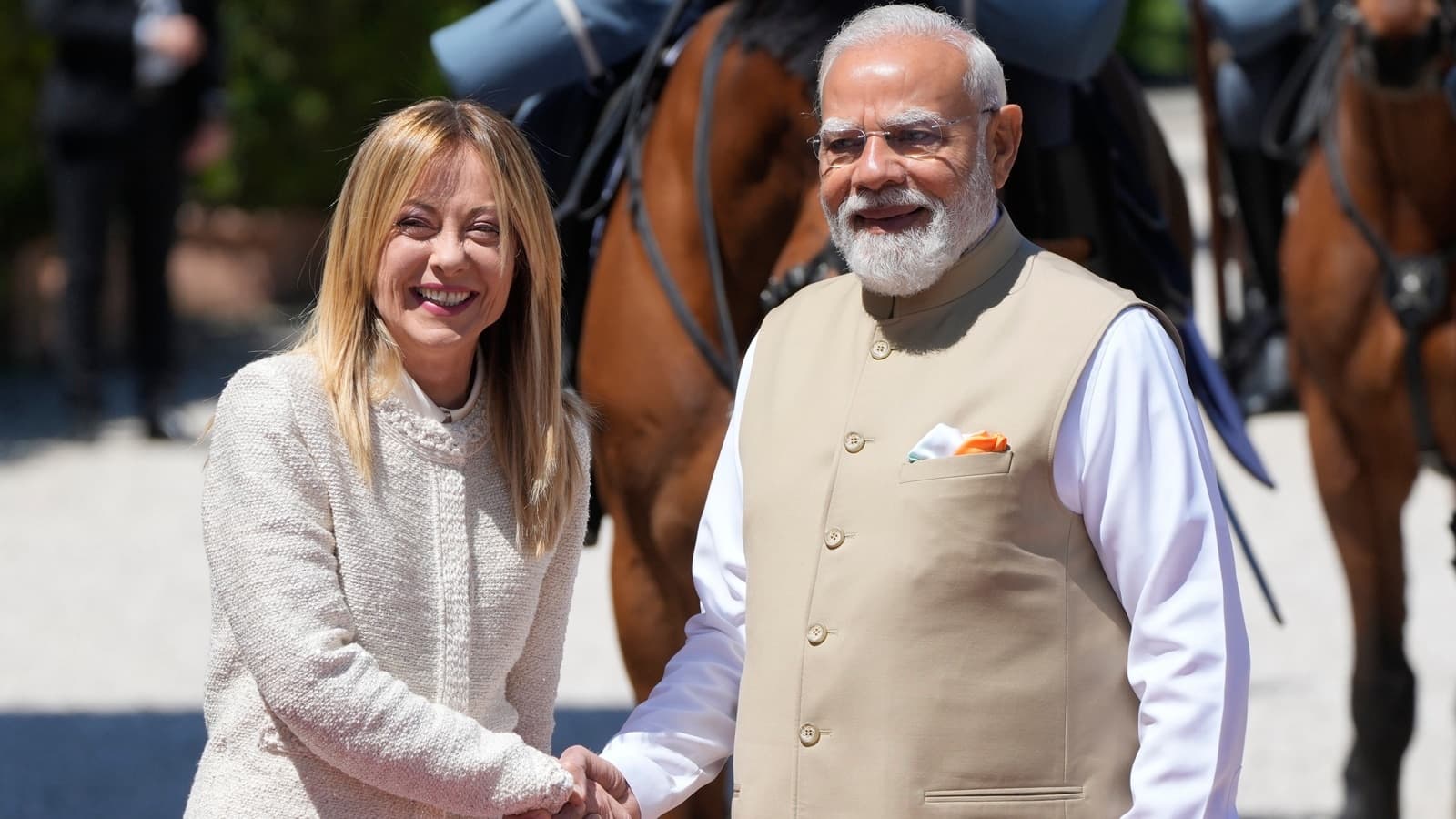
Italian Premier Giorgia Meloni welcomes Prime Minister Narendra Modi upon his arrival at Villa Doria Pamphili in Rome for talks. (AP Photo)Prime Minister Narendra Modi on Wednesday held a delegation level talks with Italian Prime Minister Giorgia Meloni as part of his five-nation tour which is aimed at strengthening relations between New Delhi and Rome. During the talks, PM Modi said that over 800 companies are “actively contributing” to India’s growth story. In the delegation level talks with Italian counterpart, PM Modi said “We deliberated extensively on enhancing India-Italy ties. India-Italy joint strategic action plan 2025-2029 gives our ties a practical and futuristic framework.” The Express Global Desk at indianexpress.com which delivers authoritative, verified, and context-driven coverage of key international developments shaping global politics, policy, and migration trends. The desk focuses on stories with direct relevance for Indian and global audiences, combining breaking news with in-depth explainers and analysis. A major focus area of the desk is US immigration and visa policy, including developments related to student visas, work permits, permanent residency pathways, executive actions, and court rulings. The Global Desk also closely tracks Canada’s immigration, visa, and study policies, covering changes to study permits, post-study work options, permanent residence programmes, and regulatory updates affecting migrants and international students. All reporting from the Global Desk adheres to The Indian Express’ editorial standards, relying on official data, government notifications, court documents, and on-record sources. The desk prioritises clarity, accuracy, and accountability, ensuring readers can navigate complex global systems with confidence. Core Team The Express Global Desk is led by a team of experienced journalists and editors with deep expertise in international affairs and migration policy: Aniruddha Dhar – Senior Assistant Editor with extensive experience in global affairs, international politics, and editorial leadership. Nischai Vats – Deputy Copy Editor specialising in US politics, US visa and immigration policy, and policy-driven international coverage. Mashkoora Khan – Sub-editor focusing on global developments, with a strong emphasis on Canada visa, immigration, and study-related policy coverage. ... Read More Stay updated with the latest - Click here to follow us on Instagram© IE Online Media Services Pvt Ltd Tags: Italy Narendra Modi
What India now needs is a national policy vision that treats highway corridors not merely as engines of mobility, but as strategic landscapes for ecological and economic resilience (Representative/ File Photo) 4 min readMay 20, 2026 03:26 PM IST First published on: May 20, 2026 at 03:26 PM IST Written By Vinod Mathur, Rajkumar Sapra and Vinod Kumar India is expanding its highways at an unprecedented pace. Under Bharatmala and Vision 2047, thousands of kilometres of expressways and highways are reshaping connectivity, reducing logistics costs and accelerating economic growth. This transformation is creating an ecological and public-health burden. Highway corridors are increasingly becoming zones of pollution accumulation, landscape fragmentation and agricultural risk. Since many highways pass through densely populated agricultural regions, the impacts extend beyond the carriageway itself. India needs a policy shift: Highways must no longer be viewed merely as transport infrastructure, but as ecological and socio-economic landscapes. One promising solution is Highway Farm Forestry (HFF) — a market-linked agroforestry approach in which farmers adjoining highways voluntarily cultivate commercially viable tree crops instead of pollution-sensitive food crops. These “Tree Crop Buffer Zones” can reduce pollution exposure, strengthen timber supply chains, improve ecological connectivity and generate additional income.Unlike earlier social-forestry programmes that struggled because of weak market linkages and top-down implementation, HFF is profitability-driven. Farmers will adopt tree cultivation only if returns exceed existing land-use income. Species such as poplar, bamboo, teak, Malabar neem and gamhar already have strong industrial demand. With assured buyback arrangements and extension support, roadside agroforestry can become a viable rural enterprise. The economic rationale is also compelling. India imports nearly Rs 70,000 crore worth of wood and wood products annually. HFF could reduce import dependence, create rural employment and strengthen timber industries in line with the “Make in India” agenda. However, the proposal is not simply about timber production. It is fundamentally about integrating ecological planning into infrastructure policy. Conventional roadside green belts based solely on public land acquisition are difficult to scale across the highway network, given the high cost of acquiring adjoining land. A more practical approach is a differentiated “Tiered Zone Framework”. Highways nearest to pollution-affected belts — roughly within 100 m — should prioritise tree-based systems, while areas beyond can continue mixed agroforestry or conventional agriculture depending on local ecological and livelihood conditions. This calibrated approach recognises that ecological restoration, food security and farmer livelihoods must advance together. Properly designed roadside tree systems can function as ecological stepping stones in fragmented landscapes, supporting pollinators, birds and local microclimates. Plantation biomass can also support carbon sequestration and help farmers participate in emerging carbon markets. At the same time, ecological safeguards are essential. Monocultural plantations could create new environmental problems if poorly designed. Species selection must therefore remain science-based, region-specific and groundwater-sensitive. Ecologically invasive species should be excluded, while native and mixed-species systems should be encouraged. HFF is not a substitute for cleaner mobility systems or stronger environmental safeguards in infrastructure planning; it must complement them. Implementation will require institutional coordination and farmer support. Farmers need quality planting material, extension services, predictable markets and simplified regulations. Encouragingly, the National Transit Pass System introduced in 2023 has already addressed a major bottleneck by enabling seamless interstate mov


Discussion (0)