
Loading dispatches...
← Return to NewsroomPolitics
SIR: BJP, RSS conspiracy should not be allowed to succeed, B.K. Hariprasad

KPCC President B.K. Hariprasad addressing a gathering of Congress legislators, office-bearers and party workers after inaugurating an SIR awareness convention in Hubballi on June 25, 2026. | K. Hariprasad has said that the Congress is not opposed to the Special Intensive Revision (SIR), but is against the alleged conspiracy hatched by the RSS and BJP to remove names of genuine voters from the list of electors. He called on party workers to foil the conspiracy.On June 25, he inaugurated the ‘SIR Awareness Convention’ organised by Hubballi Dharwad Urban District and Dharwad Rural District units of the Congress, at Babu Jagjivan Ram Sabhabhavana in Hubballi.Mr. Hariprasad said, “India belongs to everyone, and it is not the property of any one person. We should not allow BJP’s conspiracy to be successful. For the next two-three months Congress legislators, leaders and workers should actively participate in SIR-related activities.”He said that ‘the RSS was never part of the freedom struggle, and the organisation always wanted power to be vested with only a few with the remaining people to serve as their slaves’. “Now, the RSS has resorted to the undemocratic act of keeping all the power with itself,” he alleged.Clarifying that the Congress is not opposed to SIR, he said that the party is against removal of names of genuine voters on the pretext of mapping. “People should understand that they would receive government scheme benefits only if their names are in the electoral rolls.”Former chairperson of Karnataka Legislative Council V.R. Sudarshan alleged that BJP leaders were misusing the Election Commission of India for their benefit. “The officials should remember that retaining genuine voters is their duty. People too should be aware of their voting rights, and also concerned about retaining and exercising them. The party workers, office-bearers and also legislators should keep an eye on this exercise,” he said.Mr. Sudarshan asked booth level agents (BLA- 1&2) to visit each household from June 30. “The draft electoral roll will be released in August. If genuine voters have been left out, objections should be filed immediately. In every segment, services of separate advocates should be availed for the purpose. Up to 10 objections could be filed in a day. Along with BLOs, BLAs-2 should attend workshops,” he explained.Former minister Santosh Lad alleged that well-wishers of the Congress were being identified through social media by using AI technology, and they would be removed from the electoral rolls. “So everyone should be careful,” he said.Mr. Lad contended that by linking Aadhaar card with EPICs, voter duplication could be avoided, but it was not being done. He emphasised the need for party workers to actively participate in the exercise.Hubballi Dharwad East MLA Prasad Abbayya alleged that Congress well-wishers were being systematically removed in 90 Assembly segments. “Everyone should be careful about it. BJP, which came to power earlier through covert means, was clever enough to implement another similar ploy to come back to power,” he said.Navalgund MLA N.H. Konaraddi said that the BJP is hellbent on destroying the base of the Congress, and it is important that the BLAs understand their responsibilities thoroughly.Congress legislators Srinivas Mane, Yasir Ahmed Khan Pathan, U.B. Banakar, F.H. Jakkappanavar, former ministers A.M. Hindasageri and Basavaraj Shivannavar, former legislators B.R. Yavagal, M.S. Akki, Kusumavati Shivalli, and host of leaders from Belagavi division attended the convention. Published - June 26, 2026 12:28 pm IST
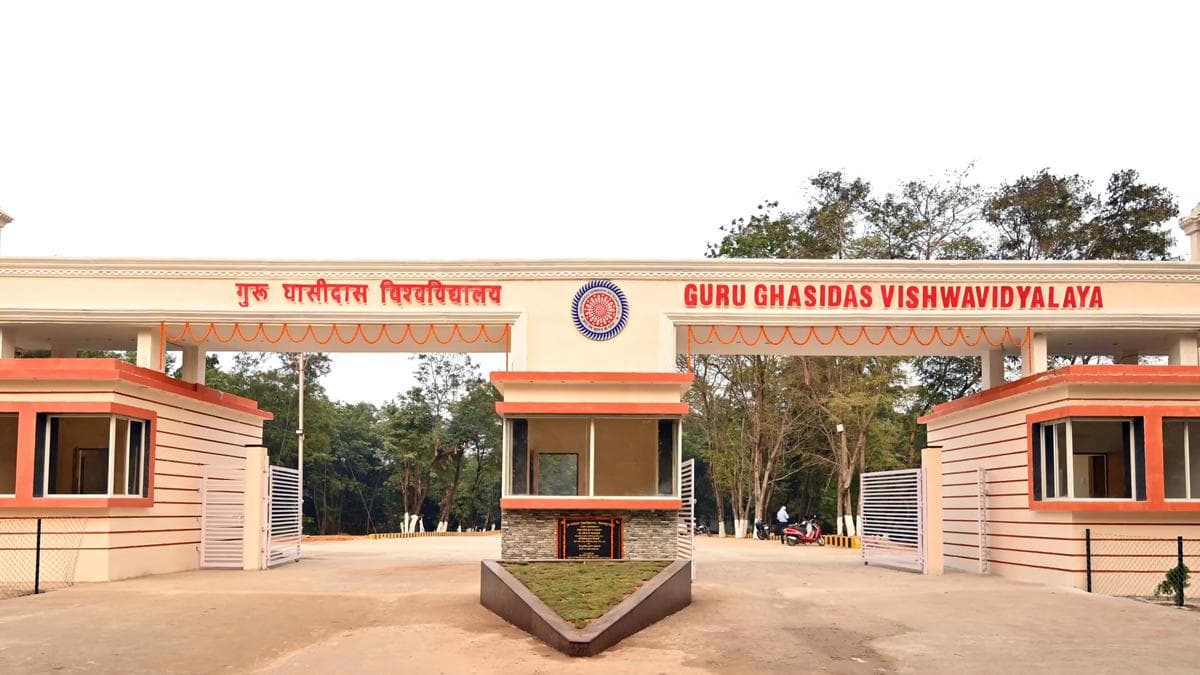
Guru Ghasidas Central University. File picture (www.ggu.ac.in) A central university in Chhattisgarh's Bilaspur has decided to replace the word "India" with "Bharat" in its marksheets, degree certificates and official communications, its top official said on Saturday (June 20, 2026).Guru Ghasidas Central University took the decision, and its standing committee passed a resolution to this effect about six months ago, the university's Vice Chancellor Alok Kumar Chakrawal said."Gradually, the word 'Bharat' will replace 'India' in marksheets, degrees and official communications," he told PTI.At present, university marksheets and degree certificates carry references to both India and Bharat in English and Hindi respectively. Under the new decision, "India" appearing in English will also be replaced with "Bharat", he said.Mr. Chakrawal added that the change will be implemented once the existing stock of marksheets and degree certificates is exhausted.Explaining the rationale behind the move, the V-C referred to the use of the term "Bharat" during the G20 Summit hosted by India in 2023."During the G20 meetings last year, the Honourable President used the word 'Bharat' in an official dinner invitation. When the highest constitutional authority in the country follows this tradition, we are also following it. It is a matter of our tradition," he said.Mr. Chakrawal said the term "Bharat" has deep roots in Indian civilisation and culture."Historically, the region of Aryavarta and Jambudweep has been referred to as Bharat. The name India was given by foreigners for their convenience. We need not be guided by what outsiders thought. Our culture and tradition have always referred to the country as Bharat, and we are making an effort to reinforce that tradition," he said.He added that people have used different names for the country over time, reflecting their own understanding, and he did not wish to comment on those interpretations.Meanwhile, officials of some state universities, including Indira Gandhi Krishi Vishwavidyalaya in Raipur and Atal Bihari Vajpayee University in Bilaspur, said no such decision had been taken by their institutions so far and no guidelines had been issued by the authorities in this regard. Published - June 20, 2026 06:15 pm IST

The Mughal gardens of Kashmir set a new style and influenced the gardens outside, which included the gardens of the Taj Mahal in Agra and Bagh-e Babur in Kabul, said Jan Haenraets, a landscape architect at Boston University in the United States, on Friday (June 19, 2026).“Kashmir gardens are important sites to understand Mughal landscape architecture. These gardens fit in the wider context. Kashmir gardens were essential to what was practised by Mughals outside, like the gardens of the Taj Mahal (in Agra) and Bagh-e-Babur in Kabul. Both are influenced by Kashmir gardens,” said Mr. Haenraets.Mr. Haenraets made the statement while speaking at the pre-launch of the first-ever book that deals exclusively with the Mughal gardens of Kashmir. It is titled “Kashmir’s Mughal Landscape of Gardens: Creation and Decline of a Golden Age, 1586-1753”.“Kashmir offers an imperial garden family of emperors and empresses, from Akbar to Aurangzeb. To me, the water channels of the Taj Mahal garden were influenced by Kashmir. The elongated garden, like Nishat, took shape in Kashmir with mountains in the backdrop. At the Taj Mahal, unlike the previous idea of a garden with a mausoleum at the centre, it’s an elongated garden like the one in Kashmir,” said Mr. Haenraets.The author, who researched about 80 Mughal gardens and sites for 16 years in Kashmir, said the Mughal garden sites “are comparable to the monastic heritage sites of Kyoto in Japan”. He termed Mughal gardens “essential elements of Kashmir’s identity and heritage”.“Shah Jahan, Jahangir or Nur Jahan focused on the gardens. Mughal governors like Zafar Khan and Ali Mardan Khan too are associated with gardens in Srinagar. Dara Shikoh’s father-in-law (Jahangir’s son Parvez) is behind the garden that pre-dated Dara Shikoh Garden in Bijbehara (in south Kashmir),” said Mr. Haenraets.Kashmir has been home to “hundreds of Mughal gardens with only 80 sites left behind, including six main Mughal gardens.” “Mughals had multiple types of gardens constructed. One was earlier strategic encampment gardens like Naseem Bagh etc. Later, they focused on the pleasure gardens like Shalimar and Nishat gardens,” said the author.He said Kashmir gardens “deserve a place to understand Mughal gardens around the world”. “These gardens have outstanding value and could be comparable to the heritage sites of Persia,” said the author.He said Mughals also played with pre-existing layers of history in Kashmir. “The fact Maha Dev peak is depicted in one of the Mughal paintings is an example of this. Mughal gardens in Kashmir were about power, control and colonisation but also privilege and pleasure,” said Mr. Haenraets.He said the Mughals gradually capitalised on Kashmir’s topography, hydrology, and subliminal nature to develop gardens that fully engage with their settings. “Their garden-making reached its zenith under Jahangir, Nur Jahan, and Shah Jahan, with key figures such as Asaf Khan, Dara Shikoh, Jahanara, Zafar Khan, and Ali Mardan Khan,” the author added.His book offers new insights into famous gardens like Bagh-e Shalimar and Bagh-e Nishat, “rediscovering many forgotten ones”. It has Mughal artwork, rare images, historical maps, and new photography “to provide a glimpse into Kashmir’s lost Mughal landscape of sovereignty, power, and pleasure”.After the Mughal rule ended, Mr. Haenraets said these gardens did not get enough attention. “Many gardens have been converted into an urban neighbourhood. Conservation works are fund-driven and not meant to restore its elements in the right context. Conservation works especially in Shalimar and the Shalimar canal are a cause of concern. Conservation needs knowledge and understanding. My book aims to set the course for it,” he added.Speaking on the occasion, Saleem Beg, Convenor of the Indian National Trust for Art and Cultural Heritage (INTACH) J&K Chapter, said the book will offer new insights towards the conservation of Mughal gardens in Kashmir.“Instead of referring to Kas
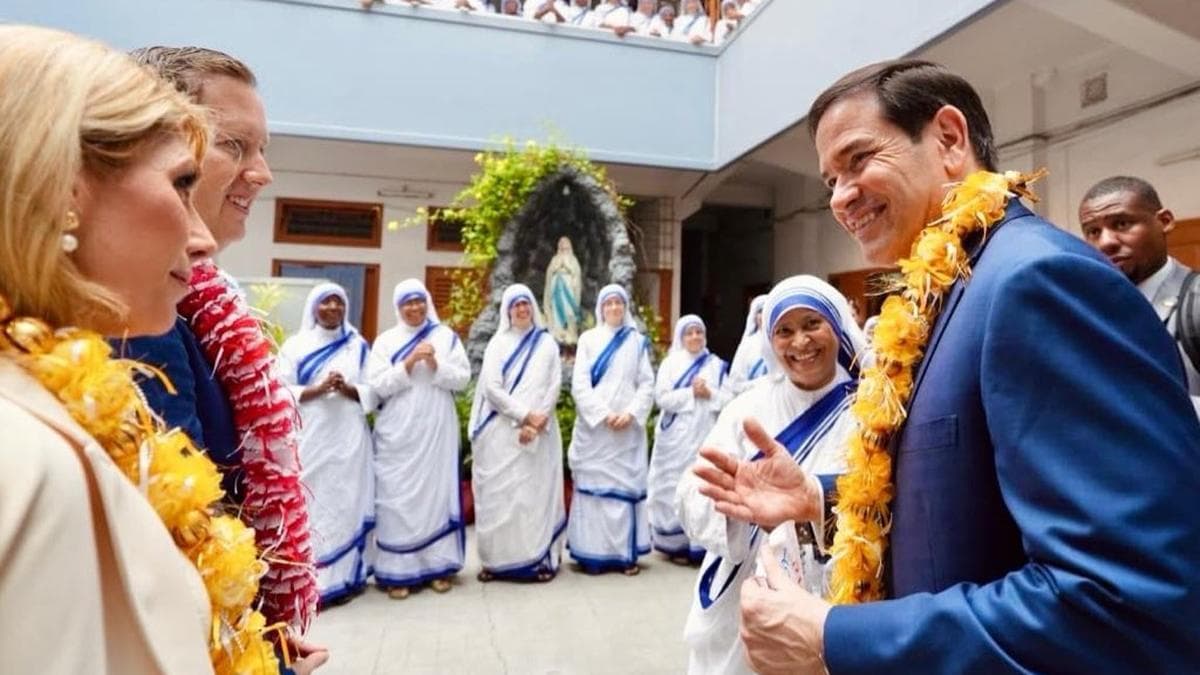
U.S. Secretary of State Marco Rubio visited Mother House, the headquarters of Saint Teresa's Missionaries of Charity in Kolkata, on Saturday, May 23, 2026. | S. Secretary of State Marco Rubio arrived in Kolkata on Saturday (May 23, 2026) for his four-day diplomatic tour to India, with the city marking the opening leg of a visit that carries considerable political and historical resonance.Mr. Rubio’s India itinerary, scheduled from May 23 to 26 and also encompassing Agra, Jaipur, and New Delhi, is being viewed as diplomatically significant for his scheduled energy talks with India and the meeting with Ministers from the Quad nations.The visit will be closely watched as it comes against the backdrop of the U.S.’s continued engagement in hostilities in the Persian Gulf region, which have had consequences for India’s energy security. Responding to a question about India being affected by high energy prices due to the closure of the Strait of Hormuz, Mr. Rubio described India as a “great partner” and said he was looking forward to meeting with Ministers from the Quad nations.Follow here for live updates,May 23, 2026 09:56 Marco Rubio and his wife Jeanette D. Rubio leave for DelhiU.S. Secretary of State Marco Rubio and his wife Jeanette D. Rubio arrive at Kolkata Airport for their onward travel to Delhi. - ANI May 23, 2026 09:53 Marco Rubio along with wife, arrives at Nirmala Shishu BhavanU.S. Secretary of State Marco Rubio along with his wife Jeanette D Rubio, on Saturday (May 23) arrived at Nirmala Shishu Bhavan Missionaries of Charity, in Kolkata. The Nirmala Shishu Bhavan is a network of specialised children’s homes managed by the Missionaries of Charity, the Roman Catholic religious congregation established by Mother Teresa in 1950. - ANI May 23, 2026 09:40 U.S.-India partnership also rests on the spirit of selfless service that transcends borders: U.S. Ambassador Sergio GorU.S. Ambassador Sergio Gor wrote in a post on X, sharing moments from U.S. Secretary of State Marco Rubio’s visit to the Mother House in Kolkata, that “U.S.-India partnership rests not only on strong policies, but also on shared values and the spirit of selfless service that transcends borders.” May 23, 2026 09:31 Marco Rubio visits the Mother Teresa House Of The Missionaries of CharityU.S. Secretary of State Marco Rubio leaves from The Mother Teresa House Of The Missionaries of Charity in Kolkata. - ANI May 23, 2026 09:18 U.S. Ambassador to India Sergio Gor welcomes Marco Rubio in KolkataIn a post on X, U.S. Ambassador to India Sergio Gor said, “Secretary Marco Rubio has landed in Kolkata. This is his first trip to India. Later today, we will call on Prime Minister Modi in New Delhi. Trade, Technology, Defence, QUAD, and many other items to discuss and advance over the next few days!”. May 23, 2026 09:15 U.S. Secretary of State Marco Rubio arrives in Kolkata, visits Saint Teresa’s Mother HouseU.S. Secretary of State Marco Rubio visited Mother House, the headquarters of Saint Teresa’s Missionaries of Charity, in Kolkata on Saturday (May 23, 2026).Mr. Rubio arrived in Kolkata this morning, marking the opening leg of his maiden four-day visit to India, and was welcomed by U.S. Ambassador Sergio Gor at the city airport.Read more here, Published - May 23, 2026 09:10 am IST
Mirwaiz Umar Farooq. File picture | “As international commitments made over the Kashmir issue were never implemented and wars between the neighbouring countries over the conflict got them nowhere, my father strongly advocated that they talk to each other to find a way out and, in the process, take the people of Jammu Kashmir along, addressing their concerns and democratic aspirations. We still support this process,” said the Mirwaiz. Referring to the stand of his father, Mirwaiz Moulana Farooq, who was assassinated by gunmen in 1990, the Mirwaiz said, “These past thirty-six years have been very tough on Kashmir, witnessing tragedies, violence and loss, and yet no closure. The Shaheed-e-Millat understood that the Kashmir conflict, while of dominion and territory for India and Pakistan, was played out at the cost of the people of Kashmir, who were treated like dumb, driven cattle. His political struggle was for their voice to be heard, their democratic aspirations to be respected and their dignity established,” said the Mirwaiz.Recalling his father’s stand, the Mirwaiz said, “He advocated dialogue and practised it throughout his life - in his constant outreach to all, even to his political adversaries. He saw dialogue among countries, communities, sects, and people as the best means to peaceful and respectful coexistence, leading to their wholesome growth, prosperity and development,” said the Mirwaiz.He underlined the path shown by his late father, where he put thrust on “resolution, peace, brotherhood, dignity, and coexistence”. “The path of dialogue and moderation is what has guided me through the ups and downs of these last 36 years as I follow in his footsteps,” said the Mirwaiz.Meanwhile, the Mirwaiz said Id prayers will be held at Eidgah in Srinagar on May 27. For the past many years, the authorities denied permission for holding Id prayers at Eidgah in Srinagar. Published - May 23, 2026 09:56 am IST

Discussion (0)