
Loading dispatches...
← Return to NewsroomPolitics
Southwest monsoon arrives in Andhra Pradesh, says IMD

An agricultural worker fetching water from a pipeline to quench his thirst amid intense heat, in Kothapatnam mandal, near Ongole, on Saturday. | n a press release, the IMD said the monsoon advanced into some more parts of Karnataka, entire Goa, a few parts of Maharashtra and Andhra Pradesh, most parts of Tamil Nadu, and some parts of Northwest Bay of Bengal, Mizoram and Manipur.The usual date for onset of the monsoon in Andhra Pradesh is June 4. The previous year, it had arrived on May 26. According to the IMD, conditions are favourable for further advance of the monsoon in some more parts of the State in the next three-four days. The monsoon touches Rayalaseema first, and moves northwards, weather experts say.Rain in RayalaseemaThe Rayalaseema region received good amount of rainfall in 24 hours ending at 8.30 a.m. on Saturday. Manthralayam in Kurnool district received the maximum rainfall of 50 mm, followed by Yemmiganur in Kurnool district and Kanekal in Anantapur district (40 mm), Nagari in Chittoor district (30 mm), and Gorantla in Sri Sathya Sai district, Kunurpi in Anantapur district, Alur in Kurnool district, Rayadurg in Anantapur district (20 mm).On Saturday, some places experienced severe heatwave conditions, while others received moderate rainfall. Between 8.30 a.m. and 4 p.m., D. Polavaram in Kakinada district received the highest rainfall of 48.75 mm, followed by Rolugunta and Nathavaram in Anakapalli district (27.5 mm) and Kothakota in Anakapalli (25.5 mm).According to the A.P. State Disaster Management Authority, 23 mandals experienced severe heatwave conditons and 88 mandals experienced heatwave on Saturday. Most of these were in Anakapalli, Srikakulam and Vizianagaram districts. The day’s highest temperature of 44 degree Celsius was recorded in Pedaparupudi in Krishna and Kanigiri in Markapuram districts.The IMD has given a heavy rainfall warning for Rayalaseema, especially for the districts of Sri Sathya Sai, Kurnool and Anantapur, for Sunday (June 7). Meanwhile, a heatwave alert has been issued for isolated places in coastal Andhra Pradesh for June 7 and 8. People in the districts of NTR, Krishna, Bapatla, East and West Godavari, Eluru, Guntur, and nearby districts may experience heatwave conditions on the two days. Published - June 06, 2026 07:53 pm IST
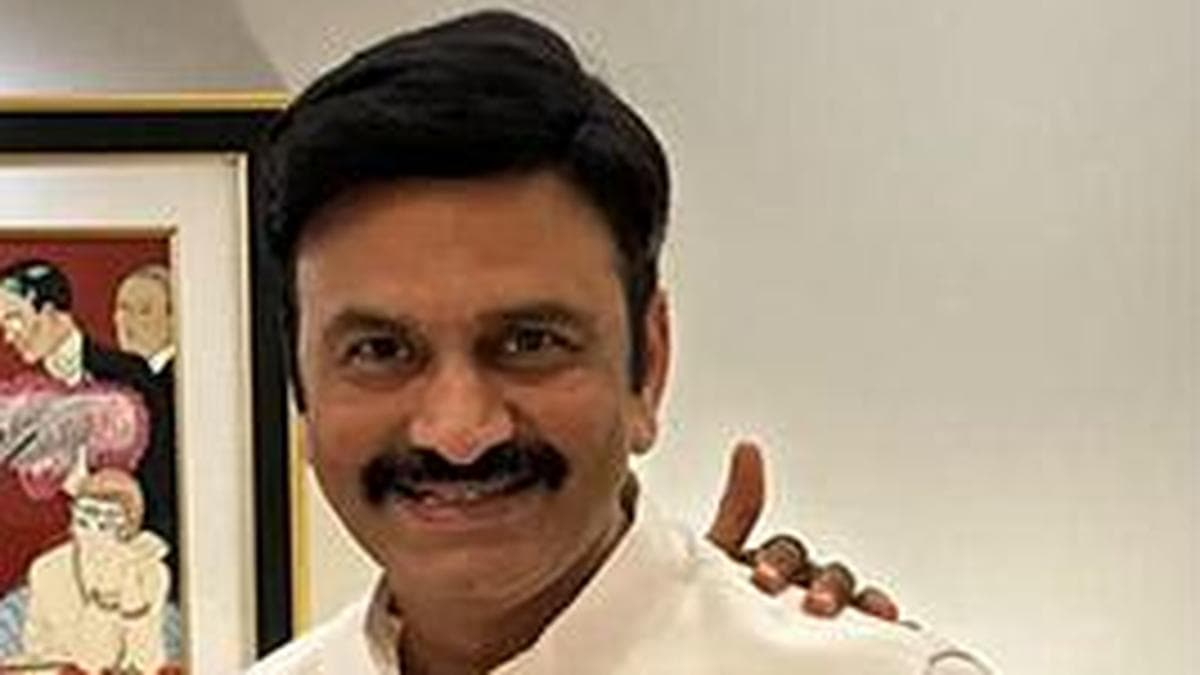
Andhra Pradesh Legislative Assembly Deputy Speaker K. Raghu Ramakrishna Raju. File | Pawan Kalyan by some Telangana leaders, Andhra Pradesh Legislative Assembly Deputy Speaker K. Raghu Ramakrishna Raju said that one could express his or her opinions in a democracy but there was no place for such politics of intimidation.He stated on X on Tuesday (June 2, 2026) that the threat to “cut out his tongue” was heinous and that people would not tolerate the abusive remarks passed on Mr. Pawan Kalyan, calling him a leader who was tirelessly working for the people and facing countless challenges in public life. Every individual who loves Telangana has the right to speak up for its people and, if necessary, to fight for them.Mr. Ramakrishna Raju hoped that the two States would move forward with mutual respect and brotherhood, while pledging his support to the Deputy Chief Minister, whose vow to contest the 2028 Assembly elections in Telangana sparked an intense political debate in the two Telugu-speaking States. Published - June 03, 2026 02:27 pm IST
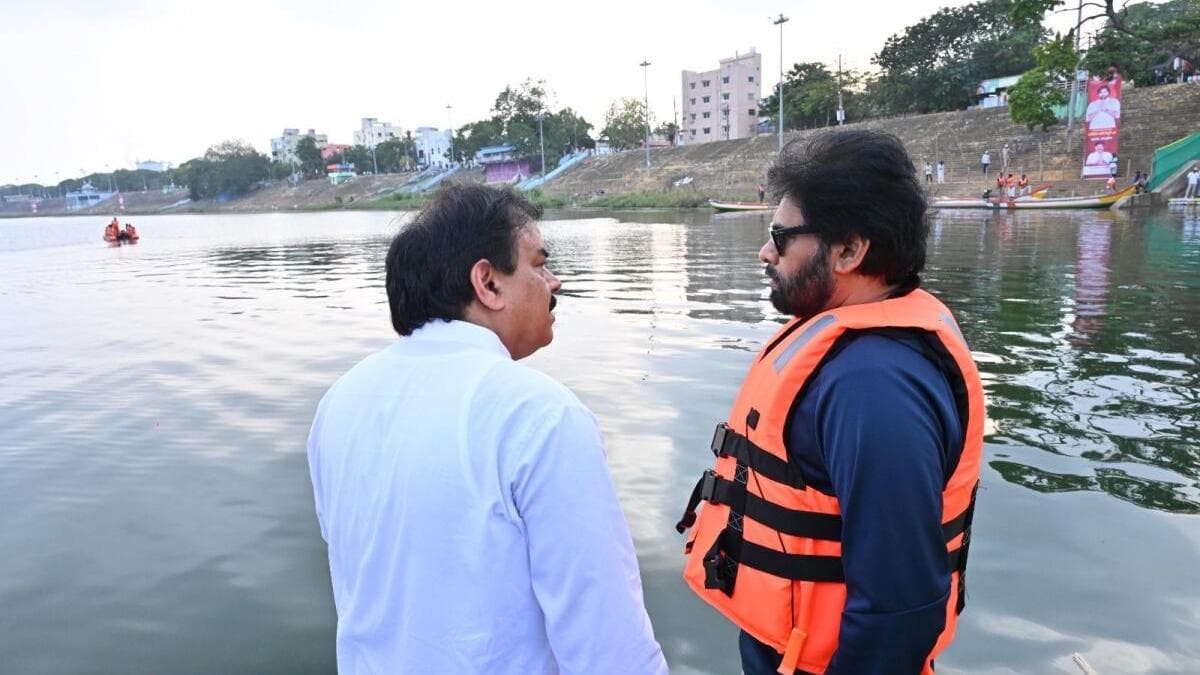
Deputy Chief Minister K. Pawan Kalyan inspecting river Godavari to assess the pollution at Pushkar Ghat in Rajamahendravaram city on Monday. | Pawan Kalyan on Monday (May 25, 2026) directed Rajamahendravaram Municipal Corporation authorities to prepare an action plan to prevent the release of untreated sewage and effluents from Andhra Paper Limited’s mill into the river Godavari in Rajamahendravaram city.Accompanied by Mission Director of the Mission for Clean Krishna, Godavari Canals G.C. Kishore Kumar and Andhra Pradesh Pollution Control Board chairman P. Krishnaiah, Mr. Pawan Kalyan inspected the sites from where untreated effluents and sewage water are being allowed into the Godavari river.Andhra Pradesh Deputy Chief Minister K. Pawan Kalyan inspecting the sites where untreated sewage and effluents enter the Godavari, in Rajamahendravaram on Monday. Video: I&PR A.P. pic.twitter.com/hy44MOCyqo— The Hindu - Andhra Pradesh (@THAndhra) May 25, 2026Sailing on a punt, Mr. Pawan Kalyan, Civil Supplies Minister Nadendla Manohar and Minister for Tourism and Culture Kandula Durgesh inspected the river Godavari along the ghats between Pushkar Ghat and Kotligalaghat, where Andhra Paper Limited releases its effluents into the river.Asked about the levels of water pollution in the river Godavari, Rajamahendravaram Municipal Commissioner Rahul Meena claimed that only 15% of the 55 million litres per day (MLD) of sewage water is being treated near Kotilingala Ghat. The water samples collected from the Godavari river were also reviewed. The sewage water generated from the entire city is also let into the river through sewage drains.Mr. Pawan Kalyan directed Mr. Rahul Meena to come up with an action plan with a permanent solution, preventing entry of effluents and untreated sewage water into the river Godavari. “The Godavari Pushkarams-2027 will be a global event. It will be an occasion to commit to achieving ‘zero pollution’ of river Godavari. The fund flow can be pursued if the action plan is ready,” he said.On the return journey, Mr. Pawan Kalyan reviewed the ongoing Godavari beautification works at Pushkar Ghat and other ghats. East Godavari District Collector Kirthi Chekuri, Rajamahendravaram City MLA Adireddi Srinivas, Rajamahendravaram Rural MLA Gorantla Butchaiah Chowdary and other officials were present. Published - May 25, 2026 01:28 pm IST
As part of the preparedness measures, the department is planning to screen passengers arriving from Ebola-affected countries at the international airports in Visakhapatnam, Vijayawada and Tirupati. | The announcement by Health, Medical Education and Family Welfare Minister Satya Kumar Yadav came hours after the Union government issued a travel advisory urging the public to “avoid non-essential travel to the Democratic Republic of the Congo, Uganda and South Sudan until further notice.”In a release issued on Sunday, Mr. Satya Kumar Yadav said that in view of the worsening situation in the African countries, where infections caused by the Bundibugyo strain of the Ebola virus are reportedly increasing, the State government was taking preventive measures in line with the guidelines of the Union government and the World Health Organisation. An action plan has also been prepared to tackle any emergency situation, if required.As part of the preparedness measures, the department is planning to screen passengers arriving from Ebola-affected countries at the international airports in Visakhapatnam, Vijayawada and Tirupati. Those found exhibiting symptoms may be placed under quarantine, while co-passengers and close contacts may also be tested, officials said.The Minister said the department was also planning similar surveillance measures for travellers arriving by road and sea routes. Discussions have already been held with officials at the Visakhapatnam seaport, and district authorities have been directed to remain alert and take necessary steps, he added.He further said that arrangements were being made to set up 15-bed isolation wards in Government General Hospitals located in cities with international airports. ASHAs, ANMs and other frontline health workers have been sensitised through review meetings, while PPE kits have also been stocked for emergency use.People with a recent travel history to the affected countries have been advised to monitor their health for 30 days and immediately report to district health authorities if they develop symptoms, the Minister said.India has not reported any Ebola cases so far. According to the State Health Department, Ebola Virus Disease (EVD) is a severe viral haemorrhagic fever caused by Ebola viruses. Though life-threatening, the disease can be effectively controlled through early detection, isolation and supportive treatment.Symptoms generally appear between two and 21 days after exposure and include fever, severe weakness, headache, muscle pain and sore throat. In advanced stages, patients may develop vomiting, diarrhoea, abdominal pain, skin rashes and unexplained bleeding. Severe infections can lead to shock and death.The virus spreads through direct contact with the blood or bodily fluids of infected persons, contaminated needles or medical equipment, infected animals such as fruit bats, monkeys and chimpanzees, semen of recovered patients, and dead bodies during burial rituals. Published - May 24, 2026 07:00 pm IST

Discussion (0)