
Loading dispatches...
← Return to NewsroomPolitics
Doctors stress the need to develop regional centres in the government sector to focus on a single organ transplant. The Government Stanley Medical College Hospital has a liver transplant unit. | JOTHI RAMALINGAM The contribution of government hospitals to the organ donor pool has increased gradually over the past four years in Tamil Nadu. In 2025, government hospitals accounted for 58% of the deceased donors and their share has risen to 64% as of April 2026. However, organ transplantation, except for kidneys, remains limited in volume, likely reflecting the interplay of multiple factors.The number of deceased donors in Tamil Nadu showed a substantial increase from 156 in 2022 to 178 in 2023, and rose to a record high of 268 in 2024. It remained at a similar level in 2025 with 266 donors and stood at 112 up to April 2026. During this period, the government’s contribution to the organ donor pool increased steadily, rising from 33% to 64%, data from the Transplant Authority of Tamil Nadu (TRANSTAN) shows.A number of factors contributed to better performance of government hospitals, N. Gopalakrishnan, member secretary, TRANSTAN, said. This includes honour walks in government medical college hospitals, government announcement granting State honours to deceased donors, systematic reorientation for government doctors by TRANSTAN, standardisation of operational protocols, multi-level periodic reviews, and continuous updation of knowledge and practical know-how through Continuing Medical Education programmes.Share of government hospitals in deceased donors and organ transplantationsYearDonors from govt. hospitalsDonors from private hospitalsTotal donorsShare of govt. hospitals [%]20225110515633%202374104 17842%202414612226854%202515411226658%2026 [Till April]724011264%A total of 13 government hospitals and 159 private hospitals hold transplant licences, while there are 35 Non Transplant Organ Retrieval Centres (NTORC) in the government sector. “Almost 15% of the donors were contributed by these non-transplant organ retrieval centres. These centres proved to be a gamechanger for improving donations and expanding the pool of donors,” he said.Once a donor is identified, maintenance becomes crucial, he said, adding: “Starting with constant communication to brain death certification, we have protocols in place. As a result, donors crashing before organ retrieval has become rare now. But there is no room for complacency. Measures to sustain the progress are happening.”Organ transplantation in Tamil NaduYearTransplants in govt. hospitalsTransplants in private hospitalsTotal transplantsShare of govt. hospitals [%]2022151727 87817%2023253 682 93527%2024473 972 1,44533%2025420 997 1,41730%2026 [Till April]211 40561634%Source: Transplant Authority of Tamil NaduDr. Gopalakrishnan added the acceptance rate for organ donation was around 75% to 80% in the State. “The reasons for the remaining 20% to 25% have to be studied. There are certain myths surrounding organ donation. We need to address apprehensions among families and expedite processes such as faster handing over of mortal remains after organ retrieval,” he said, adding that transparency in the organ allocation process has led to trust in the system among the public.A number of senior doctors said there were areas that required strengthening. More government centres should have the capacity to perform transplants, and training for heart, lung, and liver transplants. One or two fully equipped government centres can function in each region to improve the organ transplant rates. Doctors said kidney transplants dominated the transplantations in the government sector as most centres perform them. Patients with renal failure are able to survive with the help of dialysis, resulting in more persons listed for kidney transplants. Many have a good quality of life on maintenance dialysis, which is provided free of cost in the government sector. On the contrary, liver, heart, and lung
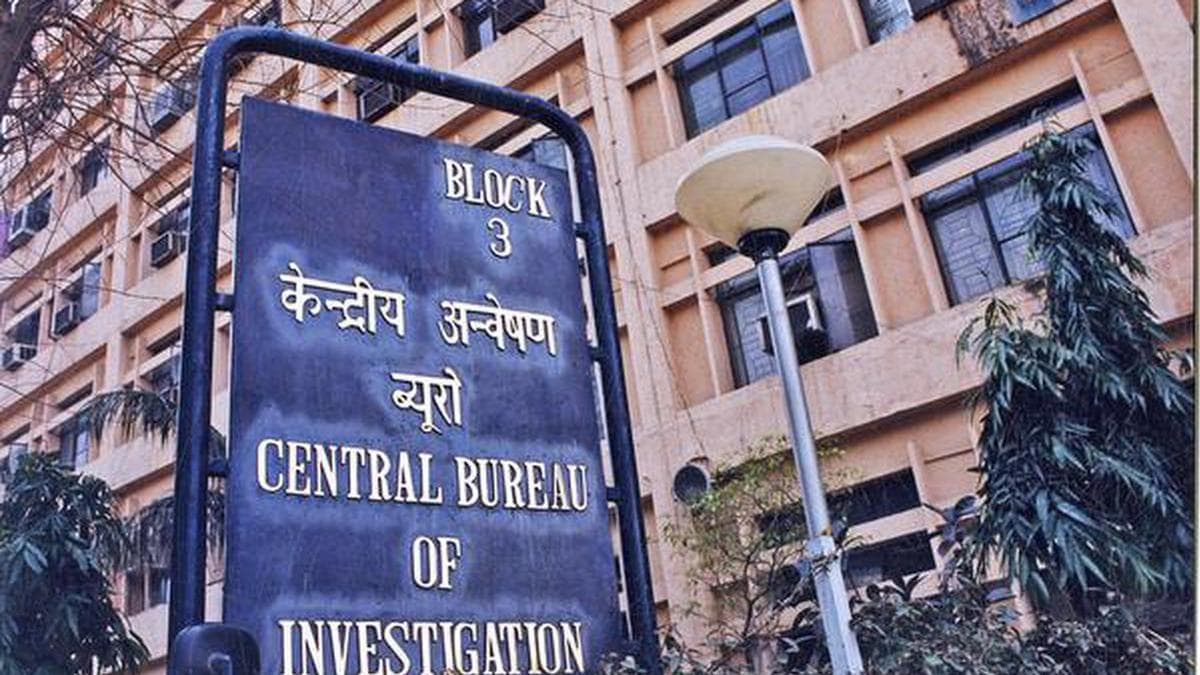
A view of the CBI headquarters in New Delhi. CBI conducted searches at six locations in Chandigarh, Panchkula and Delhi-NCR in connection with an alleged ₹661 crore fraud involving the siphoning of government funds from departments of the Haryana government and the Chandigarh administration. | The searches were carried out on Friday (June 5, 2026) at premises linked to senior Haryana cadre public servants and Noida-based Vipam Consultancy Pvt Ltd and its director as part of an ongoing probe into the alleged misappropriation of funds parked with IDFC First Bank and AU Finance Bank, an official statement said.According to the agency, the fraud affected eight departments of the Haryana government and two departments of the Union Territory of Chandigarh — Municipal Corporation Chandigarh and Chandigarh Renewable Energy and Science and Technology Promotion Society (CREST).“During investigation evidences have surfaced suggesting that the public servants had colluded with bank officials and had facilitated in opening of accounts, transfer of funds and subsequent diversion thereof,” the statement said.The agency alleged that the public servants received undue advantages for facilitating the transactions and failing to act against the irregularities.The investigating agency also alleged that Vipam Consultancy Pvt Ltd received proceeds of crime in its bank account, which were later transferred to the personal account of its director.“Incriminating documents, digital devices, property documents and other relevant material were seized during the search operations,” the agency said.The probe stems from one case taken over from the Haryana State Vigilance and Anti-Corruption Bureau and two cases originally registered by the Economic Offences Wing police station in Chandigarh.The cases relate to alleged criminal conspiracy, misappropriation of government funds and related offences committed in connivance with bank officials and public servants, the agency said.The CBI said it has already filed its first chargesheet before a special court in Panchkula detailing the alleged role of public servants from the Haryana Power Generation Corporation Ltd and Haryana School Shiksha Pariyojna Parishad.The chargesheet also outlined the alleged modus operandi used to siphon off government funds parked with the IDFC First Bank and AU Finance Bank, it said.The investigation is continuing and additional chargesheets will be filed against other accused found involved in the case, it added. Published - June 07, 2026 09:11 am IST
The United Democratic Front (UDF) government is reportedly examining whether to refer the case pertaining to the politically controversial death of former Additional District Magistrate (ADM) Kannur K. Naveen Babu to the Central Bureau of Investigation (CBI). Naveen Babu’s family, including his wife and Revenue department official, K. Manjusha, and his brother, Praveen Babu, a lawyer, had recently called on Chief Minister V.D. Satheesan and Home Minister Ramesh Chennithala, and reiterated their demand for a CBI inquiry into the politically stormy suicide abetment case in which the Kerala police had arraigned Communist Party of India (Marxist) [CPI(M)] leader and former Kannur district panchayat president P.P. Divya as the sole accused. Officials said the government has not yet issued a formal notification of consent authorising the CBI to investigate the case. They said it was likely the government would seek legal opinion and weigh the family’s request in the Cabinet. Health Minister K. Muraleedharan told reporters that Mr. Satheesan had promised justice for the bereaved family. Moreover, he said the case had public importance, given the family’s accusation that the law enforcement under the Left Democratic Front (LDF) government had gone the extra mile to protect the CPI(M)’s Kannur leadership implicated in the ADM’s death. '13 anomalies’Mr. Praveen Babu told reporters in Pathanamthitta that the family had pointed out 13 “anomalies” in the affidavit filed by the previous government in the case in the Kerala High Court. (The prosecution’s case against Ms. Divya centred around the allegation that she voiced publicly an alleged corrupt intent in the delay on the ADM’s part in granting sanction for a fuel outlet in the district at Naveen Babu’s farewell meeting at the Kannur district Collectorate in October 2022). Mr. Praveen Babu said the police did not question Prasanthan, who was the applicant for the license. “It did not probe the benami angle. Revenue records relating to Prasanthan’s partners disappeared from the Collectorate,” he added. Naveen Babu’s death had caused a political storm, with the UDF, then in the Opposition, accusing Ms. Divya of publicly humiliating the ADM in front of his colleagues. The UDF also accused the CPI(M) of duplicity by “falsely declaring” solidarity with Naveen Babu’s family while senior leaders turned up in strength to receive Ms. Divya upon her release from prison after she received bail in the case. The UDF had also projected the CPI(M) nomination of the investigation officer in the case, T.K. Retnakumar, as the party’s candidate from the Kottur municipal ward in Sreekandapuram municipality in Kannur in the local body elections as a telling example of the LDF government’s Janus-faced approach in the case. It had also demanded that the then Kannur District Collector Arun K. Vijayan be brought under the ambit of the police probe. CPI(M) State secretariat member M.V. Jayarajan said the High Court and later the Supreme Court had rejected the family’s demand for a CBI probe and vested trust in the Kerala police investigation. He termed the UDF’s reported move to refer the CBI as a “political witch-hunt.” Published - May 31, 2026 05:35 pm IST

In times of crisis, the availability of raw materials is crucial rather than their cost, for uninterrupted operations, said the Chairman of SAIL. File | The company buys raw materials, such as limestone from Dubai, Ashok Panda, the newly appointed Chairman of the steel major, said."So far as SAIL is concerned, we will have some impact with respect to the fluxes, limestone, et cetera, which we are buying from Dubai. So, the landed cost, the CFR (cost and freight) cost is going to go up, because it was around $23-$24, now it will be around $35," the official said in reply to a question related to the impact of the West Asia crisis.But overall, in sellable steel, its impact will be hardly ₹100 or ₹200, the chairman said.Mr. Panda also said that in times of crisis, the availability of raw materials is crucial rather than their cost, for uninterrupted operations, and that SAIL is working towards tying up with parties to secure larger quantities from West Asia through diverted routes."It is more of a raw material security than a price increase. We are working towards tying up with the parties to get more quantities from the Middle East through diverted routes," he noted.Iron ore and coking coal are the two key raw materials used in steel making through the blast furnace process. While SAIL meets 100% of its iron ore demand from its captive mines, the company sources a major part of its coking coal needs from offshore markets, such as Australia and Russia.Limestone, one of the fluxes used in steelmaking via the blast furnace route, acts as an agent to remove impurities such as silica, phosphorus, and sulphur from molten iron."And so far as fuel is concerned...concern was there in the fourth quarter, but we have come out of it by using PNG in certain locations and creating LPG banks in other locations. So, that's not going to be a major challenge for us in the first quarter," he said. Published - May 31, 2026 12:00 pm IST

Chief Secretary Shalini Rajneesh exploring exhibits displayed at Global MEME Conclave in Bengaluru on Friday. | MSMEs not only contribute to economic output and exports, but more importantly, they generate employment opportunities, encourage innovation, strengthen local economies, and bring opportunities closer to people, she said at a three-day Global MSME Conclave that began here on Friday.Ms. Rajneesh said that MSMEs are playing a significant role in establishing competitive and resilient economic systems during an era when the global economy is being reshaped by technology, sustainability, and supply chains.She added that digital commerce has given opportunities to even small-scale enterprises to compete globally while providing them with appropriate technology, market accessibility, and support. “This presents immense opportunities for our MSMEs to scale up, embrace innovation, and become part of global value chains,” she further said.Reiterating the Karnataka government’s commitment towards the creation of a transparent, technologically competent, and investor-friendly business environment, she stated the future of MSMEs would depend upon their ability to adopt digital platforms, automation, Artificial Intelligence, Industry 4.0 solutions, and e-commerce ecosystems.Further, she highlighted the role of the Center of Excellence in Artificial Intelligence for the betterment of entrepreneurs, and the collaboration with banks alongside restructuring of RSETTI institutions would enhance digital governance and capacity building.“Our youth are our greatest strength. By aligning skill development programs with industry requirements, we can create a future-ready and globally competitive workforce,” she said.She also highlighted the government’s initiative of giving importance to supporting women entrepreneurs, rural enterprises, and first-generation business owners to ensure inclusive and equitable growth. “Let us take MSMEs from survival to growth, from local markets to global markets, and from dreams to achievements,” she said Published - May 29, 2026 10:22 pm IST
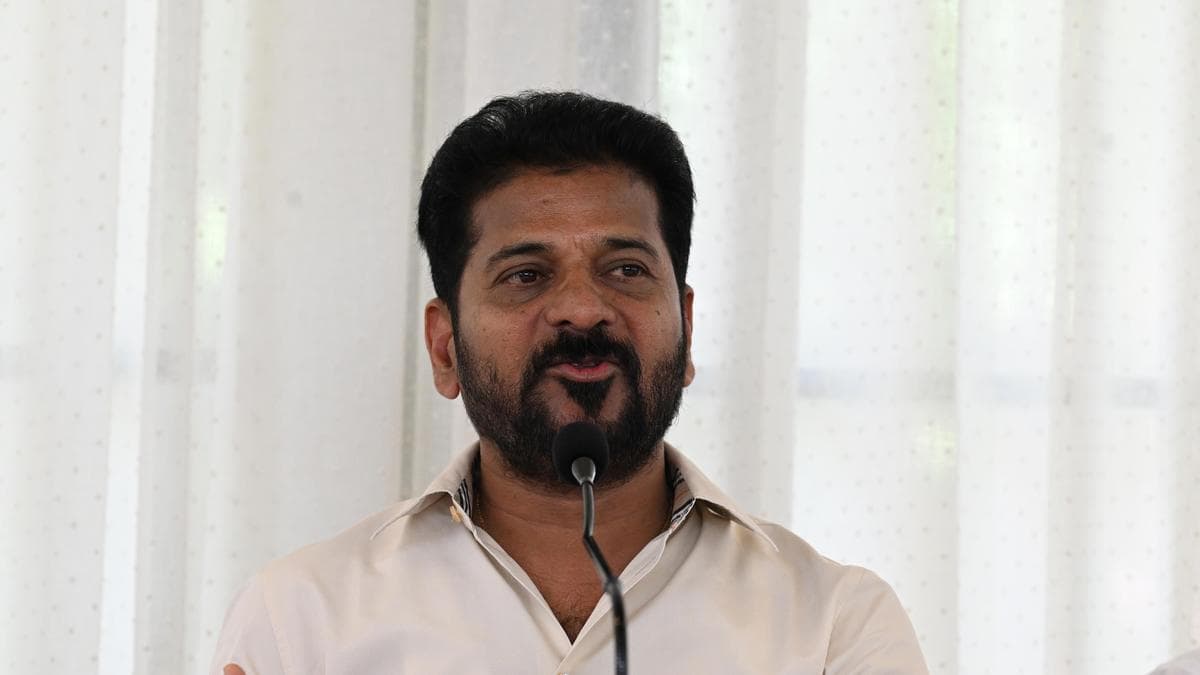
A. Revanth Reddy | Revanth Reddy-led State government has embarked upon yet another reform aimed at strengthening the Panchayat Raj institutions.The government has decided to amend Section 70 (3) of the Telangana Panchayat Raj Act 2018 allowing gram panchayats to deposit their own source revenue into a separate bank account instead of depositing it into the treasury. The Chief Minister announced the decision aimed to revive the old system which was allegedly diluted by the previous government adversely affecting the independence of the gram panchayats.Simultaneously, he directed the officials concerned to ensure that salaries to over 50,000 staff of village panchayats were credited promptly on the first day of the month. “The gram panchayat staff should also receive salaries on the first of every month like the IAS officers,” he said.The State government would release ₹50 crore every month to the Panchayat Raj department enabling it to pay salaries to the staff in time. He instructed the officials to ensure timely payment of salaries to all staff, including those engaged on contract and outsourcing basis. “Delay of even a single day will not be tolerated,” he averred.Mr. Revanth Reddy suggested changes in the mode of payment of pensions to beneficiaries asking officials to credit the amount into the beneficiaries accounts instead of disbursing it through postal department. Payment of pensions should be streamlined through voter ID, SEEEPC data to ensure that only eligible recieved the benefit. With the government deciding to sanction two lakh new pensions, steps should be taken to give priority to single woman beneficiaries. Published - May 26, 2026 09:54 pm IST
The Micro, Small and Medium Enterprises (MSMEs) in Tamil Nadu have appealed to the State and Central governments to relax the mandatory norms that they need to adhere to for government orders.Sudhakar Sundaravel, national head of the MSMEs domain of the All India Congress Committee Professional Congress, said the State government should extend delivery timelines for the purchase orders it has issued to four months without invoking the liquidated damages clause. The Centre has issued similar relief measures for its Departments and PSUs.He explained that the 47-lakh registered MSMEs in the State are severely impacted by the geo-political tensions and war situation involving the US–Israel and Iran as there is a steep increase in fuel prices, the Indian rupee is weakening, the global supply chain is disrupted, and raw material prices have increased abnormally.A large number of the MSMEs supply to Central and State governments and public sector undertakings. “The present situation has not only caused substantial input cost escalation, but has also disrupted raw material availability and logistics, thereby affecting production schedules and delivery commitments.As a result, many MSMEs are unable to execute purchase orders within the contractual delivery timelines despite their sincere efforts,” he said.M. Karthikeyan, president of the Coimbatore District Small Industries Association, said the MSMEs face several challenges because of the war. For instance, the repayment of security deposit is extended to 36 months. If a unit has an annual order for ₹20 crore, it gets 5% of the amount as working capital. The 1% of the project cost that is taken as security deposit will be returned not immediately after execution of the order, but after three years, leading to liquidity issues for the MSMEs.Similarly, there are MSMEs that import certain raw materials for some special orders and the supply of these materials is stopped now. So, they are struggling to complete the orders on time. The government should look at these practical difficulties that the MSMEs face, Mr. Karthikeyan said.Mr. Sundaravel also sought measures to control of raw material price escalation, reduction in power tariff, timely release of payments for supplies made, easy availability of affordable finance, and reduction in finance costs. Published - May 26, 2026 07:53 pm IST

Discussion (0)