
Loading dispatches...
← Return to NewsroomEconomy
Iran fires missiles at Israel for Beirut attack, Trump calls for calm: ‘That’s enough' - 10 points
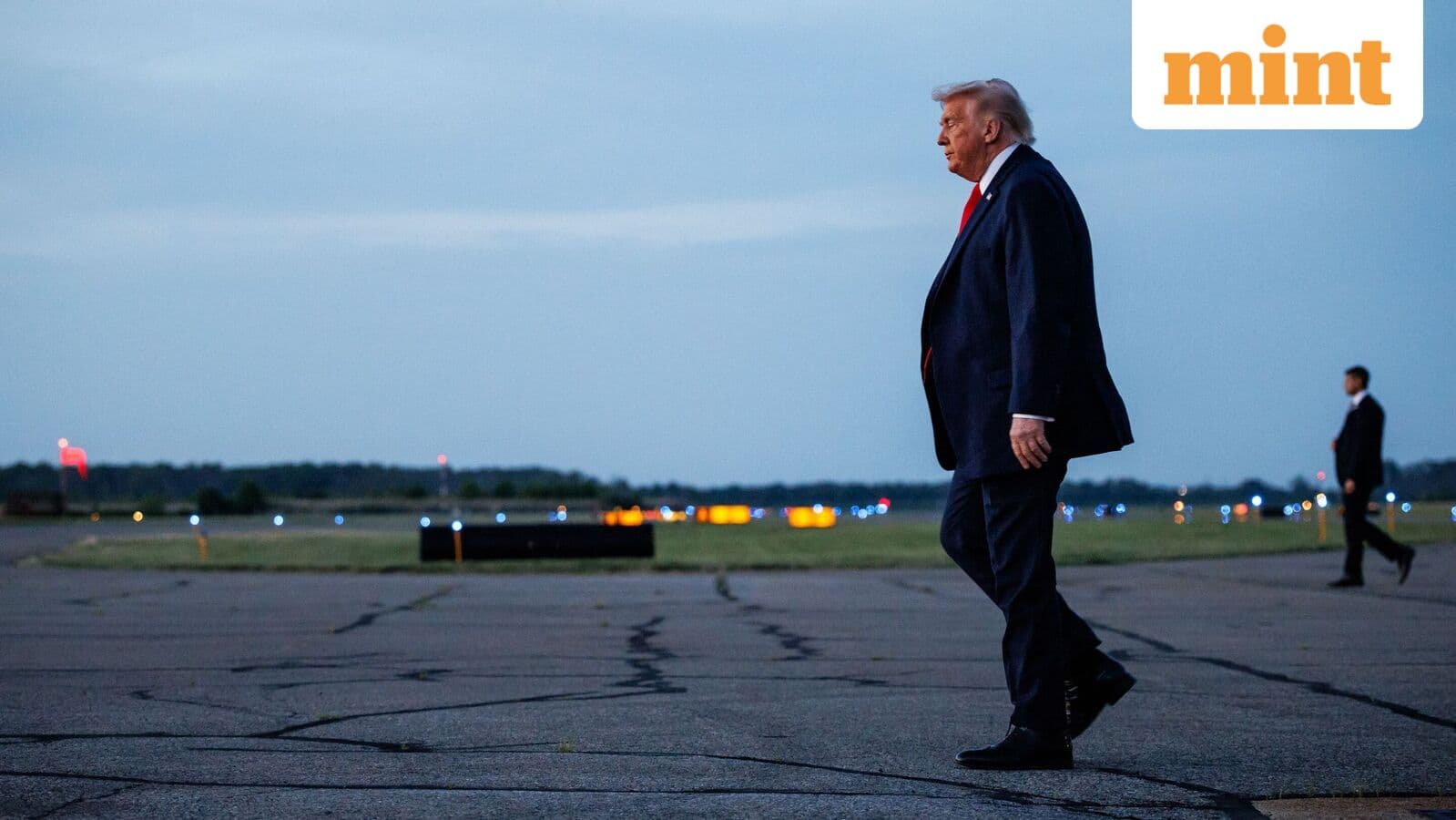
Iran launched missiles at Israel following Israeli strikes in Beirut, escalating tensions. Trump urged Iran to negotiate and criticised Israel. The situation in West Asia worsens with ongoing strikes and a stalled ceasefire.Iran fires missiles at Israel for Beirut attack, Trump urges Tehran to resume negotiations(Getty Images via AFP)Iran on Sunday, June 7, fired a number of missiles at Israel after the latter targeted the suburbs of Beirut. As the recent escalation in the strikes between Iran and Israel threatens to disrupt a fitful ceasefire, President Donald Trump has urged Iran to resume negotiations as he criticised Israel for Beirut strikes.“At this time, the Israeli Air Force is operating to intercept and strike threats where necessary to remove the threat,” the Israeli military said.Meanwhile, Iran has said that it has targeted ‘terrorist groups’ in Iraq, without elaborating much on it. As Iran and Israel resume strikes in the West Asia, disrupting peace, here are what has happened in the region so far.IRAN-ISRAEL TENSIONS IN 10 POINTS1. After Israel's Beirut strikes that killed two and injured 11, Islamic Revolutionary Guard Corps (IRGC) said that Israel must stop its attack in southern Lebanon.2. As Iran launched a barrage of missiles at Israel as a warning to “cease their hostile actions”, Tel Aviv warned sending an additional volley of missiles toward Tehran.3. The fresh attack follows hard on the heels of an escalation between Israel and Hezbollah. Early Sunday, the Lebanese militia attacked targets in northern areas of the Jewish state, whose army responded with a strike in Beirut’s southern suburbs.4. The resumption of strikes between Iran, Israel and Hezbollah comes at a time when Washington and Tehran appear to be making little progress toward an interim deal to end the war.5. Asserting his domination and downplaying the role of Israeli President Benjamin Netanyahu in the conflict, Donald Trump told Financial Times that he “calls the shots, Netanyahu doesn't call the shots.”6. Donald Trump said he would tell Benjamin Netanyahu not to strike back after Iran fired a salvo of missiles at Israeli targets in retaliation for an attack on the outskirts of Beirut, news outlet Axios reported.7. According to Bloomberg, back in Washington, Trump’s team is working out a plan to use Iranian assets frozen in the US to compensate regional allies for war-related damages.8. “If they behave, if they do a good job, we start talking” about releasing the assets, Trump said in interview to NBC.9. Iran’s Deputy Foreign Minister Kazem Gharibabadi rejected the idea, saying the assets “are neither Washington’s war spoils nor a fund for paying its allies.”10. Iran also demanded “full compensation” for its own damages.(With agency inputs)Get Latest real-time updatesStay updated with the latest Trending, India , World and US news. HomeNewsWorldIran fires missiles at Israel for Beirut attack, Trump calls for calm: ‘That’s enough' - 10 pointsMore

Israel said it identified incoming missiles fired from Iran, threatening to disrupt a fitful ceasefire in the US’s 100-day conflict with Tehran.Israel Says Identified Incoming Missiles Launched From IranIsrael said it identified incoming missiles fired from Iran, threatening to disrupt a fitful ceasefire in the US’s 100-day conflict with Tehran.“At this time, the Israeli Air Force is operating to intercept and strike threats where necessary to remove the threat,” the Israeli military said, before warning of an additional barrage of missiles.Iran’s semi-official Fars news agency said that the country launched several missiles toward enemy positions, without specifying the target.Iran’s Islamic Revolutionary Guard Corps said that Israel must stop its attack in southern Lebanon, according to the semi—official Tasnim news agency, which cited a statement that also warned against retaliation.The fresh attack comes amid skirmishes between Israel and Hezbollah, and as the US and Iran appear to be making little progress toward an interim deal to end the war.As warning sirens sounded in several areas, Israel said it canceled school across the country for Monday.The past week saw the worst flare-up in tensions since the truce started around April 8. Negotiations between Washington and Tehran are bogged down over the fate of billions of dollars of frozen Iranian assets and a parallel conflict between Israel and Iran-backed Hezbollah in Lebanon.Fighting between Israeli troops and Hezbollah continued over the weekend. The Israel Defense Forces said they’d intercepted two projectiles launched from Lebanon into Israel on Sunday.Israel retaliated with a strike on two apartment buildings in Beirut’s southern suburbs, killing two and injuring 11. Hezbollah last week rejected a US-brokered ceasefire between Israel and Lebanon announced by the State Department just hours before.With assistance from Susanne Barton.©2026 Bloomberg L.P.This article was generated from an automated news agency feed without modifications to text.Get Latest real-time updatesStay updated with the latest Trending, India , World and US news. HomeNewsWorldIsrael Says Identified Incoming Missiles Launched From IranMore

Israel expanded its ground assault in Lebanon on Sunday with its broadest incursion into the country for a quarter of a century as Hezbollah — Iran’s most powerful regional ally — stepped up its attacks on Israel’s north. According to the Israeli military, Hezbollah fired more than 300 “projectiles” at its soldiers in Lebanon and at northern Israel over the weekend. The latest escalation has shattered a brittle ceasefire declared after the Tehran-backed group attacked Israel in response to its war on Iran, which it launched with the US on Feb. 28.Topping a military operation that started several days ago, the Israeli Defense Forces said in a statement that they’d crossed the Litani River and are near Shi’ite-majority Nabatieh — one of the biggest cities in south Lebanon — which the IDF describes as a stronghold of Hezbollah. Israel Katz, the Israeli defense minister, said the IDF had planted an Israeli flag on the historic Beaufort castle near Nabatieh and added that the military seizure in Lebanon established “a permanent presence” in the region. The escalation comes after the US hosted the fourth round of ceasefire talks between Israel and Lebanon earlier this week. Lebanon is demanding a complete truce and Israel wants a guarantee that Hezbollah — which has rejected the negotiations and isn’t taking part in them — is completely uprooted from Lebanon’s south. Fighting between Israel and Hezbollah resumed after the militant wing of the group started firing missiles at northern Israel in March in response to the war on Iran. Israel has responded with a series of devastating airstrikes on southern Lebanon and in Beirut, killing 3,370 people and wounding 10,000 others, according to the Lebanese health ministry. More than 20 Israeli soldiers have been killed as well as four Israeli civilians. Many residents in communities close to the border with Lebanon have abandoned their homes. Israeli schools in a zone stretching 20 kilometers south of the border have been instructed to shutdown and restrictions have been imposed on public gatherings. While Israel intensified its operations in Lebanon, the Islamic Republic and Washington have been locked in a standoff over an initial agreement that would end both Iran’s effective choke-hold over shipping in the oil-rich Persian Gulf and a US blockade of Iranian ports, potentially paving the way for a permanent ceasefire between the long-time foes.Iran has demanded that any peace deal with the US include an end to the conflict in Lebanon. President Donald Trump had suggested earlier in the week that an agreement with Iran was near, but the absence of any announcement after a two-hour Situation Room meeting on Friday was the latest conflicting signal from Washington over the prospects for a deal with Tehran. Israel’s latest military advance may complicate those talks as the Islamic Revolutionary Guard Corps and political hardliners at the center of Iran’s wartime leadership face pressure to secure some tangible gains having successfully leveraged their geographic dominance over the critical Strait of Hormuz and withstood weeks of military bombardment amid a major economic crisis.“This campaign is not yet over. We stand united and determined to crush Hezbollah’s power and complete our mission: ensuring lasting security for the residents of the North,” Katz said in a statement. Thousands of residents of dozens of towns and villages in south Lebanon have been ordered to leave their homes by the IDF ahead of its attacks on Hezbollah targets and deeper push into the region. The displacement is compounding an already-dire humanitarian situation.Lebanon’s Prime Minister Nawaf Salam said his country didn’t choose this war with Israel and said negotiations were the least costly alternative. “Do the negotiations come with guaranteed result? Certainly not. But it’s the least costly path for our country and our people compared with today’s alternatives,” Salam told reporters at the Grand Serail on Saturda

Israeli Defence Minister Israel Katz on Sunday said that the military had captured the strategic medieval fortress of Beaufort in southern Lebanon, where it is expanding ground operations against Iran-backed Hezbollah."44 years after the heroic Battle of Beaufort, and on this day commemorating the soldiers who fell in the First Lebanon War (1982), our troops have returned to the summit of Beaufort and once again raised the Israeli flag there," Katz said on his Telegram channel.Israel and Lebanon have been at war since Israel was created in 1948, and are currently holding direct talks in Washington. The Israeli push came despite a nominal ceasefire that has been in place since April 17 and just days before the next round of talks are set to be held at the State Department on June 2 and 3, Associated Press reported.What is the Beaufort Castle?The capture of Beaufort castle — also known as Qalaat al-Shakif — near the city of Nabatiyeh came after days of intense fighting between Israeli troops and Hezbollah members, as well as airstrikes in nearby villages.The Israeli army’s Arabic spokesperson Avichay Adraee posted a photograph on X showing Israeli troops walking outside the castle, and Defense Minister Israel Katz wrote on X that they had raised an Israeli flag over the castle.News agency AFP said its footage from Sunday morning showed the Israeli army flag raised above the citadel, with shelling audible and smoke rising from the surrounding area.The fortress commands sweeping views of south Lebanon, making it a position of considerable strategic value.Why is the Beaufort Castle a strategic capture for Israel?This is being reported as Israel's deepest incursion into Lebanon more than 25 years. Israeli troops previously captured the castle in 1982 and held it until they withdrew from Lebanon in 2000."Under Prime Minister Benjamin Netanyahu and my direction, the IDF expanded the operations in Lebanon, crossed the Litani River, and captured the Beaufort Ridge — one of the most important strategic points for defending the communities of the Galilee and safeguarding the security of our forces," AFP cited Katz as saying.Israeli troops have been advancing for days in villages close to Beaufort castle after crossing the Litani River, which the Israeli military previously used as a de facto boundary.They are now about 5 kilometers (3 miles) from the city of Nabatiyeh, a major center in southern Lebanon, and have called on all its residents to leave. Israel has designated the area from the Litani up to the Zahrani River a combat zone.There was no immediate comment from Hezbollah or the Lebanese government on the Israeli push.Hezbollah overnight claimed two attacks targeting Israeli troops and a Merkava tank in the southwestern town of Bayada near the border. In recent days, the group has said it has clashed with Israeli troops in several towns just north of the river near Nabatiyeh and the strategic castle.Hezbollah in recent weeks has frustrated Israel with attacks on troops and northern towns using hard-to-detect fiber optic drones.What rekindled the conflict?The latest Israel-Hezbollah war began on March 2, when Hezbollah fired rockets into northern Israel two days after the US and Israel attacked its main backer, Iran.Israel has since launched a ground invasion, capturing dozens of Lebanese villages and towns close to the border.It has left 3,350 people dead in Lebanon and over 1 million people displaced.According to Israeli Prime Minister Benjamin Netanyahu’s office, at least 25 Israeli soldiers and a defense contractor have been killed in or near southern Lebanon and two civilians have been killed in northern Israel, the vast majority by drones.— With inputs from agenciesAbout the AuthorLivemintFor about a decade, Livemint—News Desk has been a credible source for authentic and timely news, and well-researched analysis on national news, business, personal finance, corporates, politics and geopolitics. We bring the latest updates on a

The Gambia-flagged cargo ship Lian Star was disabled in the Gulf of Oman after ignoring more than 20 warnings from American forces overnight, as Washington's naval blockade of Iranian ports enters its seventh week and ceasefire talks hang in the balanceThe Gambia-flagged cargo ship Lian Star was disabled in the Gulf of Oman after ignoring more than 20 warnings from American forces overnight, as Washington's naval blockade of Iranian ports enters its seventh week and ceasefire talks hang in the balance(REUTERS)The US military disabled a merchant vessel attempting to run its blockade of Iranian ports by firing a missile into its engine room, Central Command announced on Saturday, marking the sixth time American forces have intercepted a ship seeking to breach the cordon since it was established in April.Cargo Ship Lian Star Disabled After Ignoring More Than 20 US WarningsThe Lian Star, a Gambia-flagged cargo vessel, was struck overnight after it repeatedly disregarded attempts by US forces to turn it back as it sought to reach an Iranian port. The ship received more than 20 separate warnings before the missile strike was authorised, the US military said.The vessel remained adrift in the Gulf of Oman on Saturday. US forces had not boarded the ship, according to a US official with knowledge of the situation who spoke on condition of anonymity to discuss military operations.US Has Now Halted Six Ships and Redirected 116 Vessels Since Blockade BeganThe Lian Star incident brings to six the total number of vessels the US military has stopped attempting to breach the blockade since it came into force. One ship was allowed to continue its passage. A further 116 vessels have been redirected away from Iranian ports, the military said.The blockade was launched on 17 April as a direct response to Iran's effective closure of the Strait of Hormuz, which followed the outbreak of war in the Middle East after US and Israeli strikes on 28 February. A fragile ceasefire has held since 7 April. The region is now waiting to learn whether a deal can be reached to extend it by 60 days, during which time negotiations on Iran's disputed nuclear programme would be held.Strait of Hormuz Standoff Keeps Pressure on the Global EconomyThe prolonged blockade at the Strait of Hormuz, the narrow waterway separating Iran and Oman through which significant volumes of the world's oil, natural gas and fertiliser once flowed freely, continues to reverberate through global markets. Shipments of those commodities remain largely stranded, deepening the strain on consumers and food producers around the world.The US blockade is designed to curtail Iran's own shipments through the waterway and restrict its access to foreign revenue, adding fresh economic pressure to an Iranian economy already substantially weakened by years of international sanctions.Trump Has Yet to Decide on 60-Day Ceasefire Extension as Iran Says No Deal Is FinalisedUS President Donald Trump met with advisers on Friday to weigh whether to proceed with a deal that would extend the ceasefire by 60 days and reopen the strait to normal commercial passage. No decision had been announced by Saturday. Iran said the deal had not been finalised.Commercial traffic has continued to move through the strait in limited volumes despite Iran's insistence that it must approve any vessel transits, though those flows remain well below the levels recorded before the war began.Iran Threatens Any Vessels That Challenge Its Authority Over the StraitTehran has made clear it does not intend to relinquish its claimed authority over the waterway without resistance. Iran's joint military command issued a pointed warning on Saturday in a statement carried by state television, directed at any vessel seeking to transit without its approval."Any violation of these regulations will place the security of their passage at serious risk," the command said, adding that military vessels attempting to interfere would be targeted.Iran has also

US Defence Secretary Pete Hegseth praised India and several key Asian partners for strengthening their military capabilities on Saturday, as he outlined Washington’s vision for a more balanced security architecture in the Indo-Pacific and delivered a pointed warning to China over its growing regional ambitions.Speaking at the International Institute for Strategic Studies (IISS) Shangri-La Dialogue in Singapore, Hegseth said the United States was committed to preserving stability across the Asia-Pacific while encouraging allies and partners to assume greater responsibility for their own defence.His remarks underscored a broader shift in US strategic thinking under President Donald Trump, with Washington increasingly pressing friendly nations to expand military spending and play a larger role in maintaining regional security.India Recognised for Strengthening Military PreparednessAmong the countries singled out for praise was India, which Hegseth cited alongside Vietnam as an example of a nation improving its military readiness amid a changing security environment.He also commended the Philippines, Australia, Indonesia, Malaysia and Singapore for what he described as their willingness to contribute more actively to collective defence efforts and regional partnerships.“The bedrock of partnership is alignment on national interests,” Hegseth said, adding that the United States would pursue a “strong, quiet, clear” approach to its alliances.The defence secretary argued that regional partnerships function most effectively when member states contribute meaningfully to shared security objectives rather than relying disproportionately on American military resources.US Warns China Over Regional Military ExpansionWhile describing current US-China ties as being among the strongest in recent years, Hegseth nevertheless delivered one of his sharpest critiques of Beijing’s strategic posture.Washington seeks “a favorable but durable balance of power in which no state, including China, can impose its hegemony and hold the security or prosperity of our nation and our allies in question,” he said.Hegseth asserted that concerns over China’s expanding military capabilities were increasingly evident across the Indo-Pacific, pointing to what he characterised as growing military activity both within the region and beyond.He claimed that there is also “rightful alarm” in the Asia-Pacific region regarding China’s military buildup, and the expansion of its military activities in the region and beyond.“While a decent peace is our goal, make no mistake, America is a Pacific nation, and we insist that China respect our longstanding position in the region.”Defence Spending Emerges as Central ThemeA significant portion of Hegseth’s address focused on defence spending, with the Pentagon chief making clear that Washington expects allies and partners to devote greater resources to their own security.He said the United States was seeking defence expenditures equivalent to 3.5 per cent of gross domestic product among allied nations and indicated that countries meeting those expectations would receive preferential treatment from Washington.“For those nations, we are moving them to the front of the line: expedited arms sales, deep industrial-based collaboration, expanded intelligence sharing, the list goes on that benefits many.”According to Hegseth, nations demonstrating stronger commitments to defence would gain quicker access to military equipment, deeper industrial cooperation and enhanced intelligence partnerships.Hegseth's Warning for Allies That Fall ShortThe defence secretary also cautioned that countries unwilling to invest sufficiently in their military capabilities could face consequences in their relationships with Washington.“Allies who refuse to step up and carry their own weight for our collective defense will face a clear shift in how we do business.”The comments reflect a longstanding position associated with the Trump administration, which has freq


Discussion (0)