
Loading dispatches...
← Return to NewsroomTechnology
Etsy Is In Its Flop Era, and Sellers Are Fleeing
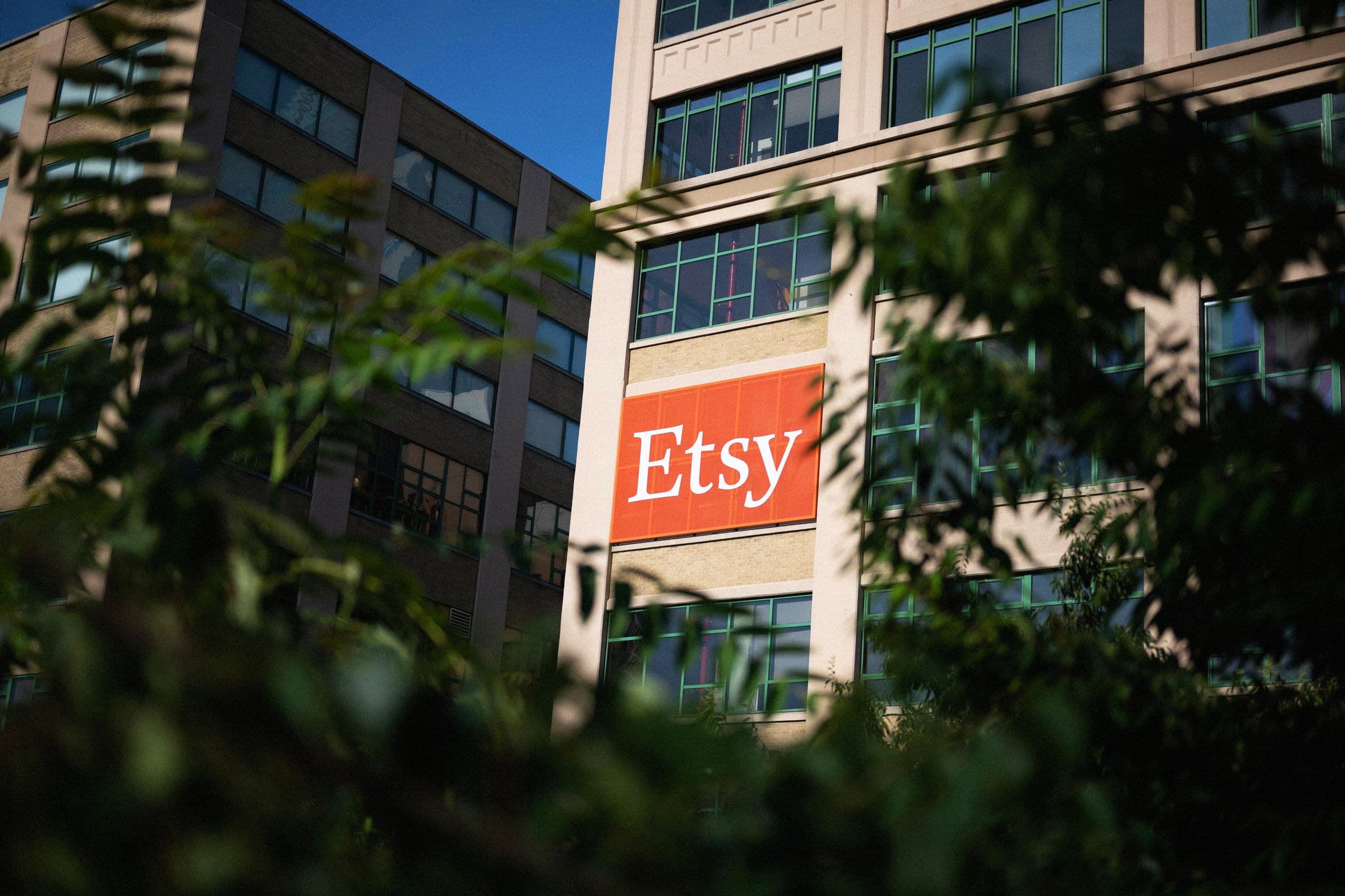
In 2017, Emily Olson, a stay-at-home mom based in Boulder, Colorado, started selling prints and custom-made puppy portraits on Etsy.Her watercolors were simple and relatively cheap—images of saucer-eyed corgis and malamutes in mini-tuxes, which she sold for $75 to $300 each—but dog owners adored them: “They were a labor of love,” she says. In 2021, she says she made more than $40,000 off her Etsy store, and her social media following ballooned to 180,000 followers on YouTube.But in 2022, she noticed something odd: Her sales started precipitously declining. Competitors flooded the platform, and she kept finding copies of her work on drop-shipping sites like Alibaba, where they were advertised as original creations. Then there were the AI-generated pet portraits, which were supplanting her listings in search results and selling for a fraction of the price.The most frustrating part, she says, was that the AI-generated portraits were getting great reviews. “People were like, ‘Oh, this is the cutest image, I love it in my daughter’s bedroom.’ They didn’t really know or care who made it, they were just eating it up,” Olson says. In 2022, she says, her sales decreased by 30 percent, followed by 50 percent the following year.In 2024, Etsy officially announced that it would continue to allow AI-generated art on its platform, provided sellers disclosed it as such. Frustrated with the policy and with her declining sales, Olson posted a video on her YouTube channel in January 2025 titled: “Etsy Was Great … Until It Wasn’t—Why I’m Walking Away.” “Etsy doesn’t align with my values these days,” she says in the video. “It feels like they’ve just become another giant corporation chasing profits above all else.”Once a quirky bastion of amateur vulva jewelry and twee crocheted dolls, longtime Etsy sellers like Olson are now migrating from the platform in large numbers due to their frustration with policies they feel are lax. Competitors are emerging. Fybe, for instance, a new online crafts marketplace, will open to vendors August 1. It explicitly prohibits AI-generated content and drop-shipping on the platform, and will rely on volunteer moderators and direct conversations with sellers to ensure all products are human-made.Both buyers and sellers on Etsy “are a little discontented,” says Rachel Powell, the founder of Fybe. “I figured if we could start a platform that has human moderation and only allows vendors that aren’t using AI or using drop-shipping, then we could be filling a very real need in the community.”On the subreddit r/EtsyCommunity, there are dozens of threads from angry sellers griping about declining sales and the influx of what one user referred to as “AI-generated slop” that isn’t labeled as such. “Every maker I've talked to is basically screaming into the void about it, and Etsy doesn't seem to care,” one post concludes.It isn’t just mass-produced mugs or T-shirts. Buyers have been inundated by AI-generated product listings for crocheting patterns, hermit crab pools, even medieval suits of armor. Longtime vendors say the hand-crafted aesthetics once prized by the platform are disappearing, thanks to a burgeoning market of online entrepreneurs promoting Etsy as a place for AI-driven side hustles.“The whole AI side of things has really, really hampered Etsy for sellers, big time,” says Chloe Rose, an artist and content creator who for years sold stickers and original watercolors on the platform.Viktor, a UK-based illustrator who has been on Etsy for 10 years, says his sales have decreased by 98 percent over the last year alone, thanks to people using the platform as “an easy way to make a quick buck.” “People have learned not to trust once-trusted sites like Etsy, because they are tired of seeing AI slop that is now infecting the site,” says Viktor, who goes by his first name online for privacy reasons. “Unfortunately, this has turned potential customers away from actual artists.”Since 2021, the company’s gross merchandise sale
Carvana has been granted the option to invest in Slate Auto, the electric vehicle startup backed by Jeff Bezos, according to documents obtained by TechCrunch. Paperwork filed with Delaware’s division of corporations shows that the online used car retailer was given a warrant to buy shares in the startup in 2025 — around the same time Slate Auto was starting to put together its $650 million Series C funding round. It’s not clear if Carvana has exercised that warrant, or how many shares it is allowed to buy. Carvana declined to comment, and Slate Auto didn’t respond to requests for comment on the deal. The transaction with Carvana comes as the retailer is looking at ways to expand into new car sales, according to the Wall Street Journal. The company has reportedly purchased a number of Stellantis dealerships across the United States. Asked about new car sales on a recent earnings call, CEO Ernie Garcia III told analysts to “stay tuned.” Slate Auto is also just weeks away from announcing final pricing and taking the first non-refundable preorders for its low-cost EV, which is expected to start in the mid-$20,000 range. Slate has said it will deliver its first vehicles by the end of this year. Similar to Tesla and other all-electric car companies like Rivian, Slate says on its website that it “won’t have traditional dealerships.” The company has said it will sell vehicles directly to customers, but it hasn’t offered much detail about how it plans to handle the logistics of the car buying experience. Selling through physical Carvana dealerships could help mitigate some of those logistics headaches while also raising the startup’s profile. Slate has been tight-lipped about its investors since it emerged from stealth last year, shortly after TechCrunch first revealed that Bezos and Guggenheim Partners CEO Mark Walter were backing the company. Slate revealed in April that Walter’s firm TWG Global led the Series C round, making the businessman one of the startup’s largest shareholders. Walter also holds a major stake in Carvana. He owns 8% of the company’s Class B common stock and 1% of the overall voting power. Only Garcia III and his son, Ernie Garcia II have more control. It’s possible Carvana has already revealed some details about the Slate tie-up to investors without naming the startup. In March, Carvana revealed in a regulatory filing that it had been granted a warrant to purchase shares of a “private consumer products company” in June 2025. Carvana did not name the company, but said the aggregate value of the warrant was $1.5 million at the end of 2025, and that it “vests in tranches through 2029 based on jointly determined performance goals.” Carvana noted that Walter has a “substantial ownership interest in the warrant issuer.” Carvana did not say whether this was a reference to Slate, or another company in Walter’s portfolio. When you purchase through links in our articles, we may earn a small commission. This doesn’t affect our editorial independence. Sean O’Kane is a reporter who has spent a decade covering the rapidly-evolving business and technology of the transportation industry, including Tesla and the many startups chasing Elon Musk. Most recently, he was a reporter at Bloomberg News where he helped break stories about some of the most notorious EV SPAC flops. He previously worked at The Verge, where he also covered consumer technology, hosted many short- and long-form videos, performed product and editorial photography, and once nearly passed out in a Red Bull Air Race plane. You can contact or verify outreach from Sean by emailing sean.okane@techcrunch.com or via encrypted message at okane.01 on Signal. View Bio



Discussion (0)