
Loading dispatches...
← Return to NewsroomEconomy
Foreign investment reforms to ease flux in capital account

India’s package of foreign investment reforms announced on Friday will provide capital account stability, strengthen the rupee, and improve liquidity and price discovery in the G-Sec market, people aware of the matter said on Saturday.The finance ministry and the RBI’s policy responses have been well coordinated and timely (HT Photo/Sanjeev Verma)The Union finance ministry announced a series of measures to widen investment options for foreign individuals and portfolio investors in Indian equities and made government bonds more attractive with tax concessions, while the Reserve Bank of India took monetary measures including hedging cost subvention for external commercial borrowings to boost foreign exchange inflows and support the rupee.The outcome of the coordination between the finance ministry and the RBI, and their nimbleness in responding to a volatile global economic situation, was reflected in the rupee appreciating 56 paise to close at 95.18 against the US dollar on Friday. The impact is expected to sustain, they added.The finance ministry and the RBI’s policy responses have been well coordinated and timely, they said — a coordination also reflected in the GDP numbers announced on Friday. The Indian economy recorded 7.7% GDP growth in 2025-26, cementing its position as the world’s fastest-growing major economy. GDP growth in the fourth quarter stood at 7.8%, building on 8.3% in the second quarter and 8.0% in the third.“In an increasingly uncertain global environment marked by the West Asia conflict, elevated energy prices, and trade disruptions, India has demonstrated remarkable macroeconomic resilience,” one of them said.Retail inflation remained within the RBI’s tolerance band. Headline CPI inflation rose to 3.48% in April — the highest in 13 months — from 3.4% in March, but remained below the RBI’s 4% target and within the 2-6% tolerance band. Thirty of 36 states and union territories recorded inflation below 4%, indicating broad-based price stability, they said.India’s forex reserves stood at $682 billion as of June, providing import cover of approximately 11 months, they said. Gross FDI reached a historical peak of $94.5 billion in 2025-26, reflecting continued long-term investor confidence, while net FDI turned strongly positive at $7.7 billion against $1 billion the previous year. Services exports surged to $421.3 billion, an annualised growth of 8.7% in FY26, with the net services surplus growing 14.7% to $216.6 billion. Merchandise exports grew an annualised 13.8% to $43.6 billion in April 2026, the highest monthly value since March 2025, they added.The central objective of the reforms, the person cited in the first instance said, was to address a structural disadvantage that had kept Indian G-Secs less competitive than comparable sovereign instruments in peer emerging markets. The current tax treatment of FII interest and capital gains income reduces the effective post-tax yield on Indian G-Secs relative to those instruments, many of whose markets are already index constituents.India’s government securities market has grown significantly in size and sophistication, but further deepening remains a key policy priority. A deeper and more liquid G-Sec market reduces the cost of sovereign borrowing, strengthens monetary policy transmission, broadens the financing base for the government’s capital expenditure programme, and enhances overall macroeconomic resilience, the person explained.India has also been actively pursuing inclusion of its G-Secs in major global bond indices, including the Bloomberg Emerging Market Local Currency Government Bond Index. Index inclusion would unlock a substantial and predictable pool of passive capital flows from index-tracking funds globally, in addition to attracting greater participation from active international bond investors. The two objectives — deepening the G-Sec market and achieving global index eligibility — are mutually reinforcing: a more accessible market supports the c
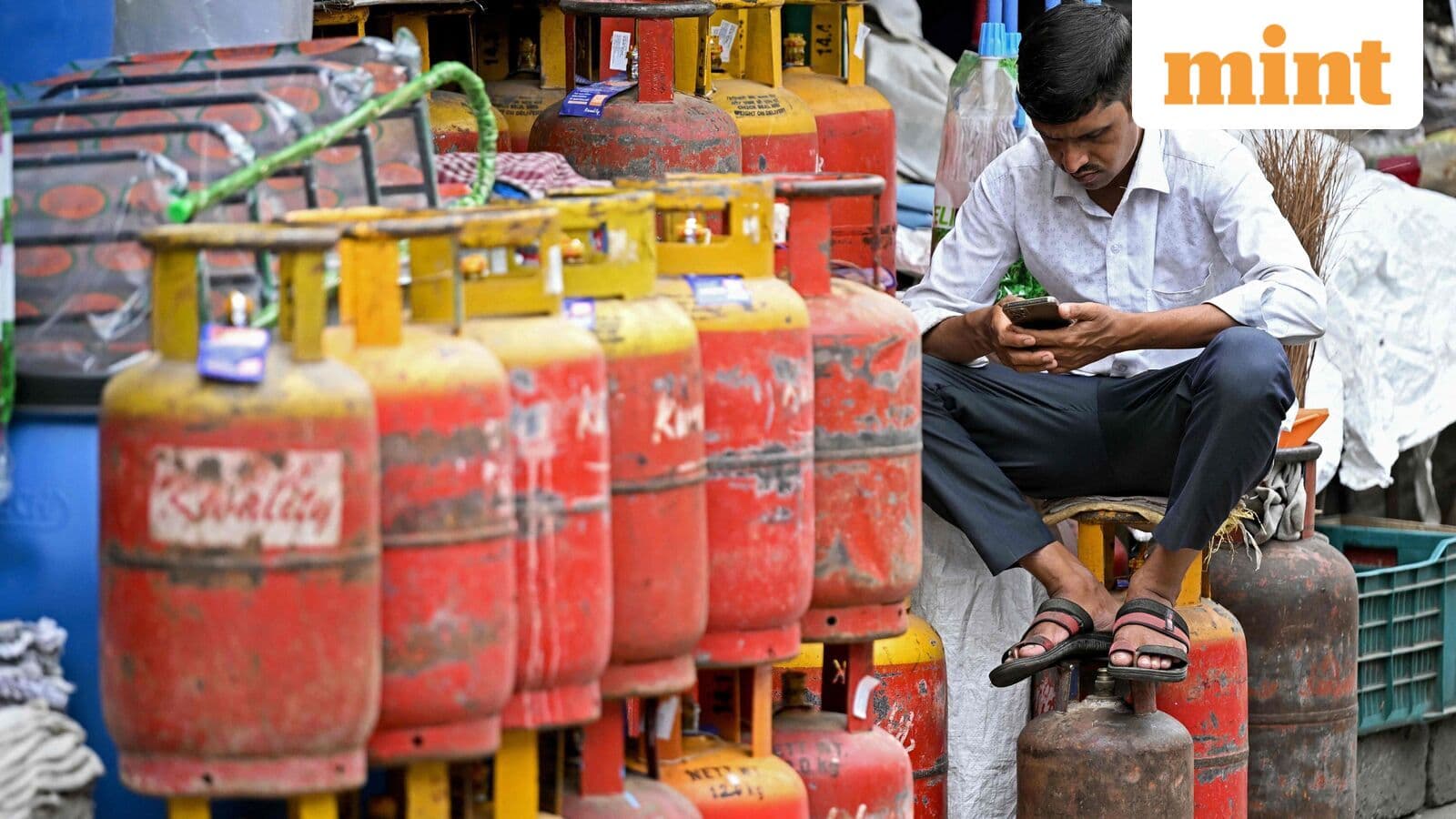
LPG price today: The price of commercial and domestic LPG cylinders remained unchanged on Saturday. Check latest LPG cylinder rates in Delhi, Bengaluru, Mumbai, Kolkata, Chennai and other cities here.The latest price hike in LPG commercial cylinder rates implemented on 1 June marks sixth revision in the first half of 2026.(AFP)LPG price today: The cost of commercial and domestic Liquefied Petroleum Gas (LPG) cylinders remained stable on Saturday after the latest hike announced on 1 June. The price of 19 kg commercial LPG cylinders was increased by ₹42 but no change in domestic cylinder prices was announced.In the last six months, the prices of commercial LPG have almost doubled, taking into account the latest price hike. The latest revision in LPG prices corresponds to sixth revision in the first half of 2026 since the US-Iran war caused supply disruption of cooking gas.CityDomestic (14.2 Kg)Commercial (19 Kg)New Delhi ₹913.00 ( 0.00 ) ₹3,071.50 ( +993.00 )Kolkata ₹939.00 ( 0.00 ) ₹3,202.00 ( +994.00 )Mumbai ₹912.50 ( 0.00 ) ₹3,024.00 ( +993.00 )Chennai ₹928.50 ( 0.00 ) ₹3,237.00 ( +990.50 )Gurugram ₹921.50 ( 0.00 ) ₹3,088.00 ( +993.00 )Noida ₹910.50 ( 0.00 ) ₹3,071.50 ( +993.00 )Bengaluru ₹915.50 ( 0.00 ) ₹3,152.00 ( +991.00 )Bhubaneswar ₹939.00 ( 0.00 ) ₹3,238.00 ( +993.50 )Chandigarh ₹922.50 ( 0.00 ) ₹3,092.50 ( +993.00 )Hyderabad ₹965.00 ( 0.00 ) ₹3,315.00 ( +994.00 )Jaipur ₹916.50 ( 0.00 ) ₹3,099.00 ( +993.00 )Lucknow ₹950.50 ( 0.00 ) ₹3,194.00 ( +993.00 )Patna ₹1,002.50 ( 0.00 ) ₹3,346.50 ( +993.50 )Thiruvananthapuram ₹922.00 ( 0.00 ) ₹3,106.00 ( +993.00 )RBI hikes FY27 Consumer Price Index inflation projection amid global energy crisesThe Reserve Bank of India on Friday projected the retail inflation for 2026-27 at 5.1 per cent. This estimate is higher from the previous prediction of 4.6% amid global energy crises due to blockade of Strait of Hormuz. Mounting input costs due to increase in petrol and diesel resulted in this estimate. Over the last month, retail fuel prices increased cumulatively by 7.4 per cent for petrol and 8.4 per cent for diesel.RBI Governor Sanjay Malhotra in Monetary Policy Statement on 5 June said, "CPI inflation for this year now is projected to be at 5.1%, about 50 basis points more than earlier projected, with Q1 at 4.2%, Q2 at 5.1%, Q3 at 5.9% and Q4 at 5.4%," Malhotra stated. "Core inflation is projected at 4.7% for this year," as he suggested that domestic inflation trajectory faces immediate pressure from the energy sector.The recent price hike in fuel rates accounts for a direct impact of about 36 basis points on headline inflation. The RBI said in its monetary policy statement said that second order effects would also get reflected in consumer price (CPI) inflation in the coming months.Considering domestic outlook constrained by supply chain disruptions and a subnormal southwest monsoon forecast, Governor Malhotra said, "Prices of several inputs such as commercial LPG, industrial raw materials, chemicals, base metals, rubber and plastic products, among others, have increased." According to the RBI Governor, higher input costs could exert upside pressure on CPI inflation in the coming months as firms would pass on these higher input costs.What is the status of Indian flagged ships navigating through the Strait of HormuzThe Ministry of Ports, Shipping and Waterways on Thursday assured that all Indian flagged ships and vessels navigating through the Strait of Hormuz are safe. During an inter-ministerial briefing, Director in the Ministry of Ports, Shipping and Waterways, Opesh Kumar Sharma confirmed that the situation west of the Strait of Hormuz remains stable."On the status of ships west of the Strait of Hormuz, as I said, all Indian flagged ships are safe, and all Indian seafarers on foreign-flagged ships are also safe, and there is no incident which has been reported in the past 72 hours. And the control room at DG Shipping is fully functional and remains in touch with our seafarers,"
Federal Reserve Chairman Kevin Warsh inherits an economy bolstered by an AI investment boom but pinched by rising prices from the Iran war, a Fed survey showed on Wednesday, setting up a fight over an interest rate hike when he runs his first policy meeting in two weeks. Most U.S. regions experienced higher inflation from late April to late May due to energy-related costs tied to the Iran war "with spillovers into shipping, packaging, groceries, and fertilizer," according to the Beige Book, a roundup of qualitative economic data from the Fed's 12 regional banks. "Overall, there were reports of increased credit card usage, fewer retail visits, and stronger demand for necessities," the report found, sobering signals for an economy that has long been sustained by consumer spending. Across sectors, the report pointed to a stagflationary combination of weakening consumer demand and rising cost pressures, an unwelcome scenario for any new Fed chair, particularly one picked by a president who has said he expects his new chief central banker to deliver an interest rate cut. In a sign of the strain that surging gas and other prices are exerting on average families, one contact told the Kansas City Fed: "Middle-income households are squeezing more life out of every dollar before deciding to spend it." Navy Federal Credit Union chief economist Heather Long said the report's findings were "the latest warning sign that inflation is quickly turning into a sticky problem...New Fed Chair Kevin Warsh has to come out at the June meeting showing his firm commitment to containing inflation." Some of Warsh's colleagues are already portraying the fight against inflation as gaining urgency. "I am increasingly concerned that higher interest rates could be necessary later this year," Dallas Fed President Lorie Logan said on Wednesday, noting that inflation is stubbornly high even as AI investment continues to boom. Interest-rate futures show traders see about a 75% chance the Fed will increase its policy rate by a quarter of percent to the 3.75%-4.00% range by the end of this year, versus about a 25% probability for no change. The Beige Book offered fresh evidence that AI is fueling what it characterized as overall "moderate" U.S. economic growth, with nine of the Fed's 12 regional banks citing data center construction as driving demand for investment as well as labor. But it was also rife with examples of inflationary pressures and pullbacks in spending in other sectors. With higher gas prices, consumers are shifting towards hybrid cars or buying fewer new cars altogether, it found. Fewer empty shipping containers are being exported as shippers hold them back due to expectations of weak domestic demand. Higher energy costs have also increased fertilizer prices. New York apple growers anticipated a much smaller harvest later this year because fertilizer has become too expensive to use. Manufacturing firms told the Richmond Fed that demand had weakened due to consumer caution, and one equipment producer in the plastics industry said its customers were delaying capital investments due to expected oil shortages. In the West, tourism-related demand was solid for specific events like concerts and corporate gatherings, the San Francisco Fed said. But demand at "value-oriented venues" declined as consumers cut back on driving and weekend trips. SOME YOUNG WORKERS SEE HIRING SLOW Warsh replaced Jerome Powell as Fed chief in late May just as many central bank policymakers were starting to get more nervous about inflation, which has reaccelerated in recent months due to the U.S.-backed war with Iran. Inflation has been above the Fed's 2% target for more than five years. Inflation by the Fed's targeted measure jumped to 3.8% in April from 3.5% in March, while the labor market, which looked to be faltering last year as the Fed cut rates in response, has appeared to stabilize. Economists polled by Reuters expect the unemployment rate to remain at 4.3% when


Discussion (0)